
Complete Commercial Rubber Floor Cleaning & Maintenance Guide
Use this guide as the central reference for identifying, cleaning, deep cleaning, troubleshooting, restoring, and maintaining commercial rubber flooring.
Rubber flooring can vary significantly by construction, texture, surface treatment, and condition, so the correct maintenance process starts with identifying the floor before choosing chemistry or equipment.
What Is the Best Way to Maintain Commercial Rubber Floors?
Identify the rubber flooring first, remove loose soil regularly, use compatible cleaning chemistry at the correct dilution, match the brush or pad to the surface profile, recover dirty solution completely, and escalate to deep cleaning, restoration, repair, or replacement only when the floor condition requires it.

Sheet rubber, rubber tile, studded rubber, and textured rubber can require different cleaning tools and maintenance methods.
Identify the Rubber Flooring Before Cleaning
Before selecting chemicals, brushes, pads, or machines, identify the floor construction, surface texture, and whether a coating or factory-applied treatment is present.
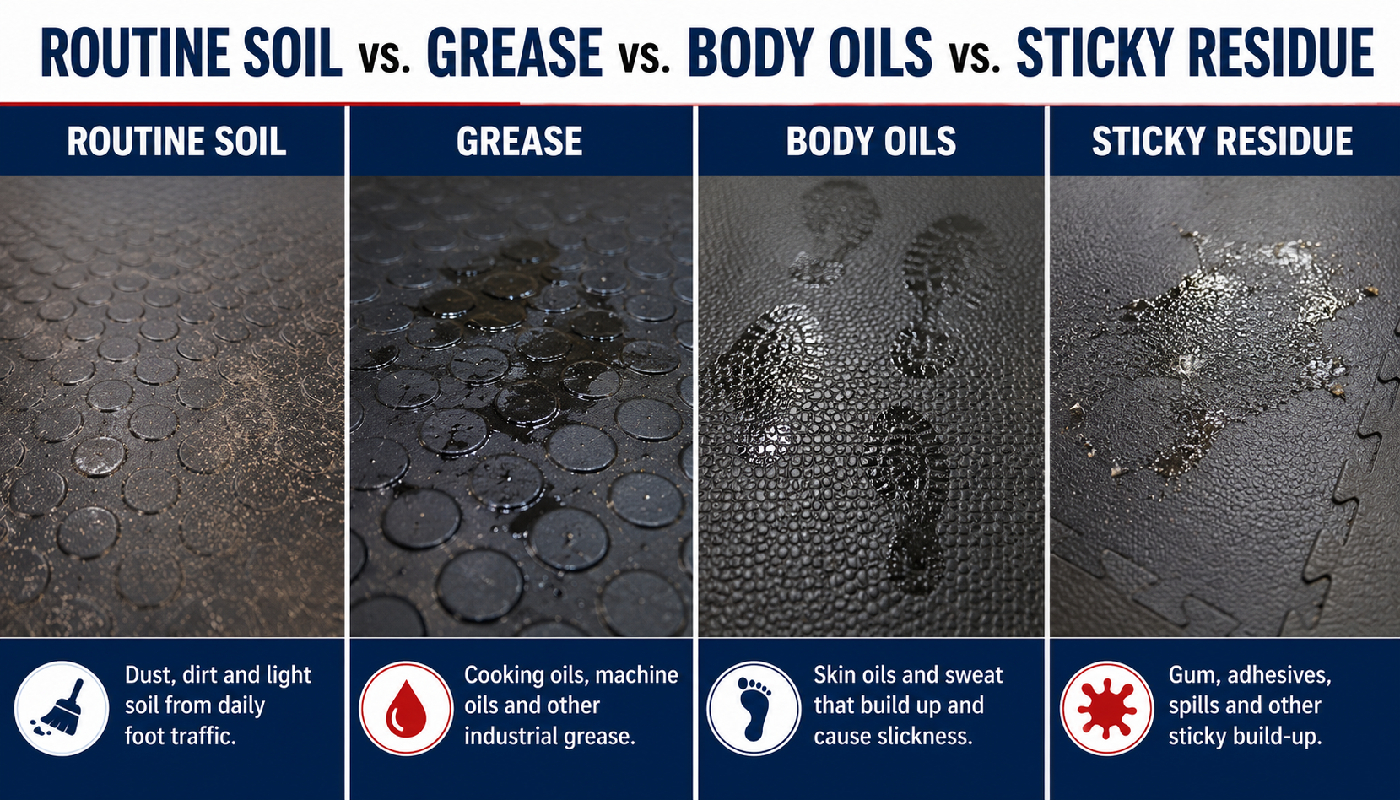
Cleaner selection should match the soil load, cleaning method, and rubber-floor manufacturer's maintenance requirements.
Choose Compatible Cleaning Chemistry
Rubber flooring should not automatically be treated with the strongest cleaner available. Start with compatible chemistry designed for the soil and cleaning method.
More Chemical Does Not Mean Better Cleaning
Excess cleaner can leave residue, create haze or stickiness, increase rinsing requirements, and make the floor look worse. Follow the product label and flooring manufacturer's instructions for dilution and use.
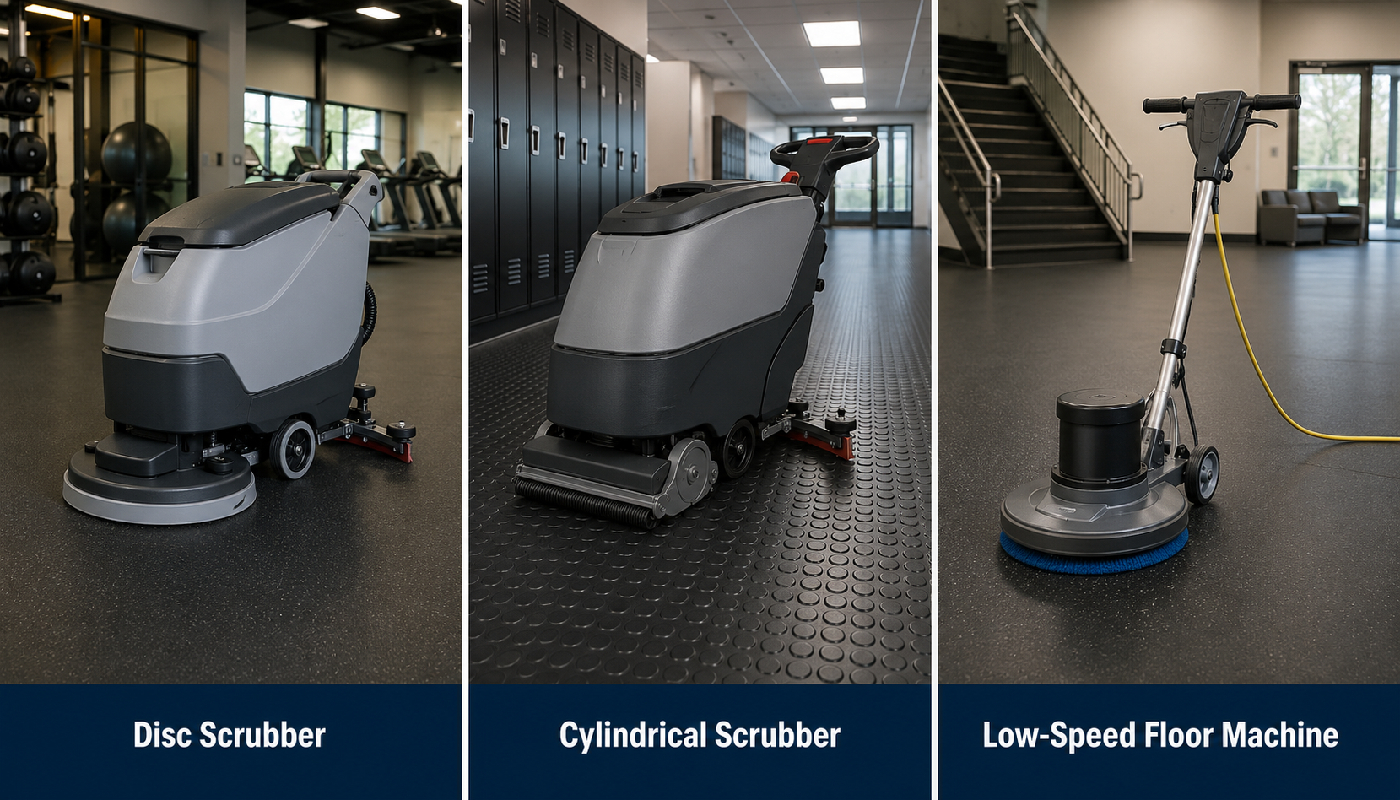
Disc scrubbers, cylindrical scrubbers, and low-speed floor machines can all have a place in rubber-floor maintenance when matched correctly to the surface.
Match the Machine, Brush or Pad to the Floor
The right floor-contact tool depends heavily on the rubber surface profile.
- Smooth rubber may allow even pad or disc contact.
- Textured rubber can benefit from brushes that reach into surface texture.
- Studded rubber often requires brush contact around raised profiles.
- Cylindrical scrubbers can help on some profiled or textured surfaces.
- Use the least aggressive compatible brush or pad that performs the job.
A Simple Commercial Rubber Floor Maintenance Process
Deep Clean When Routine Maintenance Is No Longer Enough
Deep cleaning is appropriate when removable contamination has built up beyond what routine cleaning can handle.
A controlled deep-cleaning process typically includes thorough dry-soil removal, compatible chemistry, appropriate dwell time, controlled agitation, complete dirty-water recovery, and a final inspection.
Read the Rubber Floor Deep Cleaning Guide →
Before increasing chemical strength or scrubbing aggression, determine whether the condition is soil, residue, wear, or physical damage.
Diagnose Rubber Floor Problems Before Cleaning Again
A bad-looking rubber floor is not automatically a dirty floor. Residue, wear, contamination, coating failure, and physical damage can create similar symptoms.
Read the Rubber Floor Troubleshooting Guide →
Dullness, haze, streaks, black marks, odors, and sticky floors can have different causes and should not all be treated the same way.
What Common Rubber Floor Problems Usually Mean
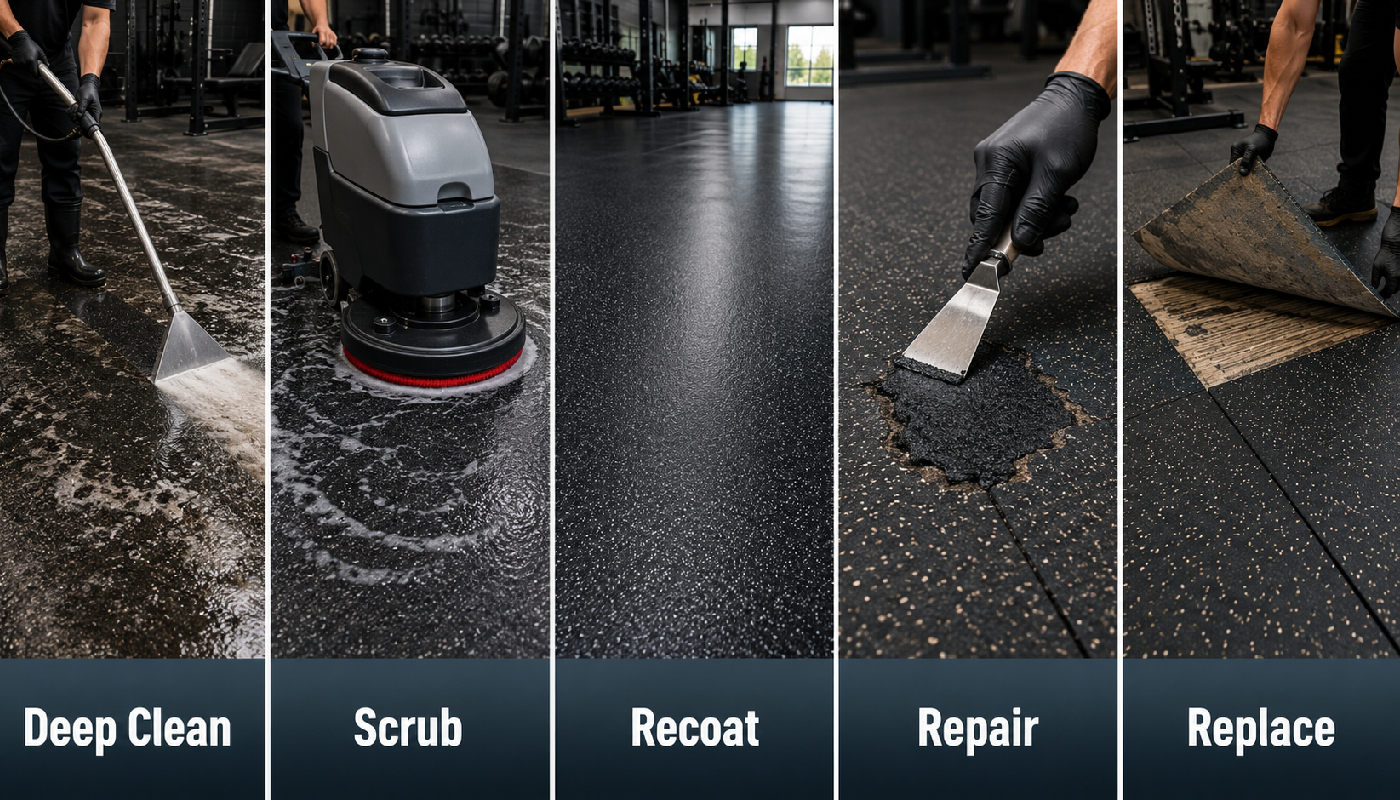
The correct corrective action can range from deep cleaning and restorative scrubbing to an approved recoat, repair, or full replacement.
Know When to Deep Clean, Scrub, Recoat, Repair or Replace
Restoration should be based on the actual condition of the floor rather than appearance alone.
- Deep Clean: removable soil, residue, oils, or contamination.
- Scrub: heavier buildup that requires more controlled mechanical agitation.
- Recoat: only where the rubber flooring manufacturer permits an approved coating or surface-treatment system.
- Repair: localized cuts, gouges, damaged seams, loose sections, or isolated material failure.
- Replace: widespread deterioration, severe cracking, major delamination, or extensive flooring failure.
Not Every Rubber Floor Should Be Coated
Many rubber floors are designed to be maintained without conventional floor finish. Do not strip, coat, burnish, or apply aggressive restoration chemistry unless the flooring manufacturer's maintenance system specifically allows it.
How Often Should Commercial Rubber Floors Be Cleaned?
Cleaning frequency should be based on traffic, soil load, facility type, contamination, weather, entrance conditions, and the flooring manufacturer's recommendations.
Rubber Floor Cleaning Mistakes to Avoid
- Cleaning before identifying the floor construction or surface treatment.
- Using too much chemical.
- Using aggressive pads or brushes before diagnosing the problem.
- Allowing dirty solution to dry back onto the floor.
- Assuming all black marks are permanent damage.
- Assuming all sticky floors are caused by cleaner residue.
- Trying to clean away cuts, gouges, loose seams, or delamination.
- Applying conventional floor finish to rubber without manufacturer approval.
Commercial Rubber Floor Care Guides
Use the individual guides below when you need more detail on a specific part of rubber-floor maintenance.
How to Identify Commercial Rubber Flooring Before Cleaning
Identify sheet rubber, rubber tile, studded, textured, coated, and uncoated flooring.
Read Identification Guide →Best Cleaning Chemicals for Commercial Rubber Floors
Compare neutral, low-foam, degreasing, and odor-control chemistry.
Read Chemical Guide →Auto Scrubbers, Floor Machines, Brushes & Pads for Commercial Rubber Floors
Match machine type and floor-contact tools to smooth, textured, and studded rubber.
Read Equipment Guide →How to Deep Clean Commercial Rubber Floors
Learn the process for chemistry, dwell time, agitation, recovery, and final inspection.
Read Deep Cleaning Guide →Commercial Rubber Floor Problems
Troubleshoot dullness, haze, streaks, black marks, odors, stickiness, wear, and damage.
Read Troubleshooting Guide →Commercial Rubber Floor Restoration Guide
Determine when to deep clean, scrub, recoat, repair, or replace.
Read Restoration Guide →Complete Commercial Rubber Floor Cleaning & Maintenance Guide
Current Guide
Commercial Rubber Floor Cleaning Equipment
Commercial Rubber Floor Cleaning FAQs
What is the best cleaner for commercial rubber floors?
The best cleaner depends on the rubber-floor manufacturer's recommendations, soil type, cleaning method, and whether the floor has a coating or other surface treatment. Compatible neutral or low-foam cleaners are common starting points for routine maintenance.
Can you use an auto scrubber on rubber flooring?
Often yes, when the machine, brush or pad, chemistry, solution flow, and recovery setup are compatible with the specific rubber flooring.
Why does rubber flooring become sticky?
Stickiness may be caused by cleaning residue, grease, body oils, contamination, a failed surface treatment, or deterioration of the rubber material itself.
Can rubber flooring be recoated?
Only when the flooring manufacturer permits an approved coating or surface-treatment system. Conventional floor finish should not automatically be applied to rubber flooring.
When should rubber flooring be replaced?
Replacement may be appropriate when the floor has widespread cracking, severe deterioration, extensive delamination, major material loss, or recurring failure that cannot be corrected through cleaning or localized repair.
Need Help Choosing Equipment or Chemicals for Rubber Floors?
Monster Janitorial can help you compare commercial cleaning chemicals, auto scrubbers, floor machines, brushes, pads, and recovery equipment for your rubber-floor application.
Tax-exempt purchasing and purchase-order support are available for qualifying schools, universities, government agencies, healthcare facilities, municipalities, and other institutional customers.