
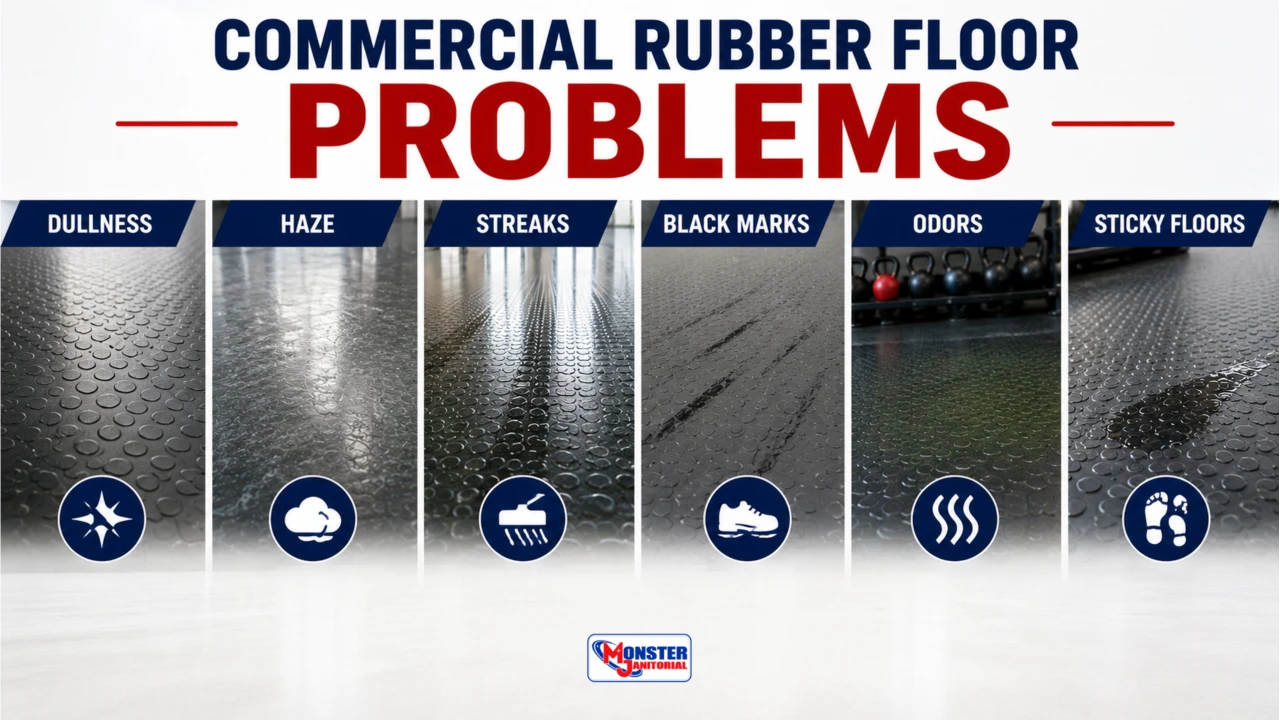
Commercial Rubber Floor Problems: Dullness, Haze, Streaks, Black Marks, Odors & Sticky Floors
A rubber floor can look dirty even when the real problem is residue, wear, contamination, or physical damage.
The goal of troubleshooting is to identify the cause before changing chemicals, pads, brushes, or cleaning frequency.
How Do You Troubleshoot a Rubber Floor Problem?
First determine whether the condition is soil, cleaning residue, contamination, wear, or physical damage. Then check where the problem appears, whether it changes after controlled cleaning, whether the floor feels different, and whether seams, coatings, or the rubber material itself are failing.

Dullness, haze, streaks, black marks, odors, and sticky areas are symptoms. The underlying cause still has to be identified.
5 Things to Check Before Cleaning Again

Soil, residue, wear, and damage may look similar from a distance, but they require very different corrective actions.
Soil vs. Residue vs. Wear vs. Damage
Dull Rubber Floors
Dullness usually develops gradually and can have several causes.
High-traffic areas are darker or dirtier and improve during test cleaning.
Dullness developed after cleaning or appears as a film across the floor.
Traffic lanes remain dull after proper cleaning and the surface appears physically worn.
Hazy or Cloudy Rubber Floors
Haze is often a process problem rather than a flooring problem.
- Cleaner concentration may be too high.
- Dirty solution may not be fully recovered.
- The cleaner may require more rinsing than the current process provides.
- Dirty mop water or recovery solution may be redepositing soil.
- The chemistry may not be compatible with the flooring or surface treatment.
Streaks After Mopping or Auto Scrubbing
Streaking often points directly to the cleaning process.
- Uneven chemical application
- Excess chemical
- Dirty mop water
- Worn or dirty squeegee blades
- Insufficient vacuum recovery
- Dirty solution drying back onto the floor
Black Marks: Transfer or Actual Damage?
Black marks are common around carts, athletic equipment, shoes, wheels, and other rubber surfaces.
Odors in Rubber Flooring
The odor source matters more than the odor-control product.
- Sweat and body oils
- Organic contamination
- Moisture trapped around seams or edges
- Subfloor conditions
- Dirty recovery or cleaning equipment
- The rubber material itself
Removing or controlling the source should come before trying to mask the odor.
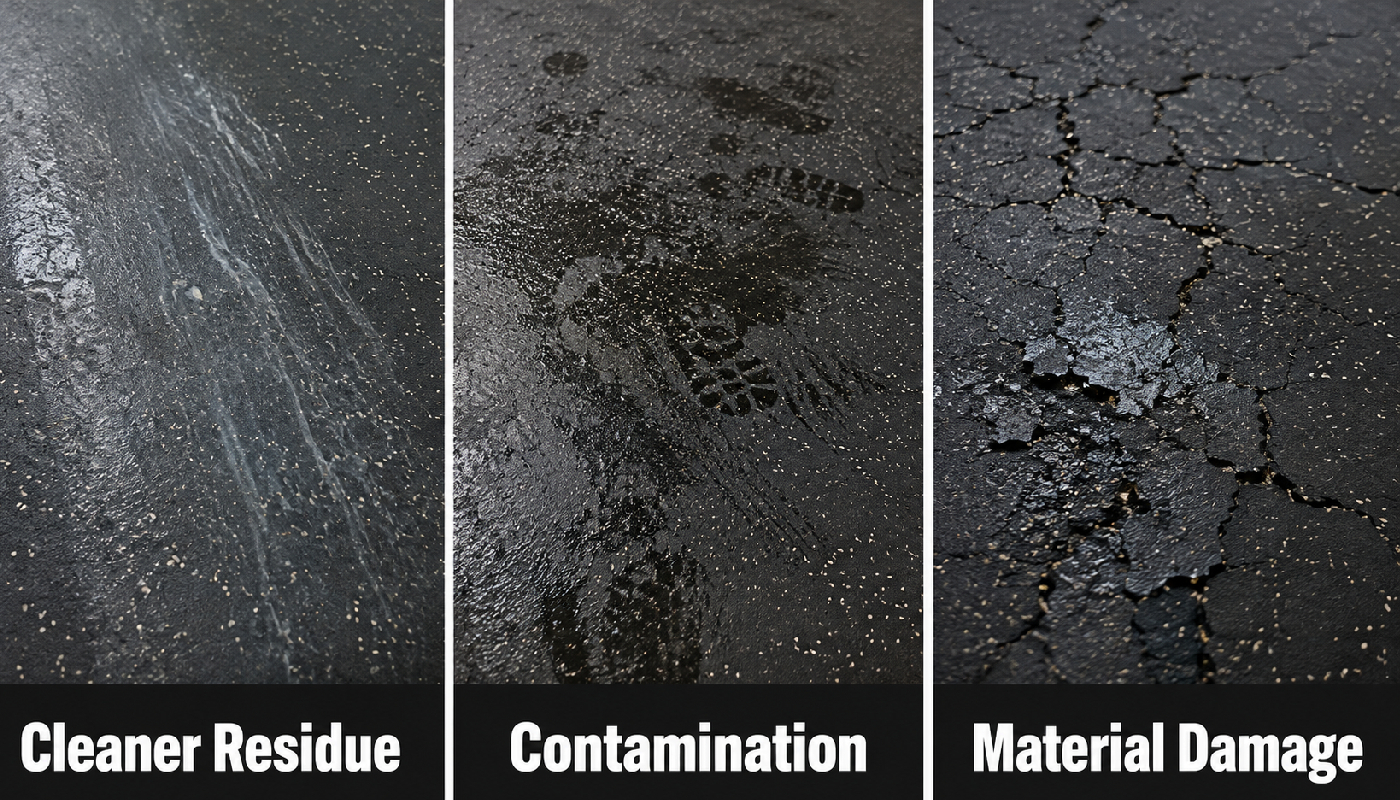
Sticky rubber can come from cleaner residue, grease or body-oil contamination, or deterioration of the flooring material itself.
Why Does a Rubber Floor Feel Sticky?
Stickiness is one of the easiest rubber-floor symptoms to misdiagnose.
Clean a Small Test Area Before Changing the Whole Process
A controlled test area can tell you whether the symptom responds to cleaning without exposing the entire floor to stronger chemistry or agitation.
How to Deep Clean Rubber Floors →Cleaning Chemistry Can Cause Haze, Streaks and Stickiness
Review the cleaner, dilution, foaming, dwell time, rinsing requirements, compatibility, and recovery process before increasing chemical concentration.
Rubber Floor Chemical Guide →When the Problem Is No Longer a Cleaning Problem
Cleaning will not correct physical changes to the flooring itself.
- Cuts and gouges
- Cracking or crumbling
- Loose seams
- Delamination
- Failed coatings
- Material deterioration
What Does the Symptom Point Toward?
Likely soil buildup.
Check chemistry, dilution, rinsing, and recovery.
Test for transferable scuff material.
Look for contamination or moisture source.
Evaluate repair or restoration.
Rubber Floor Troubleshooting Mistakes to Avoid
- Assuming every dull floor is dirty.
- Increasing chemical concentration before identifying the cause.
- Using aggressive pads to remove what may actually be wear.
- Ignoring recovery and rinsing problems.
- Treating every black mark as damage.
- Masking odors instead of locating the source.
- Assuming every sticky floor has cleaner residue.
- Continuing aggressive cleaning when the rubber itself is failing.
Continue Learning About Commercial Rubber Floors
How to Identify Commercial Rubber Flooring Before Cleaning
Identify sheet, tile, recycled, textured, studded, coated, and uncoated rubber flooring.
Read Identification Guide →Best Cleaning Chemicals for Commercial Rubber Floors
Compare routine, low-foam, degreasing, and odor-control chemistry.
Read Chemical Guide →Auto Scrubbers, Floor Machines, Brushes & Pads for Commercial Rubber Floors
Match machine and floor-contact tools to the rubber surface.
Read Equipment Guide →How to Deep Clean Commercial Rubber Floors
Use controlled chemistry, agitation, dwell time, and recovery.
Read Deep Cleaning Guide →Commercial Rubber Floor Problems
Current Guide
Commercial Rubber Floor Restoration Guide
Determine when to deep clean, scrub, recoat, repair, or replace.
Read Restoration Guide →Complete Commercial Rubber Floor Cleaning & Maintenance Guide
Use the complete guide for identification, chemistry, equipment, troubleshooting, restoration, and maintenance.
Read Complete Guide →Commercial Rubber Floor Problem FAQs
Why does my rubber floor look cloudy or hazy?
Common causes include cleaner residue, excessive concentration, incomplete recovery, inadequate rinsing, or incompatible chemistry.
Why is my rubber floor sticky after cleaning?
Cleaner residue is one possibility, but grease, body oils, contamination, a failed coating, or deteriorating rubber can also cause stickiness.
Can black marks be removed from rubber flooring?
Some marks are transferable scuffs and may respond to compatible cleaning. Gouges, abrasions, and worn material are physical damage.
Why does a rubber gym floor smell?
Odor may come from sweat, body oils, organic contamination, moisture, seams, subfloor conditions, or the flooring material itself.
How do I know whether the floor needs cleaning or repair?
Soil and residue may improve during controlled cleaning. Cuts, cracking, loose seams, delamination, and material deterioration indicate a repair or restoration issue.
Need Help Troubleshooting a Commercial Rubber Floor?
Monster Janitorial can help you compare commercial cleaners, auto scrubbers, floor machines, brushes, pads, and recovery equipment after you identify the actual floor problem.
Tax-exempt purchasing and purchase-order support are available for qualifying schools, universities, government agencies, healthcare facilities, municipalities, and other institutional customers.