
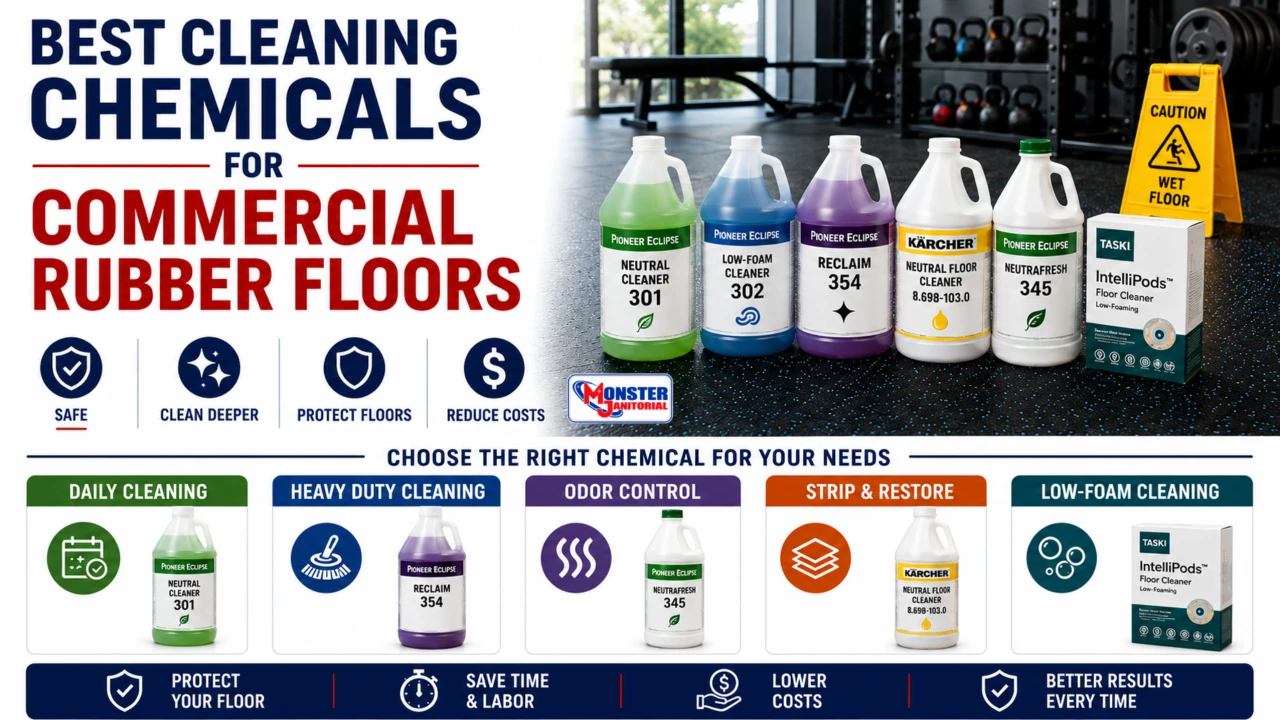
Best Cleaning Chemicals for Commercial Rubber Floors
Choose rubber-floor cleaning chemistry based on the soil you need to remove, the floor construction, and the cleaning method.
Routine dirt, grease, body oils, sticky residue, and odor problems do not all require the same cleaner.
What Cleaner Should You Use on Commercial Rubber Flooring?
For ordinary soil, start with a compatible neutral or low-residue cleaner. Use low-foam chemistry in automatic scrubbers. Grease and body oils may require a compatible degreaser, while odor-control products should be chosen after the odor source is identified. Always confirm compatibility with the specific rubber flooring system.
Confirm What Kind of Rubber Floor You Have
Sheet rubber, rubber tile, recycled gym flooring, textured or studded surfaces, and coated rubber can have different chemical restrictions and maintenance requirements.
Rubber Floor Identification Guide →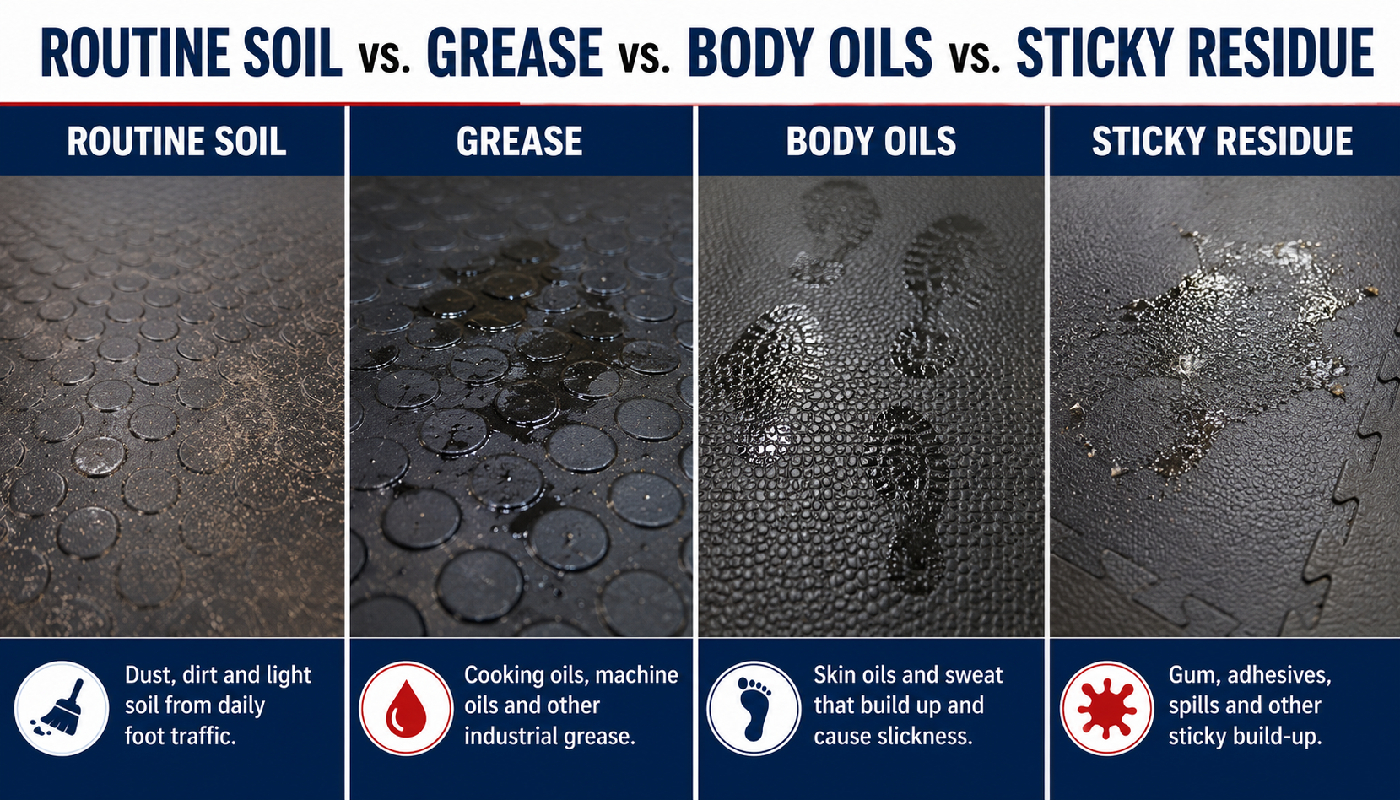
Start with the contamination. Routine soil, grease, body oils, and sticky residue may require different cleaning chemistry.
What Are You Trying to Remove?
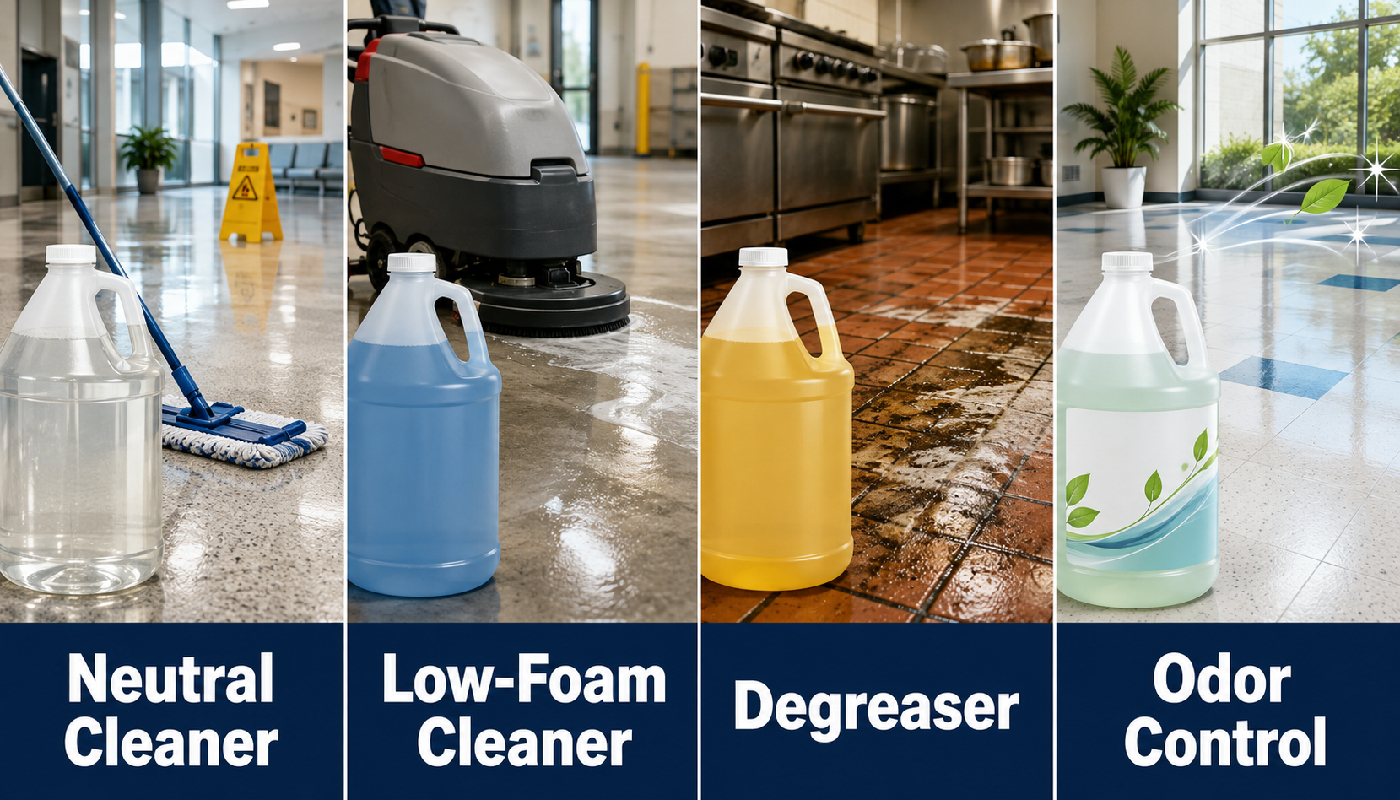
Cleaner categories solve different problems. Choose the category after identifying the soil.
Neutral & Low-Residue Cleaners
Compatible neutral cleaners are generally the first category to evaluate for ordinary maintenance soil.
Karcher Neutral Floor Cleaner 8.698-103.0
Karcher Neutral Floor Cleaner is a low-foaming neutral cleaner designed for commercial floor maintenance and automatic scrubber use. It can be considered when neutral chemistry is compatible with the specific rubber flooring.
Low-Foam Chemistry for Auto Scrubbers
A cleaner used in an auto scrubber has to work with both the floor and the machine's recovery system.
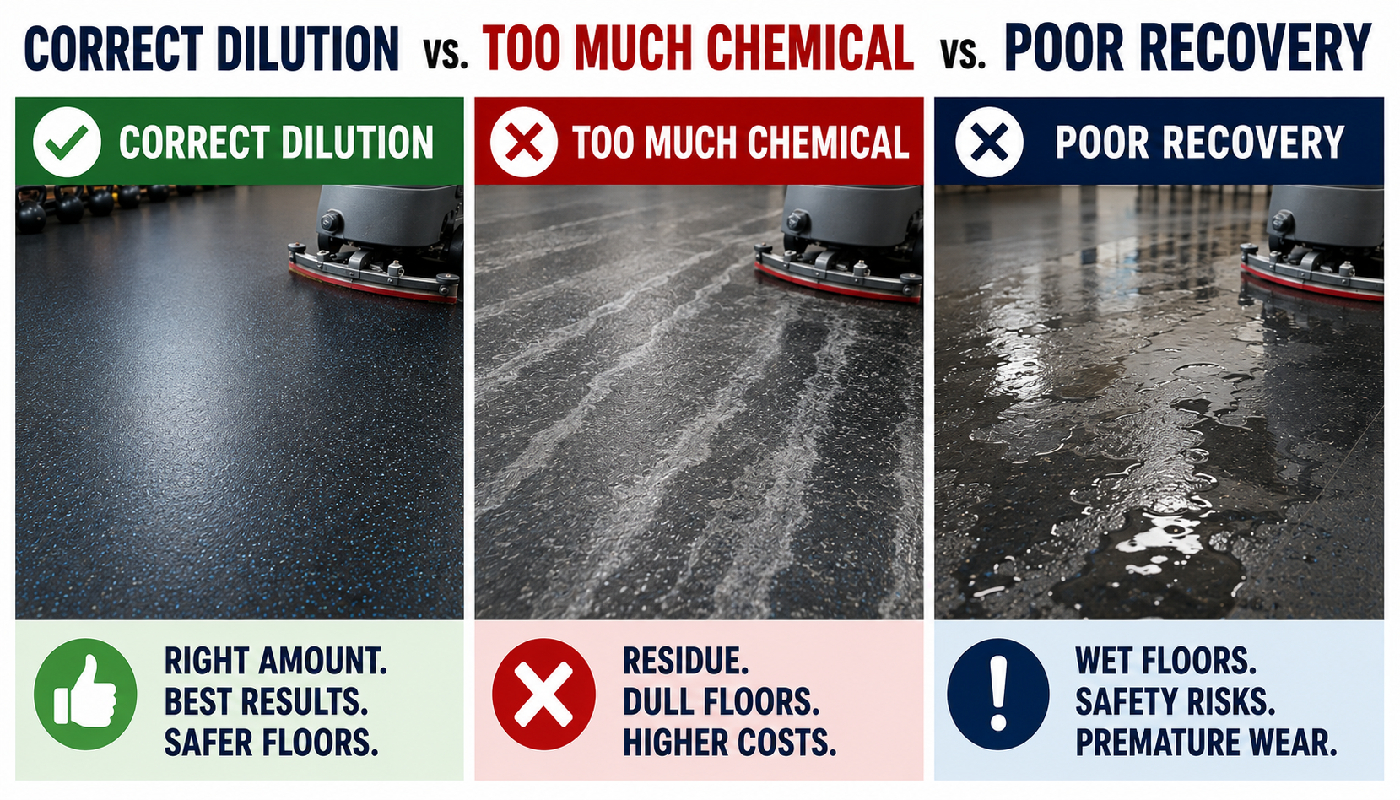
Correct dilution and complete recovery can be just as important as the cleaner selected.
More Cleaner Does Not Automatically Mean More Cleaning
Excessive concentration can contribute to foam, residue, haze, tackiness, additional rinsing, and unnecessary chemical use.
If the floor is not getting clean, check the soil type, dilution, dwell time, brush or pad contact, and dirty-water recovery before increasing chemical strength.
When Should You Use a Degreaser?
A degreaser is worth evaluating when the contamination is oily rather than ordinary dirt.
- Food grease
- Body oils and sweat
- Automotive or maintenance oils
- Greasy entrance or kitchen contamination
- Other oily soils that remain after routine cleaning
Confirm that the specific degreaser is compatible with the rubber, any surface treatment, and the flooring manufacturer's chemical restrictions.
Odor-Control Products: Find the Source First
The right odor-control approach depends on what is actually producing the odor.
What if the Rubber Floor Is Sticky After Cleaning?
Stickiness is not proof that the floor needs stronger cleaner.
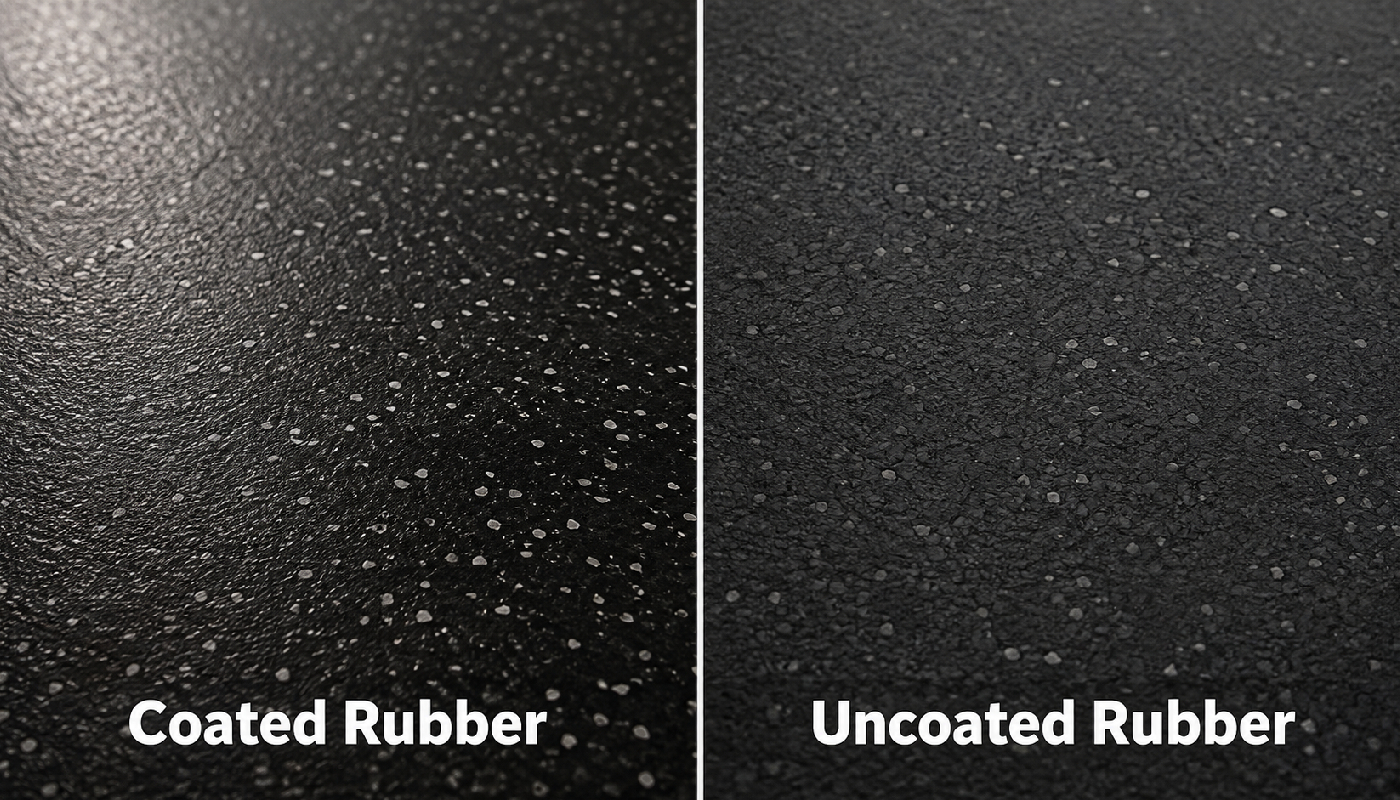
If a coating or surface treatment is present, the cleaner must be compatible with that system as well as the rubber itself.
Chemistry Must Match the Surface Treatment Too
A chemical that is compatible with bare rubber is not automatically safe for a separate field-applied coating or factory treatment.
Confirm the maintenance system before using strong alkalinity, acids, solvents, stripping chemistry, or other restorative cleaners.
Start With the Problem You Need to Solve
Evaluate a compatible neutral or low-residue cleaner.
Choose compatible low-foam machine chemistry.
Evaluate a compatible degreaser.
Identify and remove the odor source first.
Diagnose residue, staining, wear, coating failure, or physical damage before using stronger chemistry.
Shop Commercial Floor-Care Chemicals
Rubber Floor Chemical Mistakes to Avoid
- Using the same cleaner for every type of contamination.
- Increasing chemical strength before identifying the soil.
- Over-concentrating the cleaning solution.
- Using high-foam chemistry in an auto scrubber.
- Leaving dirty solution on the floor.
- Skipping rinsing when the cleaner requires it.
- Using a degreaser when the real problem is residue or wear.
- Trying to remove physical damage with stronger chemicals.
- Skipping compatibility testing when the flooring or surface treatment is uncertain.
Continue Learning About Commercial Rubber Floors
How to Identify Commercial Rubber Flooring Before Cleaning
Identify sheet, tile, recycled, textured, studded, coated, and uncoated rubber.
Read Identification Guide →Best Cleaning Chemicals for Commercial Rubber Floors
Current Guide
Auto Scrubbers, Floor Machines, Brushes & Pads for Commercial Rubber Floors
Match the machine and floor-contact tool to the rubber surface.
Read Equipment Guide →How to Deep Clean Commercial Rubber Floors
Remove embedded contamination with proper chemistry, dwell time, agitation, and recovery.
Read Deep Cleaning Guide →Commercial Rubber Floor Problems
Diagnose dullness, haze, streaks, marks, odors, stickiness, wear, and damage.
Read Troubleshooting Guide →Commercial Rubber Floor Restoration Guide
Determine when to deep clean, scrub, recoat, repair, or replace.
Read Restoration Guide →Complete Commercial Rubber Floor Cleaning & Maintenance Guide
Use the complete guide for identification, chemistry, equipment, deep cleaning, troubleshooting, restoration, and ongoing maintenance.
Read Complete Guide →Rubber Floor Cleaning Chemical FAQs
What is the best cleaner for commercial rubber floors?
A compatible neutral or low-residue cleaner is often a good starting point for ordinary soil. The actual product should match the flooring manufacturer's instructions and the contamination being removed.
Can you use a degreaser on rubber flooring?
Some rubber floors can be cleaned with compatible degreasing chemistry when oily contamination is present. Confirm product and flooring compatibility first.
What cleaner should be used in an auto scrubber?
Use compatible low-foaming chemistry intended for automatic floor-cleaning equipment and follow the product's dilution instructions.
Why does rubber flooring feel sticky after cleaning?
Possible causes include excessive cleaner concentration, incomplete recovery, accumulated residue, insufficient rinsing, oily contamination, coating failure, or material deterioration.
Should stronger cleaner be used when rubber flooring stays dull?
Not automatically. Determine whether the remaining condition is soil, residue, staining, wear, coating condition, or physical damage before increasing chemical strength.
Need Help Choosing a Cleaner for Commercial Rubber Floors?
Monster Janitorial can help you compare floor-cleaning chemistry, auto scrubber products, brushes, pads, and commercial cleaning equipment for your rubber-floor application.
Tax-exempt purchasing and purchase-order support are available for qualifying schools, universities, government agencies, healthcare facilities, municipalities, and other institutional customers.