null

Rubber Floor Care

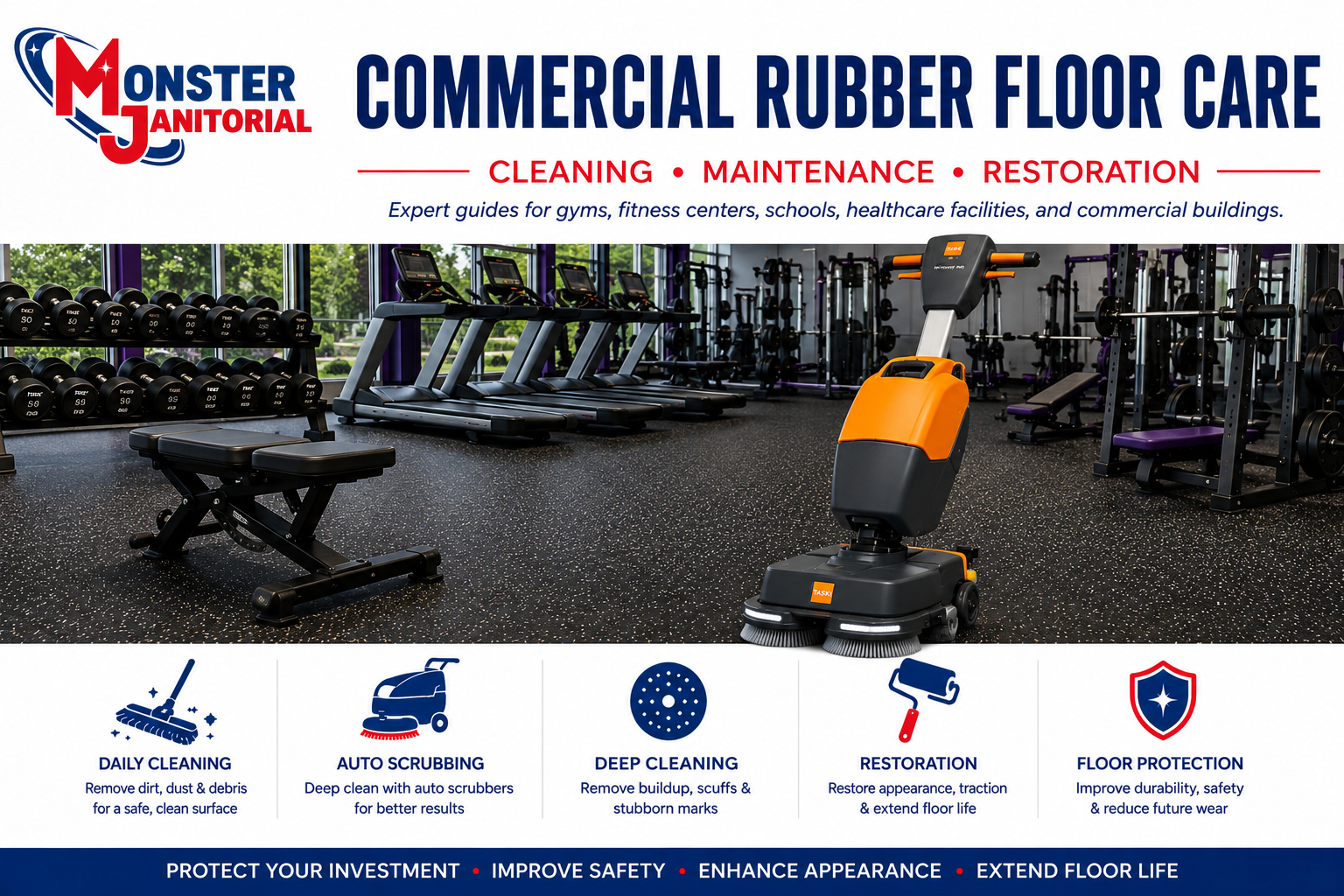
Commercial rubber floor care guide for cleaning, auto scrubbing, gym floors, fitness centers, schools, hospitals, and commercial rubber flooring maintenance

Commercial rubber floors are durable, comfortable underfoot, slip resistant, and common in gyms, fitness centers, schools, hospitals, locker rooms, athletic facilities, airports, retail spaces, and commercial buildings. Rubber flooring can handle heavy foot traffic, exercise equipment, rolling loads, and daily use, but it still requires the right cleaning methods, chemicals, pads, and auto scrubbers to prevent dulling, residue buildup, scuff marks, and surface damage.

Commercial Rubber Floor Care Guide

Rubber floors are often used in high-traffic areas where safety, durability, sound reduction, and comfort are important. They are especially common in fitness centers, weight rooms, physical therapy areas, schools, healthcare facilities, and locker rooms.

Unlike VCT floors, most rubber floors do not require traditional stripping and waxing unless the flooring manufacturer recommends a coated maintenance system. A good rubber floor maintenance program focuses on dust control, pH-neutral cleaning, proper auto scrubber pads, scuff removal, periodic deep cleaning, and approved restoration methods.

What Types of Rubber Floors Are Covered?

Commercial rubber flooring can include smooth rubber sheet flooring, rubber tile, rolled rubber gym flooring, interlocking rubber tiles, recycled rubber flooring, textured safety flooring, and coated rubber floors.

  • Fitness centers and gyms
  • Weight rooms and exercise areas
  • Planet Fitness-style rubber gym floors
  • Schools and universities
  • Hospitals and healthcare facilities
  • Locker rooms and athletic facilities
  • Physical therapy and rehab areas
  • Airports, retail stores, and public buildings
Examples of commercial rubber flooring in gyms, fitness centers, schools, locker rooms, rehabilitation centers, and healthcare facilities

Daily Cleaning & Preventive Maintenance

Daily cleaning is important because rubber floors can hold dust, sweat, body oils, shoe marks, chalk, salt, and soil from heavy traffic. If soil is not removed regularly, the floor can become dull, slippery, sticky, or difficult to restore.

Recommended Daily Cleaning Steps

  • Dust mop or vacuum loose soil, grit, and debris.
  • Clean spills, sweat, and sticky residue quickly.
  • Use a pH-neutral cleaner approved for rubber flooring.
  • Use a white pad for daily auto scrubbing.
  • Use a red pad for routine gym soil, sweat buildup, and shoe marks.
  • Use walk-off mats at entrances to reduce tracked-in dirt.
  • Recover cleaning solution properly to prevent residue.
  • Inspect high-traffic areas, weight areas, and locker rooms regularly.

Important: Avoid harsh degreasers, solvents, acidic cleaners, petroleum-based products, abrasive pads, and strong alkaline cleaners unless approved by the flooring manufacturer.

Can You Use an Auto Scrubber on Rubber Floors?

Yes. Auto scrubbers are commonly used on commercial rubber floors, especially in gyms, schools, healthcare facilities, athletic areas, and large commercial buildings. The key is to use the correct pad or soft brush, proper chemical dilution, and good water recovery.

Best Auto Scrubber Setup for Rubber Floors

  • Use a disc scrubber with white or red pads for most smooth rubber floors.
  • Use a white pad for daily cleaning and light soil.
  • Use a red pad for routine scrubbing, sweat buildup, gym soil, and shoe marks.
  • Use a soft nylon brush only on textured rubber floors when approved.
  • Use pH-neutral cleaner or a rubber floor cleaner.
  • Use proper solution flow so the floor is cleaned without leaving excess water.
  • Use strong vacuum recovery to prevent residue and slip issues.
  • Test first before using stronger pads or chemicals.

Brush or Pad for Rubber Floors?

Most rubber floors should be cleaned with pads first. Brushes can be useful on heavily textured rubber or safety flooring, but stiff brushes may damage or dull the surface.

  • Smooth rubber floors: Use white or red pads.
  • Gym rubber floors: Use white pads for daily cleaning and red pads for routine soil.
  • Textured rubber floors: Use soft nylon brushes only when approved.
  • Coated rubber floors: Follow the coating manufacturer’s recommendations.

Monster Janitorial Tip: If the floor looks hazy, dull, sticky, or slippery after cleaning, the chemical may be too strong, the pad may be too aggressive, or the floor may need better rinsing and recovery.

Recommended Chemicals

Rubber floors should be cleaned with pH-neutral cleaners, rubber floor cleaners, or auto scrubber detergents approved for rubber flooring. The wrong chemical can leave residue, soften the surface, dull the finish, reduce traction, or cause long-term damage.

Avoid: solvent cleaners, petroleum-based products, bleach, strong degreasers, acidic cleaners, harsh alkaline cleaners, abrasive powders, and aggressive stripping chemicals unless the flooring manufacturer approves them.

Rubber Floor Deep Cleaning, Restoration & Refinishing

Rubber floors can often be restored through deep cleaning, residue removal, approved conditioners, or recoating if the flooring system allows it. Many rubber floors should not be stripped and waxed like VCT unless the manufacturer specifically recommends a coating system.

Commercial rubber floor restoration before and after showing deep cleaning and restoration

Regular cleaning and periodic deep restoration help preserve appearance, improve safety, remove embedded soil, and extend the life of commercial rubber flooring.

Deep Cleaning Rubber Floors

  • Remove dust and loose soil before scrubbing.
  • Use pH-neutral or rubber-safe cleaner.
  • Scrub with white or red pads depending on soil level.
  • Use soft nylon brushes only on textured rubber flooring.
  • Recover dirty solution completely.
  • Rinse if necessary to remove residue.
  • Allow the floor to dry before reopening the area.

Can Rubber Floors Be Recoated?

Some rubber flooring systems can be coated or refinished using manufacturer-approved products. This is different from traditional VCT stripping and waxing and should only be performed when approved by the flooring manufacturer.

  • Remove embedded soil and residue first.
  • Use only compatible rubber floor coatings.
  • Follow dry times and cure times carefully.
  • Burnish only coated rubber floors when approved.

Common Restoration Warning Signs

  • Floor remains dirty after cleaning.
  • Traffic lanes appear darker than surrounding areas.
  • Black marks do not clean off easily.
  • Surface feels sticky or slippery.
  • Cleaning leaves haze or residue.
  • Coated rubber floors are peeling or uneven.

Rubber Floor Equipment Recommendations

Small to Medium Gyms

For fitness centers, weight rooms, locker rooms, and facilities with equipment placed close together, the TASKI ULTIMAXX 360 is a strong choice for rubber floor cleaning. Its compact size makes it easier to maneuver around exercise machines, benches, mats, treadmills, cardio equipment, and tight aisles while still providing auto scrubber productivity for daily cleaning.

TASKI ULTIMAXX 360 cleaning rubber gym flooring around exercise equipment

Compact auto scrubbers like the TASKI ULTIMAXX 360 are ideal for cleaning rubber gym floors around exercise equipment, benches, cardio machines, locker rooms, and tight spaces.

  • TASKI ULTIMAXX 360 for compact gym and fitness center cleaning.
  • White pads for daily cleaning and light soil.
  • Red pads for routine gym soil, sweat buildup, and shoe marks.
  • pH-neutral cleaner for daily auto scrubbing.
  • Soft nylon brushes only for textured rubber flooring when approved.

Recommended Equipment Categories

Selecting the proper equipment can improve cleaning results, reduce labor costs, and extend the life of commercial rubber flooring. Gyms, schools, healthcare facilities, and commercial buildings may require different equipment based on floor texture, traffic levels, and facility size.

Monster Janitorial Tip: Most rubber floors clean best using disc auto scrubbers with white or red pads. Soft nylon brushes are generally reserved for textured safety flooring.

Rubber Floor Maintenance Schedule

Frequency Recommended Task
Daily Dust mop or vacuum, remove grit, clean spills, and auto scrub with a white pad as needed.
Weekly Auto scrub with white or red pads depending on soil level, especially in gyms and locker rooms.
Monthly Inspect traffic lanes, scuffs, residue, slip resistance, and dull areas.
As Needed Deep clean with a red pad or soft nylon brush if approved for textured rubber.
Periodic Restore, recoat, or condition rubber flooring only with manufacturer-approved products and procedures.

Common Rubber Floor Problems

  • Scuff Marks: Often caused by shoes, weights, equipment, carts, or athletic use.
  • Dull Appearance: May indicate soil buildup, residue, wrong cleaner, or wear in traffic lanes.
  • Sticky Floors: Often caused by sweat, body oils, cleaner residue, or poor rinsing.
  • Slippery Floors: Can be caused by residue, wrong cleaner, overuse of chemicals, or coating failure.
  • Black Marks: Common in gyms and weight rooms from shoes, mats, and equipment.
  • Hazing: May happen when cleaners are too strong or not fully recovered.
  • Peeling Coating: Coated rubber floors may need approved stripping, deep cleaning, or recoating.

Rubber Floor Care FAQs

Can you use an auto scrubber on rubber floors?

Yes. Auto scrubbers are commonly used on rubber floors in gyms, schools, healthcare facilities, and commercial buildings. Use the correct pad, approved cleaner, and strong water recovery.

Should I use a brush or pad on rubber floors?

Most smooth rubber floors should be cleaned with pads. Use a white pad for daily cleaning and a red pad for routine soil. Soft nylon brushes may be used on textured rubber floors when approved by the manufacturer.

What pad should be used on gym rubber floors?

For gyms and fitness centers, use a white pad for daily cleaning and a red pad for routine sweat buildup, soil, and shoe marks. Avoid aggressive pads unless tested and approved.

Is the TASKI ULTIMAXX 360 good for gym floors?

Yes. The TASKI ULTIMAXX 360 is a good choice for small to medium gyms because it is compact and easy to maneuver around exercise equipment, benches, cardio machines, locker rooms, and tight aisles.

Can rubber floors be stripped and waxed?

Most rubber floors should not be stripped and waxed like VCT unless the flooring manufacturer recommends a coated system. Many rubber floors are maintained with cleaning, deep scrubbing, approved conditioners, or compatible recoating systems.

What cleaner should be used on rubber floors?

Use a pH-neutral cleaner, rubber floor cleaner, or auto scrubber detergent approved for rubber flooring. Avoid solvents, petroleum-based products, bleach, harsh degreasers, and aggressive alkaline cleaners unless approved.

Can you burnish rubber floors?

Only coated rubber floors should be burnished, and only when the coating manufacturer approves burnishing. Uncoated rubber floors should not be burnished like traditional finished VCT.

Need Help Choosing Rubber Floor Equipment or Chemicals?

Monster Janitorial can help recommend the right cleaners, pads, auto scrubbers, floor machines, wet/dry vacuums, and rubber floor maintenance products for gyms, fitness centers, schools, healthcare facilities, locker rooms, and commercial buildings.

Email: sales@monsterjanitorial.com
Call: 956-772-4842