
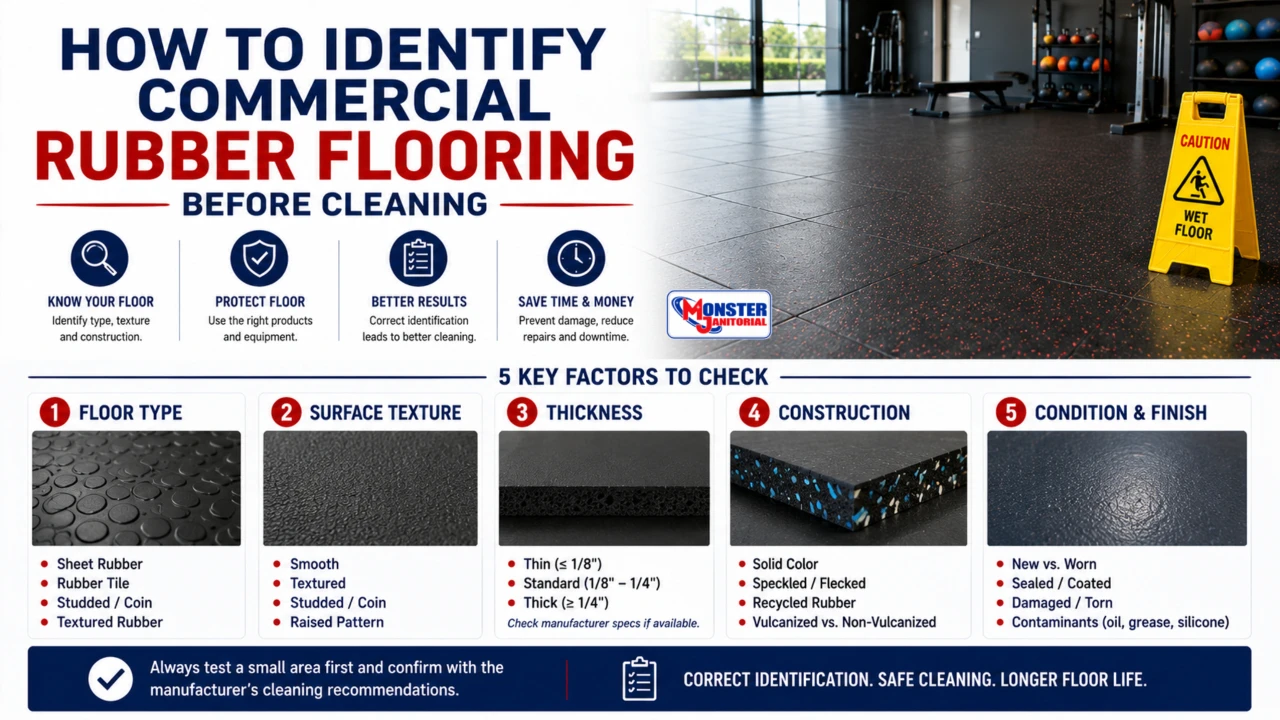
How to Identify Commercial Rubber Flooring Before Cleaning: Sheet Rubber, Rubber Tile, Studded & Textured Floors
Before choosing a cleaner, pad, brush, or auto scrubber, first determine what type of rubber flooring you actually have.
The fastest clues are usually the seams, surface texture, material appearance, exposed edges, and whether the floor has a separate coating or surface treatment.
Start With the Seams and Surface
Large continuous sections with relatively few seams often indicate sheet or rolled rubber. A regular grid of joints usually points to rubber tile. Raised circular profiles indicate studded rubber, while embossed or rough surfaces indicate textured rubber. Visible bonded granules often suggest recycled rubber gym flooring.

Start by comparing the floor's seams and surface profile. These two clues can often narrow the flooring type quickly.
5 Things to Check Before Cleaning a Rubber Floor
What Are You Looking At?
| What You See | Likely Type | Key Clue |
|---|---|---|
| Large continuous areas with relatively few seams | Sheet / Rolled Rubber | Long seams and broad continuous sections |
| Regular square or rectangular joints | Rubber Tile | Repeated tile-size seam pattern |
| Raised circular or molded bumps | Studded Rubber | Distinct raised profile above the base surface |
| Embossed, rough, ribbed, or patterned surface | Textured Rubber | Soil can settle into recesses and surface texture |
| Visible rubber granules or flecks bonded together | Recycled Rubber | Crumb-like particles visible throughout the material |
| Puzzle-shaped or mechanical joining edges | Interlocking Rubber Tile | Visible interlocking joints rather than straight tile seams |
| Glossy film, peeling layer, or wear through a separate surface film | Possibly Coated Rubber | Separate surface layer appears different from the rubber underneath |
Sheet Rubber vs. Rubber Tile
The seam pattern is usually the easiest way to separate these two constructions.
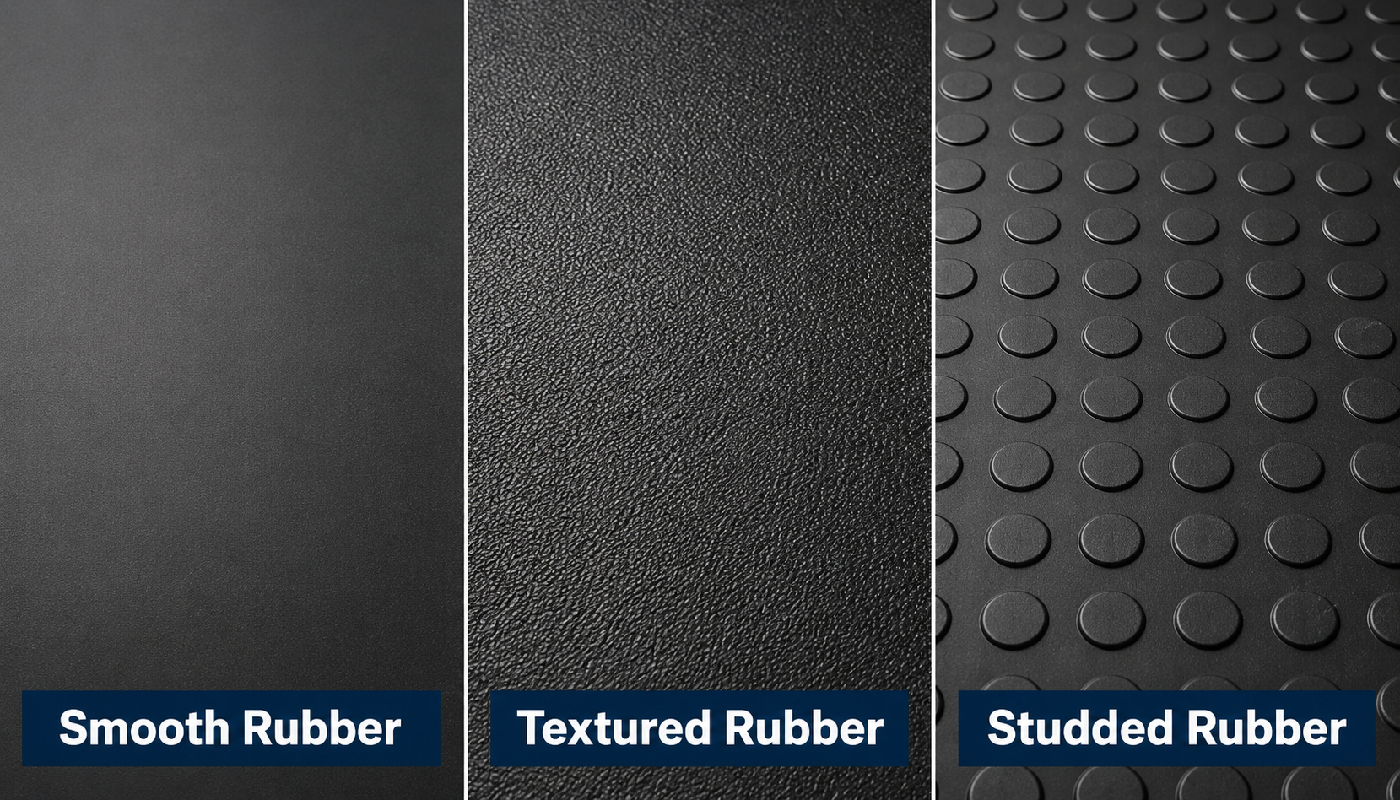
Surface profile is another major identification clue because smooth, textured, and studded rubber make contact with cleaning tools differently.
Smooth vs. Textured vs. Studded Rubber
How to Recognize Recycled Rubber Gym Flooring
Recycled rubber flooring commonly used in gyms, weight rooms, and athletic areas often looks different from homogeneous sheet or tile rubber.
- Visible black or colored rubber granules throughout the material.
- A more porous or crumb-like appearance than homogeneous sheet rubber.
- Often supplied as rolls, square tiles, or interlocking tiles.
- Edges or damaged areas may clearly show bonded particles through the full thickness.
- Seams, joints, and subfloor construction can affect how much moisture should be used during cleaning.
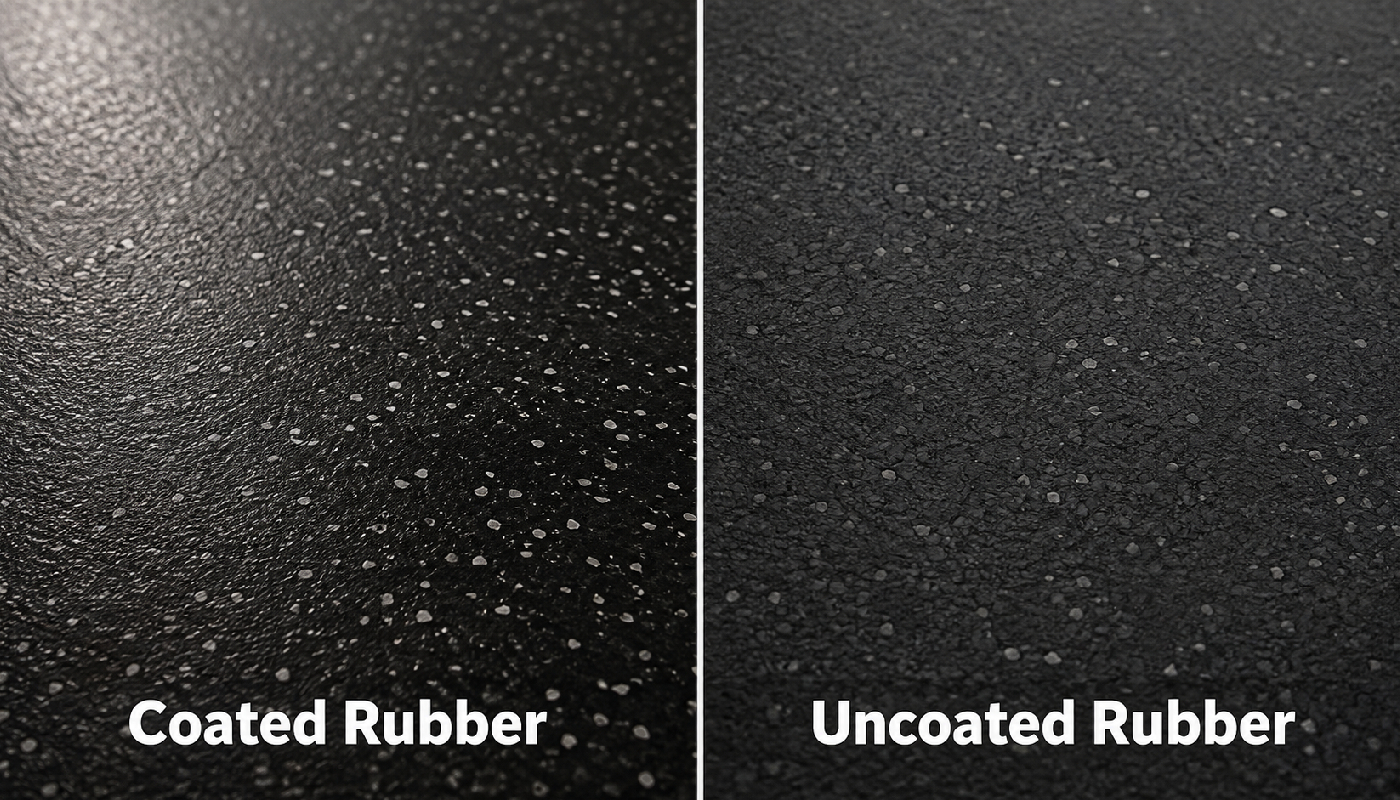
A separate surface film, visible wear layer, peeling, or obvious gloss difference may indicate a coating or treatment, but appearance alone is not enough to confirm the maintenance system.
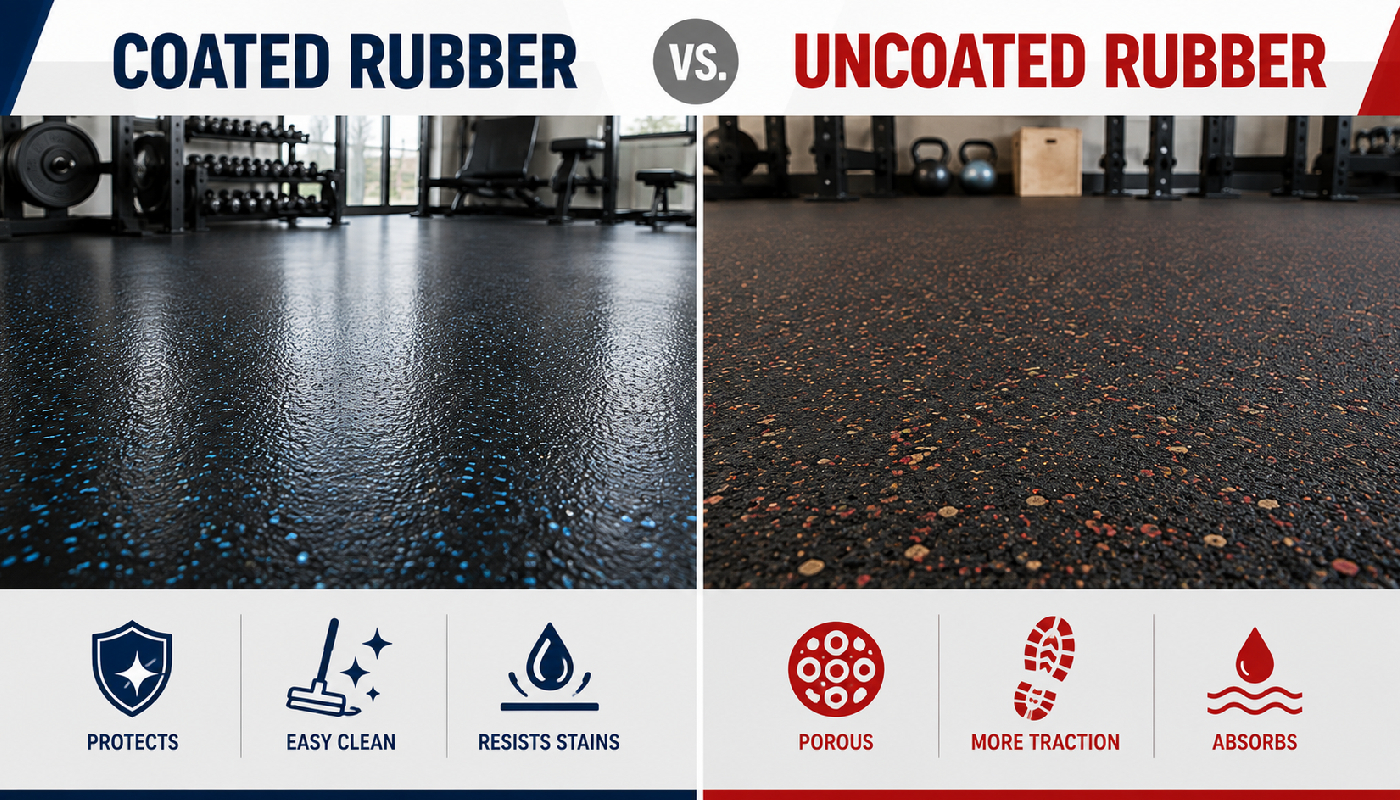
Is the Rubber Floor Coated or Uncoated?
This is one of the most important details to confirm before using restorative chemicals, aggressive pads, stripping chemistry, or a recoating system.
Do not rely on gloss alone. Factory treatments, wear, previous cleaning products, and residue can change how rubber looks. Confirm the flooring and maintenance system whenever possible.
Look at an Exposed Edge or Damaged Area
When the surface alone is not enough, a doorway transition, floor drain, damaged corner, cut edge, loose tile, or removed threshold can reveal construction details.
- Is the material one consistent rubber layer?
- Can you see bonded granules through the full thickness?
- Is there a backing or separate underlayment?
- Is the floor made from individual tiles?
- Is there a distinct surface coating sitting above the base rubber?
Floor Condition Does Not Identify the Floor Type
Dullness, haze, stickiness, black marks, odor, staining, and wear tell you about the condition of the floor — not necessarily its construction.
Diagnose the floor type first, then diagnose the condition separately.
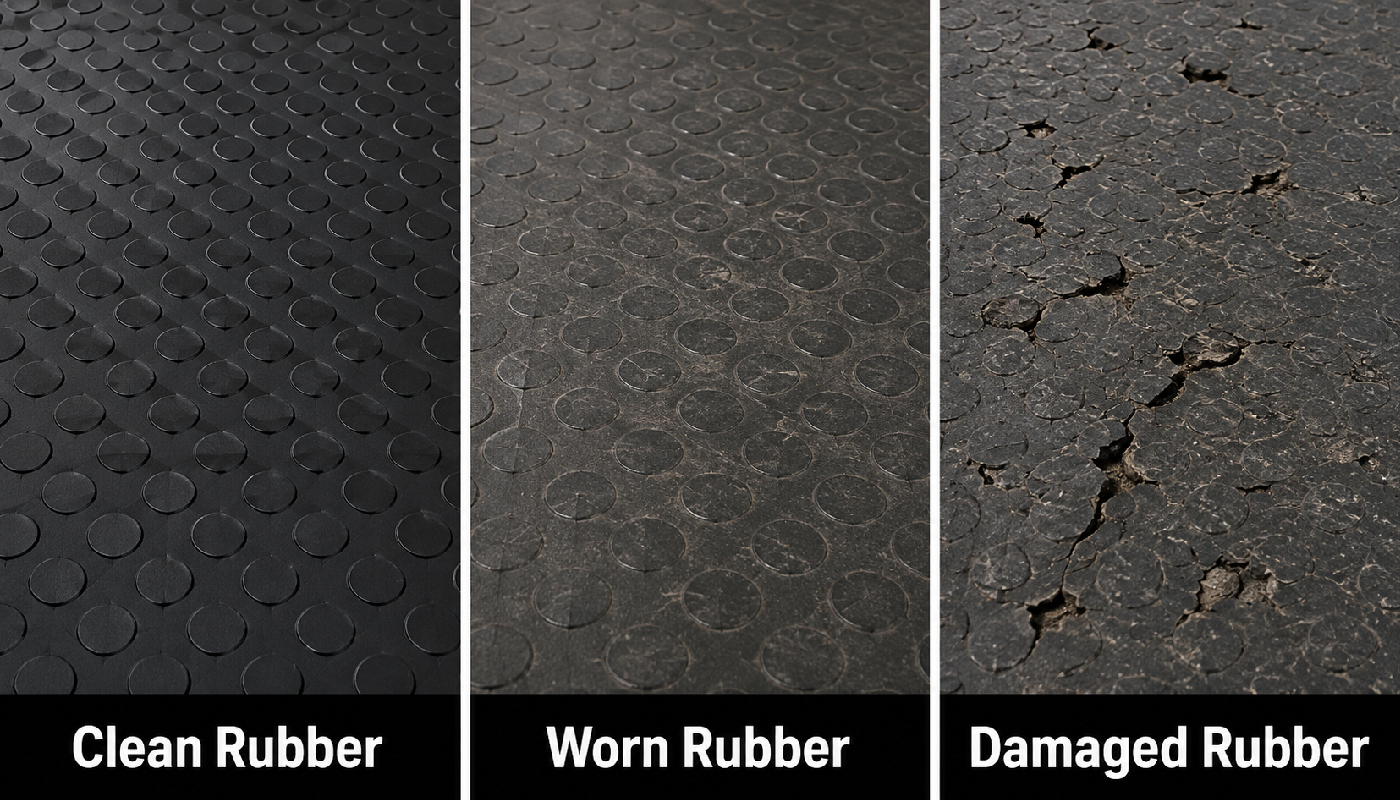
A clean, worn, or damaged floor may still be the same flooring type. Condition should be evaluated separately from construction.
How to Confirm the Flooring Manufacturer and Product
Visual identification is useful, but manufacturer information is better when the cleaning process could affect the flooring.
- Check facility maintenance records.
- Look for leftover flooring cartons or material.
- Review architectural finish schedules or renovation documents.
- Check the underside of a removable tile if appropriate.
- Look for manufacturer markings or product labels.
- Contact the flooring manufacturer or installer when the maintenance system is uncertain.
How Floor Type Changes the Cleaning Setup
- Smooth rubber: can provide relatively even pad or disc contact.
- Textured rubber: may require brush contact to reach recesses.
- Studded rubber: flat pads may ride across the raised profile and miss lower areas.
- Recycled rubber: may have different porosity, seam, and moisture considerations.
- Coated rubber: requires compatibility with the specific coating or surface-treatment system.
After identifying the floor, choose chemistry and equipment based on the flooring manufacturer's instructions and the soil you actually need to remove.
After You Identify the Floor
Best Cleaning Chemicals for Commercial Rubber Floors
Choose chemistry based on the floor construction, soil, cleaning method, and manufacturer requirements.
Read Chemical Guide →Auto Scrubbers, Floor Machines, Brushes & Pads for Commercial Rubber Floors
Match the cleaning machine and floor-contact tool to smooth, textured, or studded rubber flooring.
Read Equipment Guide →Complete Commercial Rubber Floor Cleaning & Maintenance Guide
Use the complete guide for the full rubber-floor maintenance process from identification through routine cleaning, deep cleaning, troubleshooting, restoration, repair, and replacement.
Read the Complete Guide →Rubber Flooring Identification FAQs
How can I tell rubber sheet from rubber tile?
Sheet rubber usually covers larger continuous areas with fewer long seams. Rubber tile normally creates a repeating grid of square or rectangular joints.
How do I identify recycled rubber flooring?
Recycled rubber often has visible bonded granules or flecks throughout the material and is commonly found in gyms, weight rooms, and athletic facilities.
How can I tell if rubber flooring is coated?
Look for a separate film, peeling layer, gloss difference, or areas where a surface layer has worn away. Confirm with manufacturer or facility records before treating the floor as coated.
Does a shiny rubber floor mean it has finish on it?
Not necessarily. Factory surface treatments, cleaning residue, wear, and previous maintenance products can all change appearance.
What should I do if I cannot identify the rubber floor?
Avoid aggressive chemistry or restoration procedures until the product is confirmed. Check records, labels, leftover material, architectural documents, or contact the flooring manufacturer or installer.
Need Help Choosing Equipment for a Rubber Floor?
Monster Janitorial can help you compare auto scrubbers, floor machines, brushes, pads, and floor-care chemistry after you identify the flooring and maintenance requirements.