
VCT Floor Care
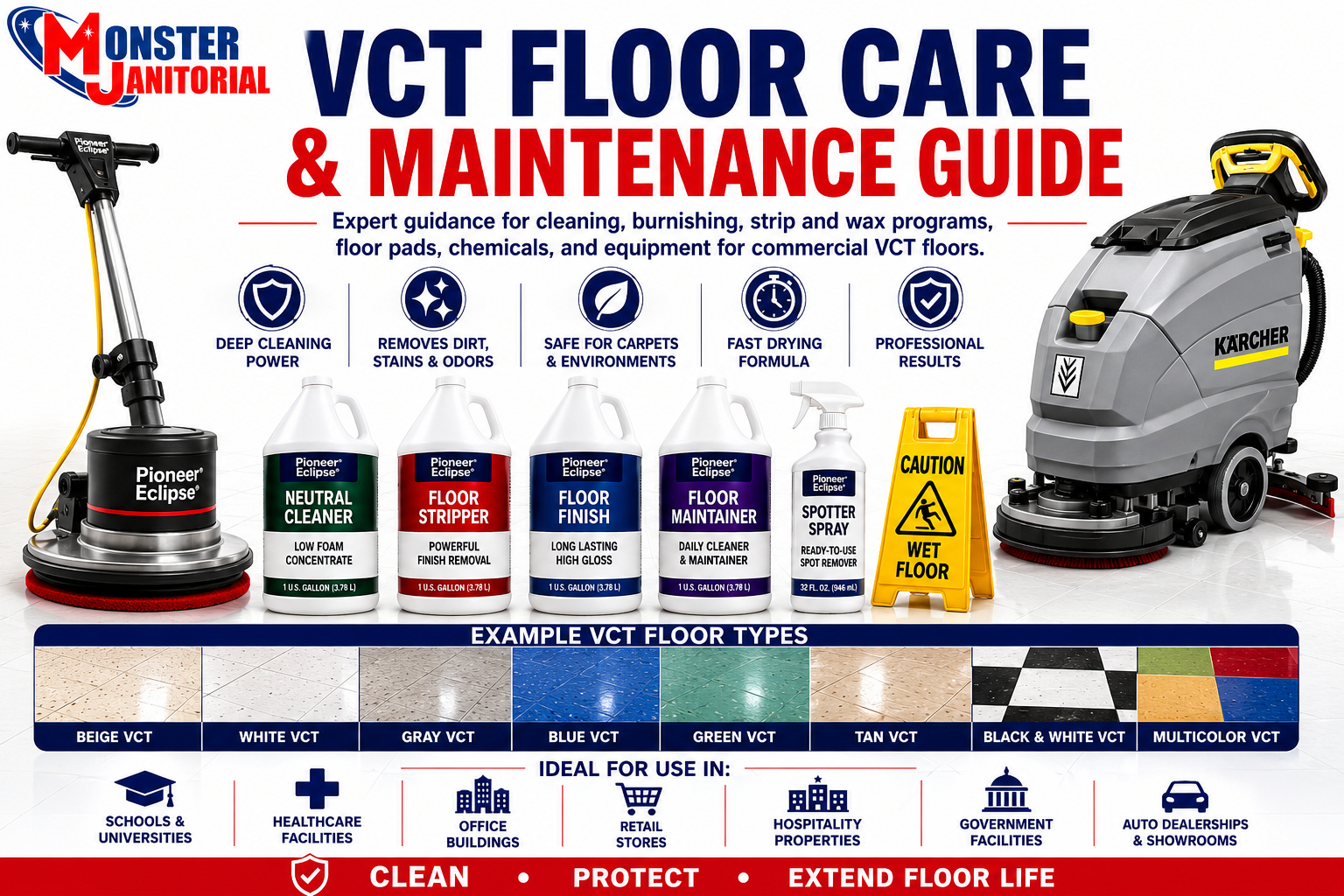
Expert guides for cleaning, burnishing, strip and wax programs, floor pads, chemicals, and equipment recommendations for commercial VCT floors.
VCT Floor Care & Maintenance Guide
Vinyl Composition Tile (VCT) remains one of the most common commercial flooring types in schools, universities, healthcare facilities, government buildings, retail stores, and public facilities. When properly maintained, VCT can provide decades of service while maintaining an attractive appearance.
Learn how to clean, burnish, strip, wax, and maintain VCT floors with expert recommendations on chemicals, pads, equipment, and maintenance schedules.
What is VCT Flooring?
VCT (Vinyl Composition Tile) is a durable and economical flooring material commonly used in educational, healthcare, and government facilities. Unlike many modern flooring types, VCT is designed to be protected with floor finish systems that can be burnished, restored, and recoated over time.
Common Facilities: Schools, universities, hospitals, government buildings, retail stores, airports, and office buildings.
Why Facilities Choose VCT
- Economical installation cost
- Long service life when maintained properly
- Easy tile replacement
- Excellent durability in high-traffic areas
- Supports burnishing and restoration programs
- Ideal for schools and public facilities
Daily Cleaning & Maintenance
Daily maintenance extends floor life, improves appearance, and reduces the need for costly restoration.
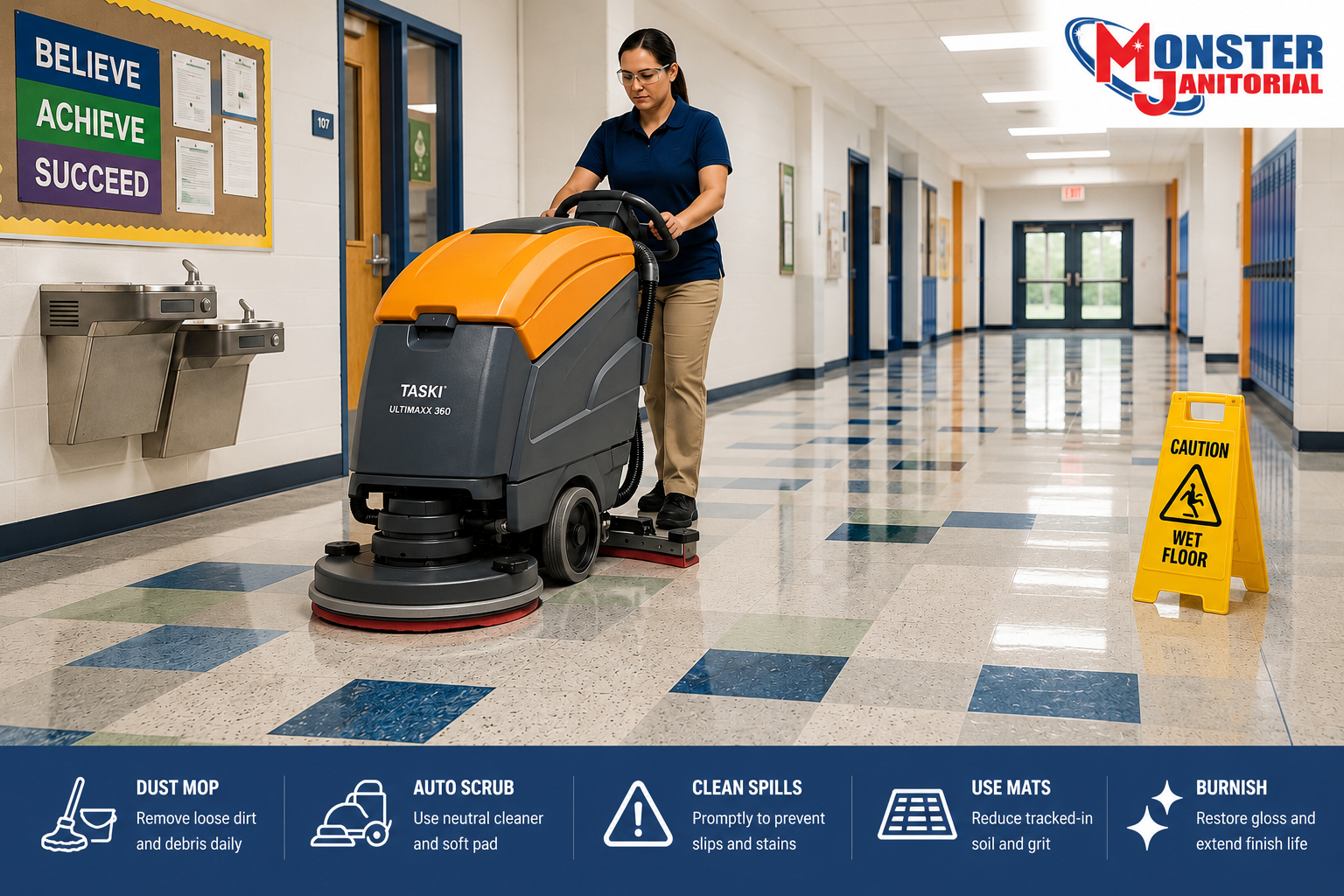
Daily cleaning, auto scrubbing, spill removal, entrance matting, and burnishing help extend VCT floor finish life and reduce restoration costs.
Recommended Daily Maintenance Steps
- Dust mop high-traffic areas daily.
- Remove spills promptly.
- Use entrance matting to reduce soil and grit.
- Auto scrub floors on a regular schedule using a neutral cleaner or maintainer.
- Burnish periodically to restore gloss when the floor finish is clean and properly cured.
Recommended VCT Floor Chemicals
A successful VCT maintenance program combines daily cleaning, burnishing, top scrubbing, and periodic strip-and-refinish procedures. The following products are commonly used in schools, healthcare facilities, government buildings, retail stores, and commercial facilities.
- Pioneer Eclipse ReClaim 354 – Neutral hard floor cleaner and maintainer for daily VCT cleaning and auto scrubbing.
- Pioneer Eclipse 396 Heavy Duty Degreaser – Restorative cleaning and heavy soil removal in high-traffic areas.
- Pioneer Eclipse 314 d-Limonene Degreaser – Citrus-based degreaser for grease, oil, and stubborn soil conditions.
- Pioneer Eclipse Floor Strippers – Removes worn floor finish prior to refinishing.
- Pioneer Eclipse Floor Neutralizers – Neutralizes stripper residue and prepares the floor for finish application.
- Pioneer Eclipse Floor Finishes – Protective coatings designed for VCT gloss, durability, and appearance retention.
Typical VCT Process: Daily cleaning with a neutral cleaner, periodic burnishing, top scrub and recoat when needed, and strip-and-refinish when the floor finish can no longer be restored.
Never Do This on VCT Floors
- Never use black stripping pads for routine daily cleaning.
- Never allow floor stripper or cleaning chemicals to dry on the floor.
- Never apply floor finish over dirt, dust, old residue, or improperly rinsed flooring.
- Never skip the neutralizing and rinsing step after stripping.
- Never burnish newly applied floor finish before it has properly cured.
- Never use aggressive pads when a lighter pad or top scrub process will accomplish the job.
- Never leave standing water on VCT floors.
- Never mix floor chemicals unless specifically directed by the manufacturer.
- Never use harsh degreasers or solvent-based chemicals for routine maintenance.
- Never apply additional finish coats without first cleaning and preparing the floor surface.
VCT Floor Restoration & Maintenance System
One of the biggest advantages of VCT flooring is that it can be restored multiple times throughout its life. Most facilities use a combination of daily cleaning, burnishing, top scrubbing, recoating, and periodic strip-and-refinish programs to maintain appearance and protect the floor.
Stage 1: Daily Cleaning
- Dust mop daily to remove grit and abrasive soil.
- Auto scrub using a neutral cleaner or maintainer.
- Clean spills immediately.
- Use entrance matting to reduce tracked-in soil.
Stage 2: Burnishing & Gloss Restoration
- Restore gloss between recoating cycles.
- Reduce visible scuffs and traffic lane wear.
- Extend finish life.
- Improve overall floor appearance.
Stage 3: Top Scrub & Recoat
- Remove the upper worn layers of floor finish.
- Preserve sound finish underneath.
- Apply one or more fresh coats of finish.
- Reduce labor and downtime compared to full stripping.
Stage 4: Strip & Refinish
- Remove all existing floor finish.
- Neutralize and rinse the floor.
- Apply multiple coats of new finish.
- Restore maximum appearance and protection.
VCT Floor Equipment Recommendations
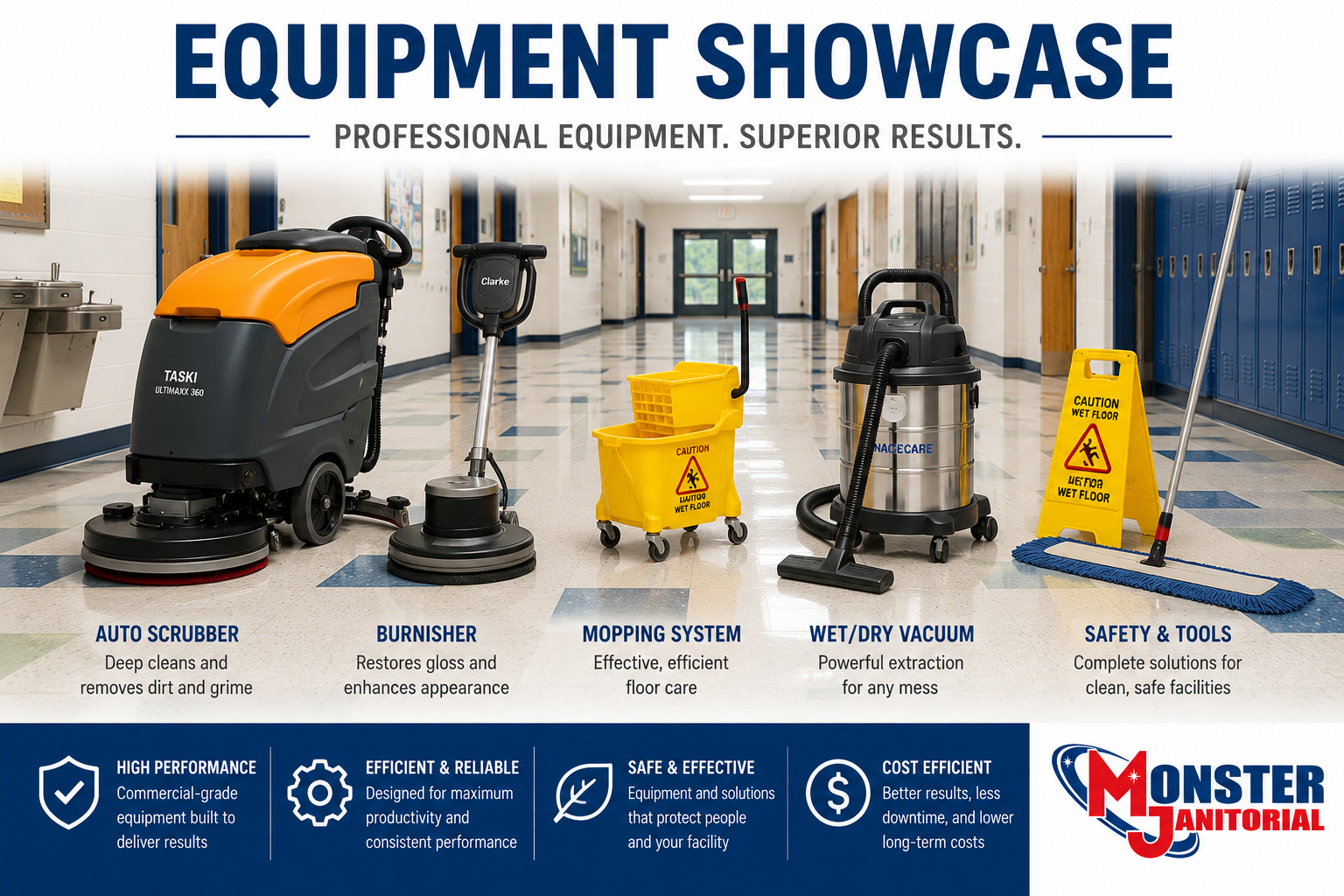
Recommended equipment for daily cleaning, burnishing, stripping, top scrubbing, and VCT floor restoration programs.
Daily Cleaning Equipment
- TASKI ULTIMAXX 360 for small facilities, detail cleaning, and daily VCT maintenance.
- Walk-Behind Auto Scrubbers for schools, healthcare facilities, offices, and commercial buildings.
- Ride-On Auto Scrubbers for large areas, hallways, and high-square-foot facilities.
- Robotic Scrubbers for large facilities that need consistent cleaning with reduced labor.
- Floor Pads & Brushes for routine scrubbing, burnishing, top scrubbing, and stripping.
Burnishing & Gloss Maintenance Equipment
- High-Speed Burnishers for restoring gloss on finished VCT floors.
- Burnisher Learning Center for choosing battery, electric, or propane burnishers.
- Burnishing Pads for gloss restoration and floor finish maintenance.
Strip, Top Scrub & Recoat Equipment
- Low-Speed Floor Machines for stripping, scrubbing, and heavy restoration work.
- Dual-Speed Floor Machines for scrubbing, spray buffing, polishing, and maintenance programs.
- Wet/Dry Vacuums for floor stripping slurry recovery and cleanup.
- Floor Prep & Finish Equipment for finish application, recoating, and project supplies.
- Pads, Brushes & Pad Drivers for stripping, scrubbing, top scrubbing, and finish prep.
Burnishing & Gloss Restoration
Burnishing helps restore shine and improve the appearance of finished VCT floors between recoating or strip-and-wax cycles. Proper burnishing requires a clean floor, the right floor finish, the correct burnishing pad, and an appropriate high-speed or ultra-high-speed burnisher.
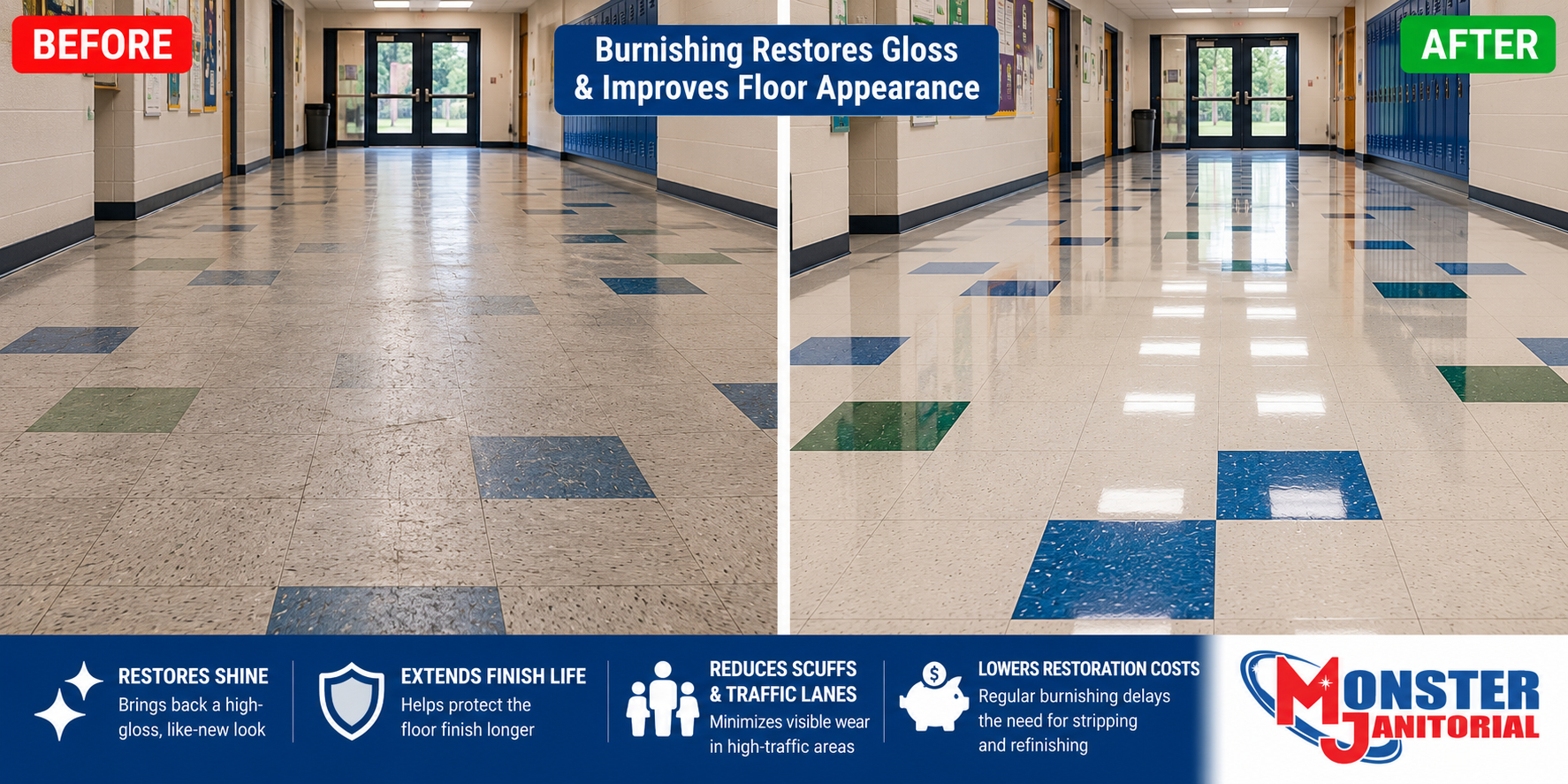
Burnishing restores gloss, improves appearance, and extends floor finish life between recoating cycles.
Typical Burnishing Process
- Dust mop or vacuum the floor to remove loose dirt, sand, and debris.
- Auto scrub or damp clean the floor using a neutral cleaner or maintainer.
- Allow the floor to dry completely before burnishing.
- Select the proper burnishing pad for the floor finish and desired gloss level.
- Burnish the floor using the recommended machine speed and pad.
- Inspect traffic lanes and repeat as needed.
- Dust mop after burnishing to remove any fine powder residue.
Signs Burnishing Is No Longer Enough
- Traffic lanes remain dull after burnishing.
- Finish appears worn through in high-traffic areas.
- Scuff marks return quickly after cleaning.
- Gloss becomes uneven throughout the facility.
- Powdering or finish breakdown is visible.
- Burnishing no longer improves appearance.
Monster Janitorial Tip: Burnishing works best on clean floors with a healthy finish layer. If gloss cannot be restored through burnishing, a top scrub and recoat may be required.
Related Articles
Strip & Wax Programs
Strip and wax programs restore VCT floors when finish becomes worn, yellowed, scratched, or difficult to maintain. In many facilities, a top scrub and recoat may be used between full strip-and-wax cycles to reduce labor and chemical costs.

Strip and wax programs restore appearance, rebuild protection, and extend the life of VCT flooring in schools, healthcare facilities, and commercial buildings.
Common Strip & Wax Steps
- Remove old floor finish with floor stripper.
- Recover stripping slurry properly.
- Rinse and neutralize the floor.
- Allow the floor to dry completely.
- Apply the proper number of floor finish coats.
- Maintain gloss with burnishing and daily cleaning.
Recommended Finish Coats
- Schools: 4–6 coats
- Healthcare: 4–5 coats
- Retail: 3–5 coats
- High traffic areas: 6+ coats
Recommended Strip & Wax Chemicals
- Pioneer Eclipse Floor Stripper
- Pioneer Eclipse Floor Neutralizer
- Pioneer Eclipse Floor Finish / Wax
- Pioneer Eclipse Floor Maintainer
Top Scrub & Recoat
Top scrubbing removes the upper layer of worn floor finish while preserving lower coats. Facilities often use this process to restore appearance while reducing labor and downtime compared to full stripping.
Related Articles
Example VCT Maintenance Schedule
| Frequency | Recommended Task |
|---|---|
| Daily | Dust mop, remove spills, and spot clean high-traffic areas. |
| Weekly | Auto scrub using a neutral cleaner or approved maintainer. |
| Monthly | Burnish or spray buff depending on floor finish and traffic level. |
| Semiannual | Top scrub and recoat when finish is worn but still salvageable. |
| As Needed | Full strip and wax when finish is damaged, yellowed, or no longer responds to maintenance. |
Auto Scrubber Squeegee Blades
Proper water recovery is essential for maintaining VCT floors and reducing slip hazards. Squeegee blade material can affect performance and service life.
- Polyurethane: Excellent all-around choice for many VCT applications and high-traffic facilities.
- Linatex: Premium performance with excellent water recovery and long life.
- Gum Rubber: Economical option for general-purpose indoor cleaning.
- Urethane: Good abrasion and chemical resistance.
Monster Janitorial Tip: Polyurethane squeegee blades are often an excellent choice for VCT floors in schools, healthcare facilities, and commercial buildings due to their durability and long wear life.
VCT Floor Pads & Accessories
Selecting the proper floor pad is critical for cleaning performance, gloss, floor appearance, and extending finish life. Using the wrong pad can reduce shine or prematurely wear floor finish.
Common Floor Pad Colors
- White Pads: Light polishing and buffing.
- Red Pads: Spray buffing and light cleaning.
- Blue Pads: Medium scrubbing and heavier soil removal.
- Green Pads: Aggressive scrubbing and top scrub applications.
- Black Pads: Floor stripping and finish removal.
Burnishing Pads
High-speed and ultra-high-speed burnishing pads are designed to restore gloss and maintain finished VCT floors between recoating cycles.
Diamond Pads
Diamond-impregnated pads can provide longer life than traditional pads and may help maintain gloss while reducing labor and chemical usage in some facilities.
- Long service life
- Consistent gloss
- Reduced chemical consumption
- May help reduce stripping frequency in some facilities
- Can also be used on terrazzo and polished concrete
Brush vs Floor Pads: How to Choose the Right Cleaning Setup →
Common VCT Floor Problems
Even well-maintained VCT floors can develop appearance issues over time. Many problems can be corrected through proper cleaning and restoration programs.
- Loss of Gloss: Often corrected with burnishing or recoating.
- Scuff Marks: Reduced through proper pads and maintenance.
- Yellowing: May indicate aged or worn floor finish.
- Powdering Finish: Often caused by finish breakdown or improper maintenance.
- Black Heel Marks: Frequently removed through burnishing or cleaning.
- Uneven Appearance: May require top scrub and recoat or strip and wax.
Related Equipment Maintenance Guides
Related MJ University Resources
VCT vs LVT & LVP Floor Care
| Feature | VCT | LVT / LVP |
|---|---|---|
| Full Name | Vinyl Composition Tile | Luxury Vinyl Tile / Luxury Vinyl Plank |
| Common Appearance | Usually 12" x 12" speckled tile, often glossy from floor finish | Wood-look planks, stone-look tile, concrete-look tile, or modern matte finishes |
| Daily Cleaning | Dust mopping, neutral cleaning, auto scrubbing, burnishing prep | Dust mopping, neutral cleaning, auto scrubbing with soft pads or brushes |
| Floor Finish Required | Usually yes | Usually no |
| Strip & Wax | Common maintenance process | Usually not recommended unless manufacturer-approved |
| Burnishing | Common for gloss restoration | Limited; follow manufacturer guidelines |
| Best Equipment | Auto scrubbers, floor machines, burnishers, pads | Auto scrubbers, soft pads, soft brushes, robotics |
| Typical Facilities | Schools, government, healthcare, retail, public facilities | Healthcare, hospitality, offices, retail, multifamily, modern commercial buildings |
VCT Floor Care FAQs
How often should VCT floors be burnished?
Burnishing frequency depends on traffic, floor finish, and appearance expectations. Schools and high-traffic facilities may burnish weekly or monthly, while lower-traffic areas may need less frequent burnishing.
How often should VCT floors be stripped and waxed?
Many facilities strip and refinish VCT floors as needed, often annually or when the finish becomes yellowed, scratched, worn, or no longer responds to burnishing or recoating.
Can VCT floors be auto scrubbed?
Yes. Auto scrubbers are commonly used for VCT floor maintenance. Use the correct pad, neutral cleaner, and water recovery system to avoid damaging the finish or leaving residue.
What is the best cleaner for VCT floors?
A neutral floor cleaner is usually best for daily VCT maintenance. Avoid harsh cleaners unless performing restorative cleaning or stripping.
What pad should I use on VCT floors?
Red pads are commonly used for light cleaning and spray buffing, blue or green pads for heavier scrubbing, black pads for stripping, and burnishing pads for gloss restoration.
What is the difference between top scrub and strip and wax?
A top scrub removes the upper worn layers of finish before recoating. A full strip and wax removes all old finish and rebuilds the floor finish system from the bare VCT surface.
Can you use diamond pads on VCT?
Yes, diamond pads may be used in some VCT maintenance programs to help maintain gloss, reduce chemical use, and extend pad life. Always match the pad to the floor finish and maintenance goal.
Is VCT the same as LVT?
No. VCT usually requires floor finish and periodic restoration, while many LVT and LVP floors are factory-finished and should not be stripped or waxed unless approved by the flooring manufacturer.
What equipment do I need for VCT floor maintenance?
Common VCT equipment includes dust mops, auto scrubbers, low-speed floor machines, dual-speed machines, burnishers, wet/dry vacuums, floor pads, and squeegee blades.
Need Help Choosing VCT Floor Equipment or Chemicals?
Monster Janitorial can help recommend the right scrubbers, floor machines, burnishers, pads, chemicals, and maintenance programs for your facility.
- Schools & Universities
- Healthcare Facilities
- Government Buildings
- Retail Stores
- Hospitality Properties
- Building Service Contractors
Need help selecting equipment for your facility size, floor type, or cleaning program? Our sales, customer service, and technical support teams are here to help.
Email: sales@monsterjanitorial.com
Technical Support: tech@monsterjanitorial.com
Call: 956-772-4842