
Tile & Grout Floor Care

Commercial Tile & Grout Floor Care Learning Center
Learn how to identify, clean, deep clean, troubleshoot, restore, seal, repair, and maintain commercial tile and grout floors.
Start with the floor and grout type, then choose chemistry, brushes, machines, recovery equipment, and restoration methods that match the actual condition.
Complete Commercial Tile & Grout Floor Cleaning & Maintenance Guide
Use the complete guide for a full overview of tile identification, grout types, cleaning chemistry, scrubbers and brushes, deep cleaning, common problems, extraction, sealing, restoration, and repair.
Read the Complete Tile & Grout Guide →Choose the Guide You Need
Follow the series from identification through restoration, or go directly to the problem you need to solve.
How to Identify Commercial Tile & Grout Before Cleaning
Identify ceramic, porcelain, quarry, textured tile, grout type, treatments, and floor condition.
Read Identification Guide →Best Cleaning Chemicals for Commercial Tile & Grout Floors
Compare routine cleaners, low-foam chemistry, degreasers, restroom products, and restorative cleaners.
Read Chemical Guide →Auto Scrubbers, Floor Machines & Brushes for Commercial Tile & Grout Floors
Compare disc and cylindrical scrubbers, brushes, floor machines, pads, and extraction equipment.
Read Equipment Guide →How to Deep Clean Commercial Tile & Grout Floors
Remove embedded soil and determine whether dark grout is dirty, stained, treated, or damaged.
Read Deep-Cleaning Guide →Commercial Tile & Grout Floor Problems
Diagnose dark grout, haze, streaks, odors, greasy floors, residue, slipperiness, and efflorescence.
Read Troubleshooting Guide →Commercial Tile & Grout Restoration Guide
Determine when to deep clean, extract, steam clean, reseal, restore color, repair, or replace.
Read Restoration Guide →Complete Commercial Tile & Grout Floor Cleaning & Maintenance Guide
Use the complete guide as the central reference for identification, chemistry, equipment, routine maintenance, deep cleaning, troubleshooting, restoration, sealing, and repair.
Read Complete Guide →Identify Four Things First
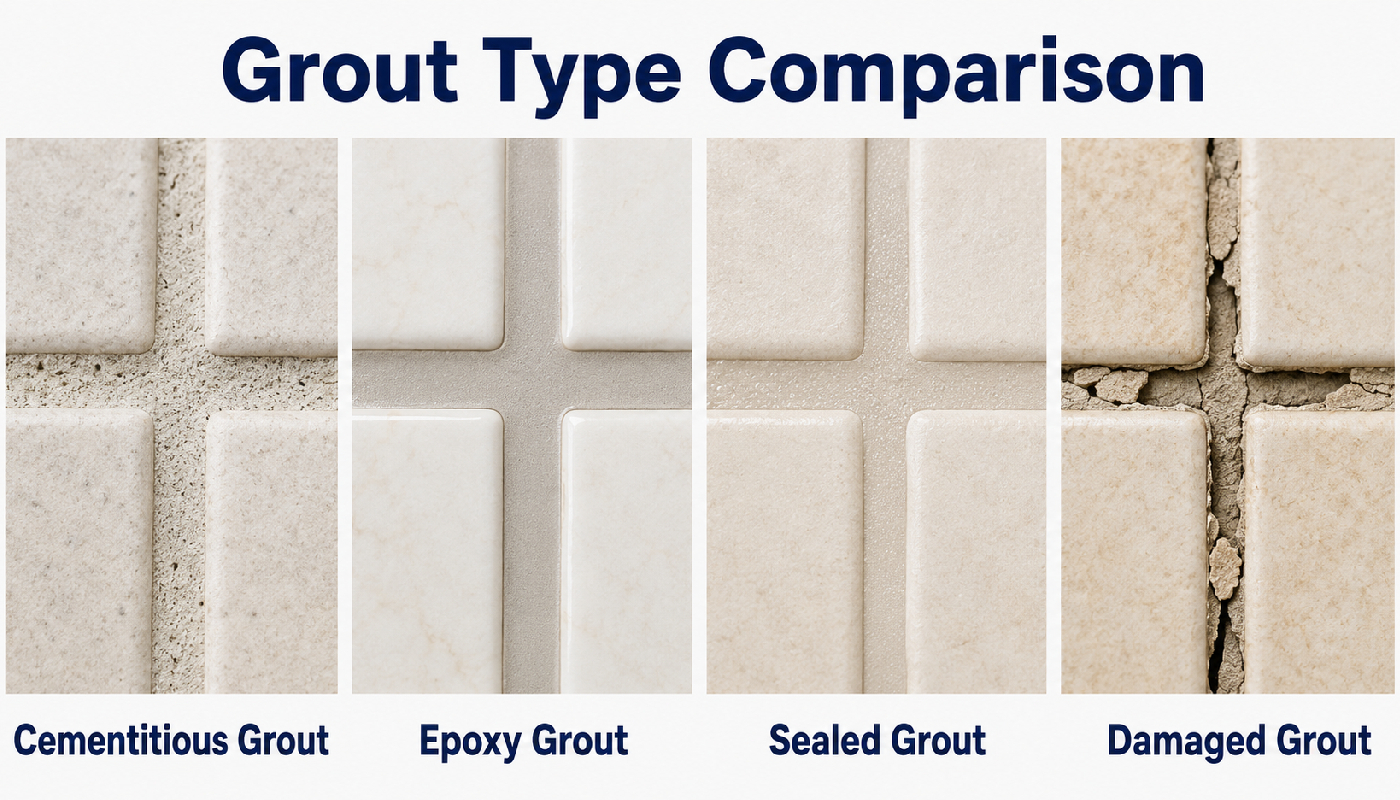
Grout type and condition can change the correct cleaning, sealing, restoration, or repair process.
Tile and Grout May Need Different Floor Contact
A smooth tile face can look clean while recessed grout still holds soil.
Brushes can reach deeper into grout and texture, while good rinsing and dirty-water recovery help prevent loosened soil from settling back into grout lines.
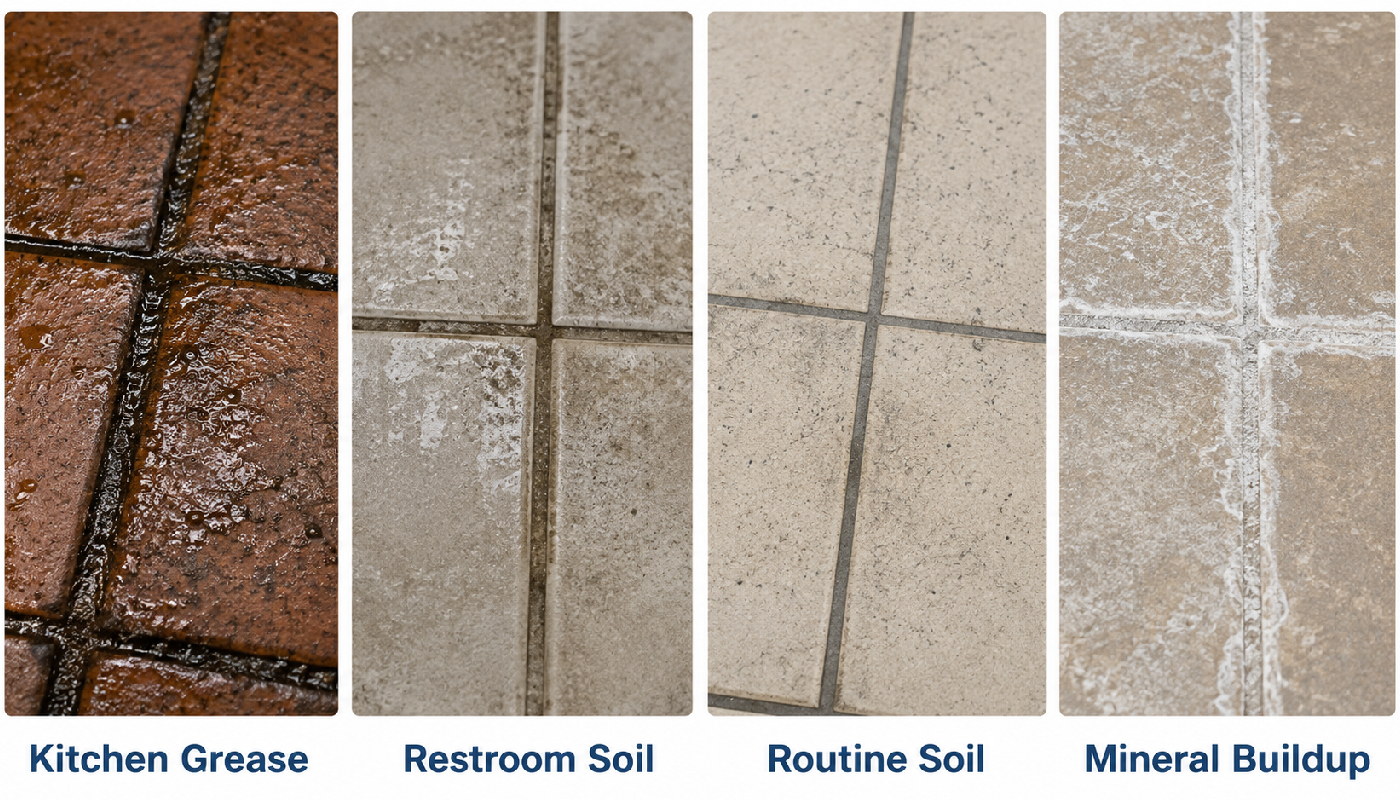
Chemistry should be selected for the soil being removed, not simply because the floor is tile.
Match the Cleaner to the Soil
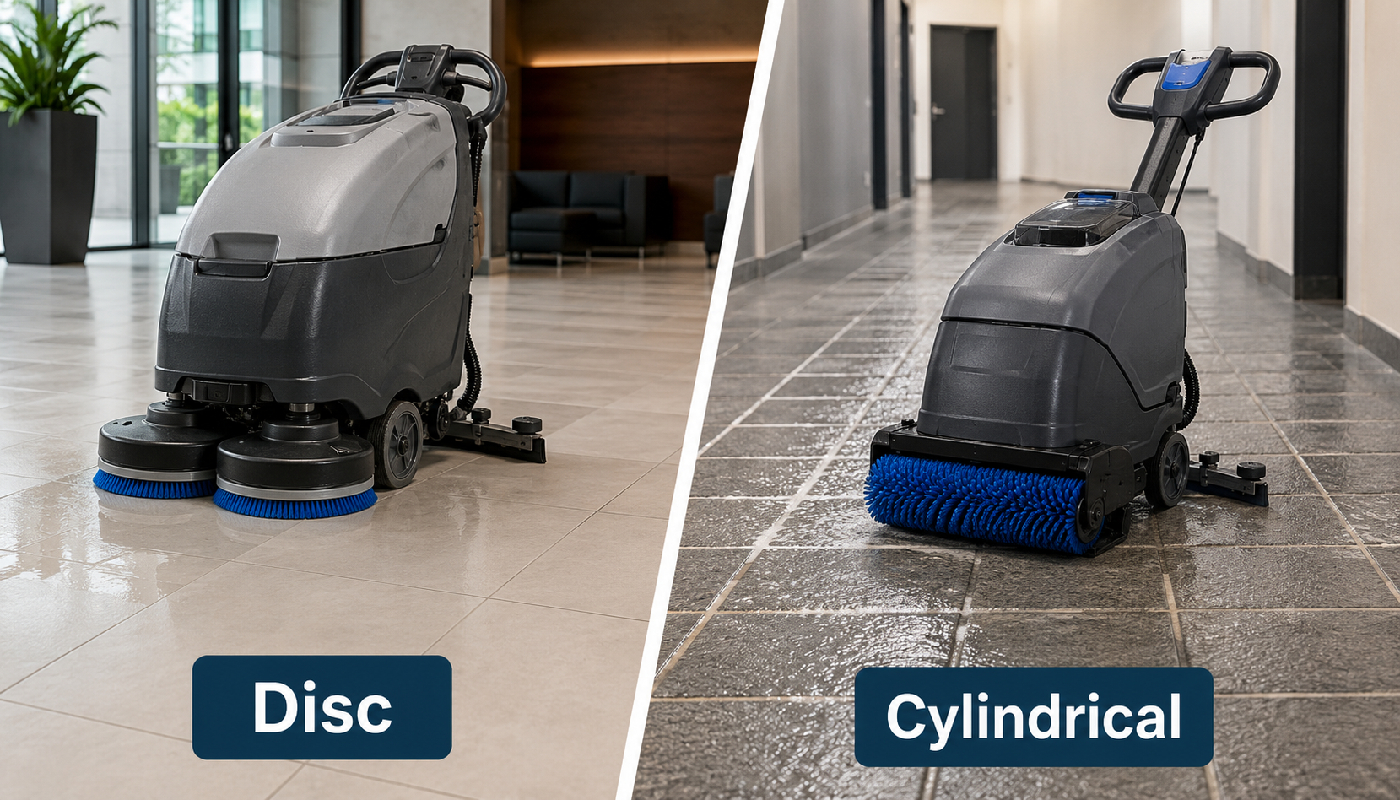
Disc scrubbers can work well on many smooth tile surfaces, while cylindrical systems can provide better contact with texture and recessed grout.
Match the Machine to the Floor Profile
Shop Commercial Tile & Grout Floor-Care Products
Common Tile & Grout Floor Problems
Soil, grease, permanent staining, moisture, treatments, or deterioration.
Dilution, dirty solution, rinsing, water quality, squeegees, or poor recovery.
Incomplete grease removal, residue, poor agitation, or contaminated water.
White mineral deposits may indicate moisture movement instead of ordinary soil.

Once the floor is clean, remaining staining, sealer wear, loose tile, cracked grout, and moisture problems are easier to diagnose.
When Cleaning Is No Longer Enough
Embedded soil may require deeper brushing or extraction. Permanent grout staining may require color restoration. Compatible porous tile or cementitious grout may benefit from penetrating sealer after proper cleaning and drying.
Cracked grout, loose tile, failed joints, recurring moisture, missing grout, or substrate movement require repair or further investigation rather than stronger cleaning.
Tile & Grout Restoration Guide →Related Commercial Floor-Care Learning Centers
Commercial Tile & Grout Floor Care FAQs
Can an auto scrubber be used on tile and grout?
Yes. Disc scrubbers can work well on many smooth tile floors, while cylindrical or brush-equipped scrubbers may provide better contact with textured tile and recessed grout.
Are brushes better than pads for grout?
Often. Brush bristles can reach recessed grout and texture that a flat pad may not contact fully.
Why does grout remain dark after cleaning?
Remaining darkness may come from embedded soil, permanent staining, moisture, previous treatments, grout color variation, or physical deterioration.
When should tile and grout be extracted?
Extraction can be useful when heavily embedded soil requires stronger flushing and immediate dirty-water recovery than normal scrubbing provides.
Should all grout be sealed?
No. Sealing depends on grout type, porosity, condition, previous treatment, and manufacturer guidance.
When should tile or grout be repaired instead of cleaned?
Loose or cracked tile, missing or crumbling grout, failed joints, recurring moisture, and substrate movement require repair or further investigation.
Need Help With Commercial Tile & Grout Floor Care?
Monster Janitorial can help you compare cleaning chemicals, auto scrubbers, floor machines, brushes, pads, hard-floor extractors, steam cleaners, and other commercial tile and grout cleaning equipment.
Tax-exempt purchasing and purchase-order support are available for qualifying schools, universities, government agencies, healthcare facilities, municipalities, and other institutional customers.