
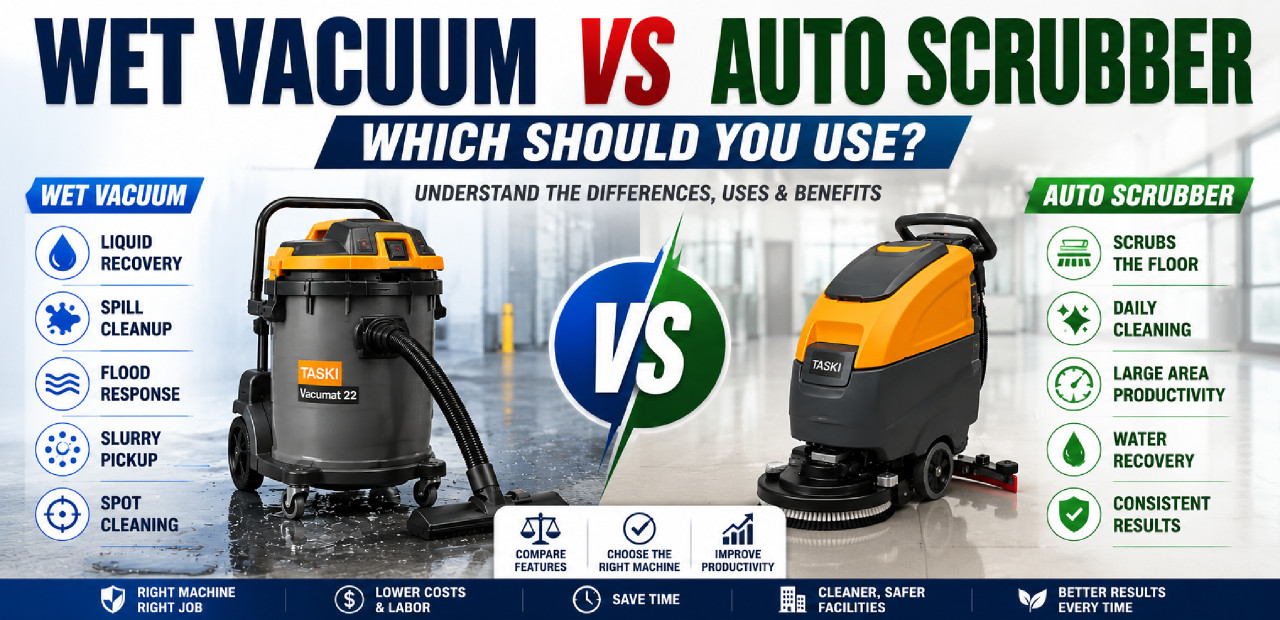
Understanding water recovery, daily floor cleaning, spill cleanup, floor stripping recovery, and commercial floor maintenance applications.
Wet vacuums and automatic floor scrubbers are both used in commercial cleaning programs, but they are not designed to do the same job.
A wet vacuum is built primarily for liquid pickup, spill cleanup, slurry recovery, and emergency water removal.
An auto scrubber is built for daily floor cleaning, scrubbing, solution application, and water recovery in a single pass.
Understanding the difference helps schools, healthcare facilities, airports, warehouses, municipalities, and commercial cleaning contractors choose the right machine for the job.
What Is a Wet Vacuum?
A wet vacuum, also called a wet recovery vacuum, is designed to recover liquids, standing water, cleaning solution, and slurry from hard floors.
Wet vacuums are commonly used for:
- Spill cleanup
- Standing water recovery
- Floor stripping slurry pickup
- Flood response
- Tile and grout cleaning support
- Emergency water removal
Wet vacuums are especially useful when water or slurry needs to be recovered from a specific area quickly.
What Is an Auto Scrubber?
An automatic floor scrubber applies cleaning solution, scrubs the floor, and recovers dirty water in one pass.
Auto scrubbers are commonly used for:
- Daily floor cleaning
- Large-area maintenance cleaning
- Routine hard floor scrubbing
- Water recovery after scrubbing
- Productivity cleaning
- Schools, hospitals, airports, and commercial facilities
Unlike a wet vacuum, an auto scrubber is designed to clean large floor areas efficiently while leaving the floor drier and safer for traffic.
Can a Wet Vacuum Replace an Auto Scrubber?
Usually No
A wet vacuum can recover liquid, but it does not efficiently apply cleaning solution, scrub large areas, and recover water in one pass. For routine daily floor cleaning, an auto scrubber is usually the better choice.
Can an Auto Scrubber Replace a Wet Vacuum?
Usually No
An auto scrubber is excellent for daily cleaning, but it is not the best tool for flood cleanup, spot spill recovery, standing water pickup, or floor stripping slurry recovery. Many facilities benefit from having both machines available.
Wet Vacuum vs Auto Scrubber Comparison
| Feature | Wet Vacuum | Auto Scrubber |
|---|---|---|
| Water Recovery | Excellent | Excellent during scrubbing |
| Daily Floor Cleaning | Limited | Excellent |
| Floor Stripping Slurry | Excellent | Limited |
| Flood Cleanup | Excellent | Not ideal |
| Large-Area Productivity | Limited | Excellent |
| Emergency Cleanup | Excellent | Limited |
When Should You Use a Wet Vacuum?
Use a wet vacuum when your facility needs targeted recovery of liquid, slurry, or standing water.
- Floor stripping projects
- Spill cleanup
- Flood response
- Restroom water recovery
- Tile and grout cleaning support
- Emergency cleanup
When Should You Use an Auto Scrubber?
Use an auto scrubber when your facility needs efficient daily cleaning over larger hard floor areas.
- School hallways
- Healthcare corridors
- Retail stores
- Airports
- Warehouses
- Municipal buildings
- Large commercial facilities
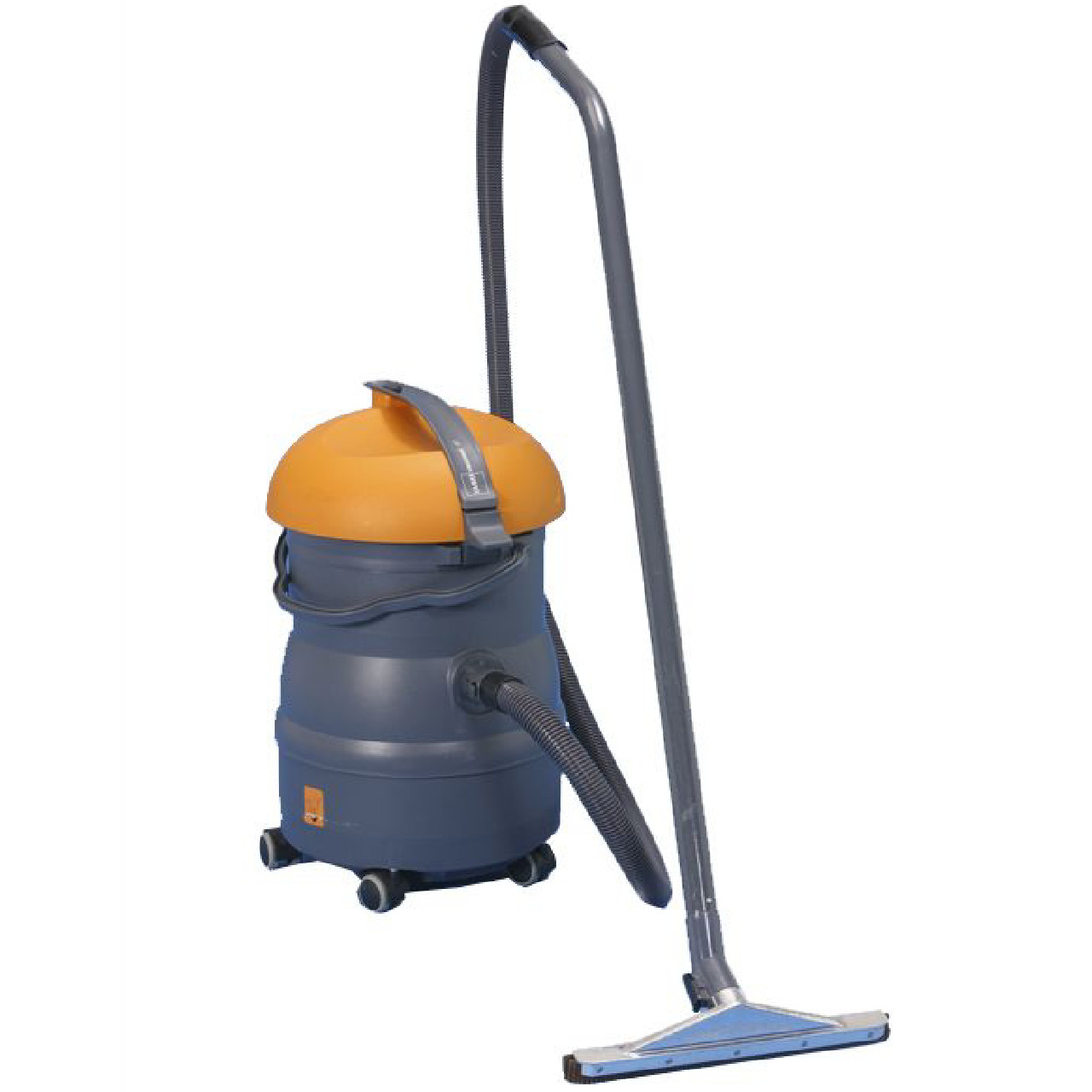
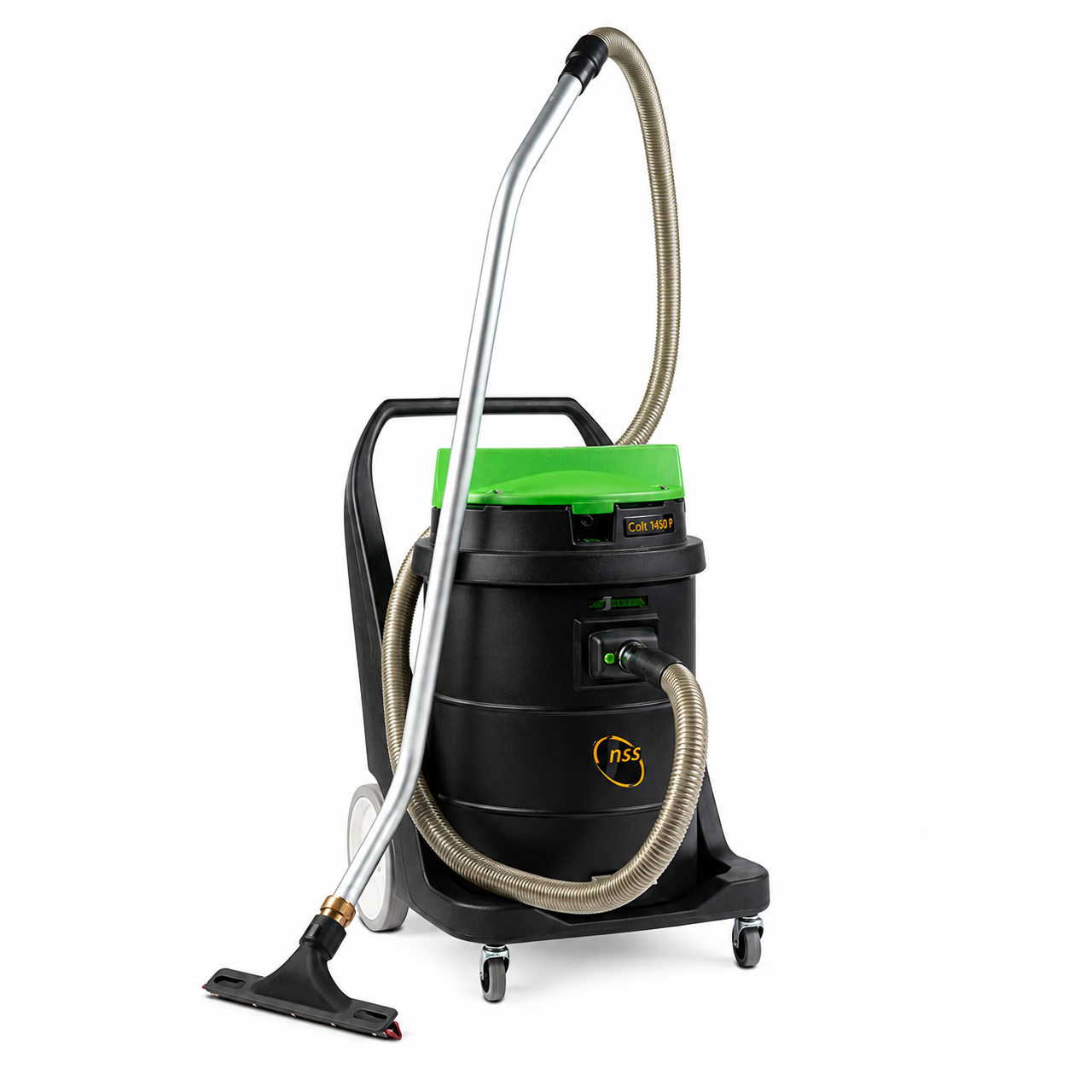
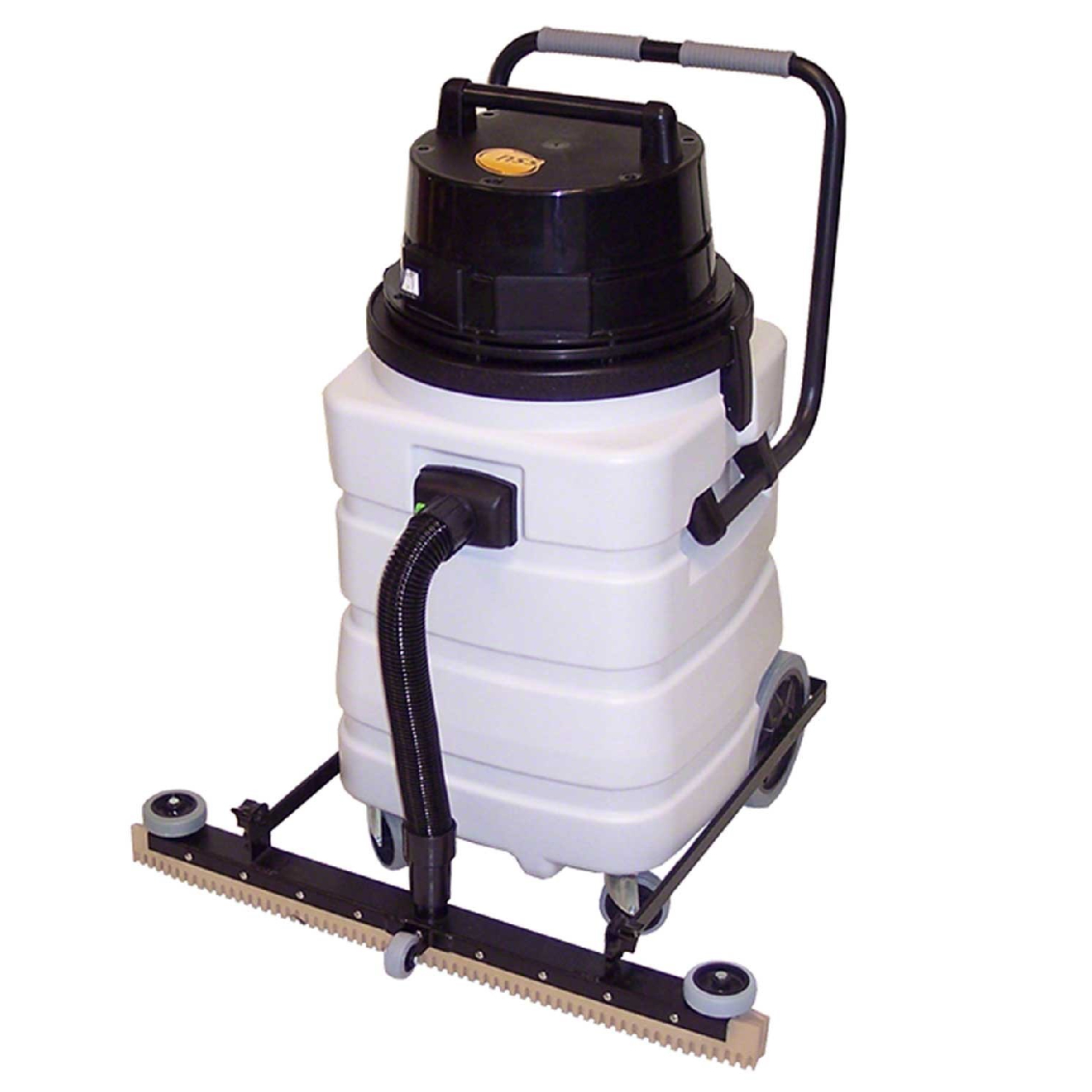
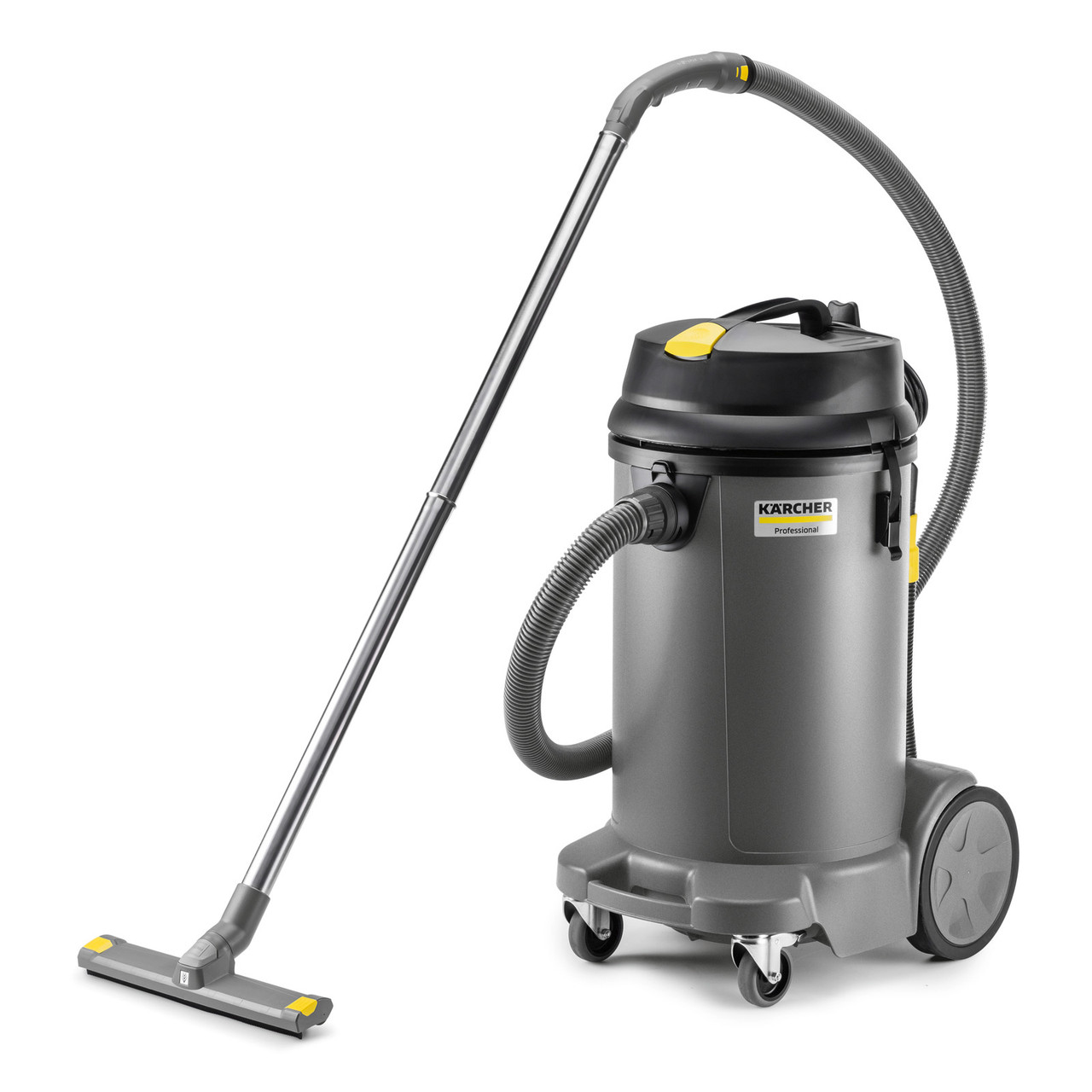
Recommended Wet Recovery Vacuums
Recommended Wet Recovery Vacuums
Commercial Wet Vacuums for Spill, Slurry & Water Recovery
These wet recovery vacuums support spill cleanup, water recovery, and commercial maintenance applications.
Recommended Auto Scrubbers
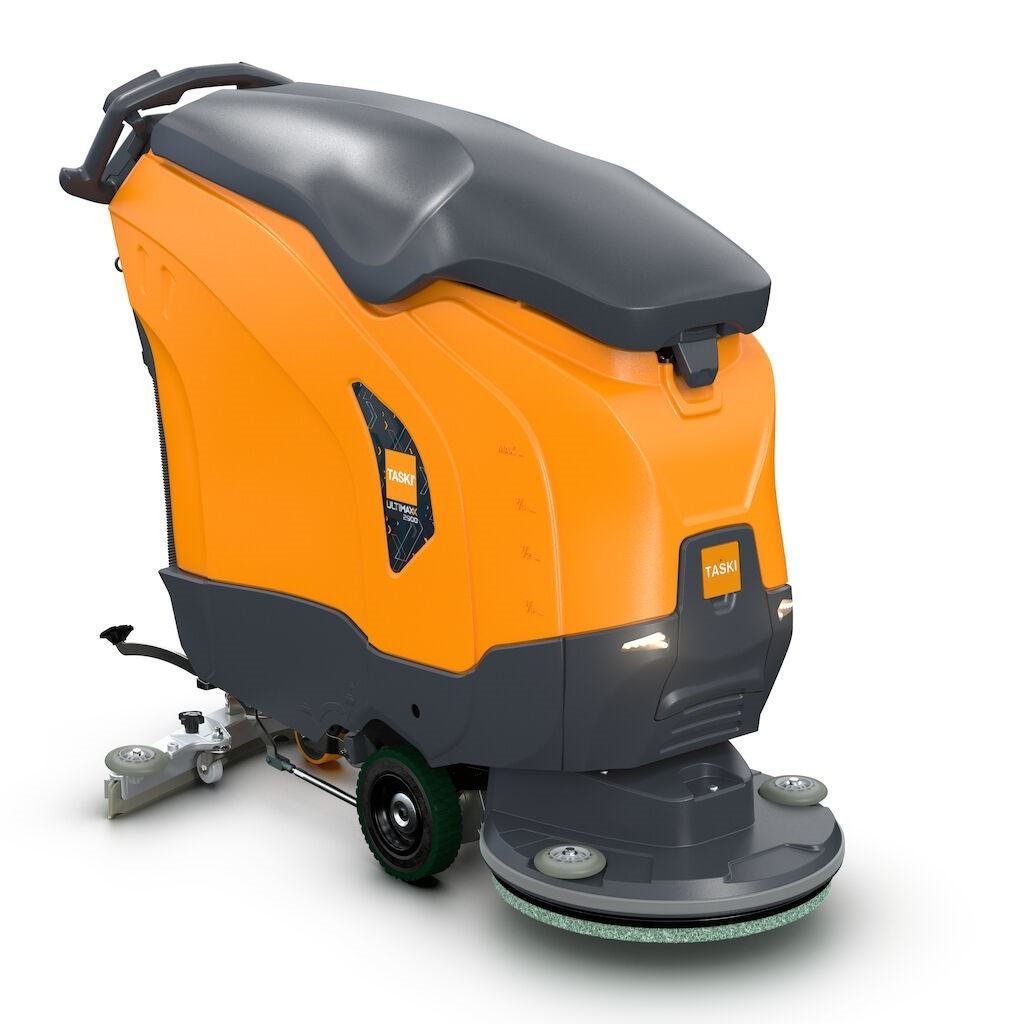
Recommended Auto Scrubbers
Commercial Floor Scrubbers for Daily Cleaning
These automatic floor scrubbers are designed for daily maintenance cleaning, water recovery, and productivity cleaning in commercial facilities.
Final Thoughts
Wet vacuums and auto scrubbers both support commercial floor care, but they solve different problems.
Wet vacuums are best for spill cleanup, slurry recovery, flood response, and targeted water pickup.
Auto scrubbers are best for daily floor cleaning, large-area maintenance, and productivity cleaning.
Most commercial facilities benefit from having both types of equipment available, especially schools, healthcare facilities, airports, warehouses, and public buildings.