
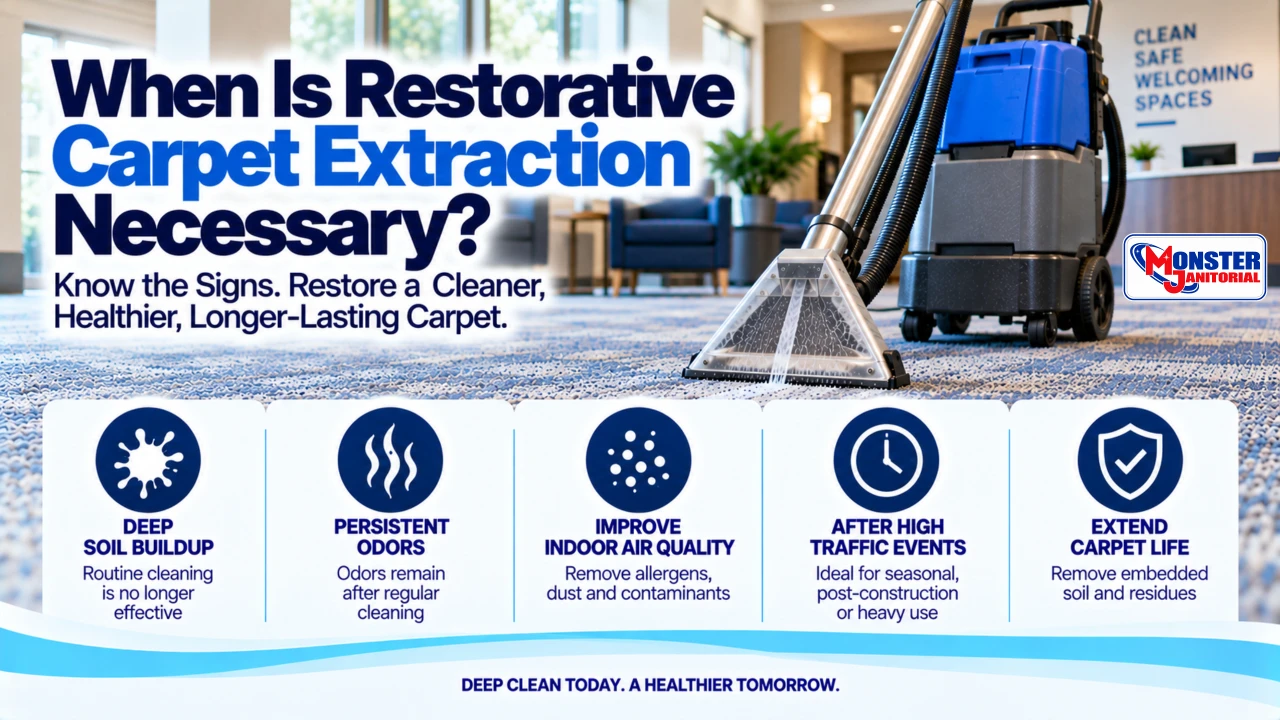
When Is Restorative Carpet Extraction Necessary?
Learn when encapsulation and routine low-moisture cleaning are no longer enough—and when commercial carpet needs deeper flushing, rinsing, and wastewater recovery.
Extraction is needed when soil must be physically removed.
Heavy soil, sticky residue, recurring spots, persistent odors, oily contamination, and deeper carpet buildup usually require flushing and recovery—not only surface-level maintenance.
Encapsulation maintains. Extraction restores.
Encapsulation is useful for interim appearance maintenance. Restorative extraction is used when carpet needs deeper soil removal, residue recovery, or corrective cleaning.
What Is Restorative Carpet Extraction?
Restorative extraction is a deeper carpet-cleaning process used when vacuuming, spotting, and low-moisture maintenance no longer provide acceptable results.
Cleaning chemistry loosens soil, agitation helps release buildup, and an extractor flushes and recovers the suspended contamination. The process may also include rinsing, dry passes, airflow, and inspection after drying.
Eight Signs Extraction May Be Necessary
Traffic-Lane Buildup
Entrances, hallways, service counters, and elevator areas receive concentrated grit, oils, dust, and fine particles. Extraction is often necessary when this soil extends below the upper carpet fibers.
Detergent and Spotter Buildup
Overapplied or improperly rinsed chemicals can leave carpet sticky, stiff, dull, and prone to rapid resoiling. Extraction can flush and recover accumulated residue.
Spots That Return
Soil or liquid may remain in the lower pile, backing, adhesive, or cushion. Controlled extraction may remove the deeper source, but overwetting can increase the risk of wicking.
Organic Contamination
Food, beverages, urine, and other organic material may need to be physically removed. Applying more deodorizer without removing the source may provide only temporary improvement.
Severe Contamination Is Not Routine Carpet Cleaning
Sewage, floodwater, bodily fluids, hazardous materials, suspected mold, or contamination extending into the carpet cushion may require professional remediation, controlled removal, or carpet replacement.
Encapsulation or Restorative Extraction?
Choose the method according to the soil level, residue, odor, drying requirements, and carpet condition.
Use Encapsulation For
Use Extraction For
How Often Should Restorative Extraction Be Scheduled?
There is no single schedule for every building. Extract when the carpet condition requires it—not only because a calendar date has arrived.
Correct Restorative Extraction Process
More Water Does Not Mean Cleaner Carpet
Excess moisture can move contamination deeper, slow drying, affect adhesive, and create additional carpet problems.
Equipment Used for Restorative Extraction
Products for Restorative Extraction
Always confirm carpet compatibility, dilution, dwell time, and rinsing instructions before use.
Preconditioning chemistry for compatible restorative carpet-cleaning procedures.
View ProductExtraction detergent for compatible commercial carpet-cleaning machines.
View ProductConditioning rinse for detergent-residue removal and compatible extraction procedures.
View ProductHelps control excessive foam inside compatible carpet-extractor recovery tanks.
View ProductUse extraction when contamination must be flushed and recovered.
Restorative carpet extraction may be necessary when carpet contains heavy soil, chemical residue, recurring spots, persistent odor, oily contamination, or deeper buildup that low-moisture cleaning cannot adequately remove. Encapsulation should support the maintenance program—not permanently replace corrective extraction.
Related Carpet-Care Guides
Learn More About Commercial Carpet Care
Explore commercial carpet guides covering extraction, encapsulation, carpet chemistry, fibers, spotting, drying, maintenance, and equipment selection.
Explore Carpet Care Learning →Need Help Choosing Carpet-Extraction Equipment?
Monster Janitorial can help match extractors, carpet wands, CRB machines, vacuums, air movers, pre-sprays, detergents, rinses, spotters, and defoamers to your carpet and facility.
- #carpet detergent residue
- #carpet drying
- #carpet extractor
- #carpet odor removal
- #carpet pre-spray
- #carpet rinse agent
- #carpet traffic-lane cleaning
- #carpet wicking
- #commercial carpet extraction
- #commercial carpet maintenance
- #deep carpet cleaning
- #encapsulation vs extraction
- #heavily soiled carpet
- #hot-water extraction
- #low-moisture carpet cleaning
- #MJ University
- #Monster Janitorial
- #oily carpet soil
- #portable carpet extractor
- #prevent carpet overwetting
- #recurring carpet spots
- #restorative carpet extraction
- #when to extract commercial carpet