
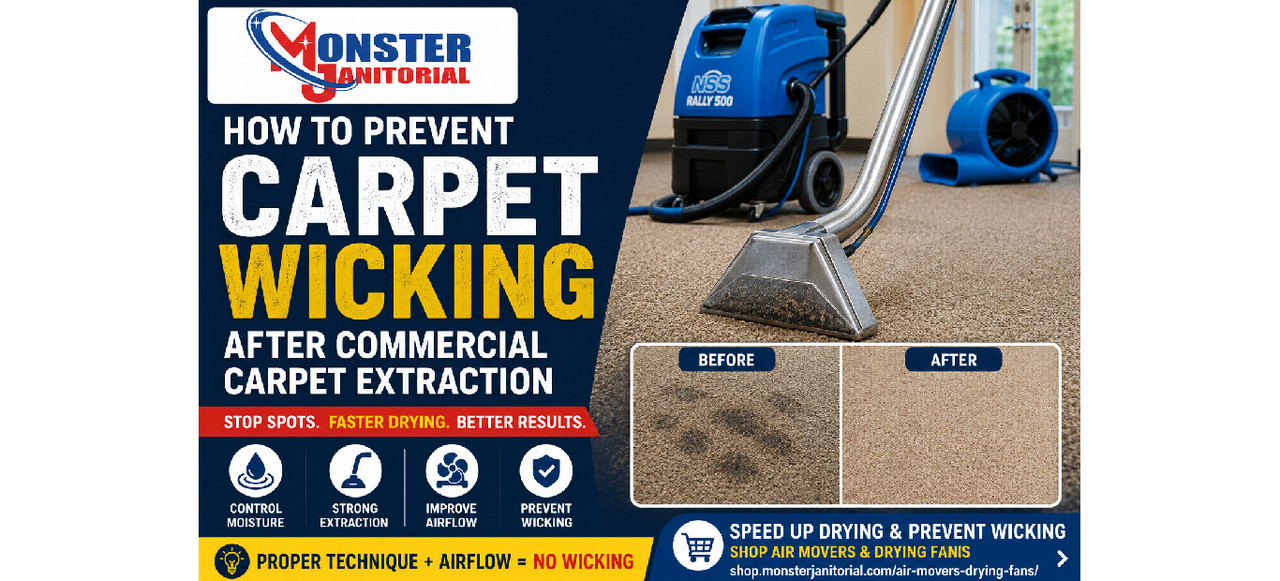
Carpet wicking is one of the most common problems after commercial carpet extraction cleaning. A carpet may initially look clean, only for spots, stains, or dark traffic lanes to reappear as the carpet dries.
In most cases, carpet wicking is caused by excess moisture pulling embedded soil back to the surface during the drying process. Understanding why this happens and how to prevent it can improve carpet appearance, reduce customer complaints, and extend carpet life.
What Is Carpet Wicking?
Carpet wicking happens when moisture deep in the carpet backing or pad moves upward during drying. As the moisture rises, it carries soil, stains, detergent residue, or contaminants back to the carpet surface.
This often causes spots or traffic lanes to reappear several hours after cleaning.
Quick Answer: Carpet wicking is usually caused by over-wetting, poor vacuum recovery, slow drying conditions, or soil left deep in the carpet backing after extraction cleaning.
How to Prevent Carpet Wicking
1. Avoid Over-Wetting the Carpet
One of the biggest causes of carpet wicking is excessive moisture. Applying too much solution or making unnecessary wet passes can saturate the carpet backing and pad.
Use proper pressure settings and controlled solution flow during extraction.
2. Use Proper Vacuum Recovery Passes
Strong vacuum recovery is critical after extraction. Additional dry passes help remove excess moisture and improve drying times.
Commercial extractors with strong water recovery performance reduce the amount of moisture left behind in the carpet.
3. Improve Airflow Immediately After Cleaning
Fast drying is one of the best ways to reduce carpet wicking. Use professional air movers and drying fans immediately after extraction cleaning.
Improved airflow helps pull moisture out of the carpet before soil can wick back to the surface.
4. Vacuum Thoroughly Before Extraction
Dry soil removal before extraction is extremely important. Excess dry soil mixed with moisture increases the risk of wicking and recurring stains.
Commercial vacuums with HEPA filtration and strong airflow improve pre-cleaning performance.
5. Use Encapsulation as a Follow-Up Maintenance Method
Many facilities use encapsulation cleaning after extraction programs to improve carpet appearance and reduce recurring spotting.
Low-moisture encapsulation systems help control downtime while improving routine carpet maintenance.
Drying Time Matters
Recommended Carpet Extraction Equipment
- NSS Rally 500H – Heated commercial extractor designed for restorative carpet cleaning and strong water recovery.
- NSS Rally 220H – Portable heated extractor for commercial carpet maintenance and deep extraction cleaning.
- TASKI Procarpet 30 – Compact carpet cleaning system combining encapsulation and extraction cleaning.
- TASKI Procarpet 45 – Wide-area commercial carpet extractor designed for high productivity carpet maintenance.
Best Carpet Cleaning Strategy for Commercial Facilities
The best way to prevent carpet wicking is to combine proper extraction procedures with low-moisture maintenance cleaning.
Many schools, hotels, healthcare facilities, and office buildings use this approach:
- Daily vacuuming
- Routine spot cleaning
- Monthly encapsulation maintenance
- Scheduled hot water extraction
- Immediate airflow after extraction cleaning
Final Recommendation
Carpet wicking is usually preventable when proper extraction procedures, airflow, vacuum recovery, and drying methods are used.
Controlling moisture, improving airflow, and combining extraction with encapsulation maintenance can dramatically improve carpet appearance and reduce recurring stains in commercial facilities.