
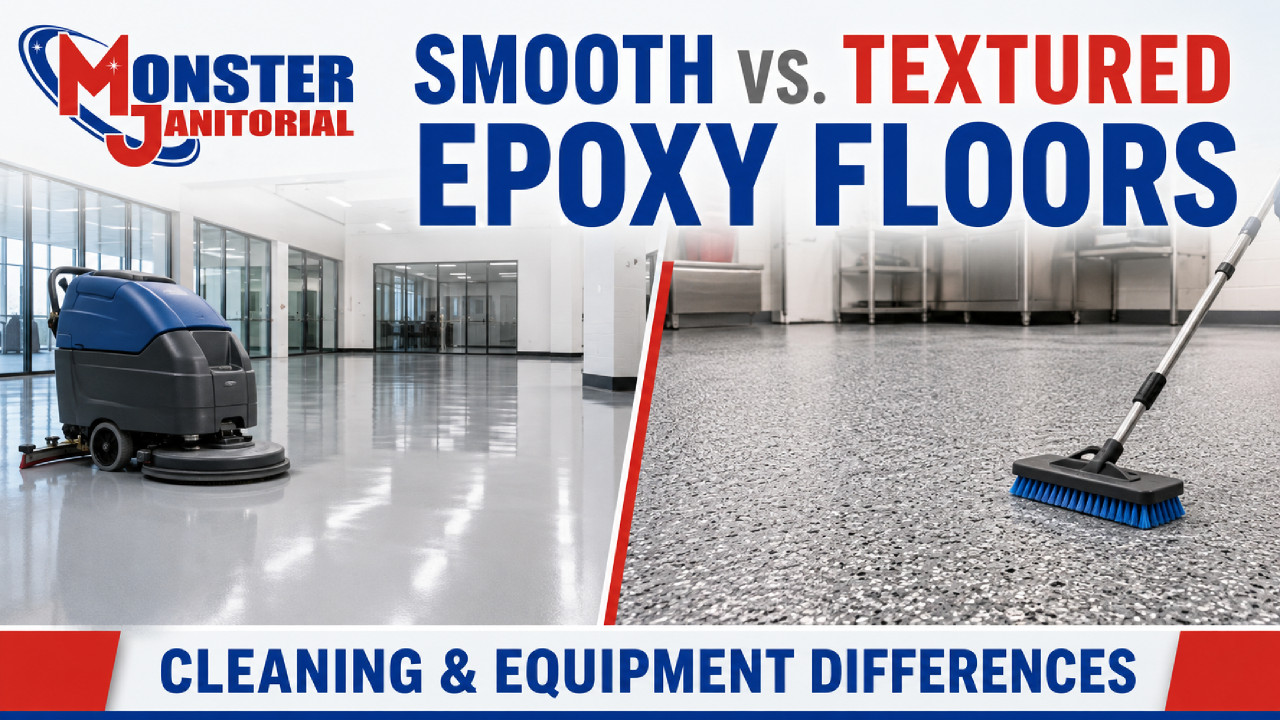
Smooth vs. Textured Epoxy Floors: Cleaning and Equipment Differences
Compare the cleaning challenges, scrubber decks, pads, brushes, solution flow, and water-recovery needs of smooth and slip-resistant epoxy floors.
Smooth epoxy favors flat pads and even squeegee contact. Textured epoxy often needs brushes and more careful recovery.
The best setup depends on surface texture, soil type, coating condition, and how easily the machine can reach and recover solution from recessed areas.
Smooth and Textured Epoxy Floors Need Different Cleaning Setups
Both surfaces can be cleaned with commercial equipment, but the agitation and recovery methods should match the floor texture.
Smooth Epoxy Floors
- Flat pads usually maintain full contact
- Squeegees recover water more evenly
- Haze, scratches, and streaks are more visible
- Disc and orbital scrubbers often work well
- Lower agitation may be enough for routine cleaning
Textured Epoxy Floors
- Aggregate can trap grease and fine soil
- Flat pads may not reach recessed texture
- Dirty solution can remain below the squeegee
- Soft nylon or cylindrical brushes often work better
- Slower passes or double scrubbing may be required
How to Identify the Surface Texture
Do not judge the surface only by appearance. Some coatings look smooth from a distance but contain enough aggregate to change pad contact and water recovery.
Cleaning Challenges on Smooth Epoxy Floors
Smooth epoxy is easier to contact and recover, but it can show cleaning errors more clearly.
Cleaning Challenges on Textured Epoxy Floors
Texture improves traction but creates more recessed areas where soil and dirty solution can remain.
Best Scrubber Decks for Each Surface
Deck type matters most when the surface texture prevents consistent pad contact.
Disc Scrubbers
Best suited to smooth and lightly textured epoxy where pads or brushes can maintain even contact.
Disc decks offer broad pad and brush options for routine cleaning and targeted correction.
Orbital Scrubbers
Useful on smooth coatings when controlled multidirectional agitation and edge cleaning are important.
Pad selection must remain compatible with the coating to avoid excessive abrasion.
Cylindrical Scrubbers
Often more effective on textured epoxy because rotating brushes can reach shallow recessed areas.
Many cylindrical machines also collect small loose debris during scrubbing.
Pads vs. Brushes
Select the least aggressive tool that can contact the full surface and remove the soil.
Pads for Smooth Epoxy
- White pads for light cleaning
- Red pads for routine scrubbing
- Microfiber pads for light soil and residue control
- Avoid aggressive stripping pads unless specifically approved
Brushes for Textured Epoxy
- Soft nylon brushes for routine texture cleaning
- Cylindrical brushes for shallow grooves and aggregate
- Stiffer brushes only after compatibility testing
- Avoid wire or highly abrasive brushes that may damage the coating
Chemical and Solution-Flow Differences
The chemical may stay the same, but the amount of solution, dwell time, and agitation method may need to change.
Smooth Epoxy
- Use controlled flow to reduce streaking
- Avoid excessive chemical that can leave visible haze
- Use shorter dwell time for light routine soil
- Recover solution before it dries into a film
Textured Epoxy
- Use enough solution to wet recessed texture
- Allow controlled dwell time for embedded grease
- Agitate before the cleaner dries
- Make an additional recovery pass when water remains behind
Why Recovery Is Harder on Textured Floors
Smooth floors allow the squeegee to maintain more consistent contact. Texture creates small low points where water and suspended soil may remain.
Common Mistakes by Surface Type
Smooth Epoxy Mistakes
- Using an overly aggressive pad
- Scrubbing over loose grit
- Using too much chemical
- Operating with dirty squeegee blades
- Leaving visible streaks or residue behind
Textured Epoxy Mistakes
- Using a flat pad that cannot reach the texture
- Moving too quickly through oily areas
- Skipping controlled dwell time
- Failing to inspect recessed areas
- Leaving dirty water around drains and joints
Choosing the Right Cleaning Setup
Related Epoxy-Floor Guides
Use these guides for detailed information about machines, chemicals, soil removal, and coating condition.
Need Help Matching Equipment to Your Epoxy Floor?
Monster Janitorial can help compare disc, cylindrical, and orbital scrubbers along with compatible pads, brushes, and low-foam cleaning chemicals for smooth or textured epoxy floors.