
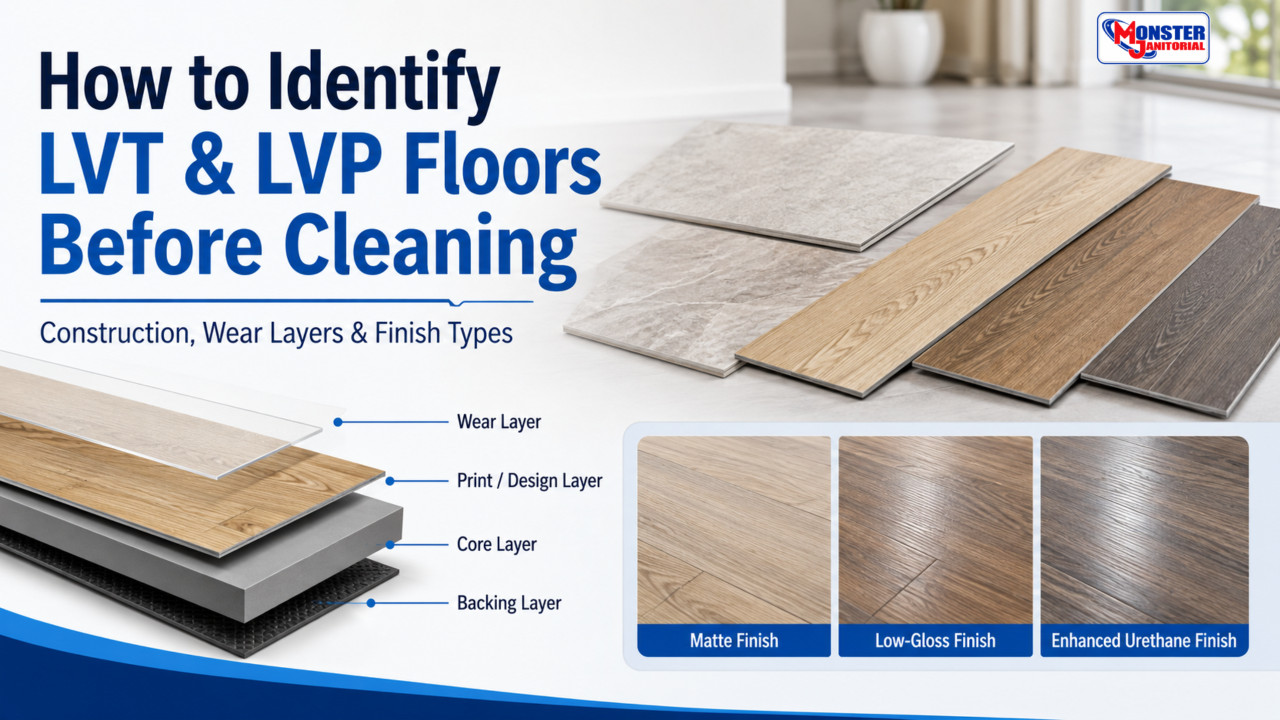
How to Identify LVT & LVP Floors Before Cleaning
Construction, Wear Layers & Finish Types
Commercial LVT and LVP floors can resemble wood, stone, ceramic tile, or other resilient flooring, but the correct cleaning process depends on how the floor is constructed, installed, finished, and worn.
Before selecting chemicals, pads, brushes, auto scrubbers, or restoration methods, identify the flooring type, wear layer, surface texture, edge condition, seams, and any existing damage.
Identify LVT and LVP by looking at the plank or tile format, construction, installation method, wear layer, surface texture, seams, and factory finish.
Do not assume LVT or LVP should be cleaned or refinished like VCT. Most commercial LVT and LVP products use a factory-applied wear layer and protective finish that should be preserved rather than stripped away.
LVT vs. LVP: What Is the Difference?
Both are luxury vinyl flooring products. The main difference is usually the format and visual design.
Luxury Vinyl Tile
LVT is commonly manufactured in square or rectangular tile formats and may imitate stone, ceramic tile, concrete, terrazzo, or other hard surfaces.
- Tile-shaped pieces
- Stone, concrete, or tile visuals are common
- May be glue-down or floating
- Can have smooth or embossed texture
Luxury Vinyl Plank
LVP is commonly manufactured in plank-shaped pieces and is usually designed to resemble hardwood or other plank flooring.
- Long plank-shaped pieces
- Wood-grain visuals are common
- May be glue-down or click-lock
- Often has embossed wood texture
Do Not Confuse LVT or LVP With Other Flooring
Many floor types can imitate the same wood or stone visual. Cleaning based only on appearance can lead to the wrong chemical, pad, or restoration process.
Understanding LVT & LVP Floor Construction
Commercial luxury vinyl floors are layered products. Exact construction varies by manufacturer, but understanding the basic layers helps explain why aggressive cleaning can permanently damage the surface.
What Is the Wear Layer?
The wear layer protects the decorative image beneath it from normal traffic, scratches, staining, and cleaning activity. Once this layer is severely damaged, routine cleaning cannot restore the original factory surface.
Glue-Down vs. Floating LVT & LVP
Glue-Down LVT / LVP
- Planks or tiles are adhered directly to the substrate.
- Common in many commercial installations.
- Adhesive failure may appear as loose edges, lifting, movement, or residue.
- Moisture problems beneath the floor can affect adhesion.
Floating / Click-Lock LVP
- Pieces connect to each other rather than being fully bonded to the substrate.
- Often uses rigid-core construction.
- Open joints or damaged locking systems can allow contamination or moisture into seams.
- Excess water should not be allowed to collect along plank edges.
Smooth vs. Textured LVT & LVP
Surface texture changes how soil becomes trapped and how much agitation may be required.
Factory Finish vs. Field-Applied Coating
Many LVT and LVP floors are designed to perform with the factory wear layer and protective finish alone. Others may have received an additional coating after installation.
Check Edges, Seams & Transitions
Inspect the Floor Before Blaming the Cleaning Process
Document existing damage before cleaning so permanent defects are not mistaken for soil or a cleaning failure.
Signs of Moisture or Adhesive Problems Beneath LVT & LVP
LVT and LVP are resistant to many surface spills, but moisture beneath the flooring can still affect adhesives, seams, substrates, and installation stability.
How Identification Changes Chemical, Pad & Machine Selection
What If You Cannot Identify the Manufacturer or Flooring System?
Use a conservative cleaning process until the flooring system and maintenance history can be confirmed.
Commercial LVT & LVP Floor Identification Checklist
Common LVT & LVP Identification Mistakes
LVT & LVP Floor Care Learning Library
Explore focused commercial LVT and LVP guides covering identification, equipment, chemicals, deep cleaning, troubleshooting, coatings, repair, restoration, and replacement.
How to Identify LVT & LVP Floors Before Cleaning
Learn how construction, wear layers, factory finishes, coatings, textures, seams, and floor condition affect cleaning and maintenance.
Current GuideAuto Scrubbers, Floor Machines & Pads for Commercial LVT & LVP Floors
Compare auto scrubbers, low-speed machines, disc and cylindrical systems, floor pads, brushes, and cleaning methods.
Read Equipment & Pad Guide →How to Deep Clean Commercial LVT & LVP Floors
Learn how to improve chemistry, dwell time, agitation, pads or brushes, fresh solution, and dirty-water recovery.
Read Deep-Cleaning Guide →Best Cleaning Chemicals for Commercial LVT & LVP Floors
Compare neutral cleaners, low-foam auto scrubber chemistry, maintainers, coatings, and specialty restorative products.
Read Chemical Guide →Commercial LVT & LVP Floor Problems
Diagnose dullness, haze, streaks, scratches, scuffs, adhesive residue, soil buildup, and other appearance problems.
Read Troubleshooting Guide →Should Commercial LVT & LVP Floors Be Coated or Finished?
Learn when a factory wear layer is enough and when an approved maintainer, coating, or restorative system may be appropriate.
Read Coating & Finish Guide →Commercial LVT & LVP Floor Repair & Replacement Guide
Learn when scratches, gouges, loose flooring, wear, or widespread damage should be repaired, restored, or replaced.
Read Repair & Replacement Guide →Complete Commercial LVT & LVP Floor Cleaning & Maintenance Guide
Use the complete guide as the central reference for commercial LVT/LVP cleaning, maintenance, troubleshooting, restoration, and repair.
Read Complete Guide →Helpful Equipment, Pad & Chemical Guides
LVT & LVP Identification FAQs
What is the difference between LVT and LVP?
LVT generally refers to luxury vinyl in tile formats, while LVP usually refers to plank-shaped luxury vinyl designed to resemble wood flooring.
Is LVT the same as VCT?
No. Both are resilient flooring, but their construction and maintenance systems can be very different. Do not automatically use a VCT stripping, finishing, or burnishing program on LVT.
What is the wear layer on LVT or LVP?
The wear layer is a transparent protective layer above the decorative image. It protects the visual from traffic, scratches, and normal maintenance.
Can you tell LVT from LVP just by looking at it?
Often the format provides a clue, but appearance alone is not enough to identify construction, installation method, wear-layer thickness, or maintenance history.
What are signs of adhesive failure under LVT?
Loose tiles, lifting edges, movement, adhesive residue, recurring seam problems, or localized instability may indicate an installation or adhesive issue.
Why should LVT or LVP be identified before machine cleaning?
The surface texture, factory finish, wear layer, installation, and existing damage help determine which chemical, pad, brush, machine pressure, and cleaning process are appropriate.
Need Help Identifying or Cleaning Commercial LVT & LVP?
Monster Janitorial can help you compare commercial floor cleaners, auto scrubbers, floor machines, pads, brushes, microfiber systems, and maintenance products for LVT and LVP floors.