
Concrete Floor Safety
Why Concrete Floors Become Slippery After Cleaning
Learn why bare, polished, sealed, epoxy-coated, and decorative concrete may feel slippery after cleaning—and how to correct residue, oily film, poor recovery, excessive chemical use, and floor-finish problems.
A concrete floor should not remain unusually slippery after a properly completed cleaning process. When slipperiness develops, the cause is often cleaner residue, oil or grease that was loosened but not fully recovered, excessive solution, worn coatings, dirty rinse water, or a mismatch between the chemical and floor system.
The correct solution depends on whether the floor is bare, polished, sealed, decorative, painted, or coated with epoxy, urethane, or polyaspartic material.
Quick Answer
Concrete floors usually become slippery after cleaning because residue, oil, dirty solution, or excess moisture remains on the surface. Make a clean-water recovery pass, inspect the chemical dilution, check squeegees and vacuum recovery, and stop using aggressive chemistry until the floor system has been identified.

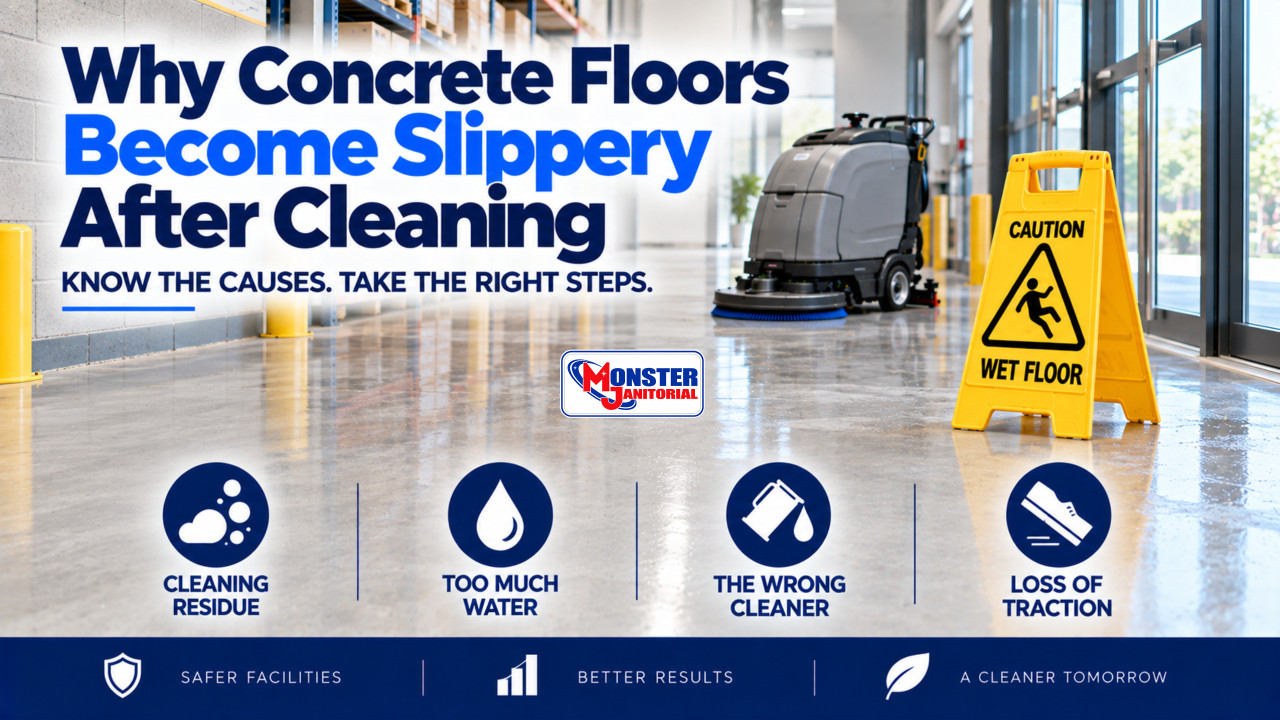
Slippery Concrete After Cleaning: Wet residue, cleaner buildup, oily soil, and poor recovery can leave concrete floors slick even after visible dirt has been removed.
Common Causes
Why Concrete Floors Feel Slippery After Cleaning
More than one condition may be present at the same time.
Cleaner Residue
Excess chemical, incorrect dilution, or incomplete rinsing can leave a slick film.
Oil or Grease Film
Cleaning may loosen oily soil without fully removing it, spreading a thin slippery layer.
Poor Water Recovery
Worn squeegees, weak vacuum recovery, clogged hoses, or excessive speed may leave solution behind.
Dirty Rinse Water
Reusing contaminated water can redeposit detergent, oil, and suspended soil.
Wrong Chemical
Products not intended for the floor may soften coatings, leave residue, or reduce traction.
Worn or Damaged Finish
Sealer, wax, epoxy, or coating wear may create uneven gloss and reduced traction.
Floor Type Matters
How Slipperiness Differs by Concrete Surface
Bare Concrete
Oil, grease, or detergent may remain inside pores and rise back to the surface as the floor dries.
Polished Concrete
Residue, aggressive pads, excessive burnishing, or incorrect chemistry may alter traction and gloss.
Sealed or Epoxy-Coated Concrete
Cleaner residue is more likely to remain on top because it cannot absorb into the protected surface.
Textured Safety Coating
Soil and chemistry may collect in the texture when a flat pad or weak recovery system does not reach low areas.
Diagnose the Problem
What Does the Floor Feel or Look Like?
Usually indicates detergent residue, softened finish, or incorrect chemical dilution.
Suggests oil was spread or emulsified without being fully recovered.
Check solution flow, squeegees, vacuum hoses, recovery tank, and operator speed.
The finish may be worn, polished by traffic, or contaminated with oil and rubber residue.
Corrective Cleaning Process
How to Fix a Slippery Concrete Floor After Cleaning
Start by removing residue and checking equipment performance before increasing chemical strength or pad aggressiveness.
1. Restrict Access
Place warning signs and keep traffic away until the cause has been corrected and the floor is dry.
2. Inspect the Surface
Check for foam, residue, oil sheen, standing water, sticky areas, gloss variation, or coating damage.
3. Make a Clean-Water Pass
Scrub or rinse with clean water and recover it immediately to remove detergent residue.
4. Inspect Recovery Equipment
Check squeegee blades, vacuum hoses, filters, seals, recovery tank, and vacuum performance.
5. Correct the Dilution
Review the product label and reduce overconcentrated chemistry before repeating the cleaning process.
6. Treat Remaining Oil
Use a compatible low-foam degreaser only where oily soil remains and recover the slurry completely.
7. Dry and Reinspect
Allow the floor to dry fully, then inspect traction, residue, gloss, and remaining contamination.
8. Document Recurring Problems
Record chemical, dilution, pad or brush, machine settings, and floor condition if slipperiness returns.
Chemical Selection
Use Low-Foam Chemistry at the Correct Dilution
More chemical does not automatically produce better cleaning. Overconcentration can increase residue, foam, rinsing time, and slip risk.
Neutral Floor Cleaner
Best starting point for compatible polished, sealed, decorative, and coated concrete during routine maintenance.
Shop Neutral Floor CleanerCommercial Degreasers
Use only when oil or grease remains and verify compatibility with the concrete, sealer, or coating.
Shop Commercial DegreasersEquipment Performance
Check the Auto Scrubber Before Blaming the Chemical
Worn, dirty, curled, or damaged blades leave water and residue behind.
Leaks, clogs, or loose connections reduce recovery performance.
Excessive water can overwhelm recovery and extend floor-drying time.
Fast turns or excessive travel speed may leave water behind.
Pad and Brush Selection
Can the Wrong Pad or Brush Make Concrete Slippery?
Pad Too Soft
It may fail to remove oily film, rubber residue, or embedded soil.
Pad Too Aggressive
It may dull, polish, scratch, or alter a sealer or coating.
Wrong Accessory for Texture
A flat pad may bridge over textured concrete and leave residue in low areas.
Safety Response
Do Not Reopen the Area Until the Floor Is Safe
Keep warning signs and barriers in place until the floor is dry and the slippery condition has been corrected. Where required, follow the facility’s slip-and-fall reporting, inspection, testing, and documentation procedures.
Avoid Recurring Problems
Common Mistakes That Leave Concrete Slippery
More cleaner often creates more residue instead of better cleaning.
Heavy soil and degreaser may require clean-water recovery.
Contaminated water redeposits detergent, grease, and soil.
Poor recovery leaves slick water and residue behind.
The floor may remain dirty or the finish may become damaged.
Foot and vehicle traffic can spread wet residue across the facility.
Prevention
How to Prevent Slippery Concrete After Cleaning
Use the dilution listed for the soil level and machine.
Inspect squeegees, hoses, filters, seals, and vacuum performance.
Do not spread contaminated solution over previously cleaned areas.
Use compatible chemicals, pads, brushes, pressure, and water flow.
Related Concrete Floor Guides
Continue Learning
Common Questions
Slippery Concrete Floor FAQs
Why is my concrete floor slippery after mopping?
The mop water may be dirty, the cleaner may be overconcentrated, or residue may remain because the floor was not rinsed and recovered properly.
Why does an auto scrubber leave the floor slippery?
Common causes include excessive chemical, worn squeegees, weak vacuum recovery, dirty water, too much solution, or oily soil that was spread instead of removed.
Will rinsing remove slippery cleaner residue?
A clean-water scrub-and-recovery pass can often remove detergent residue when the floor system is otherwise undamaged.
Why is epoxy flooring slippery after cleaning?
Residue remains on top of epoxy instead of absorbing into it. Worn coating, excessive gloss, oil film, or incompatible chemistry may also reduce traction.
Final Recommendation
Remove Residue, Correct Recovery, and Match the Process to the Floor
A slippery floor after cleaning is usually a sign that contamination, chemistry, or moisture remains on the surface. Restrict access, inspect the floor and machine, make a clean-water recovery pass, correct chemical dilution, and evaluate the sealer or coating before reopening the area.
- #Auto Scrubber Leaves Floor Wet
- #Auto Scrubber Squeegee Problems
- #Commercial Floor Safety
- #Concrete Cleaner Residue
- #Concrete Floor Maintenance
- #Epoxy Floor Slippery
- #Floor Degreaser Residue
- #Polished Concrete Slip Risk
- #Sealed Concrete Cleaning
- #Slip and Fall Prevention
- #Slippery Concrete Floor
- #Why Concrete Floors Become Slippery After Cleaning