
Industrial Concrete Floor Care
How to Clean Bare Industrial Concrete Floors
A practical cleaning guide for unfinished warehouse, manufacturing, loading-dock, truck-shop, and industrial concrete floors.
Bare industrial concrete is durable, but its porous and textured surface can trap dust, tire rubber, oil, grease, and embedded soil.
The best results come from removing dry debris first, selecting chemistry for the actual soil, allowing controlled dwell time, scrubbing with a brush or pad that reaches the surface profile, and recovering the dirty solution completely.
Quick Answer
Sweep or vacuum loose debris, pretreat heavy spots, apply a low-foam concrete cleaner, scrub with a cylindrical brush, grit brush, or compatible pad, and recover the solution with an auto scrubber or wet vacuum. Repeat only after inspecting the floor.
Before Cleaning
Confirm the Floor Is Truly Bare Concrete
A worn sealer, densifier, curing compound, paint, epoxy, or clear coating can be difficult to identify. Use a small test area before applying aggressive chemistry or brushes.
Bare Concrete
Usually porous, matte, and absorbent. Water may darken the surface temporarily.
Densified Concrete
May look natural but resist absorption more than untreated concrete.
Sealed or Coated Concrete
May have sheen, color variation, flaking, or visible wear paths and needs coating-safe products.
Identify the Contamination
Match the Cleaning Method to the Soil
Remove dry before adding water so the debris does not become abrasive slurry.
Pretreat and agitate with a compatible brush, pad, or specialty tire-mark cleaner.
Use a concrete-safe degreaser and remove contamination before it penetrates deeper.
Use controlled dwell time and a brush capable of reaching pores and surface texture.
Step-by-Step Process
How to Clean Bare Industrial Concrete
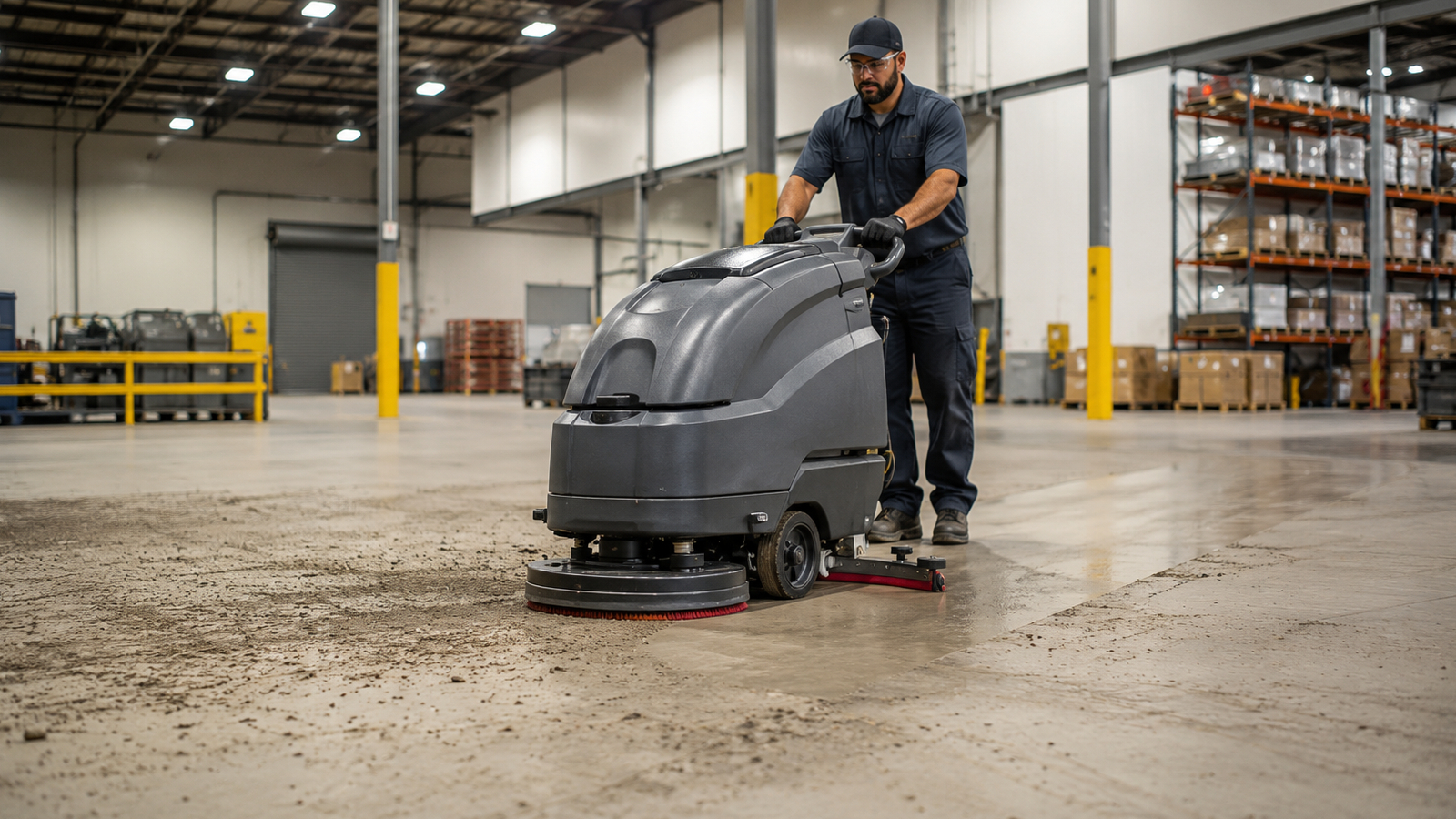
The process below works for routine warehouse cleaning and can be adjusted for heavy soil.
1. Remove Dry Debris
Sweep, dust mop, or vacuum loose dust, grit, pallet debris, metal chips, and packaging material.
2. Isolate Heavy Spots
Identify oil, grease, tire marks, adhesive, and deeply stained areas that need pretreatment.
3. Apply Cleaner
Use the correct dilution and apply only enough solution to keep the surface wet during dwell time.
4. Allow Controlled Dwell
Give the cleaner time to loosen soil, but do not allow the chemical solution to dry on the floor.
5. Scrub the Surface
Use overlapping passes and a brush or pad suited to the concrete texture and soil level.
6. Recover the Slurry
Pick up dirty solution promptly with an auto scrubber, wet vacuum, or recovery system.
7. Rinse When Needed
Make a clean-water pass if residue, foam, or heavy degreaser remains after recovery.
8. Inspect After Drying
Distinguish removable soil from permanent staining, etching, wear, or absorbed contamination.
Recommended Chemistry
Cleaners for Bare Industrial Concrete
Use a low-foam product designed for concrete and the machine being used. Follow the label, Safety Data Sheet, dilution, and personal protective equipment requirements.
Karcher Warehouse Floor Cleaner
Part Number: 8.698-107.0
Monster SKU: MPK86981070
Low-foam cleaner for grit, dense warehouse soil, and finished or unfinished concrete.
Shop Warehouse Floor CleanerCommercial Degreasers
Use for machine oil, grease, shop soil, and industrial contamination when compatible with the floor and cleaning equipment.
Shop Commercial DegreasersKarcher Tire Mark Remover & Pre-Soak
Part Number: 8.759-326.0
Monster SKU: MPK87593260
Specialty cleaner for rubber marks and scuffing on compatible washable concrete surfaces.
Shop Concrete Floor CleanersFloor Contact Selection
Pads vs Brushes on Bare Concrete
A pad works best when it maintains full contact with the surface. A brush is often better when the concrete is rough, pitted, grooved, or uneven.
Smooth Bare Concrete
Use a cleaning pad or disc brush appropriate for the soil level and machine.
Rough or Textured Concrete
Use a nylon, grit, or cylindrical brush that reaches pores, low spots, joints, and texture.
Heavy Embedded Soil
Use controlled chemistry, dwell time, and the least aggressive brush that produces acceptable results.
Choose the Right Equipment
Best Machines for Bare Industrial Concrete
Best for dry dust, sand, pallet debris, packaging material, and routine pre-cleaning.
Best for applying solution, scrubbing, and recovering dirty water in one controlled pass.
Best for concentrated deep cleaning when paired with wet-vacuum recovery.
Best for recovering slurry, rinse water, spills, and solution from floor-machine cleaning.
Best only where drainage, overspray control, water recovery, and facility conditions permit.
Avoid Poor Results
Common Bare-Concrete Cleaning Mistakes
Dust and grit become heavy slurry and increase wear on equipment.
Overconcentration can create foam, residue, and difficult recovery.
Dried chemistry can redeposit soil and leave haze or streaking.
The pad may bridge low spots and leave embedded soil untouched.
Poor recovery allows soil and grease to settle back into the pores.
Permanent discoloration may require restoration, treatment, or resurfacing.
Maintenance Planning
Suggested Industrial Concrete Cleaning Schedule
Daily
Remove dry soil, clean spills, scrub high-traffic lanes, and inspect squeegees and brushes.
Weekly
Deep clean loading areas, dock lanes, turning zones, and locations with oil or tire buildup.
Monthly or Quarterly
Inspect floor condition, evaluate stain patterns, service equipment, and review whether sealing is appropriate.
Long-Term Floor Protection
Should Bare Concrete Be Sealed or Densified?
A compatible sealer or densifier may reduce dusting, improve stain resistance, and make routine cleaning easier. It also changes the maintenance program, chemical compatibility, and repair process.
Before treatment, evaluate moisture, traffic, slip resistance, chemical exposure, appearance goals, and future coating plans with the floor-system manufacturer or qualified contractor.
Related Concrete and Warehouse Guides
Continue Learning
Common Questions
Bare Industrial Concrete FAQs
Can an auto scrubber clean unfinished concrete?
Yes. Use a low-foam cleaner and a brush or pad that matches the texture. Cylindrical or grit brushes often perform better on rough concrete.
What is the best cleaner for bare warehouse concrete?
Use a concrete-compatible warehouse cleaner for routine soil and a suitable degreaser for oil or grease. Always test and follow label dilution.
Should bare concrete be pressure washed?
Only where drainage, overspray, wastewater recovery, and facility conditions support pressure washing safely.
Why does concrete still look dark after cleaning?
The floor may still be wet, or oil and soil may have penetrated below the surface. Some discoloration is permanent even when the surface is clean.
Final Recommendation
Sweep First, Match the Chemistry, Scrub the Texture, and Recover Completely
Bare industrial concrete responds best to a controlled process. Remove abrasive debris before wet cleaning, use chemistry matched to the soil, choose brushes or pads that contact the entire surface, and recover dirty solution before it can soak back into the floor.
- #Auto Scrubber for Concrete
- #Bare Concrete Cleaning
- #Concrete Floor Brushes
- #Concrete Floor Degreaser
- #Cylindrical Floor Scrubber
- #Forklift Tire Marks
- #How to Clean Bare Industrial Concrete Floors
- #Industrial Concrete Cleaning
- #Industrial Floor Maintenance
- #Oil and Grease Removal
- #Unfinished Concrete Floors
- #Warehouse Floor Cleaning