
Commercial Burnisher Troubleshooting Guide: Poor Gloss, Swirl Marks, Dust & Pad Problems
Use this guide to diagnose common commercial burnisher problems including dull floors, uneven gloss, swirl marks, excessive dust, loaded pads, vibration, and finish that no longer responds to burnishing.
When a burnisher stops producing the expected gloss, the machine is not always the problem. Cleaning quality, pad condition, pad selection, floor finish condition, operator pace, and machine setup can all affect the final result.
The fastest way to troubleshoot is to identify the visible symptom first, then check the pad, floor condition, and machine before making unnecessary adjustments.
Quick Rule: Start with a clean floor and a clean, correctly selected burnishing pad. If the pad is loaded or the finish is badly worn, additional burnishing may not improve gloss.
Poor or Uneven Floor Gloss
Poor gloss can come from the floor, the pad, the cleaning process, or the way the burnisher is being operated.

Swirl Marks, Dust & Loaded Pads
These three problems are often connected. A dirty floor or contaminated pad can create visible marking, increased dust, and rapid pad loading during the same burnishing cycle.

Swirl Marks
Check for debris under the pad, a dirty or damaged pad, excessive pad aggressiveness, uneven contact, or burnishing before the floor is fully clean.
Excessive Dust
Check pad condition, finish condition, pad aggressiveness, and whether the floor finish is beginning to powder instead of responding normally to burnishing.
Pad Loads Quickly
Look for floor soil, residue, finish buildup, incorrect cleaning chemistry, or a pad that is being used beyond its effective service life.
When the Burnishing Pad Is the Problem
Burnishing pads gradually collect finish residue, soil, and fine debris. Once the pad becomes heavily loaded or physically worn, cleaning it may no longer restore proper performance.
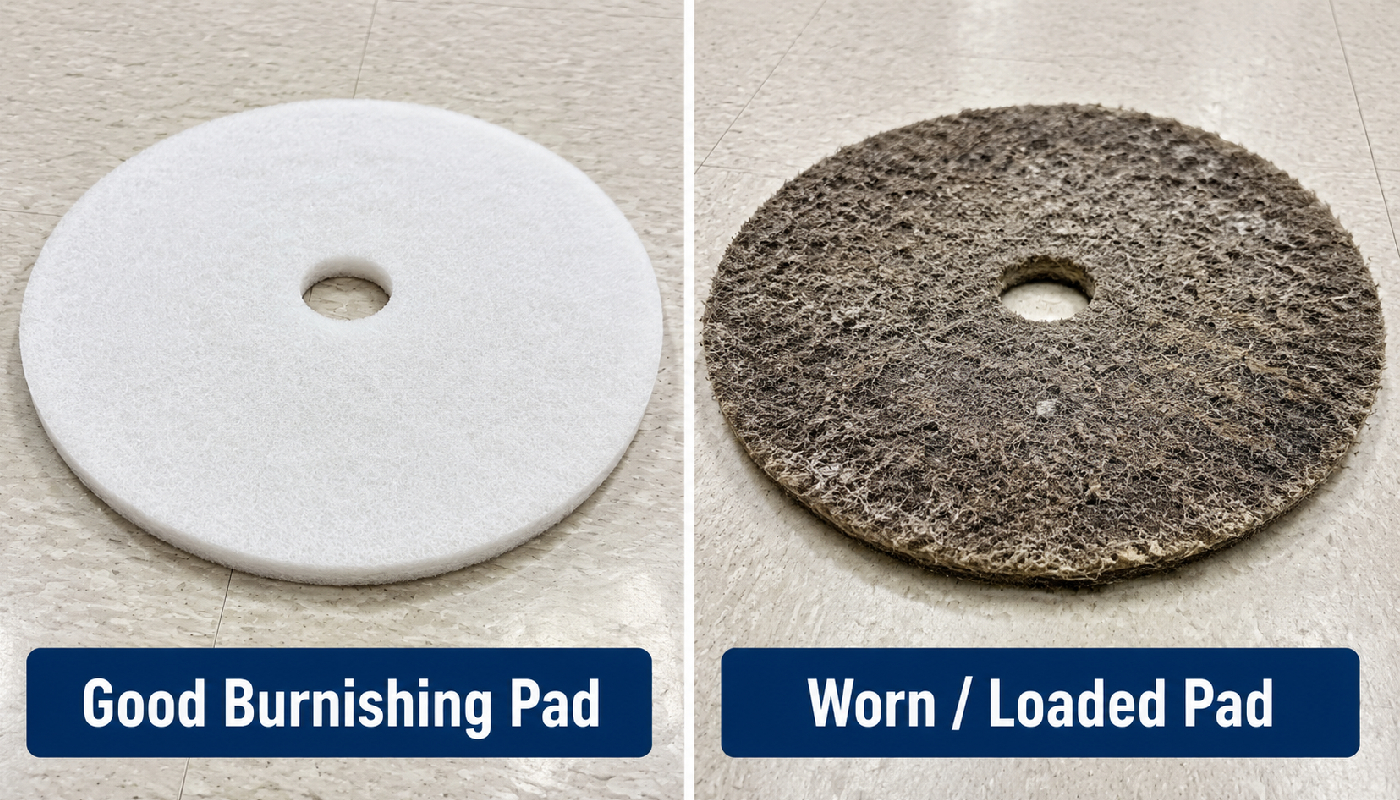
Replace or clean the pad when you see:
- Heavy finish or soil buildup across the pad face
- Glazed or matted pad fibers
- Uneven wear or thinning
- Tears, damaged edges, or distorted shape
- Rapid dust production despite a clean floor
- Reduced gloss even when machine operation appears normal
Is the Burnishing Pad Too Aggressive or Too Mild?
Pad May Be Too Aggressive
- Excessive dust
- Visible marking or swirl patterns
- Finish appears hazy after burnishing
- Pad loads rapidly with finish residue
Pad May Be Too Mild
- Little or no gloss improvement
- Traffic lanes remain dull
- Machine is operating normally but results are limited
- Multiple passes provide little improvement
Burnisher Pulling, Vibrating or Running Rough
If the machine suddenly feels different, stop and inspect the pad and machine before continuing. Vibration can affect gloss and may indicate a setup or mechanical problem.
- Make sure the pad is centered correctly.
- Check the pad for uneven wear or damage.
- Remove debris trapped between the pad and pad driver.
- Inspect the pad driver for damage or looseness.
- Check wheels and visible hardware.
- Listen for new motor, bearing, or drive-system noise.
- Stop using the machine if vibration remains after basic setup checks.
Burnisher Is Not Producing Normal Performance
If gloss has declined along with noticeable changes in machine performance, check basic operating conditions before assuming the floor finish is responsible.
When the Floor Finish Is the Problem
A burnisher can improve the appearance of maintainable floor finish, but it cannot replace finish that has worn away or correct deep damage in the coating.
- Traffic lanes remain dull after proper cleaning and burnishing
- The finish is visibly thin or worn through
- Deep scratches remain below the surface gloss
- The coating has embedded soil that routine cleaning cannot remove
- Repeated burnishing produces more dust but little improvement
- Gloss varies because the finish thickness is no longer consistent
Quick Burnisher Troubleshooting Guide
Related Burnishing & Floor Machine Guides
Shop Burnishers & Floor Pads
Browse commercial burnishers and floor-care pads for gloss maintenance, polishing, and finished-floor programs.
Commercial Burnisher Troubleshooting FAQ
Why is my burnisher not making the floor shiny?
Start by checking floor cleanliness, pad condition, pad selection, and floor-finish wear. If those are correct, inspect the machine for operating or maintenance problems.
What causes swirl marks when burnishing?
Common causes include debris under the pad, a dirty or damaged pad, excessive pad aggressiveness, uneven contact, or burnishing a floor that was not fully cleaned.
Why does my burnisher create so much dust?
Excessive dust can indicate a loaded pad, an overly aggressive pad, deteriorating floor finish, or a floor that needs a different maintenance process.
How often should a burnishing pad be changed?
There is no single interval for every facility. Replace or clean the pad when it becomes heavily loaded, worn, damaged, glazed, or no longer produces consistent results.
Can the wrong burnishing pad damage floor finish?
An inappropriate or overly aggressive pad can increase dust, marking, heat, or finish wear. Always match the pad to the machine, floor finish, and maintenance process.
When should I stop burnishing and recoat the floor?
If the floor is clean, the pad and machine are working properly, and gloss still cannot be restored because the finish is thin, damaged, or worn through, a scrub-and-recoat process may be more appropriate.
Learn More About Burnishers & Floor Machines
Visit the MJ University Burnishers & Floor Machines Learning Center for guides covering burnishing, stripping, machine operation, floor pads, maintenance, troubleshooting, and equipment comparisons.
Visit the Learning Center Email Our Team Call 956-772-4842Tax-exempt purchasing and purchase-order support are available for qualifying schools, universities, government agencies, municipalities, healthcare facilities, and other institutional customers.
- #Burnisher Dust
- #Burnisher Maintenance
- #Burnisher Troubleshooting
- #Burnishing Pads
- #Commercial Burnishers
- #Commercial Floor Care
- #Floor Burnishing
- #Floor Finish Problems
- #Floor Machine Troubleshooting
- #Floor Pad Problems
- #Loaded Floor Pads
- #MJ University
- #Poor Floor Gloss
- #Swirl Marks
- #VCT Burnishing