
MJ University VCT Floor Care
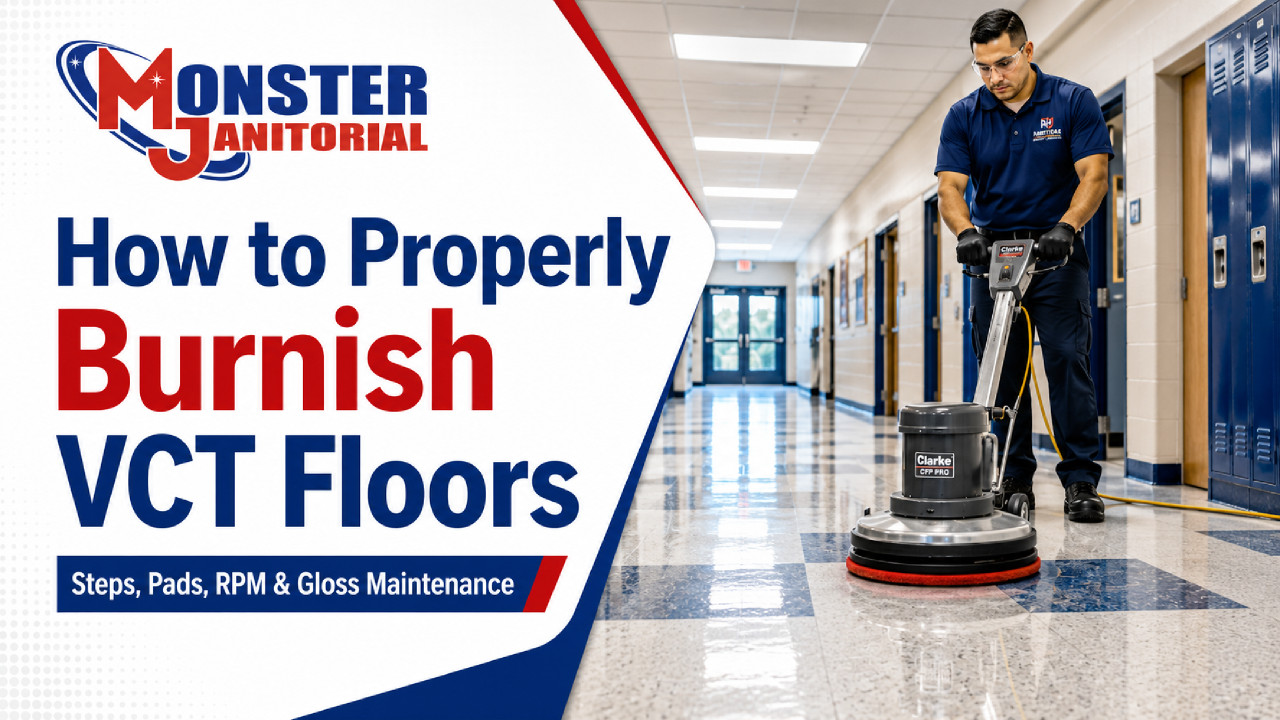
How to Properly Burnish VCT Floors: Steps, Pads, RPM Selection & Gloss Maintenance
Learn how to properly burnish VCT floors to restore gloss, improve appearance, and extend the life of floor finish. This guide explains burnishing procedures, pad selection, machine speeds, common mistakes, and commercial floor maintenance best practices.
What Is VCT Floor Burnishing?
VCT floor burnishing is a high-speed floor maintenance process used to restore shine, improve gloss levels, and maintain the appearance of vinyl composition tile flooring.
Unlike stripping and recoating, burnishing is a routine maintenance procedure that uses friction, heat, and the correct floor pad to smooth the finish surface and increase light reflection.
Quick Answer: How Do You Burnish VCT Floors?
To properly burnish VCT floors, remove dust and debris, clean the surface if needed, select the correct burnishing pad, operate the machine at the correct RPM, maintain a consistent walking speed, and inspect the finished gloss before returning the area to service.
VCT Floor Maintenance Applications
Daily Floor Maintenance
Routine burnishing programs help maintain appearance in schools, hospitals, offices, and commercial buildings with heavy foot traffic.
Gloss Restoration
High-speed burnishing restores shine by smoothing the finish surface and improving reflectivity.
Spray Buffing Programs
Lower-speed machines and spray buff products are used for repairing minor scuffs and maintaining appearance between burnishing cycles.
Commercial Facilities
VCT burnishing is commonly used in schools, healthcare facilities, retail stores, warehouses, and office buildings.
Burnishing vs Spray Buffing VCT Floors
Floor Burnishing
- Uses high-speed equipment
- Restores higher gloss levels
- Requires proper burnishing pads
- Common for finished VCT floors
Spray Buffing
- Used for routine appearance repair
- Removes light scuffs
- Usually lower RPM
- Used between major burnishing cycles
Floor Buffing vs Burnishing: How to Improve Gloss & Fix Dull Commercial Floors
Learn the difference between floor buffing and burnishing, when to use each process, how machine speed affects gloss, and how commercial facilities can restore dull floors.
Read Floor Buffing vs Burnishing Guide →
How to Properly Burnish VCT Floors Step by Step
Following the correct burnishing procedure helps prevent finish damage, uneven gloss, swirl marks, and unnecessary wear. Each step plays an important role in achieving consistent results.
1. Inspect the Floor Condition
Before burnishing, inspect the VCT finish for scratches, worn traffic lanes, deep soil, or areas that may require cleaning or recoating instead of burnishing.
- Check finish condition
- Identify damaged areas
- Remove loose debris
2. Dust Mop the Floor
Dust, sand, and debris must be removed before burnishing. Contaminants left on the floor can create scratches and reduce gloss.
- Remove dirt and grit
- Protect floor finish
- Improve final appearance
3. Clean the Floor if Needed
Burnishing works best on clean floors. Heavy soil, residue, or embedded dirt should be removed before polishing.
- Use an auto scrubber when needed
- Remove chemical residue
- Allow floor to dry completely
4. Select the Correct Burnishing Pad
The floor pad controls how much gloss is produced and how aggressively the finish is polished.
- Match pad to machine speed
- Use pads designed for burnishing
- Replace worn pads
5. Burnish at a Consistent Speed
Operate the burnisher with steady passes and slight overlap. Moving too quickly can create uneven gloss.
- Maintain consistent walking speed
- Overlap passes slightly
- Avoid stopping while the pad is spinning
6. Inspect the Finished Floor
After burnishing, inspect gloss consistency and remove remaining dust before reopening the area.
- Check gloss levels
- Dust mop final residue
- Verify appearance
What RPM Burnisher Do You Need for VCT Floors?
Machine speed affects heat, friction, and gloss development. The correct RPM depends on the floor finish, pad type, and maintenance program.
Low Speed
Typically used for spray buffing, cleaning, and general floor maintenance.
High Speed
Commonly used for VCT burnishing programs to restore gloss and appearance.
Ultra High Speed
Designed for maximum gloss production with compatible finishes and pads.
Choosing the Correct Burnishing Pad for VCT
Burnishing pads are designed for different speeds and maintenance goals. Using the wrong pad can reduce gloss or damage floor finish.
Natural Hair Pads
Often used for high-gloss polishing where maximum shine is desired.
Synthetic Burnishing Pads
Designed for consistent performance and routine commercial floor maintenance.
Diamond Maintenance Pads
Used for certain floor-care programs where polishing and restoration are combined.
Common VCT Burnishing Mistakes
Dust and debris can scratch the finish and reduce gloss results.
The wrong pad can reduce performance or damage floor finish.
RPM must match the pad, finish, and maintenance program.
Fast passes can create uneven gloss and inconsistent appearance.
Damaged finish may require recoating instead of burnishing.
Fine dust left after burnishing reduces final appearance.
How to Maintain Gloss After Burnishing
Daily Dust Removal
Routine dust mopping prevents abrasive soil from wearing the finish.
Routine Cleaning
Proper cleaning helps preserve gloss and prevents buildup.
Scheduled Burnishing
Regular maintenance schedules keep VCT floors looking professional.
VCT Burnishing FAQs
How often should VCT floors be burnished?
The schedule depends on traffic, floor finish condition, facility type, and cleaning program. High-traffic facilities may require more frequent burnishing.
What RPM is best for burnishing VCT floors?
Most VCT burnishing programs use high-speed equipment designed for the selected pad and finish system. Always follow manufacturer recommendations.
Can you burnish dirty VCT floors?
No. Dirt and debris should be removed before burnishing to prevent scratches and poor results.
What pad should be used for VCT burnishing?
The correct pad depends on machine speed, floor finish, and desired gloss level.
Related Floor Care Learning Articles
Recommended Burnisher for Large Commercial VCT Floors
For facilities that require high-gloss results across large areas, the Pioneer Eclipse 400 Series propane burnisher provides the productivity needed for commercial floor maintenance programs. Available in 21-inch and 28-inch configurations, this burnisher is designed for VCT, terrazzo, polished concrete, sealed hard floors, schools, healthcare facilities, retail locations, and contractors. :contentReference[oaicite:1]{index=1}

Pioneer Eclipse 400 Series Propane Floor Burnisher
- 21-inch and 28-inch burnishing widths available
- Propane-powered design for large-area floor maintenance
- Designed for high-speed gloss restoration
- Compatible with finished VCT and sealed hard floors
- Available with clutch and emissions-monitor options
- Built for schools, healthcare, retail, and commercial facilities
Need Help Choosing VCT Floor Care Equipment?
Monster Janitorial can help you choose the right burnishers, floor machines, pads, chemicals, and accessories for your commercial floor maintenance program.
Phone: 956-772-4842
Email: sales@monsterjanitorial.com