
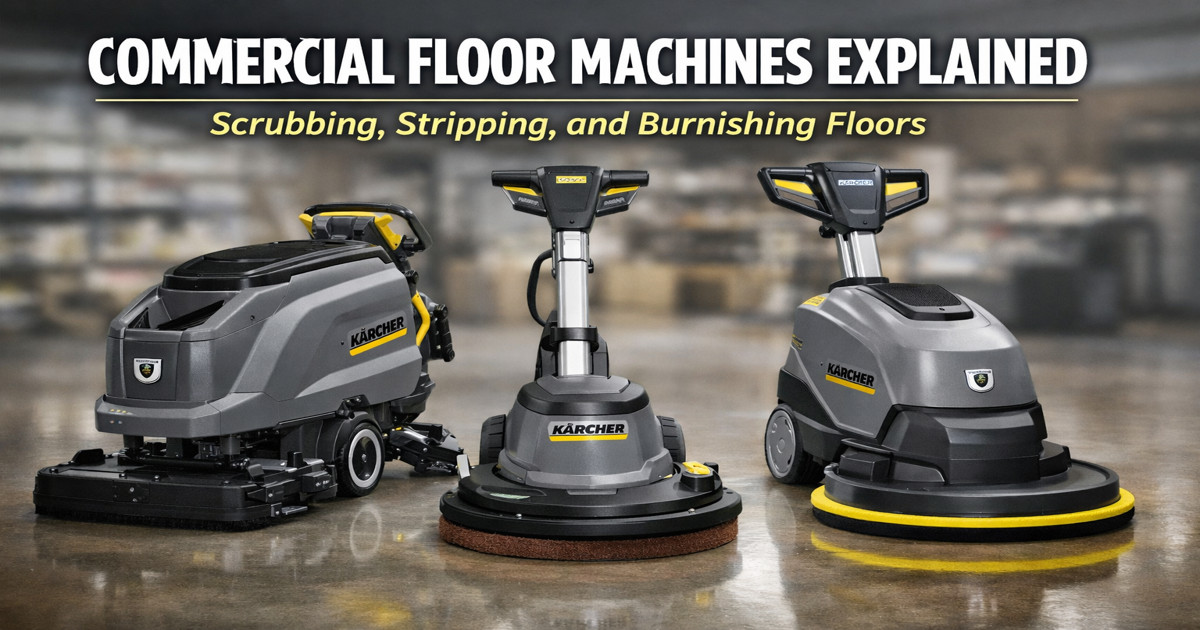
Commercial floor machines are versatile tools used to scrub, strip, polish, spray buff, prepare, restore, and burnish hard floor surfaces in schools, hospitals, retail stores, government buildings, warehouses, airports, offices, and other commercial facilities.
Although many floor machines look similar, they are not designed for the same work. A low-speed rotary machine provides the torque needed for stripping and deep scrubbing. A dual-speed machine adds light polishing flexibility. An orbital machine uses an oscillating motion for floor preparation and restoration. A high-speed burnisher is built specifically to restore gloss on finished floors.
Choosing the correct machine can improve cleaning results, reduce labor time, extend floor finish life, improve operator productivity, and help a facility maintain a cleaner and more professional appearance.
Quick Answer: Choose a low-speed floor machine for stripping, scrubbing, bonnet cleaning, and floor preparation. Choose a dual-speed machine when you want one machine for scrubbing and light polishing. Choose an orbital floor machine for controlled floor preparation, grout cleaning, and restoration work. Choose a high-speed burnisher for restoring gloss and maintaining finished floors.
What Is a Commercial Floor Machine?
A commercial floor machine is a rotary or orbital cleaning machine designed for hard-floor maintenance. Depending on the machine speed and installed accessory, it may use a brush, pad driver, stripping pad, scrubbing pad, polishing pad, or burnishing pad.
Deep Cleaning
Scrubbing
Removes dirt, scuffs, residue, and embedded soil from tile, VCT, concrete, terrazzo, and other hard floors.
Restoration
Stripping
Removes old floor finish, wax buildup, residue, and worn coatings before refinishing.
Appearance Care
Buffing & Polishing
Removes light scuffs and improves floor appearance with a red, white, or polishing pad.
High Gloss
Burnishing
Restores shine and supports a high-gloss floor finish maintenance program.
Scrubbing vs Stripping vs Buffing vs Burnishing
| Process | Purpose | Typical Machine | Common Pad |
|---|---|---|---|
| Scrubbing | Removes dirt, residue, and embedded soil | Low-speed or orbital machine | Blue or green pad |
| Stripping | Removes old finish before recoating | Low-speed or orbital machine | Black or brown pad |
| Buffing | Removes light scuffs and improves appearance | Low-speed or dual-speed machine | Red or white pad |
| Burnishing | Restores gloss on finished floors | High-speed burnisher | Tan or manufacturer-approved burnishing pad |
Floor Machine Types at a Glance
Cleaning Power
Low-Speed Rotary
Typical speed: 150–300 RPM
Best for stripping, scrubbing, bonnet cleaning, floor preparation, and restoration.
Added Flexibility
Dual-Speed
Typical speed: About 175/300+ RPM
Best for facilities that want low-speed scrubbing and light polishing from one machine.
Controlled Movement
Orbital
Movement: Rapid oscillation
Best for grout cleaning, floor prep, chemical reduction, restoration, and reduced operator fatigue.
Gloss Generation
High-Speed Burnisher
Typical speed: 1,000–2,500+ RPM
Best for polishing finished floors and maintaining a bright, reflective appearance.
Choosing a Floor Machine by Floor Type
The floor surface is one of the most important factors when choosing a commercial floor machine. Different floors require different machine speeds, pads, brushes, chemicals, and maintenance methods. Always confirm that the machine, pad, and cleaning product are approved for the specific flooring material.
VCT & Finished Resilient Floors
VCT and other finished resilient floors commonly require both restorative cleaning and regular gloss maintenance.
Recommended equipment: Low-speed machine for stripping and scrubbing, followed by a high-speed burnisher for maintaining gloss after new finish is applied.
Ceramic Tile & Grout
Tile and grout often require strong agitation to remove soil from textured surfaces and recessed grout lines.
Recommended equipment: Low-speed rotary machine with the correct brush or an orbital machine for controlled grout cleaning and reduced splash.
Terrazzo
Terrazzo may be scrubbed, polished, or restored depending on whether the surface is coated, sealed, or mechanically polished.
Recommended equipment: Low-speed or orbital machine for cleaning and restoration. Use a burnisher only when the floor system and finish manufacturer allow high-speed polishing.
Sealed Concrete
Sealed concrete can often be scrubbed with a rotary or orbital machine, but the pad and chemical must be compatible with the sealer.
Recommended equipment: Low-speed or orbital machine for routine cleaning. Burnishing may be appropriate for certain polished or finished concrete systems.
Natural Stone
Marble, limestone, granite, and other stone surfaces require careful pad, chemical, and machine selection to avoid scratching, etching, or damaging the finish.
Recommended equipment: Low-speed or orbital machine with stone-specific pads and chemicals. Use only processes approved for the particular stone type.
Wood & Gym Floors
Wood floors are sensitive to excess moisture, aggressive pads, and incorrect chemicals. Finished gym floors also require products approved for the existing coating.
Recommended equipment: Orbital or low-speed machine with manufacturer-approved pads and minimal moisture. Avoid aggressive stripping unless the floor is being professionally refinished.
Rubber Flooring
Rubber floors may be damaged by aggressive pads, high heat, or incompatible chemicals.
Recommended equipment: Low-speed machine with a soft or manufacturer-approved pad. Confirm whether the specific rubber floor is coated or uncoated before polishing.
Textured & Non-Slip Floors
Textured safety floors can trap soil below the surface where a flat pad may not provide enough contact.
Recommended equipment: Low-speed floor machine with a compatible scrubbing brush that can reach into the floor texture.
Important: The same floor type may require different equipment depending on whether it is uncoated, sealed, finished, polished, or damaged. Confirm the flooring manufacturer’s maintenance instructions before using aggressive pads, stripping chemicals, or high-speed burnishing equipment.
Low-Speed Floor Machines Explained
A low-speed floor machine typically operates between 150 and 300 RPM. These machines are also called rotary floor machines, swing machines, buffers, or rotary scrubbers.
Low-speed machines provide the torque and control needed for aggressive maintenance tasks. They can be paired with different pads, brushes, pad drivers, and solution tanks, making them one of the most versatile tools in a commercial floor-care program.
Common Low-Speed Applications
- Removing old floor finish
- Deep scrubbing tile, VCT, concrete, and terrazzo
- Carpet bonnet cleaning
- Stone floor restoration
- Floor preparation before coating or refinishing
- Spray buffing and light polishing
- General facility floor maintenance
Choose a low-speed machine when: your primary jobs involve stripping, scrubbing, floor preparation, bonnet cleaning, or restoration rather than high-gloss finish maintenance.
Dual-Speed Floor Machines Explained
A dual-speed floor machine usually provides one lower speed for scrubbing and one higher speed for buffing or light polishing. This allows a facility to complete multiple maintenance tasks with one machine.
Dual-speed machines are useful for schools, offices, smaller commercial buildings, and contractors who need versatility but do not require the gloss performance of a dedicated burnisher.
Lower-Speed Setting
Used for scrubbing, stripping, floor preparation, and other torque-dependent applications.
Higher-Speed Setting
Used for spray buffing, light polishing, and routine appearance maintenance.
Important: A dual-speed machine does not replace a true high-speed burnisher. It can perform light polishing, but it will not create the same gloss as a machine operating at 1,000–2,500+ RPM.
Recommended dual-speed option: Pioneer Eclipse 250MGP17 Floor Polisher.
What About Orbital Floor Machines?
Orbital floor machines use rapid oscillating movement instead of the traditional circular motion of a rotary machine. This controlled movement can help reduce side-to-side pull, splash, and swirl marks.
Benefits of Orbital Floor Machines
- Reduced operator fatigue
- Controlled floor preparation
- Effective grout cleaning
- Reduced chemical use in some applications
- Less splash than many traditional rotary machines
- Useful for VCT stripping and wood floor preparation
Orbital systems are commonly used for VCT stripping, tile and grout cleaning, wood floor preparation, surface restoration, and chemical-reduction floor-care programs.
High-Speed Burnishers Explained
A floor burnisher is a high-speed polishing machine designed to restore gloss on finished commercial floors. Burnishers are commonly used on VCT, terrazzo, sealed concrete, and other floors protected by a compatible commercial floor finish.
Unlike low-speed machines, burnishers are not designed for stripping, aggressive scrubbing, or heavy soil removal. Their primary purpose is maintaining and restoring floor shine.
Primary Purpose
Gloss Restoration
Restores shine after floors have been cleaned and finished.
Best Surfaces
Finished Hard Floors
Used on compatible finished VCT, terrazzo, and sealed commercial floors.
Not Designed For
Stripping or Scrubbing
Use a low-speed or orbital machine for aggressive cleaning and finish removal.
What Does RPM Mean?
RPM stands for Revolutions Per Minute. It measures how quickly the machine’s pad rotates.
Lower RPM generally provides more torque and control for stripping and scrubbing. Higher RPM generates the speed and friction used to restore gloss on compatible finished floors. Higher RPM does not automatically mean the machine is better; it means the machine is designed for a different type of floor-care task.
| Machine Type | Typical Speed | Primary Application |
|---|---|---|
| Low-Speed Rotary | 150–300 RPM | Stripping, scrubbing, floor prep, bonnet cleaning |
| Dual-Speed Machine | Approximately 175/300+ RPM | Scrubbing and light polishing |
| High-Speed Burnisher | 1,000–1,500 RPM | Routine gloss restoration |
| Ultra High-Speed Burnisher | 2,000–2,500+ RPM | Maximum gloss and reflectivity |
Low Speed = Cleaning Power
High Speed = Gloss Generation
Lower RPM
- More torque and control
- Better for stripping
- Better for deep scrubbing
- Restoration focused
Higher RPM
- More gloss potential
- Better for burnishing
- Improves reflectivity
- Appearance focused
175 RPM vs 1200 RPM vs 2000 RPM
175 RPM Floor Machine
Best for:
- Floor stripping
- Deep scrubbing
- Spray buffing
- Bonnet cleaning
- Floor preparation
Example: TASKI ergodisc 175
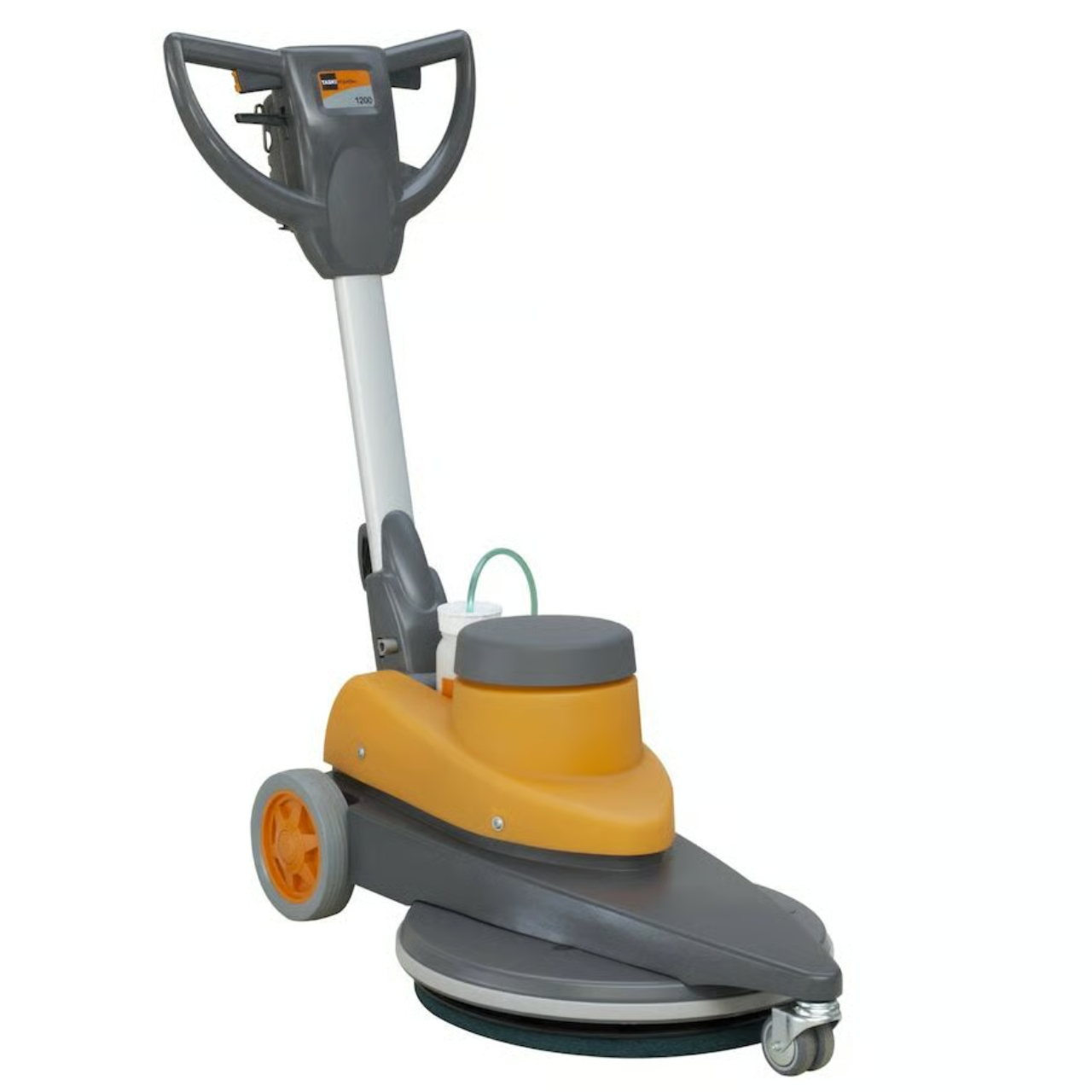
1200 RPM Burnisher
Best for:
- Schools
- Healthcare facilities
- Office buildings
- Routine gloss restoration
- Controlled appearance programs
Example: TASKI ergodisc 1200
2000 RPM Burnisher
Best for:
- Retail stores
- Airports
- Public buildings
- Maximum gloss programs
- Reflective floor finishes
Example: TASKI ergodisc 2000
Floor Machine vs Burnisher Comparison
| Feature | Low-Speed Floor Machine | High-Speed Burnisher |
|---|---|---|
| Typical Speed | 150–300 RPM | 1,000–2,500+ RPM |
| Main Purpose | Cleaning, stripping, and restoration | Gloss restoration and finish maintenance |
| Torque | Higher torque for aggressive work | Designed around speed and pad contact |
| Accessories | Brushes, pad drivers, stripping and scrubbing pads | Manufacturer-approved burnishing pads |
| Effect on Finish | Can remove or prepare finish | Enhances compatible floor finish |
| Best For | Deep cleaning, prep, and restoration | Ongoing appearance maintenance |
Best practice: Many facilities use both machine types. A low-speed machine handles stripping and scrubbing, while a burnisher maintains shine after the floor finish has been applied.
Corded Electric Burnishers
Corded electric burnishers are a common choice for schools, healthcare facilities, offices, retail stores, and buildings with reliable outlet access.
Benefits of Corded Burnishers
- Consistent power without refueling
- No on-site propane handling
- Lower direct emissions during operation
- Often quieter than engine-powered equipment
- Simple fit for routine gloss maintenance routes
Best for: Schools, healthcare facilities, offices, smaller retail spaces, and commercial buildings with accessible outlets.
Propane Burnishers
Propane burnishers are designed for high productivity in large open spaces. Because the operator is not limited by a power cord, these machines are commonly used in large retail stores, warehouses, airports, industrial facilities, and high-square-footage maintenance routes.
Benefits of Propane Burnishers
- Cord-free mobility
- High productivity in large open areas
- Long operating routes between refueling
- Good fit for big-box retail and warehouses
- Useful for overnight or large-scale floor maintenance
Safety note: Propane burnishers should only be operated by trained personnel following the machine manufacturer’s ventilation, maintenance, fuel-handling, and safety instructions.
Corded vs Propane Burnisher Comparison
| Feature | Corded Electric | Propane |
|---|---|---|
| Power Source | Electrical outlet | Propane engine |
| Mobility | Limited by cord and outlet access | Cord-free movement |
| Best Facility Type | Schools, offices, healthcare, smaller retail | Warehouses, airports, big-box retail, large open facilities |
| Operation | Plug-in operation | Requires fuel handling and trained operation |
| Productivity | Good for routine and moderate-size routes | Higher productivity in large open areas |
Why Dust Control Matters When Burnishing
High-speed burnishing can create fine dust from floor finish, pad wear, and surface residue. Without dust control, particles may settle on nearby fixtures and increase cleanup requirements after burnishing.
Benefits of Dust-Control Burnishers
- Helps reduce airborne floor-finish dust
- Reduces post-burnish cleanup
- Helps prevent dust from settling on nearby surfaces
- Supports cleaner maintenance in occupied buildings
- Useful for schools, healthcare, offices, and public facilities
Depending on the design, burnishers may use a dust skirt, passive collection system, filter bag, or vacuum-assisted dust-control system.
Which Machine Should You Choose?
Choose Low Speed
Choose a low-speed floor machine when your priority is stripping, deep scrubbing, bonnet cleaning, floor preparation, or restoration.
Choose Dual Speed
Choose a dual-speed machine when you want scrubbing and light polishing capability in one unit.
Choose Orbital
Choose an orbital machine for grout cleaning, controlled floor prep, restoration, and reduced chemical-use programs.
Choose a Burnisher
Choose a burnisher when your primary goal is polishing finished floors and maintaining a high-gloss appearance.
Which RPM Is Best for Your Facility?
| Facility Type | Common Equipment Choice | Why |
|---|---|---|
| Schools | Low-speed machine plus 1,200 RPM burnisher | Supports stripping, scrubbing, and routine gloss maintenance |
| Healthcare | Electric burnisher with dust control | Supports occupied-building maintenance and reduced cleanup |
| Office Buildings | Dual-speed machine or 1,200 RPM burnisher | Balances versatility with routine appearance care |
| Retail Stores | 1,500–2,000+ RPM burnisher | Supports a bright customer-facing appearance |
| Warehouses | Heavy-duty low-speed machine or propane burnisher | Supports large areas and productivity-focused routes |
| Airports & Public Buildings | High-productivity 2,000+ RPM burnisher | Helps maintain large, visible floor areas |
Choosing the Right Floor Pads
Pad selection is one of the most important factors in floor-machine performance. Pad colors are commonly associated with specific tasks, but always verify the pad manufacturer’s instructions, machine-speed rating, floor type, and finish compatibility.
Black Pad
Heavy stripping
Brown Pad
Wet stripping
Green Pad
Heavy scrubbing
Blue Pad
Medium scrubbing
Light Blue Pad
Spray cleaning
Red Pad
Light cleaning and polishing
White Pad
Polishing
Tan Pad
High-speed burnishing
Read the complete floor pad selection guide for more information.
Recommended Commercial Floor Machines & Burnishers
Featured Commercial Floor Care Systems
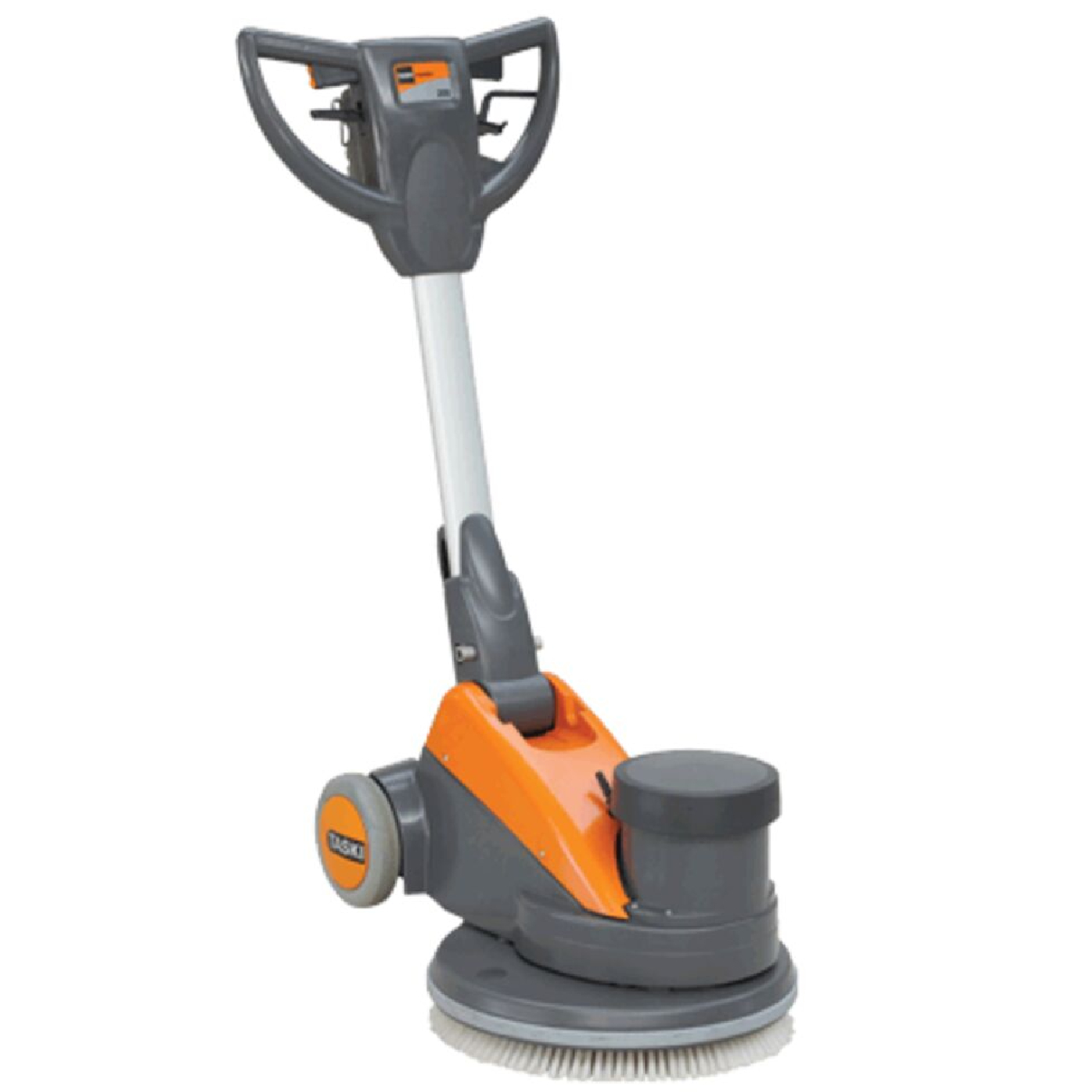
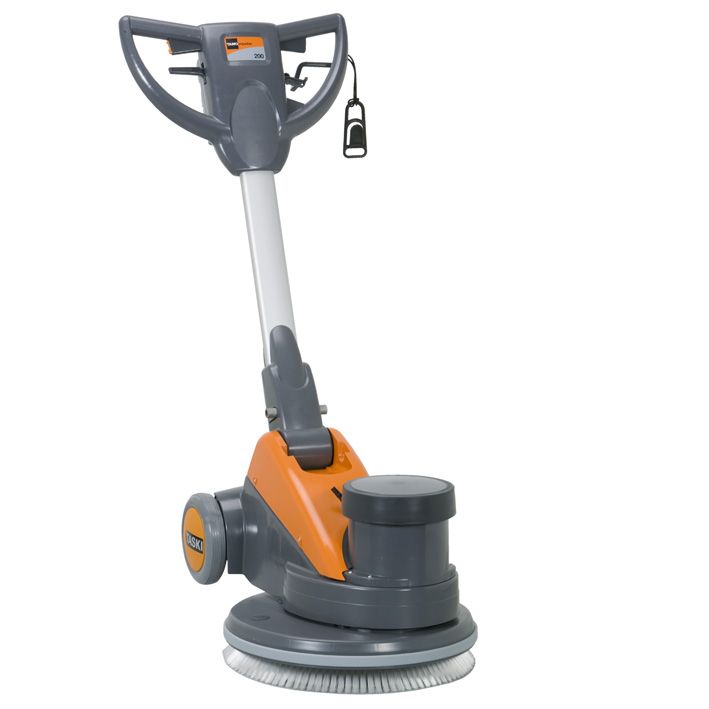
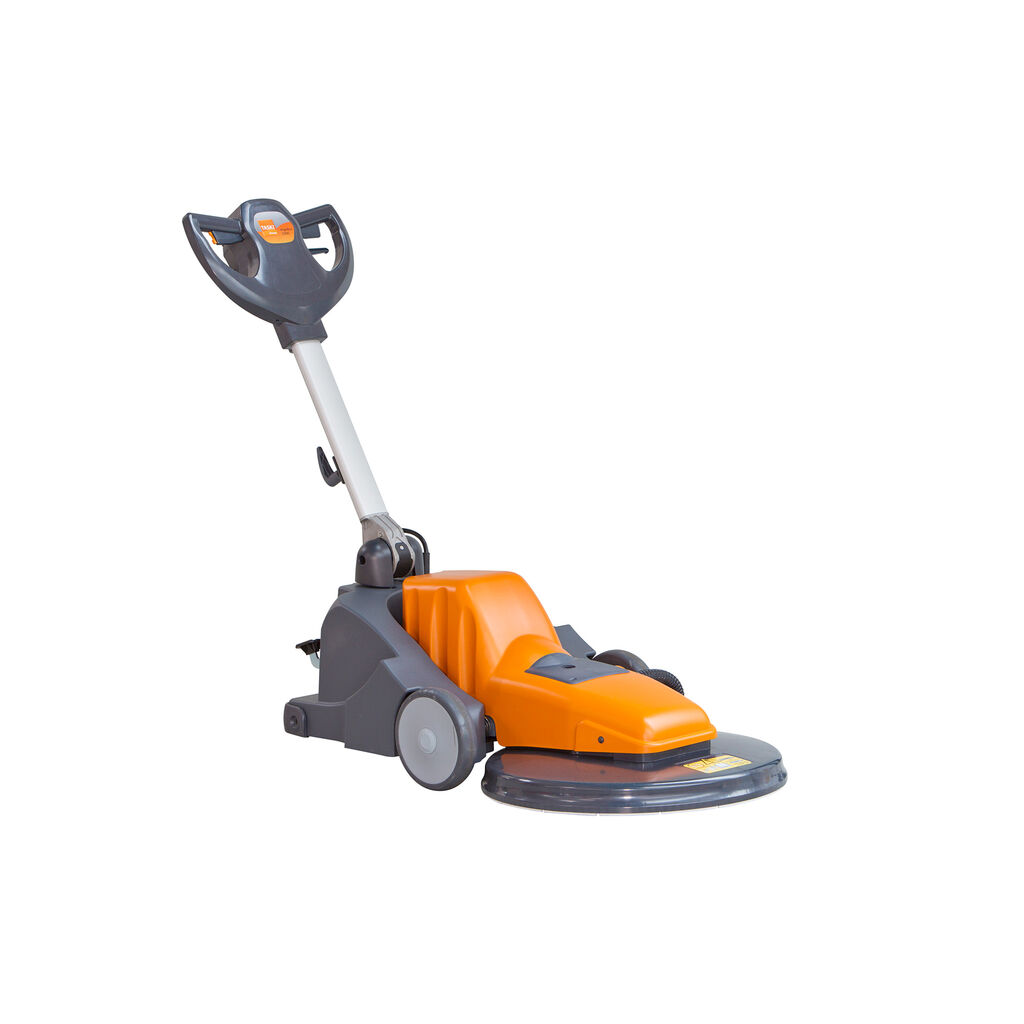
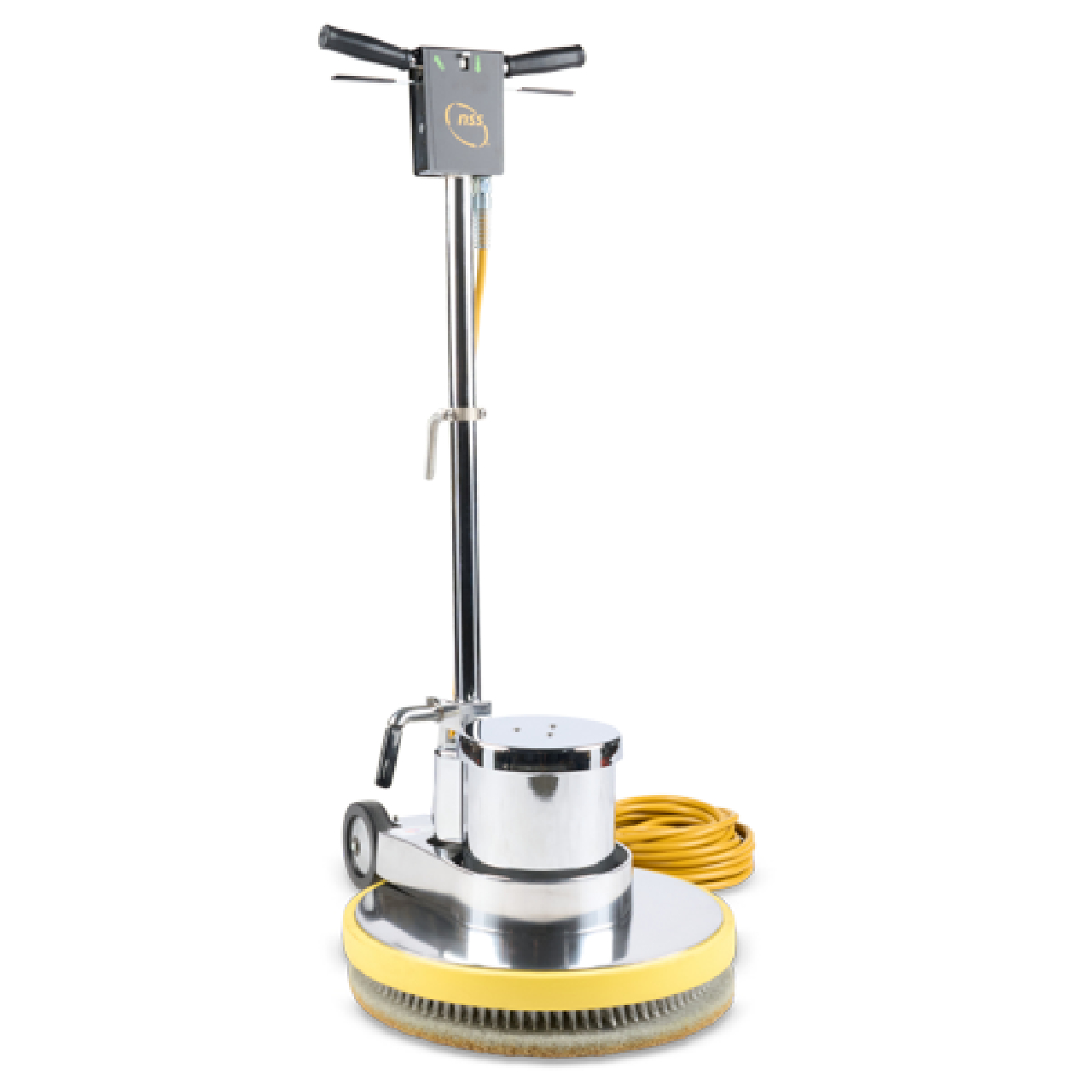
TASKI Floor Machines for Scrubbing, Stripping, Polishing & Burnishing
Compare low-speed rotary machines, orbital systems, carpet-care equipment, wet recovery equipment, and high-speed burnishers for complete commercial floor maintenance programs.
Shop Commercial Floor Machines & Burnishers
- Shop Commercial Floor Machines
- Shop Dual-Speed Floor Machines
- Shop High-Speed Burnishers
- Shop Floor Pads, Brushes & Pad Drivers
Need Help Choosing the Right Machine?
Monster Janitorial can help compare low-speed floor machines, dual-speed machines, orbital systems, corded burnishers, propane burnishers, dust-control equipment, pads, brushes, pad drivers, and floor-care chemicals.
Email sales@monsterjanitorial.com or call 956-772-4842 for equipment recommendations.
Institutional Purchasing Support
D-U-N-S Number: 080901706
UEI Number: U4TYL7A5LEN9
Purchase orders accepted
Bid and specification support available
Why Choose Monster Janitorial?
- Commercial cleaning equipment for schools, healthcare, government, retail, warehouses, and contractors
- Help matching equipment to floor type, square footage, and maintenance goals
- Floor machines, burnishers, pads, brushes, chemicals, accessories, and replacement parts
- Fast order processing
- 30-Day Returns
Tax-Exempt Purchasing
Schools, government agencies, and tax-exempt organizations can create an account and submit their exemption certificate for tax-free purchasing.
Create an Account and email your tax exemption certificate to sales@monsterjanitorial.com for review.
MJ University Learning Center
Explore equipment guidance, carpet-care information, maintenance tips and commercial cleaning resources from Monster Janitorial.
Visit MJ University