
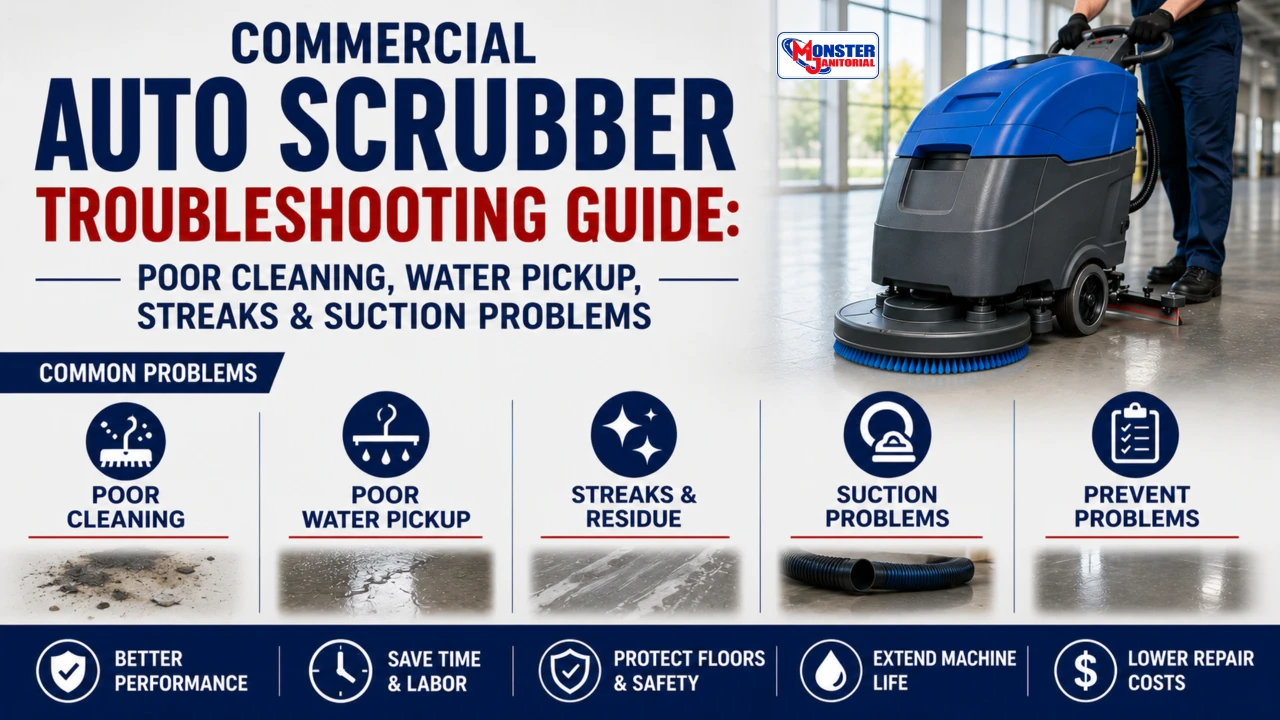
Commercial Auto Scrubber Troubleshooting Guide: Poor Cleaning, Water Pickup, Streaks & Suction Problems
If an auto scrubber is leaving water behind, streaking, not dispensing solution, or simply not cleaning like it should, the problem is often somewhere in the cleaning, solution, or recovery system.
Use this guide to narrow down the cause before replacing parts or increasing brush pressure, chemical concentration, or pad aggressiveness.
Start With the Symptom
Poor auto scrubber performance usually falls into one of four areas: cleaning performance, solution delivery, water recovery, or electrical/mechanical operation. Identify which system is failing before making adjustments.
What Is Your Auto Scrubber Doing?
Auto Scrubber Is Not Picking Up Water
When an auto scrubber leaves water behind, start at the floor and work backward through the recovery system.


Why Is the Scrubber Leaving Streaks?
The location and shape of the wet streak can help identify the problem.
Inspect the blade for a nick, tear, embedded debris, or damaged edge at that location.
Check blade contact, vacuum airflow, hose restriction, tank seals, and squeegee adjustment.
Excessive turning speed or poor squeegee tracking may reduce recovery.
Deep texture can make complete recovery more difficult and may require slower travel or a different recovery setup.
Auto Scrubber Is Running but the Floor Is Still Dirty
Poor cleaning does not automatically mean the machine needs more pressure or a more aggressive pad.
Auto Scrubber Is Not Dispensing Water or Cleaning Solution
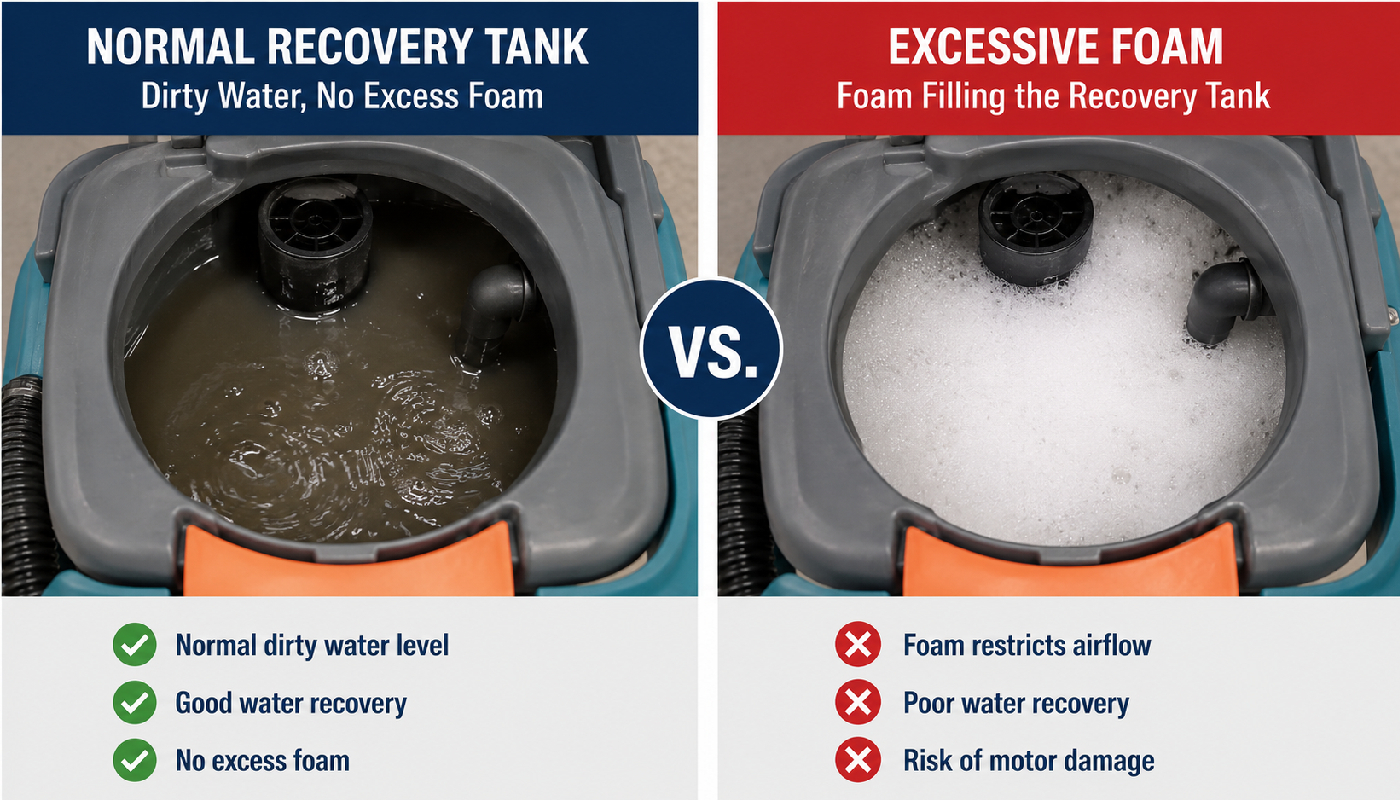
Excessive Foam Can Reduce Recovery Performance
Auto scrubbers are generally intended to be used with compatible low-foaming cleaning chemistry. Excessive foam can interfere with recovery performance and may activate float or shutoff systems before the tank is actually full.
Weak or No Vacuum Suction
A weak recovery system does not automatically mean the vacuum motor has failed.
Brush or Pad Is Not Turning
Stop operating the machine if the deck is not functioning normally. Continuing to run a stalled or overloaded system can cause additional damage.
Scrubber Runs but Runtime Is Short
Short runtime may be caused by charging practices, battery age, battery condition, loose connections, heavy brush pressure, or demanding machine settings.
Floor Scrubber Battery Guide →Quick Auto Scrubber Diagnosis
| Symptom | Check First | Then Check |
|---|---|---|
| Water left behind | Squeegee blades | Hose, seals, vacuum airflow |
| Narrow wet streak | Blade debris or nick | Blade wear and adjustment |
| No solution | Tank and flow control | Filter, hoses, valves |
| Poor cleaning | Pad or brush | Chemistry, dwell, speed, soil |
| Weak suction | Recovery hose | Tank seal, float, vacuum motor |
| Brush not turning | Battery / breaker | Deck obstruction, motor, controls |
| Excessive foam | Chemical and dilution | Existing detergent residue |
Do Not Solve Every Problem With More Pressure or a More Aggressive Pad
If a floor remains dull, stained, sticky, or discolored, determine whether the problem is soil, chemical residue, coating wear, floor damage, or incompatible maintenance before increasing scrubbing aggression.
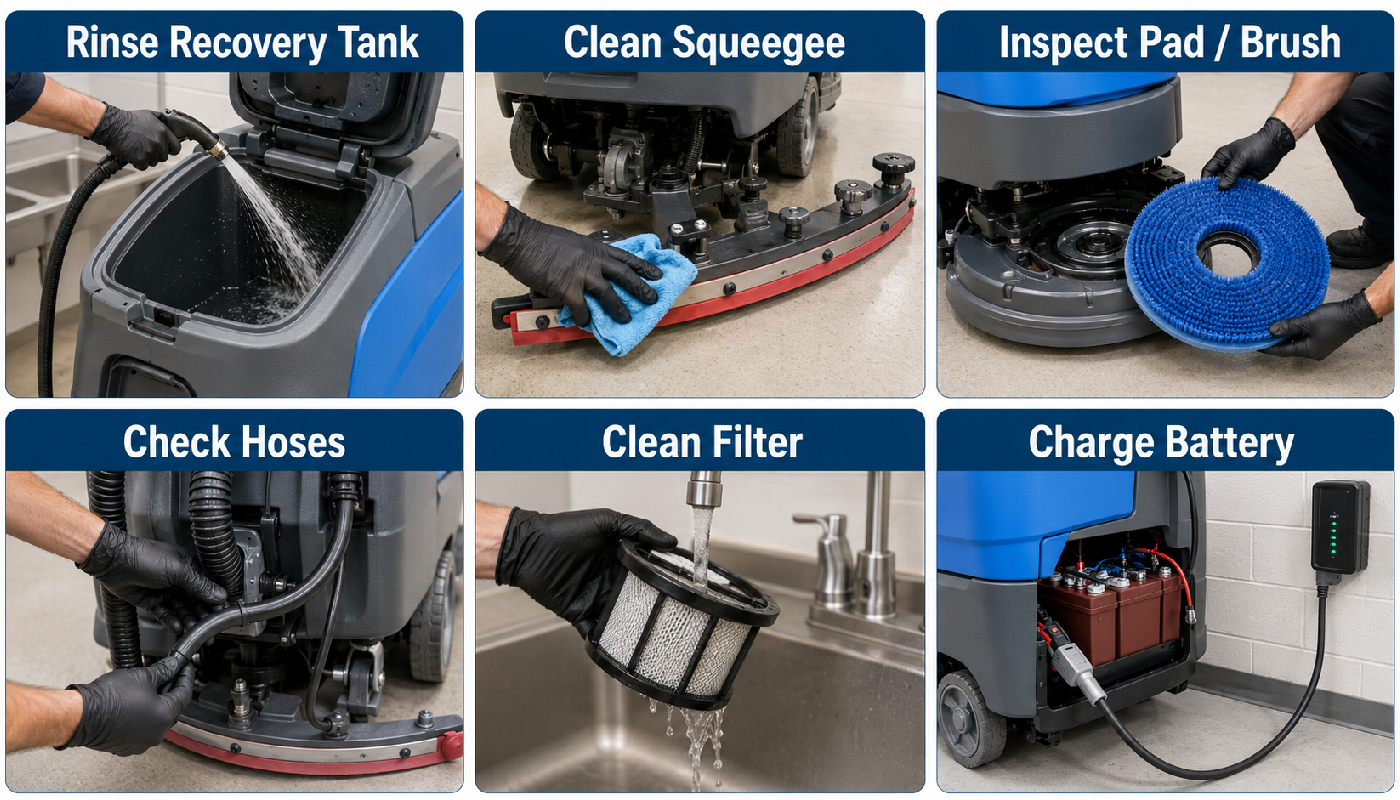
Basic Auto Scrubber Maintenance After Use
When the Scrubber May Need Professional Service
- Vacuum motor does not operate or has abnormal noise.
- Brush or drive motor repeatedly trips a breaker or fault.
- Solution solenoid or pump does not operate after filters and lines are checked.
- Battery or charging faults continue after normal inspection.
- Electrical connectors, wiring, controllers, or switches are damaged.
- Mechanical deck, steering, drive, or recovery components are damaged or leaking.
Learn More About Auto Scrubbers
How to Choose the Right Commercial Floor Scrubber
Compare machine size, cleaning path, productivity, battery runtime, and facility layout.
Read Selection Guide →Disc vs Cylindrical Floor Scrubbers
Compare scrubber deck systems for different floor profiles and soil conditions.
Read Deck Guide →Floor Scrubber Batteries Explained
Compare AGM, Gel, lithium, and flooded battery systems.
Read Battery Guide →How to Improve Floor Drying Times
Improve squeegee recovery, vacuum performance, solution control, and drying.
Read Drying Guide →Auto Scrubbers Learning Center
Explore auto scrubber selection, batteries, brushes, pads, deck systems, machine comparisons, maintenance, drying performance, and troubleshooting.
Visit Auto Scrubbers Learning Center →Shop Auto Scrubber Equipment & Supplies
Auto Scrubber Troubleshooting FAQs
Why is my auto scrubber leaving water behind?
Start by checking the squeegee blades for wear or debris, then inspect the recovery hose, tank seals, float system, and vacuum airflow.
Why does my scrubber leave one wet streak?
A narrow wet streak often points to debris, a nick, worn rubber, or another defect in the squeegee blade at that location.
Why is my auto scrubber not cleaning the floor?
Check the pad or brush, solution flow, chemistry, travel speed, soil type, and floor condition before increasing pressure or using a more aggressive pad.
Why is there so much foam in the recovery tank?
Excessive foam may result from incorrect chemical dilution, high-foaming chemistry, or detergent residue already on the floor.
When should an auto scrubber be professionally repaired?
Professional service may be appropriate when electrical faults, motor problems, charging issues, damaged mechanical components, or solution-system failures remain after normal cleaning and inspection.
Need Help Troubleshooting an Auto Scrubber?
Monster Janitorial can help identify scrubber recovery problems, squeegee issues, brushes and pads, cleaning chemistry, batteries, replacement parts, and equipment options.
Tax-exempt purchasing and purchase-order support are available for qualifying schools, universities, government agencies, municipalities, healthcare facilities, and other institutional customers.