
Floor Care & Drying Guide
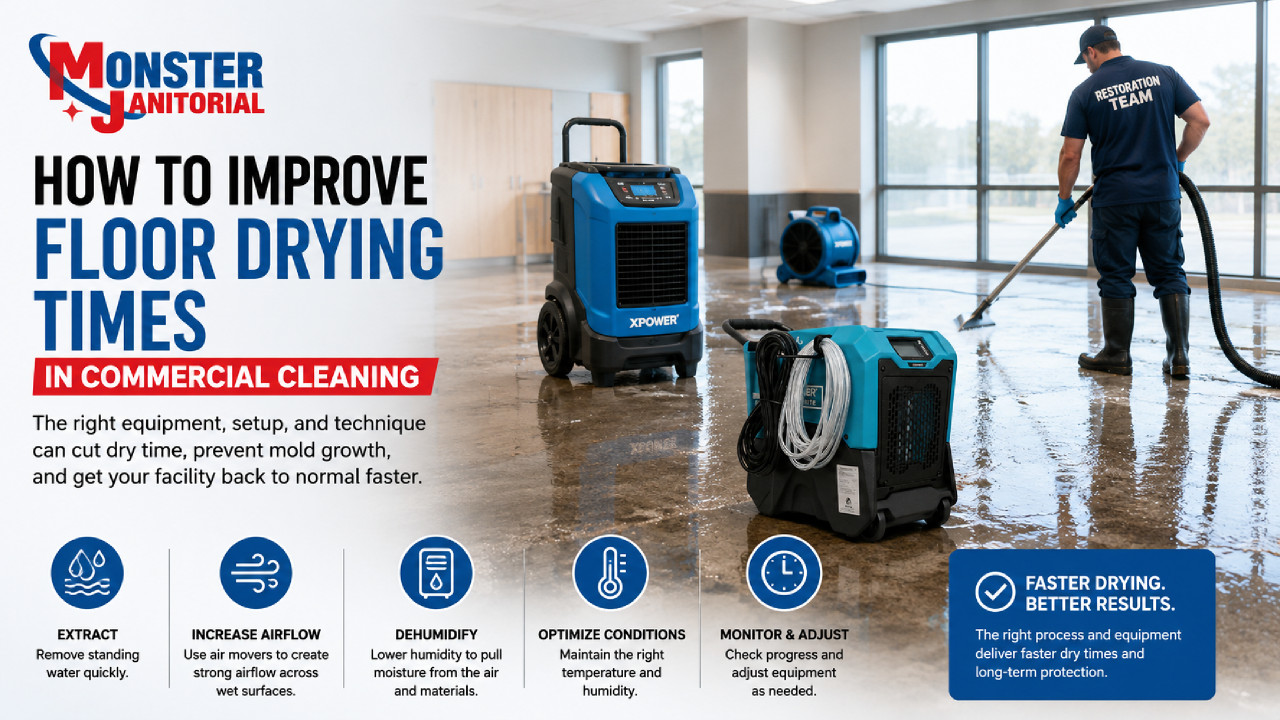
How to Improve Floor Drying Times in Commercial Cleaning
Learn how water recovery, controlled solution use, air movers, ventilation, dehumidification, and proper equipment placement work together to reduce commercial floor drying times.
Quick Answer
Recover Water First, Then Increase Airflow
The fastest way to dry commercial floors is to control water usage, recover standing water with a wet vacuum or scrubber recovery system, and use air movers to move air across the floor surface.
Remove Water First
Wet Recovery
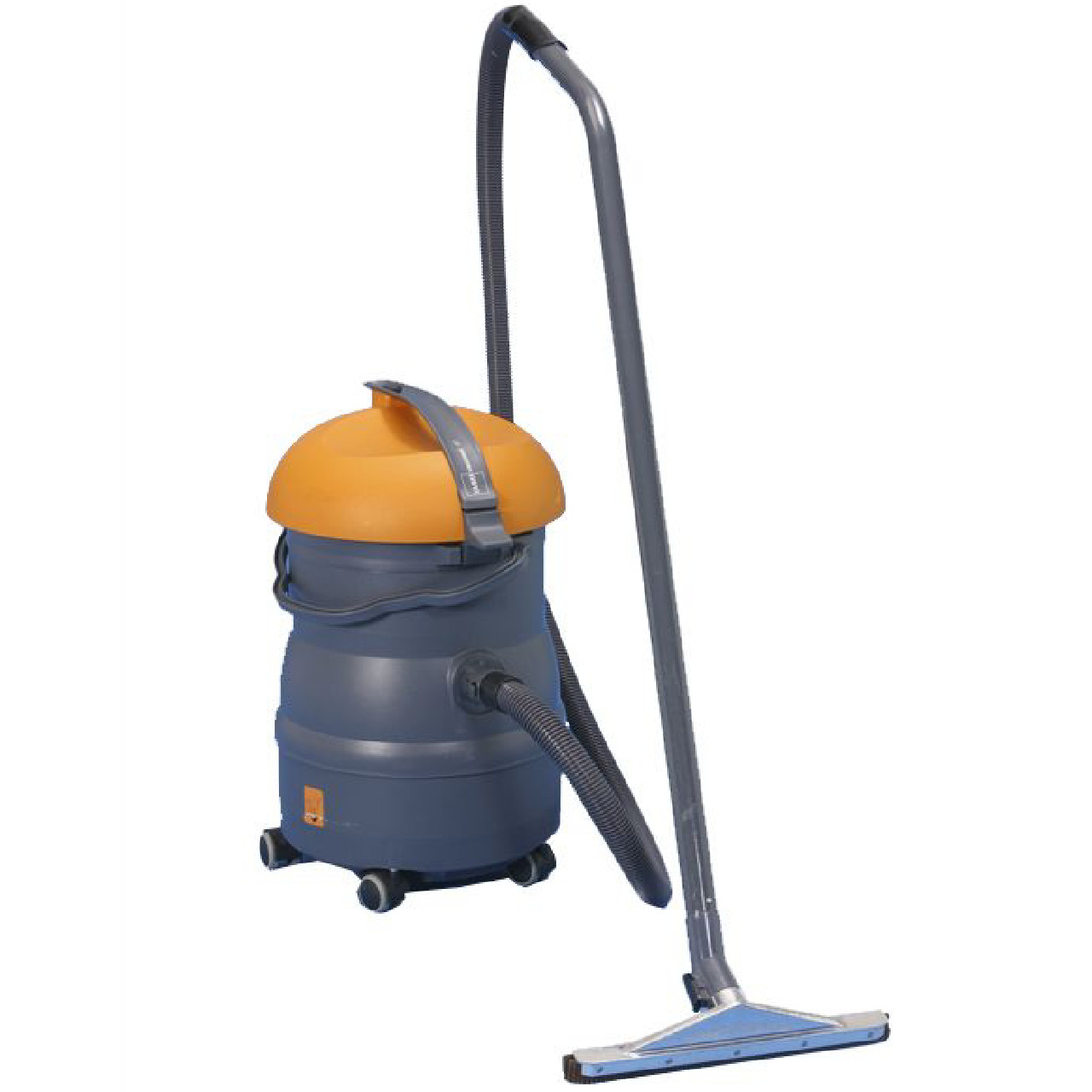
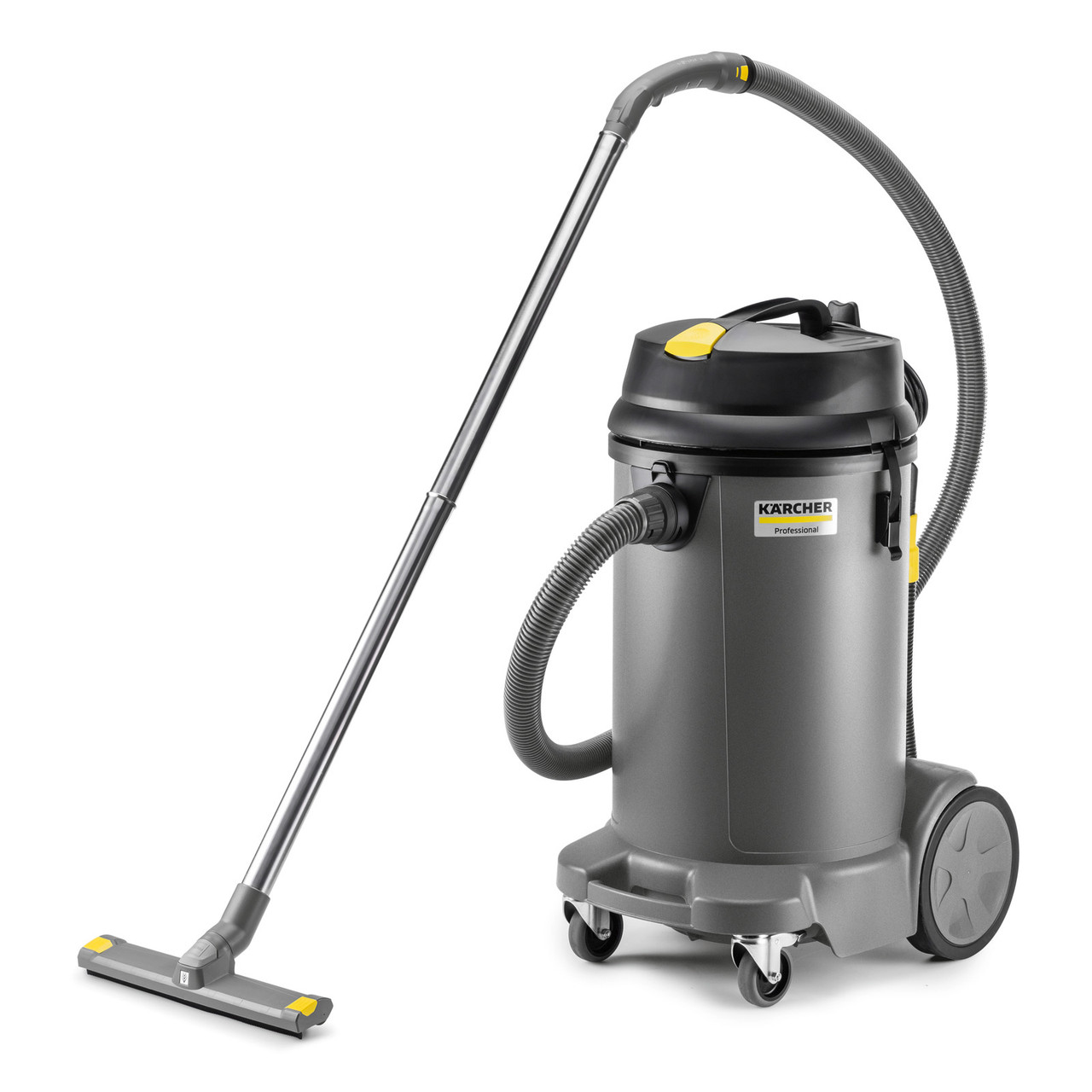
Wet/dry vacuums and scrubber recovery systems remove standing water, spills, slurry, and rinse water before airflow is applied.
Move Air Across Floors
Air Movement
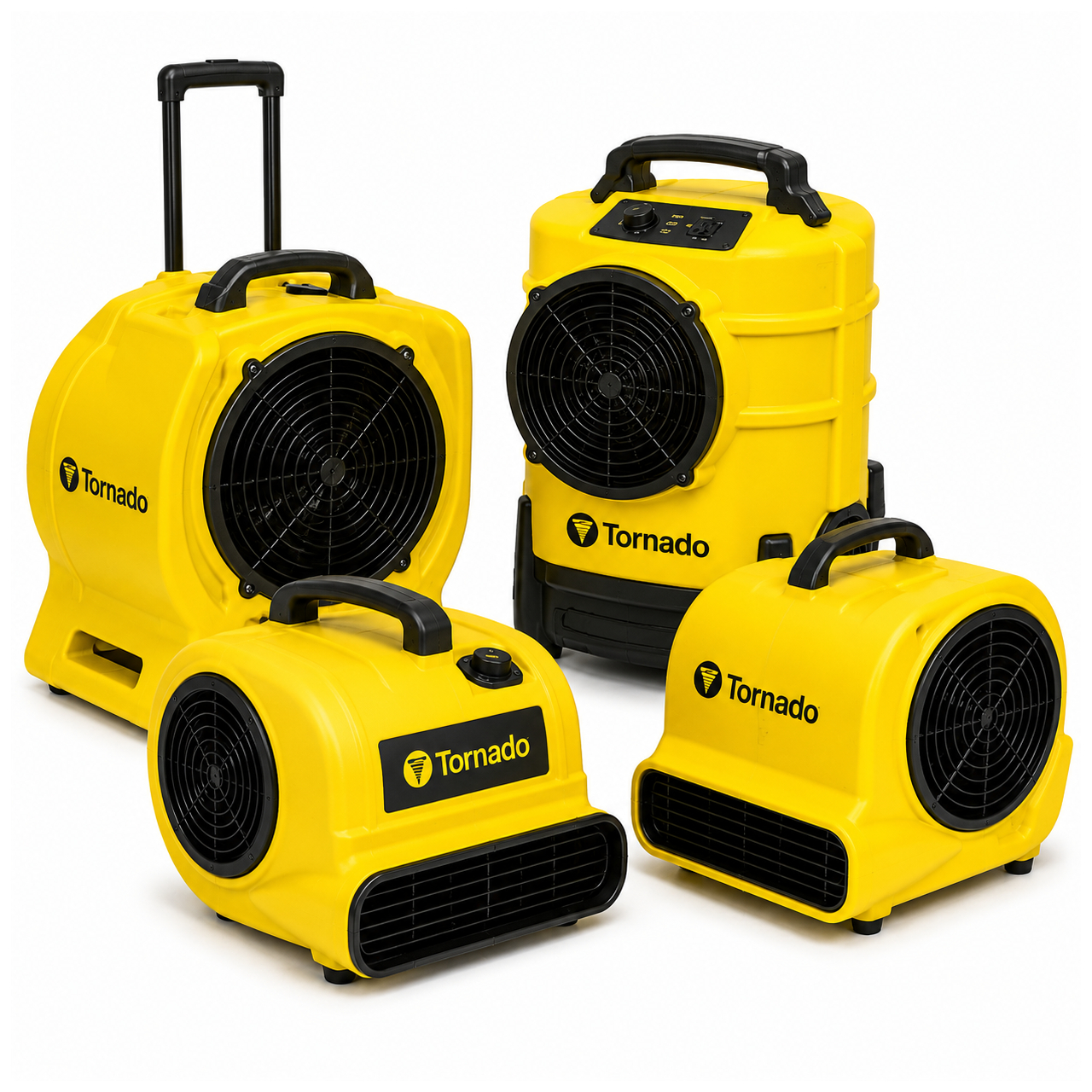
Air movers and drying fans help accelerate evaporation, reduce downtime, and keep cleaned areas safer for foot traffic.
Shop equipment: Wet/Dry Vacuums | Air Movers & Drying Fans
Step 2
Control Water Usage
Using too much cleaning solution is one of the biggest causes of slow drying. Controlled moisture application improves predictability and reduces recovery time.
Faster Commercial Floor Drying
Position Air Movers to Push Air Across Wet Floors

Step 4
Optimize Cleaning Practices
Proper technique directly affects drying performance. Overusing chemicals, leaving residue, or failing to recover water properly can slow drying.
Respond to Spills Quickly
Remove spills before they spread or become tracked through the facility.
Use Quick-Dry Methods
Choose lower-moisture methods when cleaning during operating hours.
Train Staff
Use consistent cleaning, recovery, and air-mover placement procedures.
Inspect Recovery Systems
Check squeegee blades, vacuum hoses, tanks, and recovery components.
Step 5
Match Equipment to the Facility
Healthcare
Fast drying helps reduce slip risks and supports sanitation.
Retail
Minimize downtime and keep aisles safer for customers.
Warehouses
Large concrete floors require strong recovery and airflow.
Schools
Support safer reopening of hallways, cafeterias, and classrooms.
Restaurants
Frequent spills require quick-response recovery equipment.
Offices and Public Buildings
Clean during low-traffic periods and keep access routes dry.
Bottom Line
Faster drying comes from the right combination of water control, recovery equipment, and airflow. Wet vacuums, auto scrubber recovery systems, air movers, ventilation, and dehumidifiers should be used as parts of one coordinated process.
Recommended Drying & Recovery Equipment
Wet Vacuums, Air Movers & Floor Recovery Equipment
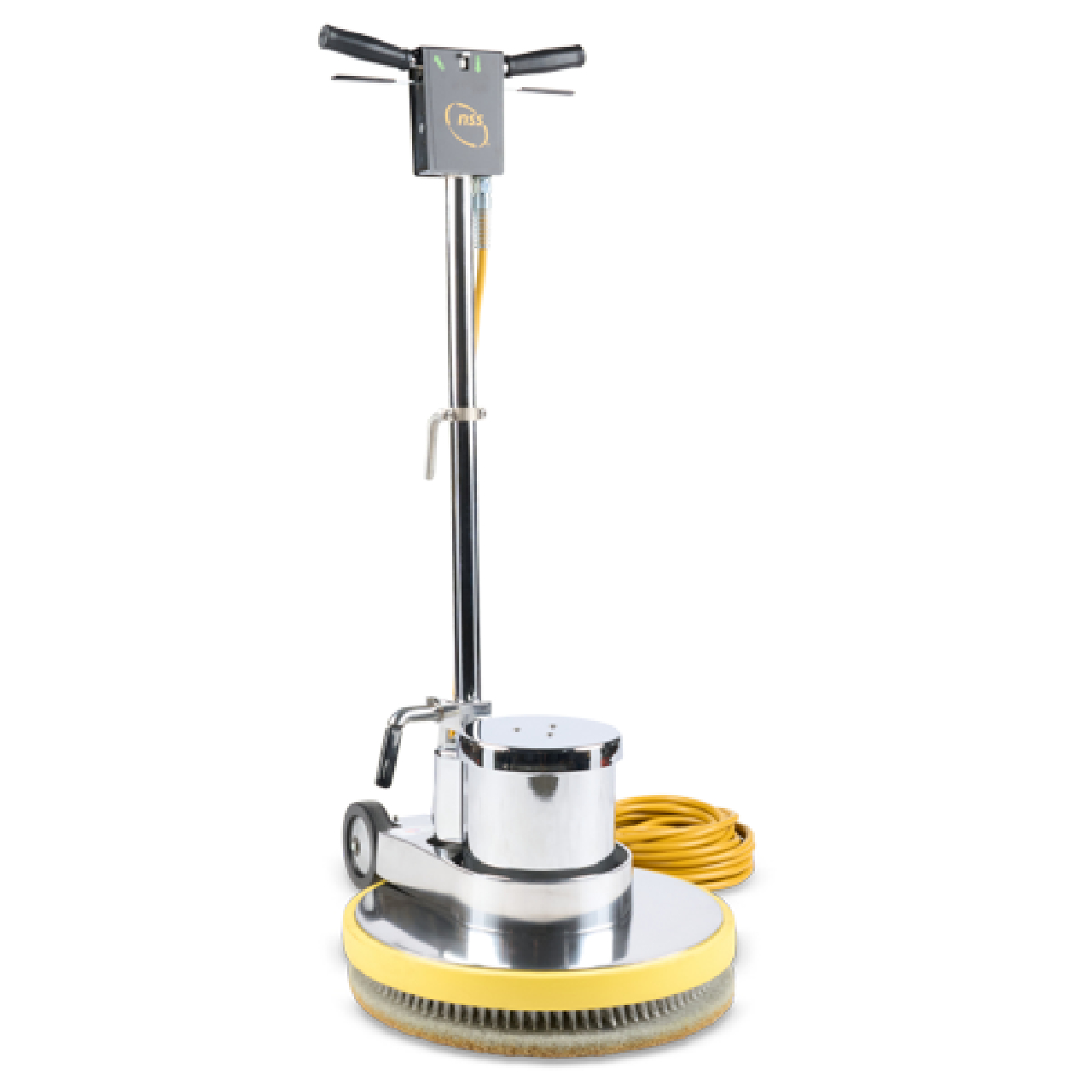
Reduce drying times with commercial wet recovery vacuums, wet/dry vacuums, auto scrubbers, and air movers designed for spills, floor stripping cleanup, and post-cleaning airflow.
Need Help Choosing Construction Dust-Control Equipment?
Monster Janitorial can help you compare HEPA air scrubbers, filtration stages, airflow, ducting, portability, and equipment for renovation or occupied-building projects.
Call: 956-772-4842 | Email: sales@monsterjanitorial.com