
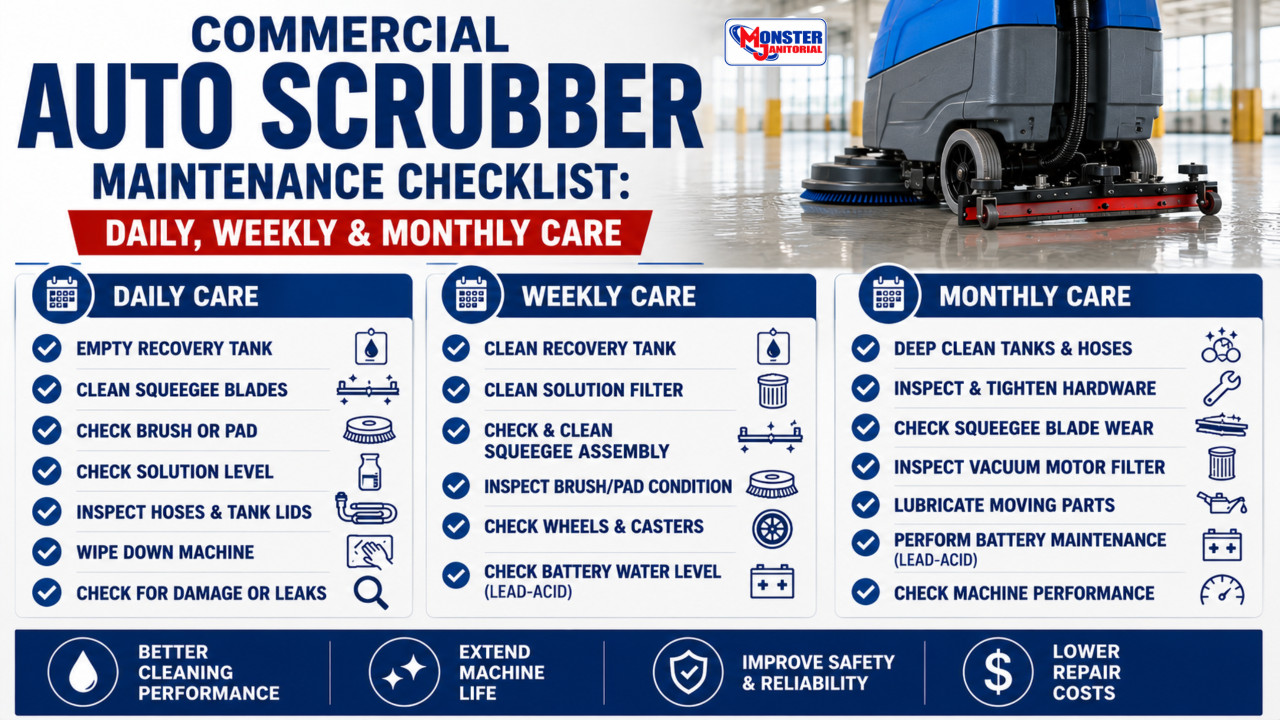
Commercial Auto Scrubber Maintenance Checklist: Daily, Weekly & Monthly Care
Regular maintenance helps an auto scrubber clean consistently, recover water properly, protect batteries, and reduce unexpected downtime.
This checklist separates the most important maintenance tasks into daily, weekly, and monthly inspections so operators know what to check and when.
Maintain the Machine at Three Levels
Daily maintenance focuses on cleaning tanks, squeegees, hoses, filters, pads or brushes, and charging the battery. Weekly maintenance checks wear items, seals, wheels, filters, and battery terminals. Monthly maintenance goes deeper into the vacuum system, solution system, deck, drive components, electrical connections, and charger or battery condition.
Small Maintenance Problems Can Become Cleaning Problems
A dirty filter, worn squeegee, clogged recovery hose, worn pad or brush, loose battery connection, or damaged gasket can quickly affect cleaning performance.
Regular inspections make it easier to catch these issues before they lead to streaking, poor water pickup, weak suction, short runtime, or machine downtime.
Clean vs Neglected Auto Scrubber Components
These common wear and recovery components should be inspected regularly. Dirt buildup and wear can reduce cleaning and recovery performance.

Daily Auto Scrubber Maintenance Checklist
Daily care should be completed after normal use so dirty water, debris, chemical residue, and worn components do not remain in the machine between cleaning shifts.
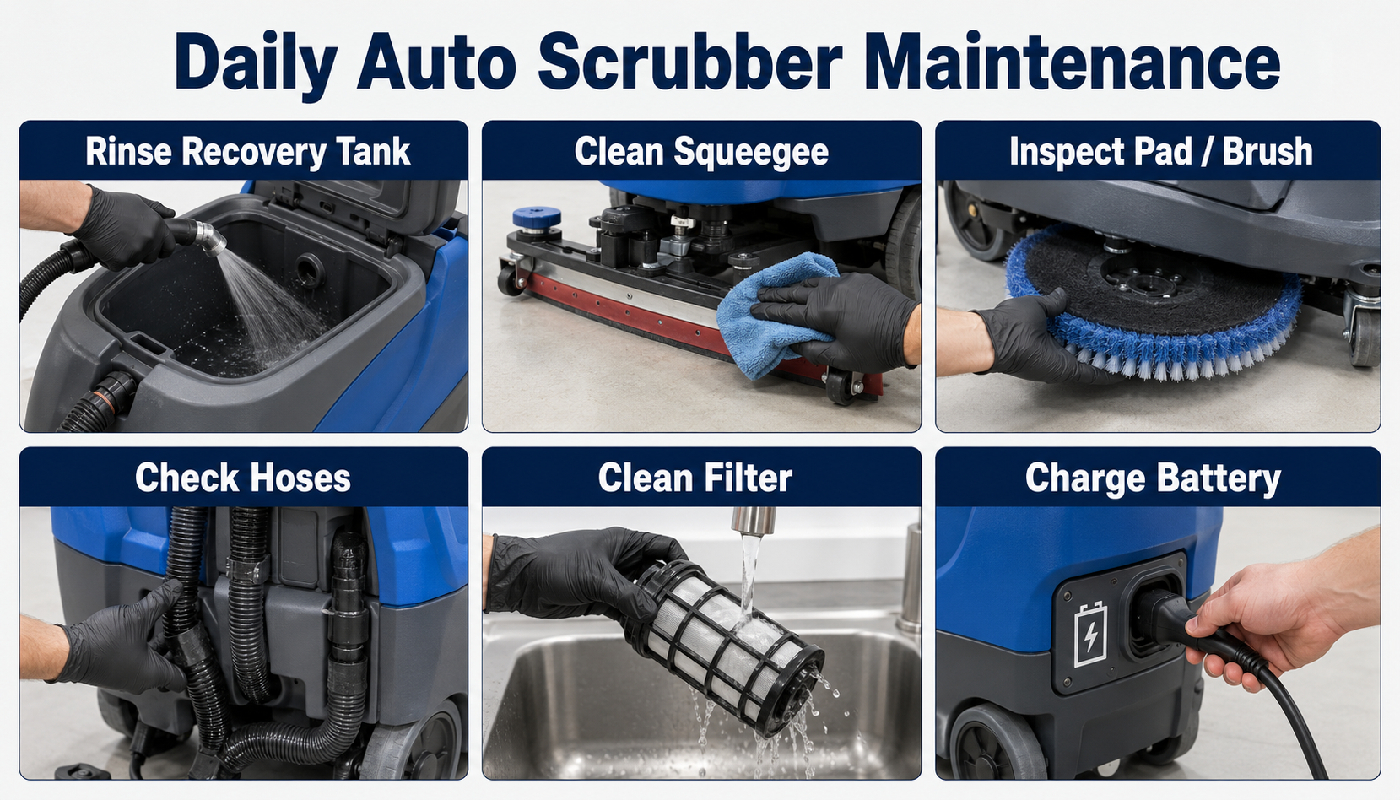
Other Daily Tasks
Weekly Auto Scrubber Maintenance Inspection
Weekly inspections focus more closely on wear items, seals, hoses, filters, wheels, and battery connections.

Other Weekly Checks
Monthly Auto Scrubber Inspection
Monthly maintenance should include a deeper inspection of the systems that affect vacuum performance, solution delivery, deck operation, drive performance, electrical reliability, and battery charging.

Battery Maintenance Depends on Battery Type
AGM, Gel, lithium-ion, and flooded lead-acid batteries do not all use the same maintenance procedures. Follow the battery and charger manufacturer's instructions for charging, storage, inspection, and service.
Floor Scrubber Battery Guide →Pay Special Attention to the Squeegee System
The squeegee is one of the most important daily wear items on an auto scrubber. Dirty, worn, curled, torn, or poorly adjusted blades can leave wet streaks and reduce recovery performance.
Auto Scrubber Squeegee Blade Guide →Quick Auto Scrubber Maintenance Checklist
| Daily | Weekly | Monthly |
|---|---|---|
| Rinse recovery tank | Inspect squeegee wear | Inspect vacuum system |
| Clean squeegee | Inspect recovery hose | Inspect solution hoses |
| Inspect pad / brush | Check tank gasket | Inspect deck linkage |
| Check hoses | Clean solution filter | Inspect drive components |
| Clean filters / screens | Inspect wheels / casters | Inspect electrical connections |
| Charge battery | Check battery terminals | Check charger / battery |
Auto Scrubber Maintenance Mistakes to Avoid
- Leaving dirty water in the recovery tank after use.
- Ignoring small wet streaks until the squeegee is badly worn.
- Running clogged filters or hoses.
- Continuing to use heavily worn brushes or pads.
- Ignoring loose or damaged battery connections.
- Using charging procedures that do not match the battery system.
- Skipping manufacturer-recommended service intervals.
When Maintenance Becomes a Repair
Routine cleaning and inspection can solve many common problems, but some conditions require professional diagnosis or repair.
- Vacuum or brush motor faults
- Repeated breaker or controller faults
- Damaged wiring or electrical connectors
- Drive-system problems
- Solution pump or solenoid failure
- Persistent charging or battery problems
Learn More About Auto Scrubber Care
Commercial Auto Scrubber Troubleshooting Guide
Diagnose poor cleaning, water pickup, streaking, suction, solution-flow, and recovery problems.
Read Troubleshooting Guide →Auto Scrubber Squeegee Blades Explained
Learn how to inspect blade wear, adjust blade contact, flip usable edges, and replace worn squeegees.
Read Squeegee Guide →Floor Scrubber Batteries Explained
Compare AGM, Gel, lithium, and flooded battery systems and their maintenance needs.
Read Battery Guide →How to Improve Floor Drying Times
Understand how squeegee condition, recovery airflow, solution control, and operator technique affect drying.
Read Drying Guide →Auto Scrubbers Learning Center
Explore auto scrubber selection, batteries, brushes, pads, maintenance, troubleshooting, water recovery, and machine comparisons.
Visit Auto Scrubbers Learning Center →Shop Auto Scrubber Equipment & Supplies
Auto Scrubber Maintenance FAQs
What maintenance should be done after every use?
Empty and rinse the recovery tank, clean the squeegee, inspect the pad or brush, check hoses and filters, and charge the battery according to the battery system.
How often should auto scrubber squeegee blades be inspected?
Operators should visually inspect and clean them regularly, with a closer wear inspection as part of the weekly maintenance routine.
How often should the solution filter be cleaned?
Inspect it regularly and clean it whenever buildup is present. A weekly check is a useful routine for many commercial cleaning programs.
Why should the recovery tank be rinsed every day?
Dirty water contains soil, chemical residue, and debris that can create odors, buildup, clogs, and maintenance problems when left in the machine.
Should every auto scrubber follow the exact same maintenance schedule?
No. This checklist is a general maintenance framework. Always follow the service intervals and procedures specified by the machine, battery, and charger manufacturers.
Need Help Maintaining an Auto Scrubber?
Monster Janitorial can help with auto scrubber maintenance, troubleshooting, brushes, pads, squeegee issues, cleaning chemistry, replacement parts, batteries, and equipment selection.
Tax-exempt purchasing and purchase-order support are available for qualifying schools, universities, government agencies, municipalities, healthcare facilities, and other institutional customers.