
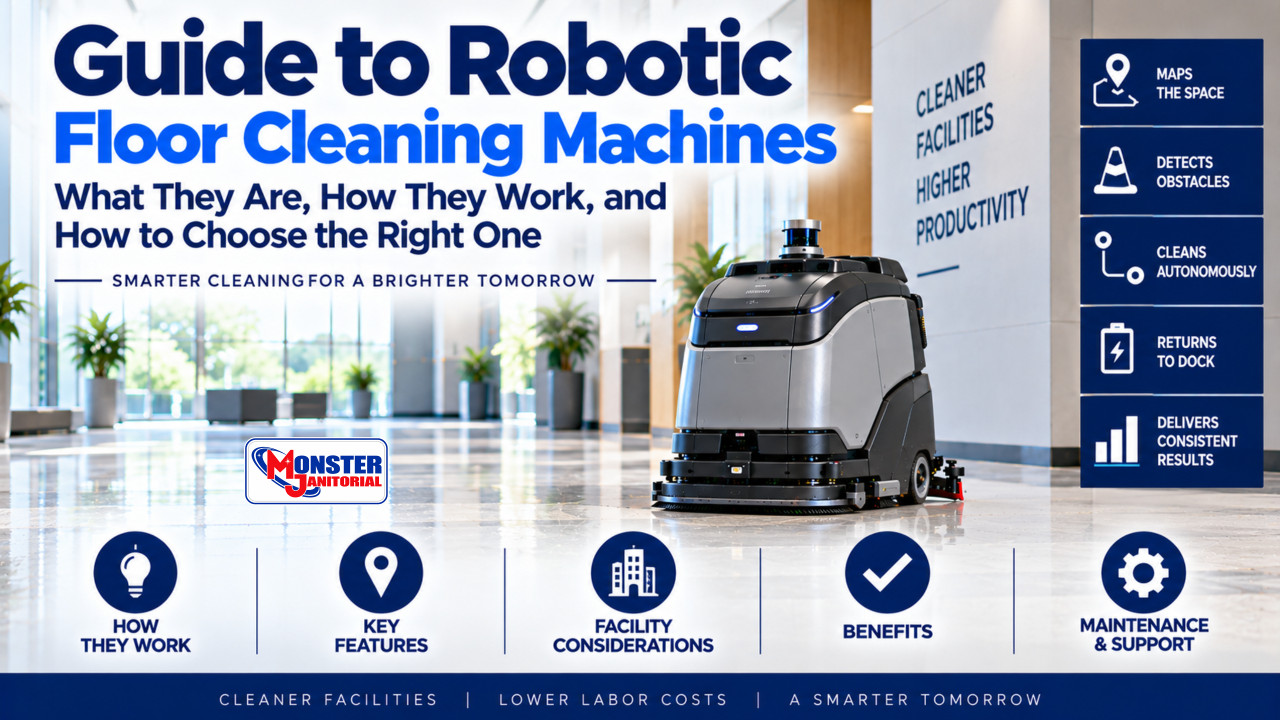
Guide to Robotic Floor Cleaning Machines
Robotic floor cleaning machines can automate portions of routine commercial floor care while allowing facility teams to spend less time continuously driving cleaning equipment.
This beginner guide explains what robotic floor cleaners are, how they work, the different machine types, where they fit best, and what to consider before choosing one for your facility.
What Is a Robotic Floor Cleaning Machine?
A robotic floor cleaning machine uses navigation software, sensors, mapping, obstacle detection, and autonomous controls to complete assigned cleaning tasks with less continuous operator involvement. Robotic scrubbers are especially useful where facilities have repeatable floor-cleaning routes and enough suitable floor area to justify automation.
What Is a Robotic Floor Cleaning Machine?
Robotic floor cleaning equipment is designed to perform assigned cleaning tasks using autonomous navigation rather than requiring an operator to continuously steer the machine.
Depending on the platform, a robot may use LiDAR, cameras, proximity sensors, mapping software, taught routes, AI-assisted navigation, or a combination of technologies.
Autonomous Operation
Completes assigned cleaning routes with less continuous machine-driving time.
Repeatable Coverage
Can follow planned routes to support consistent routine cleaning.
Labor Support
May allow staff to perform other cleaning tasks while the robot completes suitable routes.
Autonomous Does Not Mean Labor-Free
Robotic machines still require staff involvement for preparation, tank service, pads or brushes, squeegees, charging, maintenance, route management, troubleshooting, obstacle removal, and cleaning areas the robot cannot access effectively.
How Do Robotic Floor Cleaners Work?
Map or Teach
The facility or route is mapped, taught, or configured for autonomous operation.
Assign Route
Staff select or schedule the cleaning route the robot should complete.
Navigate
Sensors and navigation software help the robot move through the assigned area.
Report
Some platforms provide route completion, alerts, machine status, and cleaning data.
Why Facilities Consider Robotic Cleaning
Reduce Machine-Driving Time
Suitable routes can be completed without an employee continuously driving the scrubber.
Support Staff Productivity
Employees may be able to work on restrooms, detail cleaning, trash, touchpoints, or other tasks while the robot cleans.
Repeatable Routes
Autonomous routes can support more consistent floor coverage when the route remains accessible.
Cleaning Data
Some platforms provide route history, alerts, utilization, or cleaning-performance information.
Can Robotic Cleaning Reduce Operating Costs?
It can in the right application, but savings depend on labor rates, suitable route hours, machine utilization, interruptions, service costs, software, maintenance, and whether staff time is successfully redirected to other productive work.
Read the Robotic Floor Scrubber Cost & ROI Guide →Types of Robotic Floor Cleaning Machines
Robotic Floor Scrubbers
Scrub and recover cleaning solution from hard floors using autonomous navigation.
Robotic Sweeper Vacuums
Designed for autonomous dry debris pickup and vacuuming.
Compact Multi-Function Robots
Smaller robotic platforms may scrub, sweep, or vacuum in tighter commercial areas.
Large Autonomous Scrubbers
Higher-capacity robotic machines for larger open routes and long cleaning cycles.
Disc vs Cylindrical Robotic Scrubbers
Disc Scrubbing
Common for routine hard-floor scrubbing on relatively smooth surfaces. Performance depends on pad or brush selection, floor type, soil, down pressure, and machine setup.
Cylindrical Scrubbing
Can provide light debris pickup while scrubbing and may work well on some textured surfaces. Heavy debris should still be removed appropriately before scrubbing.
Where Robotic Floor Cleaning Can Work Well
Schools & Universities
Hallways, common areas, student centers, and other repeatable routes.
Healthcare
Suitable corridors and open areas where autonomous routes can operate safely.
Airports
Large concourses and other high-area cleaning routes when deployment conditions are suitable.
Warehouses
Long aisles and open floors when routes are reasonably stable and accessible.
Retail
Open floor areas, particularly during appropriate lower-traffic cleaning windows.
Public Facilities
Municipal buildings, convention spaces, transportation facilities, and other large properties.
Robotic vs Traditional Auto Scrubbers
Robotics does not eliminate the need for traditional cleaning equipment. Many facilities benefit from using autonomous equipment for repeatable routes and operator-controlled scrubbers for detail work, changing areas, spot cleaning, or spaces that are not good candidates for robotics.
| Machine Type | Strongest Use | Typical Facility Fit |
|---|---|---|
| Robotic Scrubber | Repeatable autonomous routes | Large corridors, open areas, aisles, common areas |
| Walk-Behind Scrubber | Flexible operator-controlled cleaning | Tight layouts, smaller routes, detailed cleaning |
| Ride-On Scrubber | Large operator-controlled routes | Warehouses, schools, campuses, large commercial floors |
Read the Full Robotic vs Traditional Auto Scrubber Comparison →
How to Choose the Right Robotic Floor Cleaner
Look at actual cleaning routes, aisle width, turns, obstacles, elevators, doors, and floor access.
Match the scrub deck, brush or pad, and recovery system to the floor surface and soil.
Consider people, carts, pallets, furniture, displays, forklifts, and temporary obstructions.
Determine whether the robot will operate during daytime traffic, overnight, or both.
Plan charging space, electrical requirements, docking location, and any automated tank-service options.
Consider parts, technical support, software, service coverage, training, and long-term maintenance.
Commercial Robotic Floor Cleaning Machines
Compare different autonomous cleaning platforms for structured routes, changing environments, large facilities, and commercial floor-care programs.
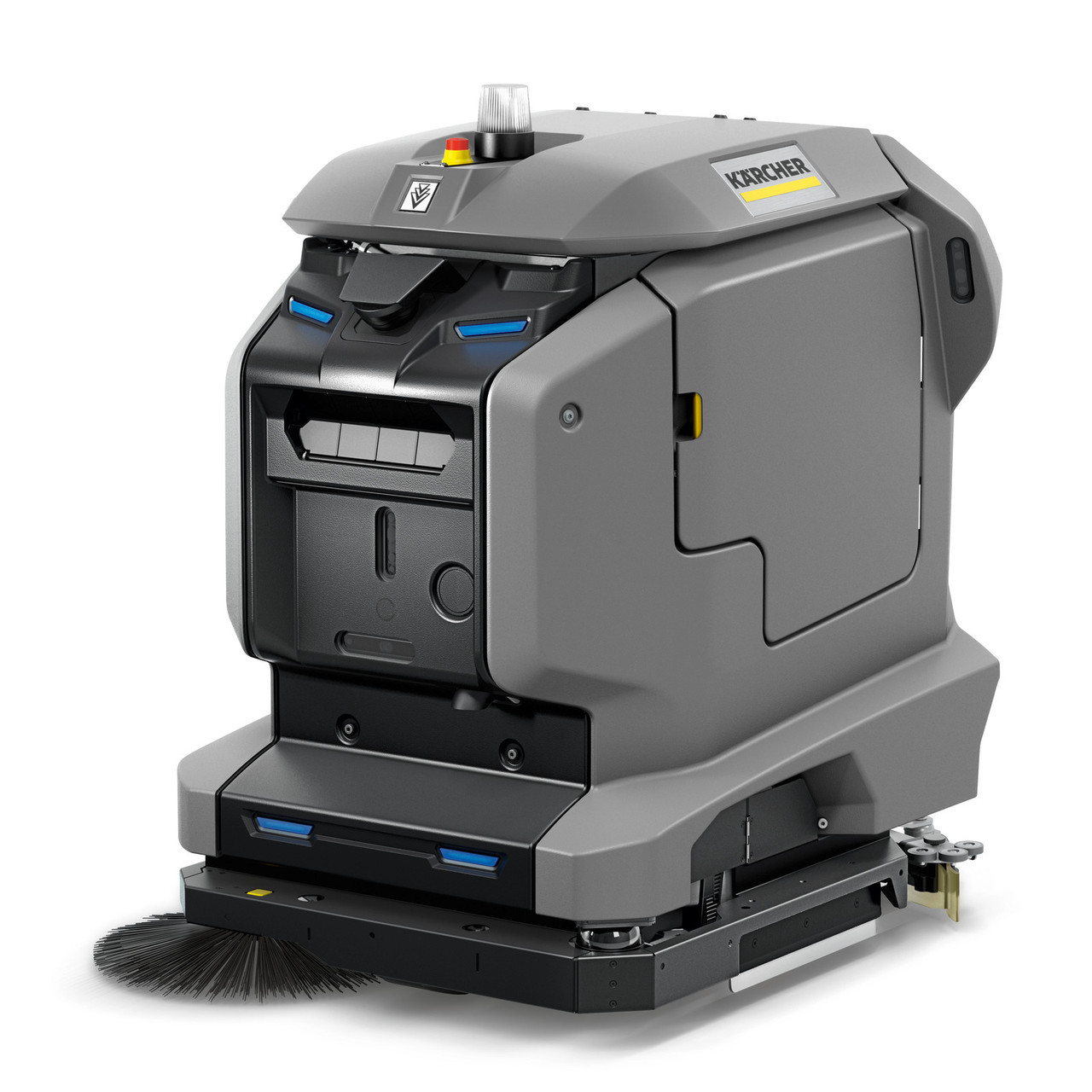
Karcher KIRA B 50
Autonomous scrubber designed for commercial floor-cleaning routes in facilities such as schools, retail, public buildings, and other suitable environments.
View KIRA B 50 →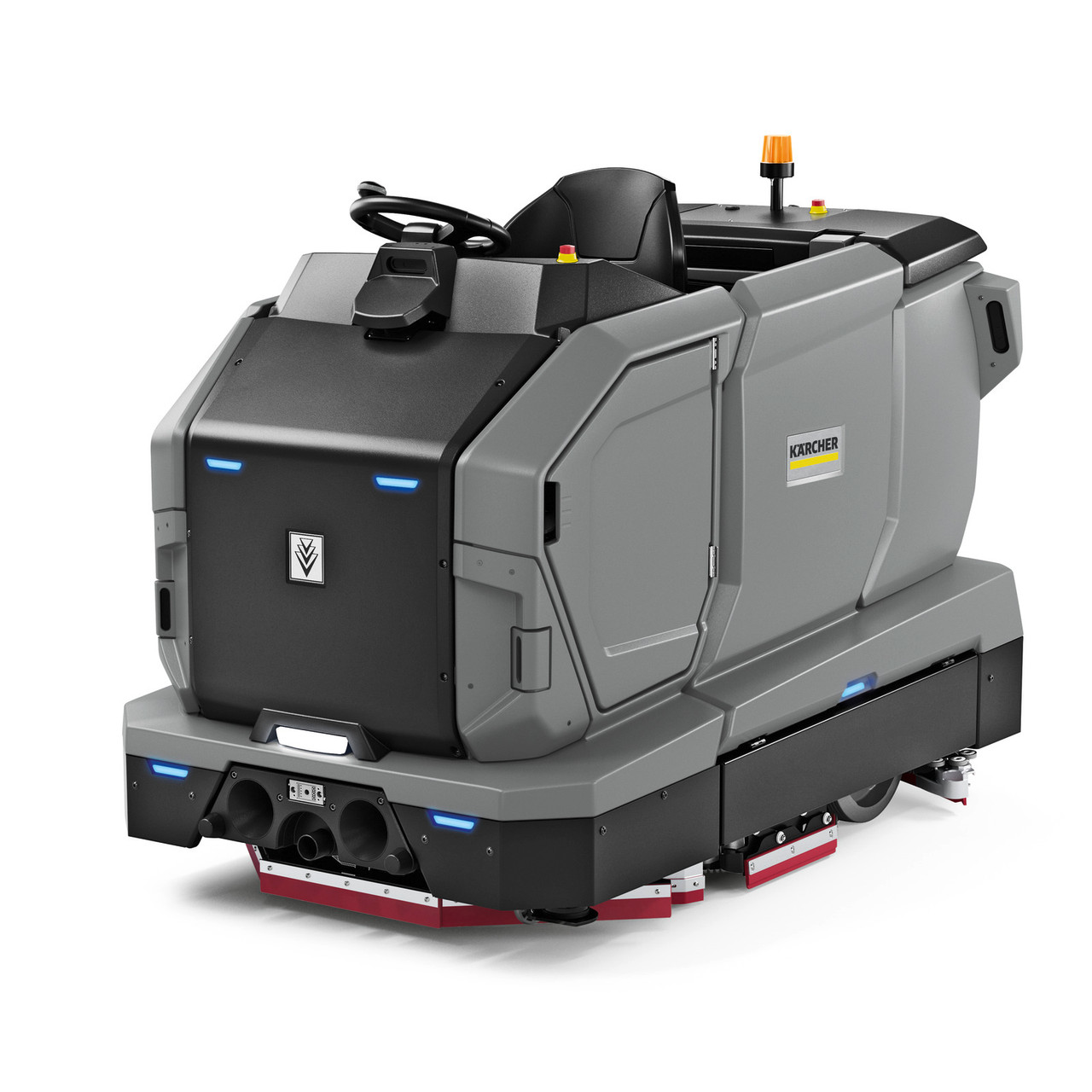
Karcher KIRA BD 200
Larger autonomous floor scrubber for high-area commercial cleaning routes, with docking-system configurations available.
View KIRA BD 200 →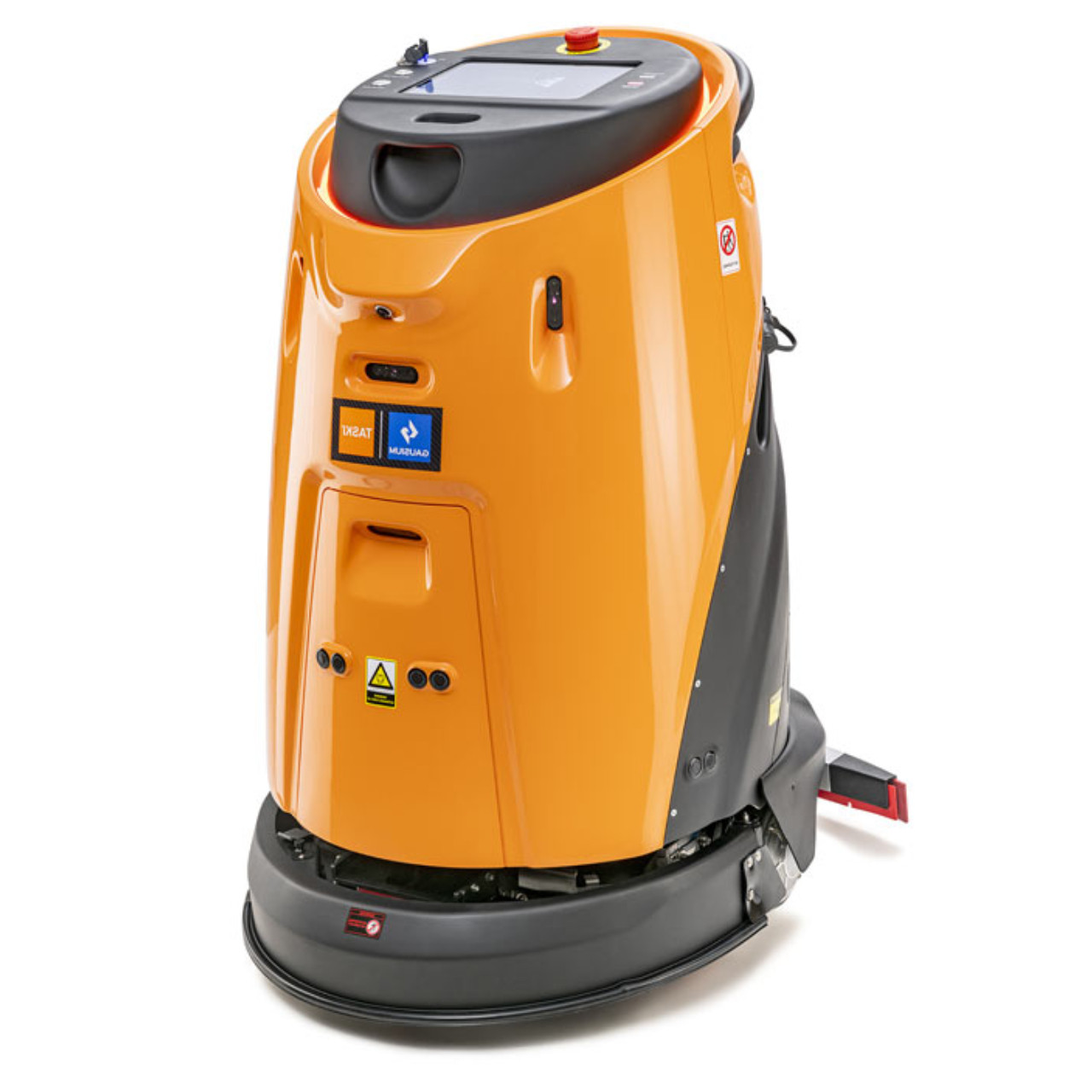
TASKI Ecobot 50 Pro
Autonomous floor scrubber using OMNIE AI and 3D LiDAR navigation for commercial environments.
View Ecobot 50 Pro →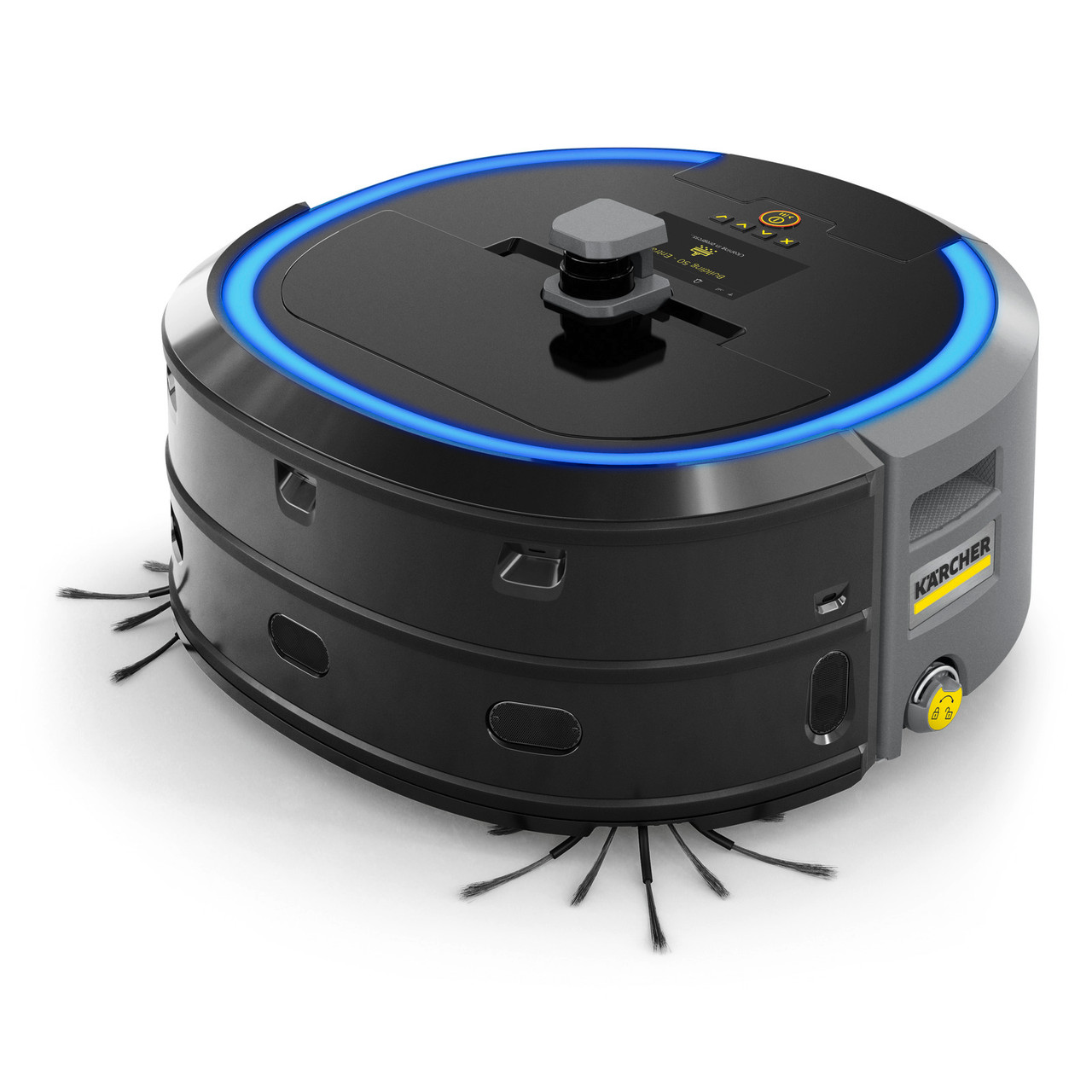
Robotic Cleaning Equipment
Explore robotic scrubbers, autonomous vacuums, sweepers, and other commercial cleaning platforms.
Shop Robotic Equipment →Prepare the Facility Before Buying the Robot
A good machine can still perform poorly if the route, docking area, connectivity, traffic, or cleaning workflow is not ready for autonomous operation.
Read How to Prepare a Facility for a Robotic Floor Scrubber →Robotic Floor Cleaning Machine FAQ
Do robotic scrubbers replace cleaning employees?
No. They can reduce continuous driving time on suitable routes, but staff are still needed for preparation, service, maintenance, problem areas, and other cleaning tasks.
Can robotic scrubbers clean during the day?
Some can operate in active facilities, but suitability depends on the machine, traffic, route, obstacles, facility policies, and deployment plan.
Are robotic scrubbers better than traditional scrubbers?
Not universally. Robotics is strongest on suitable repeatable routes, while traditional equipment provides direct operator control and flexibility.
Do robotic scrubbers need Wi-Fi?
Requirements vary by platform. Some functions may use cellular or wireless connectivity for reporting, remote support, fleet tools, updates, or cloud services.
Learn More About Robotic Cleaning
Explore robotic cleaning guides covering machine selection, navigation, deployment, fleet management, maintenance, troubleshooting, docking, ROI, and autonomous cleaning technology.
Explore MJ University →Need Help Choosing a Robotic Floor Cleaner?
Monster Janitorial can help compare robotic scrubbers, autonomous vacuums, navigation systems, floor types, route layouts, charging requirements, brushes, pads, batteries, and facility deployment needs.
Tax-exempt purchasing and purchase-order support are available for qualifying schools, universities, government agencies, municipalities, healthcare facilities, and other institutional customers.
- #autonomous cleaning machines
- #autonomous floor scrubber
- #commercial robotic scrubber
- #floor cleaning automation
- #healthcare floor scrubber
- #industrial floor scrubber
- #karcher kira
- #karcher robotic scrubber
- #kira b 50
- #kira b100 r
- #kira bd 200
- #kira br 200
- #retail floor cleaning equipment
- #robotic cleaning equipment
- #robotic floor cleaning machine
- #robotic scrubber guide
- #school floor cleaning machine
- #warehouse floor scrubber