
Concrete Stain Removal
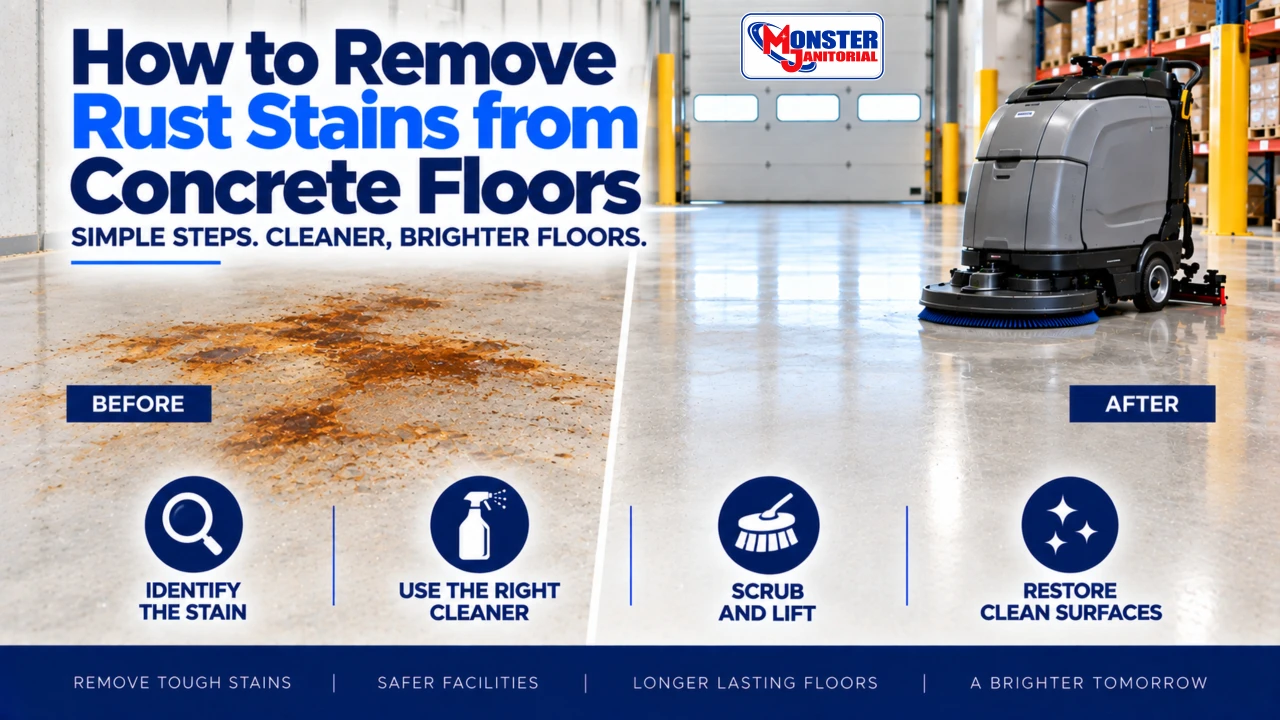
How to Remove Rust Stains from Concrete Floors
Learn how to remove rust stains from bare, polished, sealed, decorative, and coated concrete without spreading the stain or damaging the floor.
Rust stains form when moisture reacts with iron or steel and carries oxidation into the concrete surface. Common sources include metal shelving, equipment legs, batteries, tools, carts, floor drains, storage containers, and outdoor furniture.
Rust removal requires more caution than routine concrete cleaning. Many rust-removal products are acidic and may etch bare concrete, dull polished concrete, alter decorative color, or damage sealers and coatings.
Quick Answer
Remove the metal source, dry the area, test a concrete-compatible rust remover, limit dwell time, agitate gently, recover the solution completely, and rinse as directed. Never apply an acidic cleaner to the entire floor without testing it first.

Localized Rust-Stain Treatment: Test the cleaner first, treat only the stained area, scrub gently with a nonmetallic brush, and recover the solution before it dries.
Stop the Stain from Returning
Find and Remove the Rust Source
Cleaning the stain without correcting its source usually allows the rust to return.
Inspect feet, casters, legs, anchors, and contact points for corrosion.
Check racks, trays, connectors, and nearby metal components for leaks or oxidation.
Repair leaks and prevent standing water around drains, doorways, and equipment.
Use protective feet, mats, or barriers beneath furniture, planters, and storage containers.
Before Using Rust Remover
Identify the Concrete Floor System
Rust removers that are acceptable for unfinished concrete may damage polished, stained, sealed, or coated concrete.
Bare Concrete
May tolerate specialized concrete rust remover, but acidic chemistry can still etch or lighten the surface.
Polished Concrete
Requires careful testing because acid-based products may reduce gloss or create dull spots.
Decorative or Stained Concrete
Rust-removal chemistry may alter decorative color or damage the protective sealer.
Epoxy or Coated Concrete
Use only coating-compatible products and avoid extended dwell time or aggressive abrasion.
Confirm the Stain
Is It Rust, Dirt, or Another Mineral Stain?
Usually orange, reddish-brown, or dark brown and located near metal or water exposure.
Often white, gray, or chalky and commonly appear around drains or recurring water flow.
Usually dark, slick, or translucent and may spread under pressure or traffic.
Step-by-Step Process
How to Remove Rust Stains from Concrete
Work only on the affected area and increase chemical strength or agitation cautiously.
1. Remove the Metal Source
Move the rusting object and correct leaks, drainage, or recurring moisture before treating the floor.
2. Remove Loose Soil
Sweep or vacuum grit, dirt, rust flakes, and loose debris from the stained area.
3. Test the Product
Test the cleaner, dilution, dwell time, and accessory in a small inconspicuous area.
4. Apply to the Stain
Apply the product only to the affected area and follow the manufacturer’s instructions carefully.
5. Limit Dwell Time
Keep the product within the approved dwell period and do not allow it to dry on the concrete.
6. Agitate Gently
Use a nylon brush, soft pad, or another accessory approved for the floor system.
7. Recover and Rinse
Remove the cleaning solution with a wet vacuum or recovery system and rinse as directed.
8. Inspect After Drying
Check for remaining stain, etching, color change, gloss loss, residue, or coating damage.
Cleaner Selection
Choose Products for the Floor System
Rust usually requires specialized chemistry. Routine neutral or warehouse cleaners can remove surrounding soil but may not dissolve the rust stain itself.
Concrete-Compatible Rust Remover
Use only a product labeled for the specific concrete surface. Follow all dilution, dwell-time, rinsing, ventilation, and personal protective equipment instructions.
Routine Concrete Floor Cleaners
Use compatible neutral or concrete-floor chemistry to remove surrounding dirt and residue after localized rust treatment.
Shop Concrete Floor CleanersPad and Brush Selection
Avoid Over-Scrubbing the Stained Area
Nylon Hand Brush
Useful for controlled spot treatment on rough or unfinished concrete.
Red Cleaning Pad
A possible starting choice on compatible smooth sealed or coated surfaces after testing.
Soft Floor Brush
Better for textured surfaces where a flat pad cannot reach low areas.
Solution Recovery
Recover Rust-Removal Solution Completely
Do not spread acidic or rust-contaminated solution across the surrounding floor. Localized recovery is usually safer than running an auto scrubber directly through a small treated stain.
Use absorbent towels, a small extraction tool, or a compact wet vacuum.
Use a wet vacuum or controlled recovery system before completing the rinse process.
Protect the Floor
What to Avoid
They may etch, lighten, dull, or permanently alter the floor.
Dried chemistry can leave residue and increase the chance of surface damage.
Aggressive pads may damage polished, sealed, decorative, or coated concrete.
They may scratch the floor and leave metal particles that create new rust stains.
Do not mop rust-contaminated solution over clean areas.
Never combine products unless the manufacturer specifically directs it.
Troubleshooting
When the Rust Stain Does Not Disappear
Repeat only after the floor dries and the first treatment has been evaluated.
The product may have etched or changed the surface rather than simply removing the stain.
Stop treatment. Polished concrete or the protective coating may have been affected.
The metal source, moisture problem, or drainage condition has not been corrected.
Prevent Future Rust Stains
Long-Term Rust Prevention
Place non-staining barriers beneath metal shelving, carts, furniture, and equipment.
Repair leaks and eliminate standing water near metal components.
Check casters, legs, anchors, drains, battery racks, and storage areas regularly.
Repair worn sealers and coatings that allow moisture and contamination to reach the concrete.
Related Concrete Floor Guides
Continue Learning
Common Questions
Rust-Stain Removal FAQs
Can rust stains be removed from concrete?
Many surface rust stains can be reduced or removed with compatible specialty chemistry, careful agitation, and complete rinsing or recovery.
Can rust remover damage concrete?
Yes. Acidic products may etch bare concrete, dull polished surfaces, change decorative color, or damage sealers and coatings.
Can a pressure washer remove rust stains?
Pressure alone may remove loose residue but often does not dissolve the stain. Excessive pressure can also damage the concrete or coating.
Why does the rust stain keep returning?
The metal source, leak, standing water, or moisture condition may still be present.
Final Recommendation
Remove the Source, Test the Cleaner, Treat Locally, and Recover Completely
Rust removal should be treated as a localized specialty-cleaning process. Identify the floor system, correct the moisture or metal source, test the selected product, control dwell time, agitate gently, and remove the solution before it spreads or dries.
- #Bare Concrete Cleaning
- #Commercial Floor Maintenance
- #Concrete Rust Stain Removal
- #Concrete Stain Removal
- #Decorative Concrete Care
- #Epoxy Floor Cleaning
- #How to Remove Rust Stains from Concrete Floors
- #Industrial Concrete Cleaning
- #Polished Concrete Care
- #Rust Remover for Concrete
- #Sealed Concrete Cleaning
- #Warehouse Floor Cleaning