
How to Identify Commercial Wood Floors Before Cleaning
Sealed vs. Unsealed, Solid vs. Engineered & Finish Types
Commercial wood floors can look similar while requiring very different cleaning procedures. Before choosing chemicals, pads, brushes, or machines, identify the floor construction, existing finish, surface condition, and moisture risk.
This is especially important in schools, gymnasiums, athletic facilities, stages, churches, offices, hotels, universities, and other commercial buildings where wood floors may have been recoated or repaired many times.
Identify the floor construction, coating, condition, and moisture vulnerability before selecting a cleaning process.
Start by confirming that the surface is real wood, determine whether it is solid or engineered, identify whether the wood is finished or exposed, inspect the existing coating, and look for damaged seams, worn finish, swelling, cupping, or other signs that moisture could penetrate the floor.
Why Wood-Floor Identification Matters
The safest chemical, pad, brush, machine, moisture level, and corrective process can change depending on the flooring system and the coating protecting it.
Confirm That the Floor Is Actually Wood
Modern resilient flooring can imitate wood grain very closely. Do not assume a wood appearance means the floor is real wood.
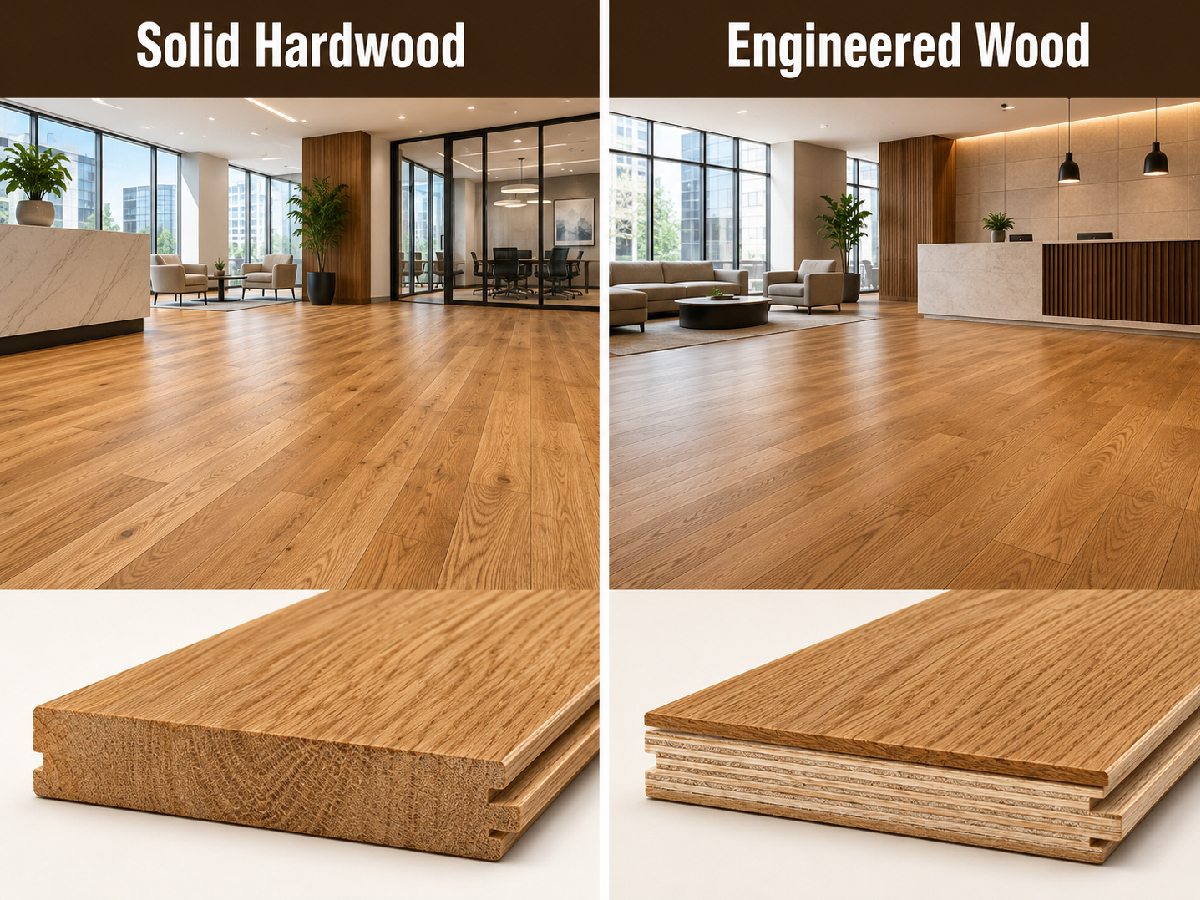
Solid Hardwood vs. Engineered Wood
Both are real wood flooring, but their construction is different and can affect future sanding, refinishing, moisture response, and repair options.
Solid Hardwood
Each board is manufactured primarily from one solid piece of wood.
- Common in traditional gym and athletic floors.
- Can often tolerate multiple refinishing cycles when sufficient wood remains.
- Board edges may show consistent wood through the full thickness.
- Still requires careful moisture control during cleaning.
Engineered Wood
Engineered flooring uses a real wood wear layer over a multi-layer core.
- May be factory finished.
- Wear-layer thickness varies by product.
- Refinishing limitations can differ from solid hardwood.
- Do not assume aggressive sanding or wet processes are appropriate.
Sealed vs. Unsealed Wood Floors
This distinction is critical because bare or poorly protected wood absorbs moisture much more readily than an intact finished surface.
Sealed / Finished
The wood is protected by an intact coating or finish.
- Surface may appear glossy, satin, or matte.
- Liquid tends to remain on the coating rather than immediately soaking into wood.
- Cleaning chemistry must be compatible with the coating.
- Minimal moisture is still recommended.
Unsealed / Exposed
Bare wood or areas where the coating has worn through require extra caution.
- Wood may absorb liquid quickly.
- Color can darken when wet.
- Surface may feel dry, porous, or rough.
- Avoid routine wet-cleaning assumptions until the floor is evaluated.
Identify the Existing Finish or Coating
The finish is often more important to the cleaning process than the wood species itself. Do not assume every shiny wood floor uses the same coating system.
Water-Based vs. Oil-Based Wood Finishes
Appearance may provide clues, but color and gloss alone are not reliable enough to positively identify a finish.
Identifying Gym & Sports-Floor Coatings
Gym floors may contain several layers of sealer, game-line paint, logos, finish, and later recoats. The current surface condition matters more than assuming the original system is still unchanged.
What If You Cannot Identify the Existing Finish?
Do not guess and immediately use stronger chemistry or aggressive pads. Treat an unknown finish conservatively until more information is available.
Inspect Seams, Edges & Moisture Damage
Even a coated wood floor can become vulnerable where the finish is damaged or liquid can enter between boards.
Identify Existing Wear & Damage
Before cleaning, document the floor's condition so existing damage is not confused with a cleaning failure.
Dirt vs. Finish Wear vs. Wood Damage
Identification helps determine whether cleaning can actually solve the problem.
Test the Complete Cleaning Process
A small test area helps confirm that the cleaner, dilution, pad or microfiber tool, moisture level, agitation, recovery, and drying process are appropriate before cleaning the entire floor.
What the Identification Tells You
Commercial Wood-Floor Pre-Cleaning Checklist
Common Wood-Floor Identification Mistakes
Related Wood-Floor Care Guides
After identifying the floor, continue with the cleaning, chemical, pad, and equipment guides that match the surface.
Commercial Wood-Floor Identification FAQs
How can you tell if a commercial wood floor is sealed?
Look for an intact film-forming surface, inspect worn areas and seams, review maintenance records, and determine whether any wood is exposed. Appearance alone should not be the only test.
Does solid hardwood clean differently from engineered wood?
Routine cleaning may be similar when both floors have compatible intact finishes, but construction affects moisture vulnerability, sanding limits, refinishing options, and repair decisions.
Can you identify a wood-floor finish by its gloss?
Not reliably. Gloss level, age, previous recoats, wood color, and wear can make different coating systems look similar.
What should you do if the wood-floor finish is unknown?
Use a conservative process, remove dry soil first, limit moisture, choose mild compatible chemistry, and test the entire cleaning process in an inconspicuous area before proceeding.
What are signs that a wood floor should not be wet cleaned normally?
Exposed wood, open seams, cupping, swelling, loose boards, damaged coating, peeling finish, or evidence of moisture intrusion all require additional evaluation.
Why is identifying finish wear important before cleaning?
Cleaning can remove soil and residue, but it cannot replace a worn-through coating. Identifying finish wear prevents unnecessary use of stronger chemicals or aggressive pads.
Need Help Identifying a Commercial Wood Floor?
Monster Janitorial can help you evaluate commercial wood and gym-floor cleaning needs and compare compatible cleaners, pads, floor machines, scrubbers, and maintenance products.