
MJ University Carpet Care Guide
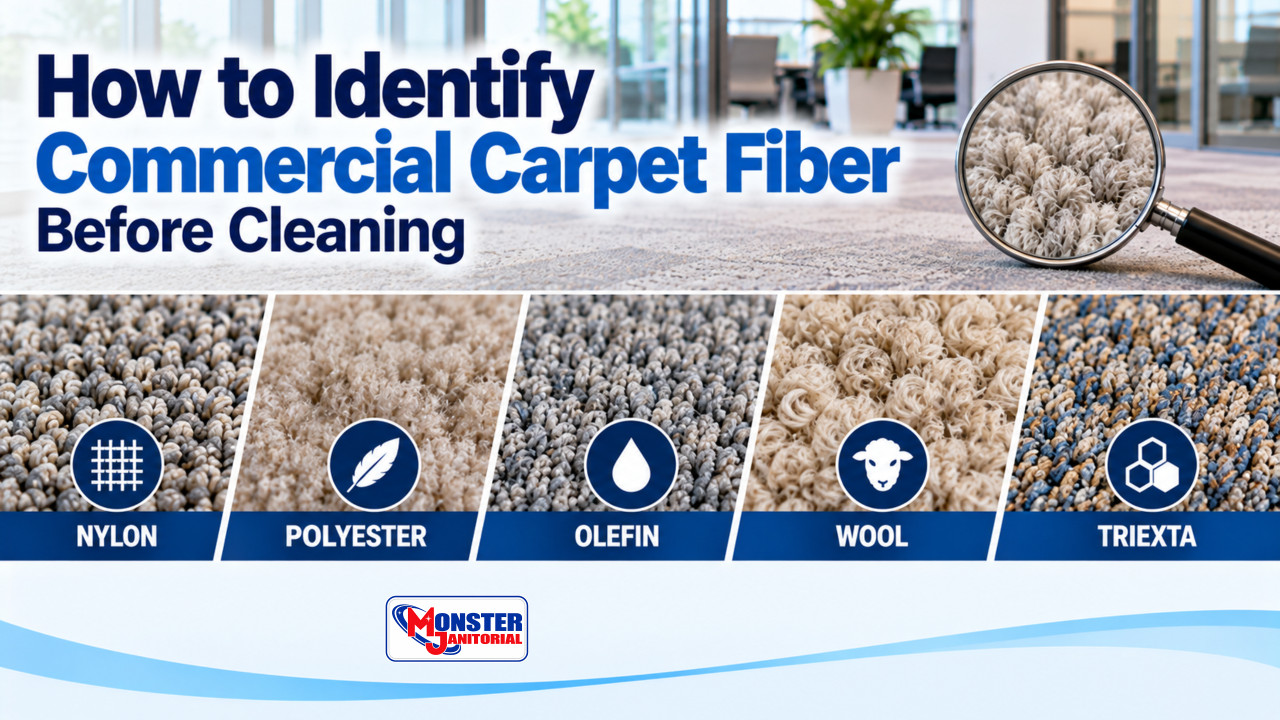
How to Identify Commercial Carpet Fiber Before Cleaning
Identifying commercial carpet fiber before cleaning helps you choose safer chemicals, appropriate agitation, controlled moisture, and the correct extraction or low-moisture method. Nylon, polyester, olefin, wool, and blended fibers do not all respond the same way to heat, pH, solvents, or aggressive brushing.
The Most Important Rule
Do not identify carpet fiber by appearance alone. Check manufacturer records, carpet specifications, labels, installation documents, or perform controlled testing before using strong chemicals, high heat, aggressive agitation, or specialty spotters.
Why Carpet Fiber Identification Matters
Commercial carpet may look similar from one facility to another, but the fiber can affect stain resistance, oil attraction, moisture tolerance, chemical compatibility, drying behavior, and long-term appearance.
Chemical Selection
The wrong pH or solvent can cause discoloration, residue, fiber damage, or loss of stain protection.
Heat and Moisture
Some fibers and backings require more conservative temperatures and faster drying procedures.
Agitation Level
Aggressive brushes can distort loops, fuzz fibers, damage wool, or change carpet texture.
Spotting Procedures
Oil, dye, protein, tannin, and adhesive spots may require different products depending on the fiber.
Start with Records Before Performing Tests
The safest identification method is to locate the carpet specification rather than guessing from texture or color.
- Ask the facility manager for flooring records or purchasing documents.
- Check the carpet manufacturer, collection name, style number, and color number.
- Inspect leftover carpet tiles, attic stock, packaging, or backing labels.
- Review construction documents, maintenance manuals, or warranty information.
- Contact the flooring manufacturer when the product can be identified.
Avoid Guessing from Appearance
Nylon, polyester, and olefin can look very similar in commercial carpet. Construction, dye method, backing, previous treatments, and wear can make visual identification unreliable.
Common Commercial Carpet Fibers
Nylon
Nylon is widely used in commercial carpet because it offers good resilience and performs well in high-traffic areas.
Common characteristics:
- Good texture retention
- Strong wear resistance
- Common in offices, schools, hotels, and public buildings
- May have stain-resistant or solution-dyed treatments
Cleaning considerations: Usually responds well to commercial extraction and encapsulation when proper chemistry, rinsing, and drying procedures are used.
Polyester
Polyester is known for color clarity and resistance to many water-based stains, but it can attract oily soils.
Common characteristics:
- Bright, rich color appearance
- Good resistance to many beverage spills
- Can retain oily or greasy soil
- May show traffic wear sooner than nylon
Cleaning considerations: Use effective dry-soil removal, appropriate preconditioning, and thorough rinsing when oily residue is present.
Olefin
Olefin, also called polypropylene, is frequently used in commercial loop-pile carpet and carpet tile.
Common characteristics:
- Good moisture resistance
- Common in glued-down commercial carpet
- Strong attraction to oily soil
- Can flatten or distort under heavy traffic
Cleaning considerations: Focus on oil removal, controlled agitation, effective rinsing, and fast drying. Avoid excessive heat unless approved by the manufacturer.
Wool
Wool is a natural fiber often found in premium hotels, executive areas, historic buildings, and specialty installations.
Common characteristics:
- Soft, resilient appearance
- Excellent soil-hiding ability
- More sensitive to strong alkalinity and aggressive chemistry
- Requires careful moisture and temperature control
Cleaning considerations: Use wool-approved products, conservative agitation, controlled moisture, colorfastness testing, and prompt drying.
Blended Fibers
Some commercial carpets combine multiple fibers to balance appearance, durability, cost, and performance.
Common characteristics:
- May respond differently across the same carpet
- Can combine natural and synthetic materials
- May require manufacturer-specific procedures
Cleaning considerations: Follow the most conservative requirement for the fibers present and verify the carpet manufacturer’s recommendations.
Specialty & Recycled Fibers
Some modern commercial carpets use recycled-content polyester, specialty synthetics, or proprietary fiber systems.
Common characteristics:
- Performance varies by manufacturer
- May include specialty stain or soil treatments
- Warranty requirements may limit chemicals or methods
Cleaning considerations: Manufacturer documentation should guide chemistry, temperature, agitation, and extraction procedures.
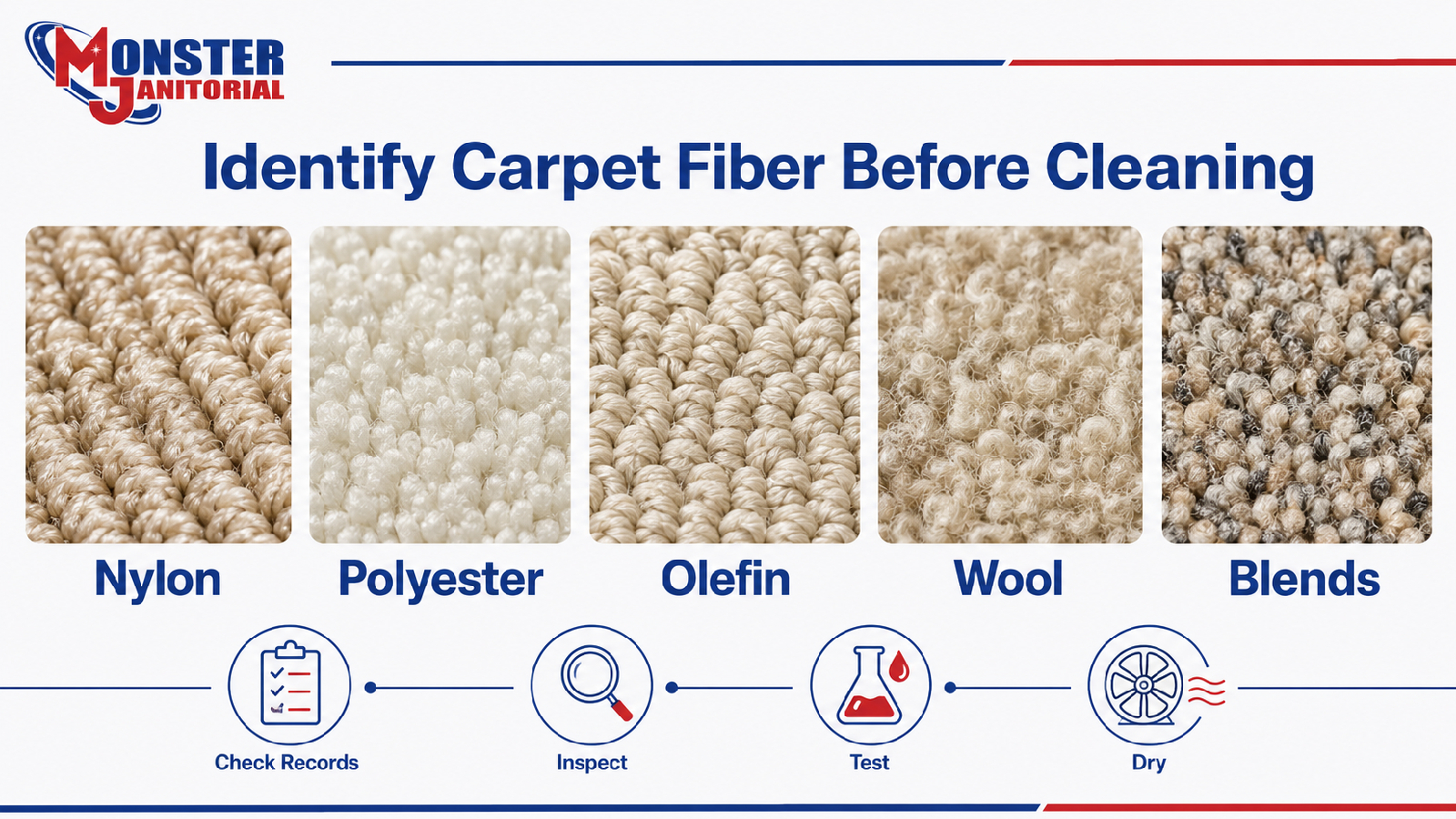
Compare carpet records, construction, backing, and controlled testing before selecting chemicals or cleaning procedures.
Quick Fiber Comparison
Fiber Is Only Part of the Identification Process
Cleaning decisions should also account for carpet construction, backing, installation method, dye system, and current condition.
Inspect These Details Before Cleaning
- Loop pile, cut pile, woven, needle-punched, broadloom, or carpet tile
- Direct-glue, double-glue, stretched, or modular installation
- Primary and secondary backing condition
- Loose seams, delamination, rippling, or edge damage
- Color loss, bleaching, browning, or previous spot-treatment damage
- Existing protector, stain treatment, adhesive, or chemical residue
Learn More About Commercial Carpet Types
Use our complete guide to construction types, recommended cleaning methods, equipment choices, and ongoing maintenance requirements.
Read the Commercial Carpet Types GuideTest Before Full Cleaning
When carpet information is incomplete, perform small controlled tests in an inconspicuous location before applying a chemical or cleaning method across the entire area.
- Vacuum and inspect the test area.
- Test the selected chemical at the correct dilution.
- Check for color transfer, bleeding, texture change, or residue.
- Allow the area to dry completely before evaluating the result.
- Document the chemical, dilution, agitation method, temperature, and outcome.
Do Not Rely on Destructive Testing Alone
Burn tests and chemical solubility tests can create fire, fume, and damage risks and may still produce uncertain results. Manufacturer records and professional laboratory identification are safer when exact fiber confirmation is important.
Match the Cleaning Method to the Carpet
Routine Vacuuming
Frequent dry-soil removal protects carpet appearance and reduces the amount of soil that must later be removed with chemicals and moisture.
Encapsulation
Useful for interim maintenance and faster drying when the carpet, chemistry, agitation system, and soil conditions are appropriate.
Hot-Water Extraction
Used for deeper restorative cleaning when embedded soil, residue, spills, or contamination must be flushed from the carpet.
Spot Treatment
Match the spotter to the stain type and fiber, then rinse or neutralize as directed to reduce residue and recurring spots.
Common Carpet Identification and Cleaning Mistakes
Pre-Cleaning Carpet Identification Checklist
- Confirm manufacturer, style, and fiber when records are available.
- Identify carpet construction and installation method.
- Inspect seams, backing, edges, and existing damage.
- Evaluate soil type, stains, odors, and previous residues.
- Choose chemistry approved for the carpet and cleaning method.
- Test colorfastness and texture in an inconspicuous area.
- Plan moisture control, extraction passes, airflow, and drying time.
- Document the procedure and final results.
Continue Learning
Need Help Choosing Carpet Cleaning Equipment or Chemicals?
Monster Janitorial can help match your carpet type, facility conditions, soil level, cleaning method, chemicals, extractor, vacuum, and drying equipment.
Phone: 956-772-4842
Email: sales@monsterjanitorial.com