
Commercial Concrete Floor Care
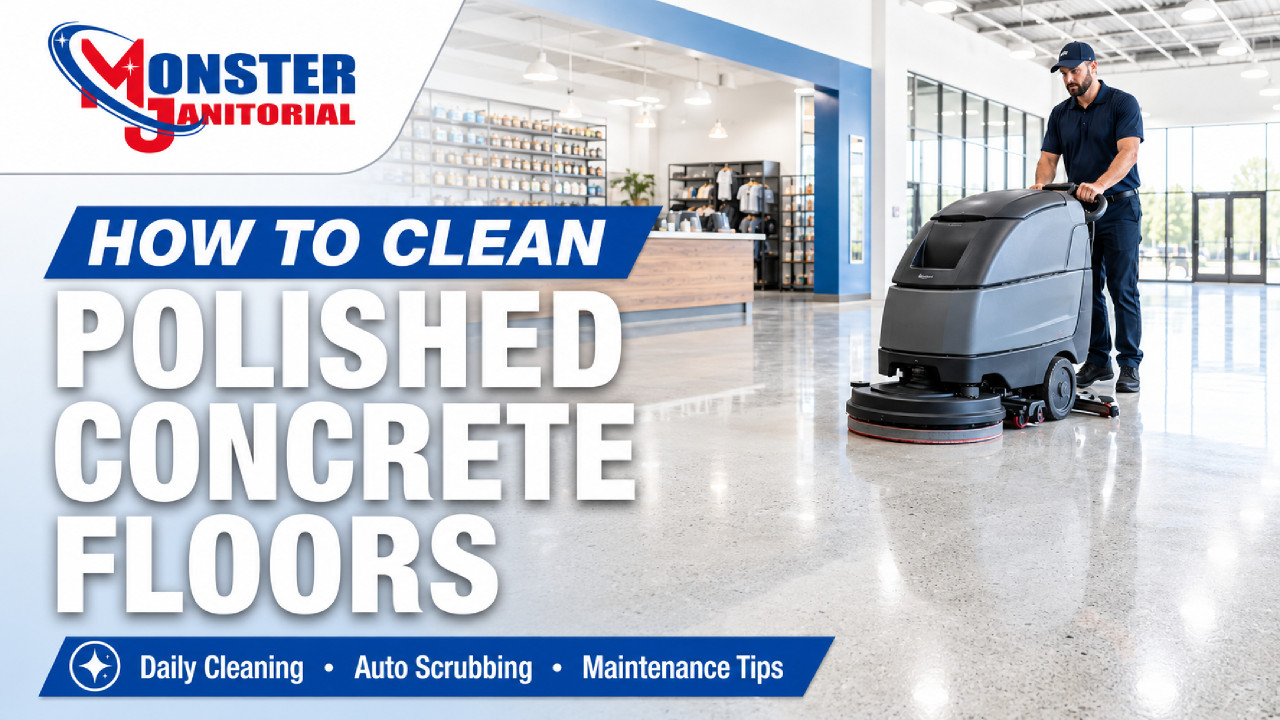
How to Clean Polished Concrete Floors
A step-by-step guide to daily soil removal, auto scrubbing, chemical selection, pad choice, stain response, and long-term gloss maintenance.
Polished concrete is durable and relatively easy to maintain, but abrasive soil, spills, and cleaning residue can reduce clarity and gloss.
The best program combines frequent dry-soil removal, compatible neutral chemistry, controlled moisture, and periodic machine maintenance with the correct pad or brush.
Quick Answer
Sweep or dust mop first, use a neutral concrete-safe cleaner, agitate with a non-aggressive pad or brush, and recover all dirty solution.
Step-by-Step Cleaning
The Correct Cleaning Process
1. Remove Dry Soil
Dust mop, sweep, or vacuum sand, grit, dust, and debris before adding water.
2. Apply Neutral Cleaner
Use a correctly diluted low-residue cleaner approved for polished concrete.
3. Agitate the Surface
Use a microfiber mop, soft brush, red pad, or approved diamond-maintenance pad.
4. Recover Dirty Solution
Use an auto scrubber, wet vacuum, or clean mop system to remove soil and solution completely.
5. Rinse When Needed
Make a clean-water pass when residue remains, then recover the rinse water.
6. Inspect the Floor
Check traffic lanes, edges, spills, residue, and dull areas before reopening the space.
Choose the Right Method
Manual Cleaning vs Auto Scrubbing
Manual Cleaning
Best for offices, edges, small areas, tight spaces, and quick spill response.
Auto Scrubbing
Best for larger areas, stronger recovery, repeatable results, and higher productivity.

Step-by-Step Cleaning Process: Remove dry soil, apply properly diluted cleaner, scrub with a compatible auto scrubber or soft pad or brush, recover the dirty solution, rinse when needed, and inspect the floor after drying.
Chemical Selection
Recommended Cleaners for Polished Concrete Floors
Use a low-residue cleaner that is compatible with polished concrete, the soil level, and the cleaning equipment. Always follow the product label, dilution instructions, and flooring-system recommendations.
Daily Neutral Cleaning
Karcher Neutral Floor Cleaner
Manufacturer Part Number: 8.698-103.0
Monster SKU: MPK86981030
Low-foam, no-rinse neutral cleaner formulated for polished concrete, polished stone, finished floors, and routine auto-scrubber cleaning.
Shop Karcher Neutral Floor CleanerGeneral Concrete Maintenance
Pioneer Eclipse 301 Neutral Cleaner
Product: Eclipse Neutral Cleaner
Monster SKU: 301MPE
All-purpose cleaner for concrete, terrazzo, marble, quarry tile, linoleum, treated wood, and other washable commercial floors.
Shop Pioneer Eclipse 301Low-Foam Auto-Scrubber Cleaning
Pioneer Eclipse 302 Low-Foam Neutral Cleaner
Product: Low Foam, Film Free Neutral Cleaner
Available SKU: MJP302FS
Film-free neutral cleaner designed for routine commercial floor maintenance where low foam and clean recovery are important.
Shop Pioneer Eclipse 302FSCleaner and Maintainer
Pioneer Eclipse ReClaim 354
Product: Hard Floor Cleaner & Maintainer
Available SKU: MJP354FS
Neutral hard-floor cleaner and maintainer used for daily maintenance of compatible polished concrete, sealed concrete, and commercial hard floors.
Shop Pioneer Eclipse ReClaim 354Warehouse and Heavier Soil
Karcher Warehouse Floor Cleaner
Manufacturer Part Number: 8.698-107.0
Monster SKU: MPK86981070
Auto-scrubber cleaner for grit and warehouse soil on compatible finished, unfinished, painted, and polished concrete floors.
Shop Warehouse Floor CleanerBrowse All Options
Concrete & Terrazzo Floor Cleaners
Shop neutral cleaners, scrubber chemicals, maintainers, and specialty products for polished, sealed, decorative, and industrial concrete floors.
Shop Concrete Floor CleanersProducts and Methods to Avoid
What Should Not Be Used on Polished Concrete?
The wrong chemical, pad, or maintenance product can leave residue, reduce clarity, alter traction, or damage the polished surface and protective treatment.
Strong Acidic Cleaners
Acid-based products can etch concrete, damage densifiers or guards, and permanently reduce gloss.
Unapproved High-Alkaline Degreasers
Heavy degreasers may leave residue, discolor the floor, or affect protective treatments when used incorrectly.
Soap-Based or Residue-Forming Cleaners
Products that leave a film can create haze, attract soil, reduce reflectivity, and make the floor feel sticky.
Conventional Floor Wax or Finish
Wax can change the maintenance system, create buildup, and hide the natural polished-concrete appearance unless specifically approved.
Aggressive Stripping Pads
Black, brown, or other highly aggressive pads may scratch the surface, reduce clarity, or alter the polished profile.
Excess Chemical or Incorrect Dilution
Overdosing can leave streaks, haze, sticky residue, and unnecessary chemical buildup.
Leaving Dirty Solution on the Floor
Poor recovery, worn squeegees, or dirty mop water can redeposit soil and leave the floor dull or streaked.
Untested Spot Cleaners or Solvents
Specialty products may discolor the surface or affect guards and stain-protection treatments if compatibility is not confirmed.
Best practice: Use the least aggressive effective cleaner and pad. Test unfamiliar products in an inconspicuous area and verify compatibility with the concrete densifier, guard, stain protector, or polishing system.
Floor Contact Accessories
Choosing Pads and Brushes for Polished Concrete
Use pads for smooth polished concrete and soft brushes where the surface is textured, uneven, or difficult for a flat pad to contact. Always match the accessory size to the machine.
Routine Cleaning
Red Cleaning Pads
For light daily cleaning and routine auto scrubbing when approved for the polished-concrete system.
Shop Red Floor PadsGloss Maintenance
Diamond-Impregnated Floor Pads
For cleaning, refinement, and gloss maintenance on compatible polished concrete, terrazzo, and stone floors.
Shop Diamond Floor PadsLight Polishing
White Polishing Pads
For light polishing and finishing where a soft, non-aggressive pad is appropriate.
Shop White Polishing PadsTextured Areas
Soft Nylon Scrub Brushes
For textured concrete, joints, uneven areas, and locations where a flat pad may not maintain full surface contact.
Machine Compatibility
Pad Drivers
Select a pad driver that matches the machine deck diameter, attachment system, and intended floor-pad size.
Avoid aggressive stripping pads: Black, brown, and other highly aggressive pads may scratch polished concrete, reduce clarity, or alter the surface profile unless professional restoration is intended.
MJ University
Related Floor Pad Guides
Learn how to choose the right pad, brush, or diamond-maintenance system for your floor and machine.
Protect the Finish
Common Cleaning Mistakes
Grit can scratch the floor during wet cleaning.
Overdosing can leave haze and sticky residue.
The wrong pad may reduce clarity.
Poor recovery causes streaks and dullness.
Recommended Floor-Care Equipment
Machines, Pads & Cleaning Products
Common Questions
Frequently Asked Questions
Can polished concrete be mopped?
Yes. Use a clean microfiber mop and correctly diluted neutral cleaner.
Can an auto scrubber be used?
Yes, with a compatible pad or brush, controlled solution flow, and maintained squeegees.
Should polished concrete be waxed?
Usually not unless the flooring-system provider specifically recommends it.
Why does the floor look cloudy?
Cloudiness may come from excessive chemical, residue, dirty water, poor recovery, or an incompatible product.
Final Recommendation
Use the Least Aggressive Effective Method
Remove abrasive soil early, respond to spills quickly, dilute chemicals correctly, and maintain traffic lanes before the floor becomes visibly dull.