
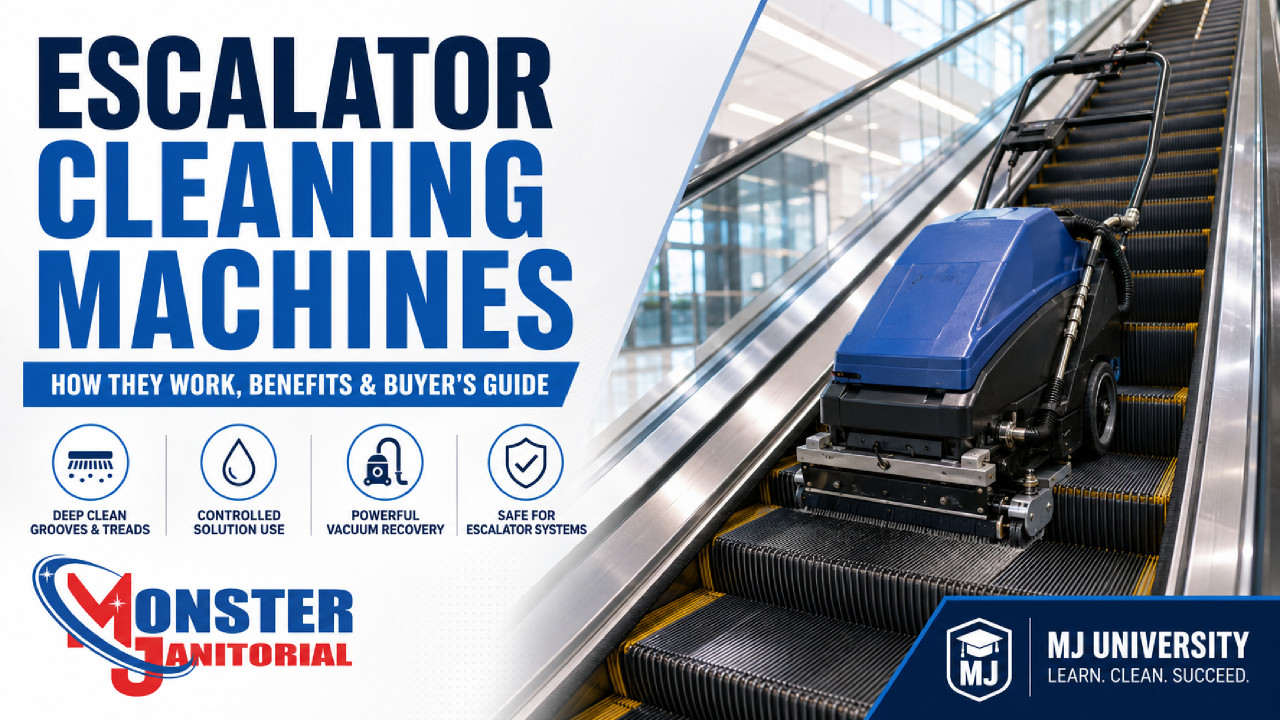
MJ University Equipment Guide
Escalator Cleaning Machines: How They Work and How to Choose One
Learn how commercial escalator cleaners remove embedded soil from steps, grooves, risers, and moving walkways while controlling moisture and reducing manual labor.
Why Escalators Need Specialized Cleaning Equipment
Escalators collect dirt, sand, grease, dust, and debris in areas that traditional mops and vacuums cannot clean effectively. Their grooves and moving components require equipment designed to clean the step surface without allowing excessive moisture to enter the internal mechanism.
Commercial escalator cleaning machines combine powered brushes, controlled solution delivery, and vacuum recovery. They are commonly used in airports, shopping centers, transit stations, hospitals, hotels, convention centers, and other high-traffic facilities.
What Does an Escalator Cleaning Machine Do?
An escalator cleaner loosens embedded dirt with rotating brushes, applies a controlled amount of cleaning solution, and recovers dirty moisture before it can spread into the machine. Some systems are designed for routine maintenance, while others provide deeper restorative cleaning.
How Escalator Cleaning Machines Work
1. Brush Agitation
Specialized brushes reach into the grooves and tread pattern to loosen compacted soil, grease, and debris.
2. Controlled Solution
Cleaning solution is applied carefully to prevent excessive water from entering internal escalator components.
3. Vacuum Recovery
The machine captures dirty solution and loosened debris, helping leave the step surface cleaner and drier.
4. Moving-Step Cleaning
Many machines remain positioned at the landing while the escalator moves each step through the cleaning area.
Main Types of Escalator Cleaning Equipment
Dry Escalator Cleaners
Dry systems use brushes and vacuum recovery without applying liquid solution. They are useful for routine dust and debris removal with minimal downtime.
Wet Escalator Cleaners
Wet systems apply a controlled amount of cleaning solution and recover the dirty liquid. They are better suited for grease, salt residue, spills, and heavily soiled steps.
Combination Wet-and-Dry Systems
Combination machines provide flexibility for routine maintenance and periodic deep cleaning. They may support different brushes, settings, or operating modes.
Moving Walkway Cleaners
Some escalator cleaning systems can also clean moving walkways. Compatibility depends on the surface, groove pattern, width, and manufacturer requirements.
Benefits of Using a Commercial Escalator Cleaner
- Reaches grooves and tread surfaces that mops cannot clean
- Reduces manual scrubbing and cleaning labor
- Improves the appearance of high-traffic entrances and public areas
- Removes sand and debris that may contribute to surface wear
- Controls moisture around sensitive mechanical components
- Supports a more consistent escalator maintenance program
How to Choose the Right Escalator Cleaning Machine
Escalator Step Width
Confirm that the machine and brush assembly match the width and groove pattern of the escalator or moving walkway.
Soil Conditions
Dry dust may require a different system than grease, salt residue, beverage spills, or deeply embedded dirt.
Wet or Dry Cleaning
Choose dry equipment for frequent maintenance or wet extraction for heavier, restorative cleaning.
Brush Options
Verify that replacement brushes are available for the escalator tread material and cleaning application.
Recovery Performance
Strong vacuum recovery helps control moisture and reduces the amount of liquid left on the steps.
Transport and Storage
Consider machine weight, wheels, handles, dimensions, and how often the unit must move between escalators.
Basic Escalator Cleaning Process
- Inspect the escalator. Check for damaged steps, loose components, oil, or objects trapped in the grooves.
- Block access. Use signs, barriers, and facility procedures to prevent passengers from entering the cleaning area.
- Remove loose debris. Vacuum or collect larger debris before using the cleaning machine.
- Install the correct brushes. Match the brush type to the escalator step and soil level.
- Use approved cleaning solution. Follow the equipment and escalator manufacturer’s recommendations.
- Position the machine securely. Follow the operating instructions for the landing and escalator direction.
- Clean the required number of cycles. Heavy soil may require additional passes.
- Inspect and dry the surface. Confirm that the steps are clean, dry, and free of loose debris before reopening.
Escalator Cleaning Safety
Escalators contain moving mechanical components and electrical systems. Cleaning crews should follow the machine manual, escalator manufacturer instructions, facility lockout procedures, and all applicable safety policies.
- Never use excessive water or unapproved chemicals
- Keep passengers away from the work area
- Inspect power cords, hoses, brushes, and recovery components before use
- Do not operate equipment on a damaged or malfunctioning escalator
- Train operators before allowing independent machine use
Choosing an Escalator Cleaning Solution
Use a low-foaming commercial cleaner compatible with the escalator step material and the cleaning machine’s recovery system. Avoid highly foaming detergents, oily products, and chemicals that may leave a slippery residue.
Always follow the manufacturer’s dilution instructions. Using too much chemical can create residue, increase foaming, reduce recovery performance, and require additional rinse passes.
Escalator Cleaner Maintenance
Common Escalator Cleaning Mistakes
Excess liquid may enter internal components and create unnecessary risk.
Larger debris can clog the machine or interfere with brush contact.
An incorrect brush may clean poorly or cause unnecessary surface wear.
Dirty filters and clogged hoses reduce suction and leave more moisture behind.
Escalator Cleaning Machine FAQs
Can a regular floor scrubber clean an escalator?
No. Standard auto scrubbers are not designed for moving escalator steps, narrow grooves, or the moisture-control requirements of escalator systems.
Do escalator cleaners work while the escalator is moving?
Many systems are positioned at a landing while the escalator moves the steps through the cleaning area. Always follow the exact operating procedure for the machine and escalator.
Can one machine clean moving walkways?
Some machines support both escalators and moving walkways, but compatibility depends on the machine design, surface width, and groove pattern.
How often should escalators be deep cleaned?
Cleaning frequency depends on traffic, weather, soil levels, facility standards, and the amount of debris entering the building. High-traffic locations may require frequent dry maintenance and scheduled wet cleaning.
Need Help Choosing an Escalator Cleaning Machine?
Monster Janitorial can help compare cleaning methods, brush systems, machine sizes, recovery performance, and facility requirements.
Tax-Exempt and Purchase-Order Support
Monster Janitorial supports schools, municipalities, healthcare systems, government agencies, and qualifying organizations. Create an account and email your tax-exemption certificate to sales@monsterjanitorial.com .