
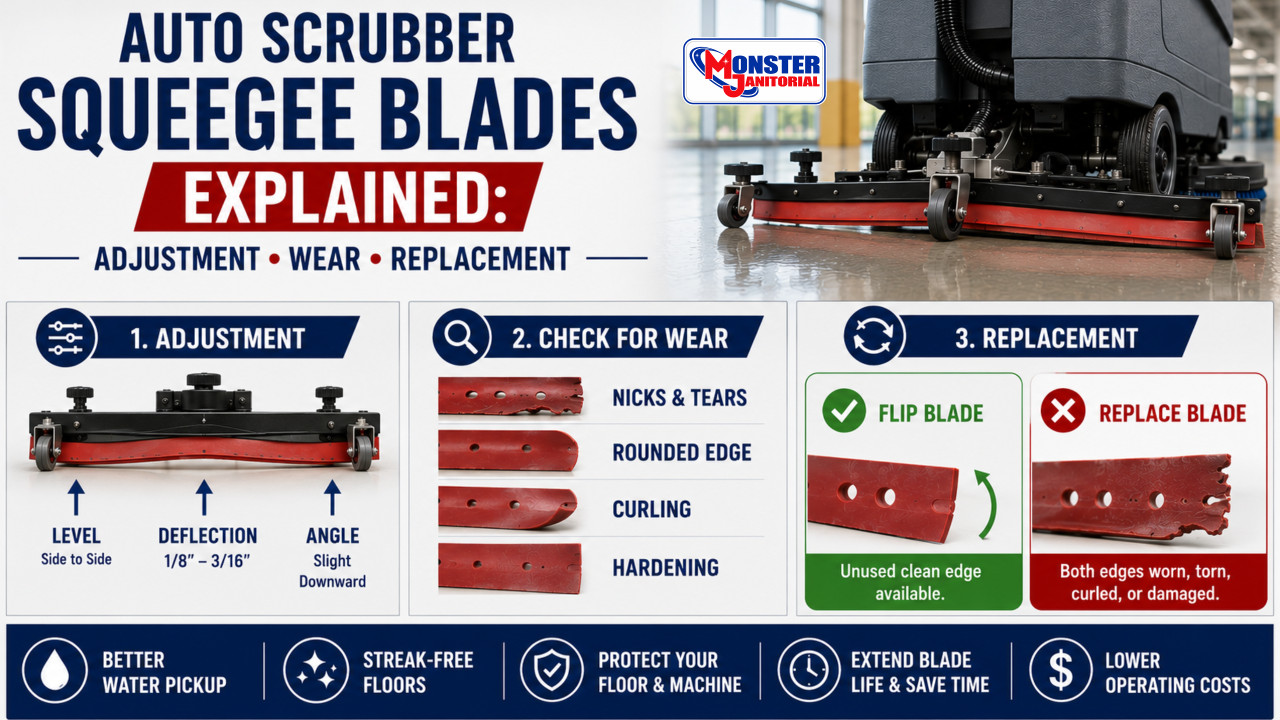
Auto Scrubber Squeegee Blades Explained: Adjustment, Wear & Replacement
The squeegee system is what allows an auto scrubber to recover dirty water and leave the floor relatively dry after cleaning.
Worn blades, poor adjustment, trapped debris, incorrect blade contact, or recovery-system problems can all cause streaking and water left behind.
Good Water Pickup Starts With Good Blade Contact
A properly adjusted squeegee should maintain consistent contact across the floor without being excessively flattened. If the blade is worn, curled, torn, dirty, or incorrectly adjusted, the scrubber may leave streaks or standing water.
What Does an Auto Scrubber Squeegee Do?
During cleaning, the scrubber applies solution and agitates the floor with brushes or pads. The squeegee assembly follows behind the cleaning deck and gathers the dirty solution so the vacuum system can pull it into the recovery tank.
Good recovery depends on the entire system working together: the blades, squeegee assembly, vacuum hose, vacuum motor, tank seals, and recovery tank airflow.
Front Squeegee Blade vs Rear Squeegee Blade
Most commercial auto scrubber squeegee assemblies use a front blade and a rear blade. Their exact design varies by manufacturer and machine.

What Proper Squeegee Blade Contact Should Look Like
The rear blade normally needs enough deflection to maintain consistent contact with the floor while still preserving an effective wiping edge.

How to Adjust an Auto Scrubber Squeegee
Signs Your Squeegee Blade Is Worn
When to Flip a Squeegee Blade vs When to Replace It
Some squeegee blades are designed with multiple usable wiping edges. If another edge is still straight, clean, and undamaged, the blade may be rotated or flipped according to the manufacturer's instructions.

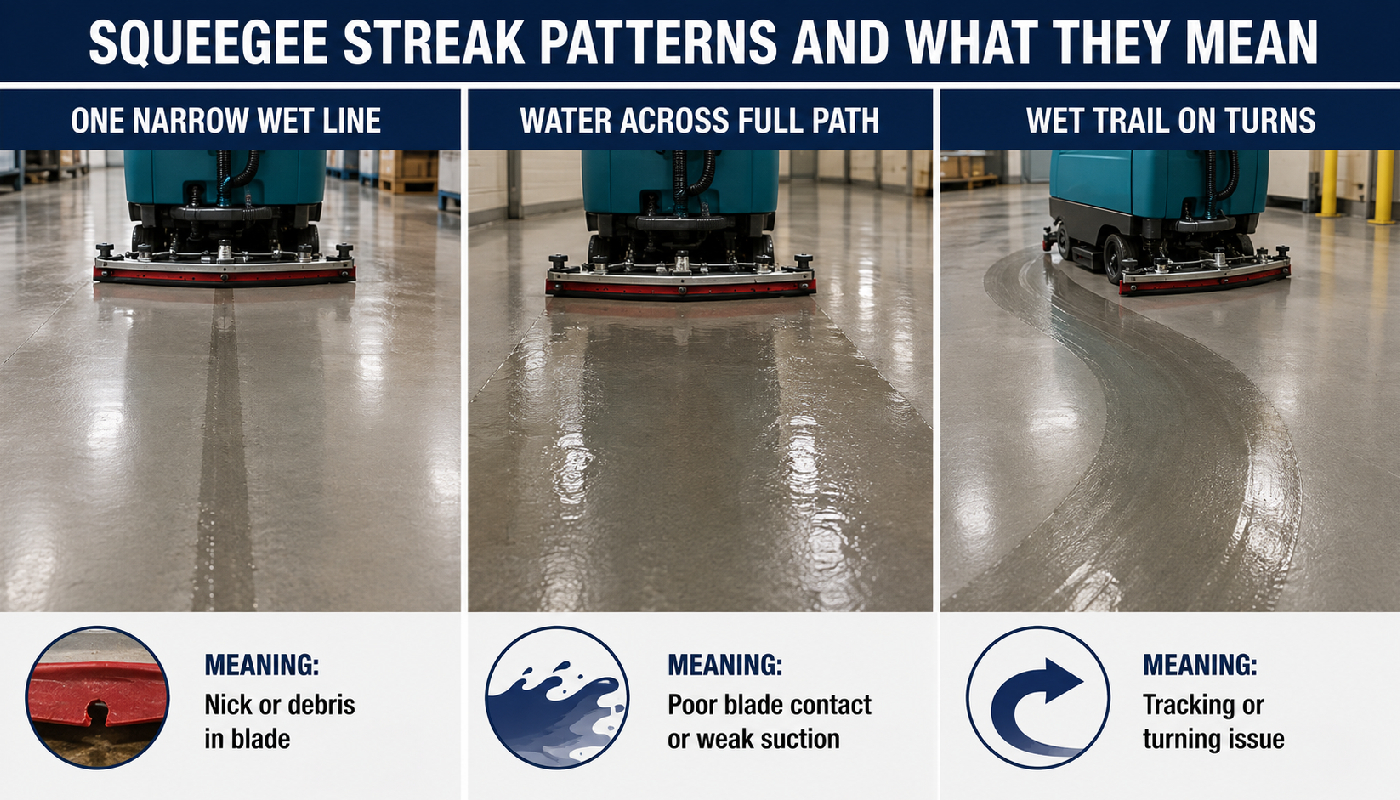
Squeegee Streak Patterns and What They Mean
The shape of the water left behind can provide useful clues about the source of the recovery problem.
Debris Under the Blade Can Look Like Blade Failure
Hair, string, paper, grit, small debris, or other material trapped under the rear blade can break the seal and leave a narrow wet streak. Clean and inspect the blade before assuming it needs replacement.
Floor Texture Can Affect Water Recovery
Uneven, textured, damaged, or deeply profiled floors may be harder to recover completely than smooth floors. Slower travel, proper blade selection, correct adjustment, and good vacuum performance become especially important on these surfaces.
Daily Squeegee Blade Maintenance
Quick Squeegee Troubleshooting Guide
| Problem | Check First | Next Step |
|---|---|---|
| Narrow wet streak | Debris or nick | Clean or inspect blade edge |
| Water across path | Blade contact | Check adjustment and suction |
| Blade curls excessively | Deflection | Adjust or replace if damaged |
| Wet trail on turns | Tracking | Check caster and turn speed |
| Good blade, poor pickup | Recovery hose | Check seals and vacuum airflow |
Learn More About Auto Scrubber Performance
Commercial Auto Scrubber Troubleshooting Guide
Diagnose poor cleaning, water pickup, streaking, suction, solution-flow, and recovery problems.
Read Troubleshooting Guide →How to Improve Floor Drying Times
Learn how squeegee performance, solution flow, recovery, and operating technique affect drying.
Read Drying Guide →Auto Scrubbers Learning Center
Explore auto scrubber selection, deck systems, brushes, pads, batteries, water recovery, maintenance, and troubleshooting.
Visit Auto Scrubbers Learning Center →Shop Auto Scrubbers & Floor-Care Supplies
Auto Scrubber Squeegee Blade FAQs
How do I know if my scrubber squeegee blade is worn?
Look for rounded edges, tears, cuts, permanent curling, uneven wear, or recurring wet streaks that remain after cleaning and adjustment.
Can auto scrubber squeegee blades be flipped?
Some blades have multiple usable edges and can be rotated or flipped. Follow the blade and machine manufacturer's instructions before changing orientation.
Why does my squeegee leave one wet line?
A narrow wet streak often indicates debris, a nick, tear, or damaged portion of the wiping edge.
Why is the whole floor still wet behind the scrubber?
Check overall blade contact and adjustment first, then inspect the recovery hose, tank seals, float system, and vacuum airflow.
Should the squeegee blade be completely flat on the floor?
No. The blade generally needs controlled deflection rather than being flattened excessively. Follow the manufacturer specification for your machine.
Need Help With Auto Scrubber Water Recovery?
Monster Janitorial can help troubleshoot squeegee blades, recovery hoses, vacuum performance, brushes, pads, replacement parts, and auto scrubber cleaning performance.
Tax-exempt purchasing and purchase-order support are available for qualifying schools, universities, government agencies, municipalities, healthcare facilities, and other institutional customers.