
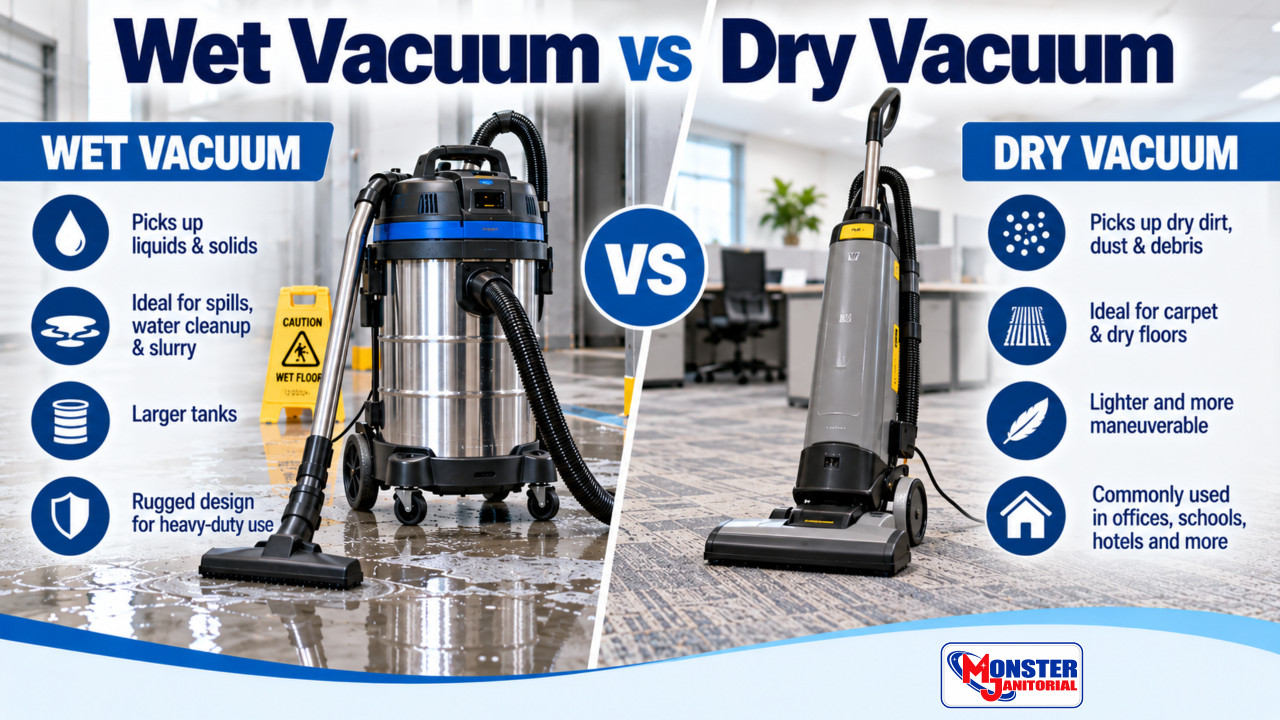
Wet Vacuum vs Dry Vacuum
Wet and dry vacuums serve very different purposes in commercial cleaning. Dry vacuums are designed for dust and debris, while wet vacuums are built to recover liquids, slurry, standing water, and cleaning solution.
Use the Vacuum Designed for the Material You Are Recovering
Use a dry vacuum for dust, dirt, carpet debris, and dry particulate. Use a wet or properly configured wet/dry vacuum for water, slurry, spills, and other approved liquid-recovery applications.
What Is a Dry Vacuum?
A dry vacuum is designed specifically for collecting dry debris such as dust, dirt, sand, paper, and other dry particulate matter.
Routine carpet and floor-detail cleaning.
Fine soil, lint, paper, crumbs, and dry debris.
Upright, backpack, and canister vacuum applications.
Many commercial dry vacuums offer high-efficiency filtration options.
What Is a Wet Vacuum?
A wet vacuum, often called a wet recovery vacuum, is designed to collect liquids, slurry, standing water, and cleaning solution. Wet-recovery machines use components specifically intended for liquid pickup, including a recovery tank and overfill-protection system.
Recover water and approved liquid spills.
Water recovery after leaks or cleanup projects.
Recover stripper solution, dissolved finish, soil, and rinse water.
Recover dirty solution after deep cleaning.
Dry Vacuum vs Wet Vacuum
The most important difference is what the machine is designed to recover.
Dust & Debris
Liquid Recovery
Can You Use a Dry Vacuum to Pick Up Water?
No—not unless the machine is specifically designed and rated for wet/dry operation.
Using a dry-only vacuum for liquid pickup can damage filters and internal components and may create electrical or equipment-safety concerns. Always follow the vacuum manufacturer's operating instructions.
When Should You Use a Wet Vacuum?
Wet Vacuum vs Dry Vacuum Comparison
| Feature | Dry Vacuum | Wet Vacuum |
|---|---|---|
| Dust & Dry Debris | Primary use | Model dependent |
| Liquid Pickup | No | Yes |
| Standing Water | No | Yes |
| Floor Stripping Slurry | No | Yes, when properly configured |
| Carpet Vacuuming | Common | Not the primary purpose |
| HEPA / High-Efficiency Filtration | Common on many models | Available on some wet/dry models |
Actual capabilities vary by model, filtration configuration, accessories, and manufacturer instructions.
Some Machines Can Handle Both
A commercial wet/dry vacuum is designed to support both dry debris and liquid recovery when it is configured correctly for the job.
Always confirm which filters, accessories, float systems, hoses, and operating procedures are required when switching between dry and wet applications.
Recommended Commercial Wet Vacuums
Commercial Wet Vacuums for Slurry, Spill & Water Recovery
Compare commercial wet and wet/dry vacuums based on capacity, recovery needs, squeegee options, filtration, and facility workflow.
TASKI Vacumat 22T
11.6-gallon commercial wet vacuum with front-squeegee capability for spill recovery, rinse water, floor stripping slurry, and hard-floor maintenance.
View TASKI Vacumat 22T →NSS Colt 1450 P
14.5-gallon commercial wet/dry vacuum with HEPA and front-mount squeegee options for water recovery, spills, and floor-care applications.
View NSS Colt 1450 P →NSS Alpha Wet Vac Series
Available in 16- and 24-gallon configurations for larger-volume water recovery, floor-care projects, warehouses, and demanding commercial cleanup.
View NSS Alpha Wet Vac Series →Karcher NT 48/1
13-gallon commercial wet/dry vacuum available in standard or front-squeegee configurations for water recovery, spills, maintenance, and floor-care work.
View Karcher NT 48/1 →Wet Vacuum vs Dry Vacuum FAQ
Not unless the machine is specifically designed and rated for wet/dry operation.
Some wet/dry machines can, but the correct filter and configuration depend on the model and manufacturer instructions.
Use a commercial wet or wet/dry vacuum designed and properly configured for liquid and slurry recovery.
A commercial dry vacuum such as an upright, backpack, canister, or wide-area vacuum is usually the appropriate choice for routine dry carpet vacuuming.
A wet vacuum focuses on liquid recovery, while a wet/dry vacuum is designed to support both wet and dry pickup when configured correctly.
Facilities that perform both routine dry vacuuming and liquid-recovery work often benefit from having equipment suited to both applications.
Continue Learning About Commercial Vacuums
Commercial Wet & Dry Vacuums
Browse commercial vacuum equipment for dry debris, carpet cleaning, liquid recovery, spill response, and floor-care applications.
Not Sure Which Commercial Vacuum You Need?
Tell Monster Janitorial what you need to recover, your facility type, flooring, cleaning frequency, and whether you need dry debris collection, liquid recovery, or both. We can help compare the right vacuum options.
Tax-exempt purchasing and purchase-order support are available for qualifying schools, universities, government agencies, municipalities, healthcare facilities, and other institutional customers.