
What Is Floor Buffing?
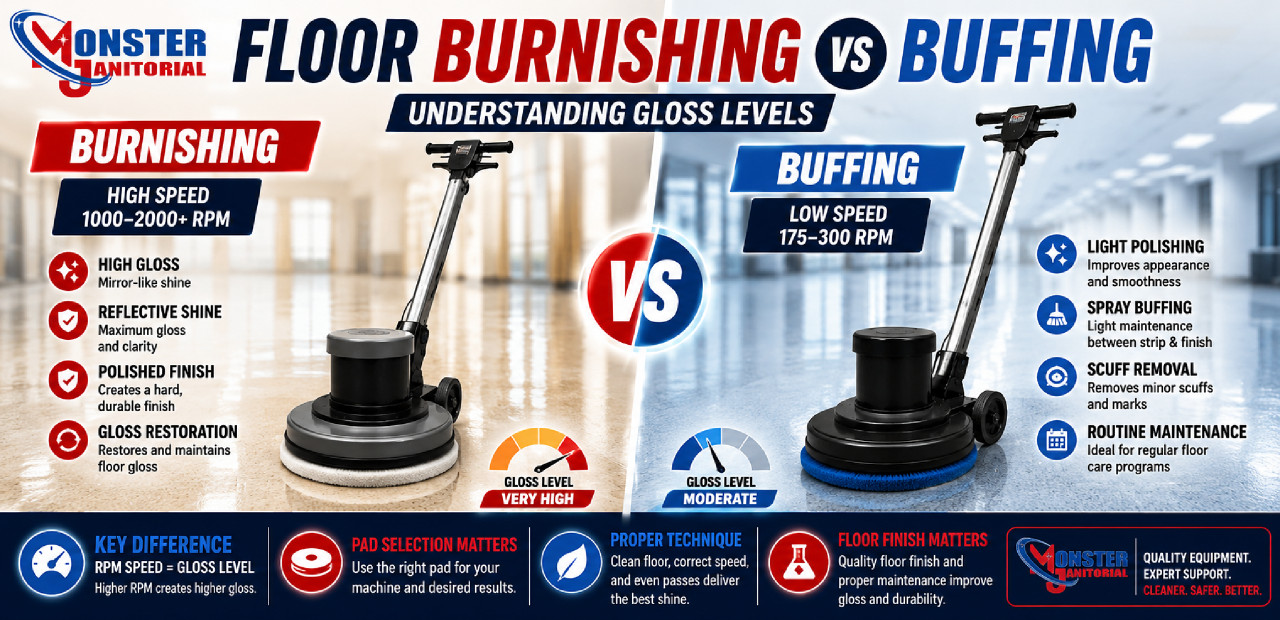
Floor buffing typically uses a lower speed floor machine to clean and lightly polish floor finish.
Buffing commonly uses machines operating around:
- 175 RPM
- 200 RPM
- 300 RPM
Buffing is often used for:
- Light gloss improvement
- Spray buffing
- Removing minor scuffs
- Routine floor appearance maintenance
- Interim floor care
Buffing produces moderate shine improvement but generally does not create the high reflective gloss associated with burnishing.
What Is Floor Burnishing?
Floor burnishing uses high speed or ultra high speed floor machines to generate significantly higher gloss levels.
Burnishers commonly operate around:
- 1000 RPM
- 1500 RPM
- 2000+ RPM
High rotational speed creates friction and heat that help polish and harden floor finish.
Burnishing is commonly used for:
- High-gloss floor programs
- Mirror-like floor appearance
- Retail shine programs
- Polished VCT maintenance
- Gloss restoration
Why RPM Matters
RPM stands for rotations per minute.
Higher RPM levels increase friction and floor finish polishing capability.
Lower RPM systems focus more on cleaning and maintenance, while higher RPM systems focus more on appearance and gloss generation.
| RPM Range | Typical Application |
|---|---|
| 175–300 RPM | Buffing, scrubbing, spray buffing |
| 1000–1500 RPM | High speed burnishing |
| 2000+ RPM | Ultra high gloss burnishing |
Recommended TASKI Burnishers & Floor Machines
Commercial Buffing & Burnishing Equipment
These TASKI commercial floor machines support spray buffing, gloss restoration, reflective floor maintenance, and high-speed burnishing programs across commercial facilities.
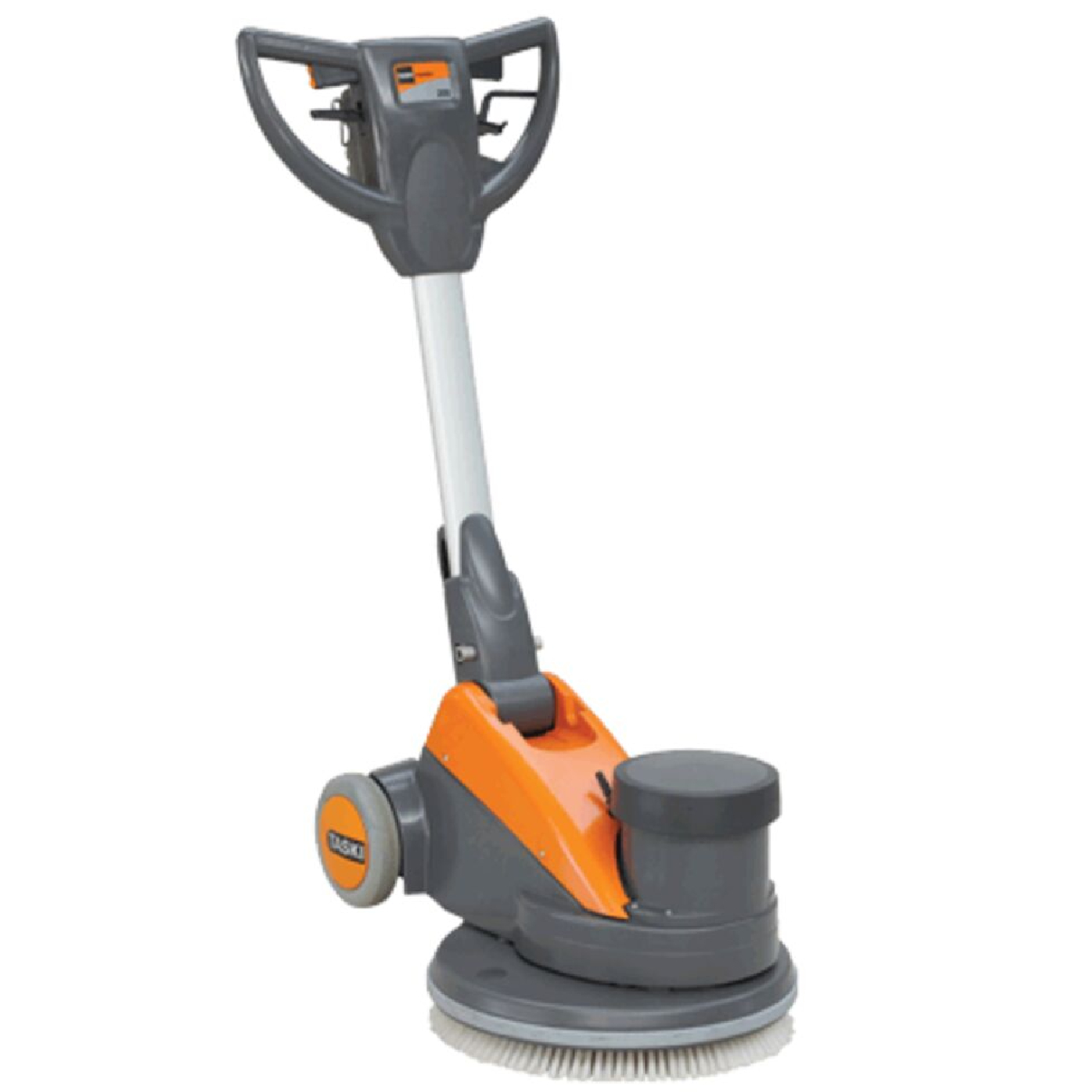
Low Speed Buffing Machines
Designed for spray buffing, light polishing, scrubbing, and routine floor maintenance.
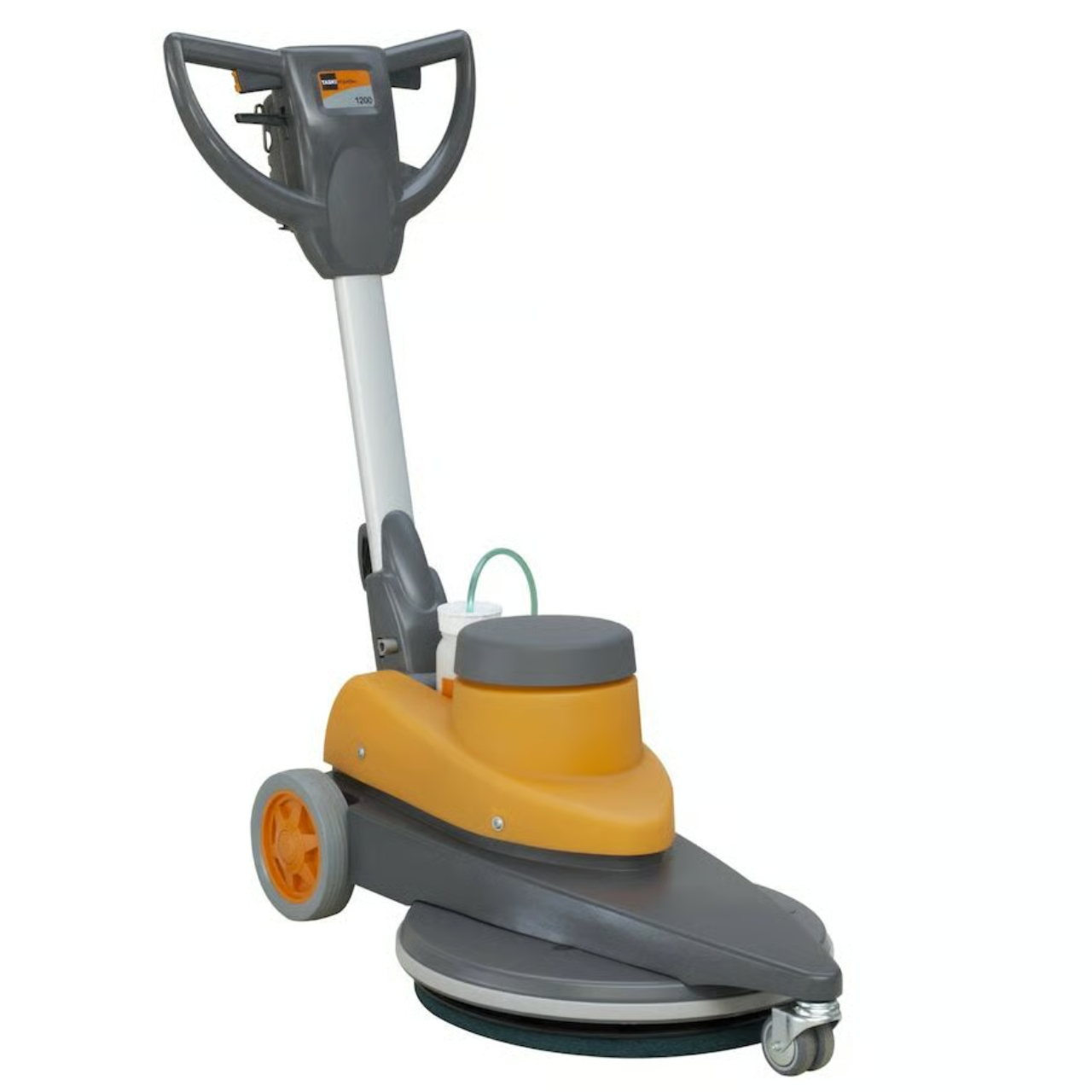
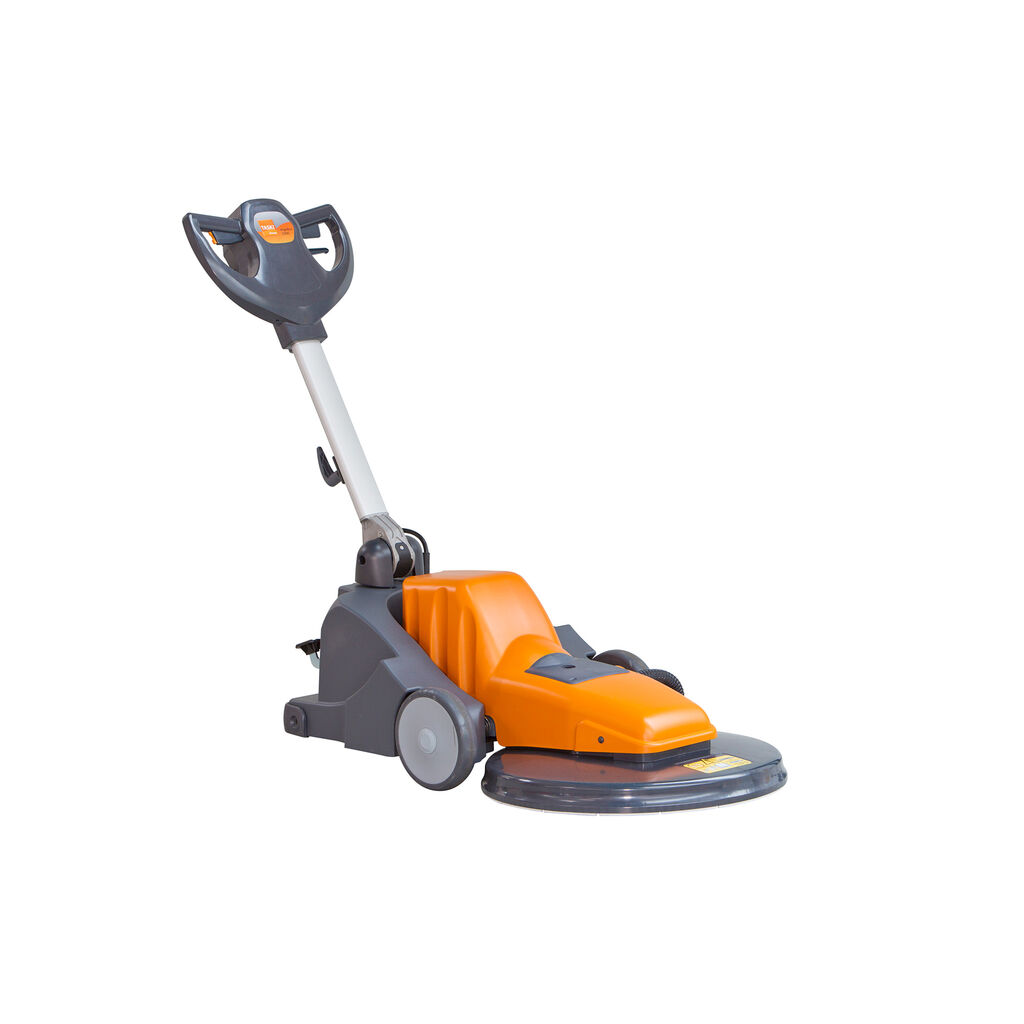
High Speed Burnishers
Designed for gloss restoration, reflective floor shine, and polished commercial floor maintenance.
Final Thoughts
Both buffing and burnishing play important roles in commercial floor maintenance programs.
Buffing helps support routine maintenance and light appearance improvement, while burnishing is designed to create high-gloss reflective floor finishes.
Understanding RPM levels, pad selection, and floor finish maintenance helps facilities build more effective and consistent floor care programs.