
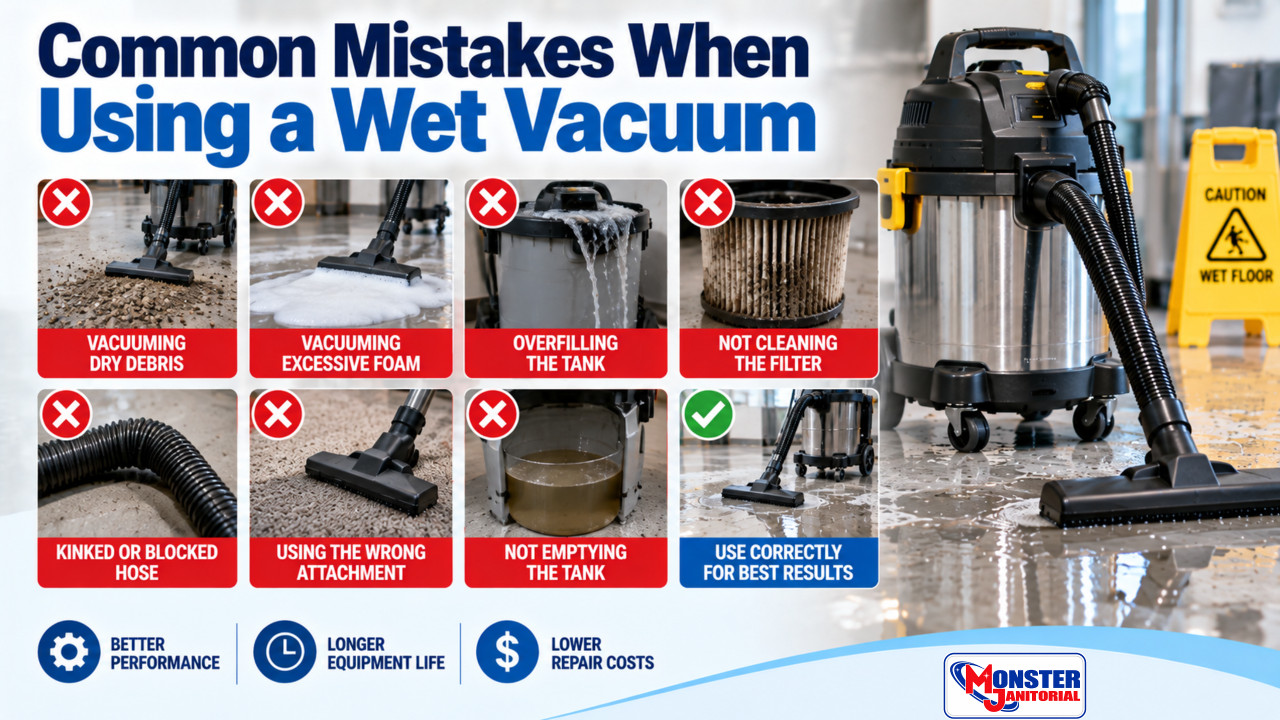
Common Mistakes When Using a Wet Vacuum
Wet vacuums are valuable tools for recovering spills, standing water, floor stripping slurry, rinse water, and cleaning solution. Many wet vacuum problems, however, are caused by improper use or skipped maintenance rather than a failed machine.
Most Wet Vacuum Problems Are Preventable
Overfilled tanks, clogged hoses, dirty filters, incorrect vacuum selection, dried slurry, and poor storage practices can reduce recovery performance and create unnecessary downtime.
What Is a Wet Vacuum Used For?
A wet vacuum, sometimes called a wet recovery vacuum, is designed to recover liquids from floors and other approved surfaces.
Quick recovery of water and liquid spills.
Recovery after leaks, cleanup work, or water intrusion.
Recovery of stripping solution, dissolved finish, soil, and rinse water.
Useful for wet floor recovery and detailed sanitation workflows.
Recovering dirty solution after aggressive cleaning.
Useful for supplemental recovery and problem cleanup.
Wet Vacuum Mistakes to Avoid
Small operating mistakes can reduce suction, create odors, cause clogs, increase labor, and shorten equipment life.
Running the vacuum too close to maximum capacity can interrupt recovery and create messy cleanup.
Never use a dry-only vacuum for liquid pickup.
Dirty recovery tanks can develop odors, residue, and buildup between jobs.
Restricted airflow and blocked hoses can quickly reduce pickup performance.
Letting the Recovery Tank Overfill
Continuing to recover liquid when the tank is already near capacity can interrupt normal operation and make cleanup more difficult.
- Reduced suction or recovery performance
- Float shutoff activation or problems
- Overflow or messy cleanup
- Extra downtime
- More difficult tank cleaning
Using a Dry-Only Vacuum for Wet Pickup
Dry-only vacuums are not designed to recover liquids. Using the wrong machine for water, slurry, or liquid spills can damage equipment and create safety concerns.
Only use a vacuum for wet pickup when the manufacturer identifies the machine as suitable for wet or wet/dry operation and it is configured correctly for that application.
Not Cleaning the Recovery Tank After Use
Dirty water, slurry, cleaning solution, and residue should not be left sitting inside the recovery tank after the job is complete.
After each job, empty the tank, rinse it thoroughly, and follow the manufacturer's storage instructions.
Ignoring Filters, Screens & Float Shutoffs
Wet vacuums rely on clear airflow paths and properly operating recovery-protection components.
Inspect and clean components according to the manufacturer's maintenance instructions, and replace worn parts when needed.
Leaving Dirty Water in the Machine Overnight
Leaving recovered water or slurry in the vacuum after the cleaning shift can cause odors, residue, and more difficult cleanup later.
- Unpleasant smells
- Tank residue
- Contaminated hoses
- More difficult cleaning the next day
Poor Hose Maintenance
Wet vacuum hoses can collect debris, residue, and slurry during commercial recovery work. Restrictions and air leaks can reduce pickup performance.
Inspect hoses regularly and flush or clean them as appropriate for the machine and application.
Letting Floor Stripping Slurry Dry
During stripping projects, slurry should be recovered while the material is still wet and workable.
- Can leave difficult residue
- Creates extra labor and rework
- Can interfere with preparation before new finish
- May contribute to haze or poor appearance
- Extends project completion time
Using More Defoamer Than Needed
Defoamer can be useful when foam is interfering with wet recovery, but excessive chemical use wastes product and may leave unnecessary residue. Follow the product label and equipment manufacturer's instructions for your application.
Daily Wet Vacuum Maintenance Checklist
A few minutes of maintenance after each job can reduce odors, prevent clogs, and keep the machine ready for the next cleaning route.
Recommended Commercial Wet Vacuums
Commercial Wet Vacuums for Spill, Slurry & Water Recovery
Compare commercial wet and wet/dry vacuums based on capacity, recovery needs, filtration, squeegee options, and facility workflow.
TASKI Vacumat 22T
11.6-gallon commercial wet vacuum with front-squeegee capability for spill recovery, rinse water, floor stripping slurry, and hard-floor maintenance.
View TASKI Vacumat 22T →NSS Colt 1450 P
14.5-gallon commercial wet/dry vacuum with HEPA and front-mount squeegee options for spills, routine recovery, schools, retail, and floor-care work.
View NSS Colt 1450 P →NSS Alpha Wet Vac Series
Available in 16- and 24-gallon configurations for larger-volume water recovery, floor-care projects, warehouses, and demanding commercial cleanup.
View NSS Alpha Wet Vac Series →Karcher NT 48/1
13-gallon commercial wet/dry vacuum available in standard or front-squeegee configurations for water recovery, spill response, routine maintenance, and floor-care applications.
View Karcher NT 48/1 →Wet Vacuum Use & Maintenance FAQ
Yes. Recovered water, slurry, and cleaning solution should normally be emptied after the job, followed by appropriate rinsing and cleaning.
No. Only use a machine for wet pickup when it is specifically designed and configured for wet or wet/dry recovery.
Possible causes include a nearly full tank, clogged hose, dirty filter or screen, blocked intake, loose connection, or activated float shutoff.
No. Recover slurry while it is still wet and work in manageable sections to reduce residue and rework.
Yes. Inspect hoses for debris, slurry buildup, kinks, damage, and air leaks, and clean them according to the equipment manufacturer's instructions.
No. Use defoamer when appropriate for the recovered solution and follow the chemical label and equipment instructions rather than adding more than necessary.
Continue Learning About Wet Recovery
Commercial Wet Recovery Equipment
Browse commercial wet/dry vacuums for spill response, floor-care projects, slurry recovery, water pickup, and facility maintenance.
Need Help With a Wet Vacuum or Recovery Application?
Tell Monster Janitorial what machine you are using, what material you are recovering, and what problem you are experiencing. We can help compare wet vacuum equipment, parts, accessories, and recovery options.
Tax-exempt purchasing and purchase-order support are available for qualifying schools, universities, government agencies, municipalities, healthcare facilities, and other institutional customers.