
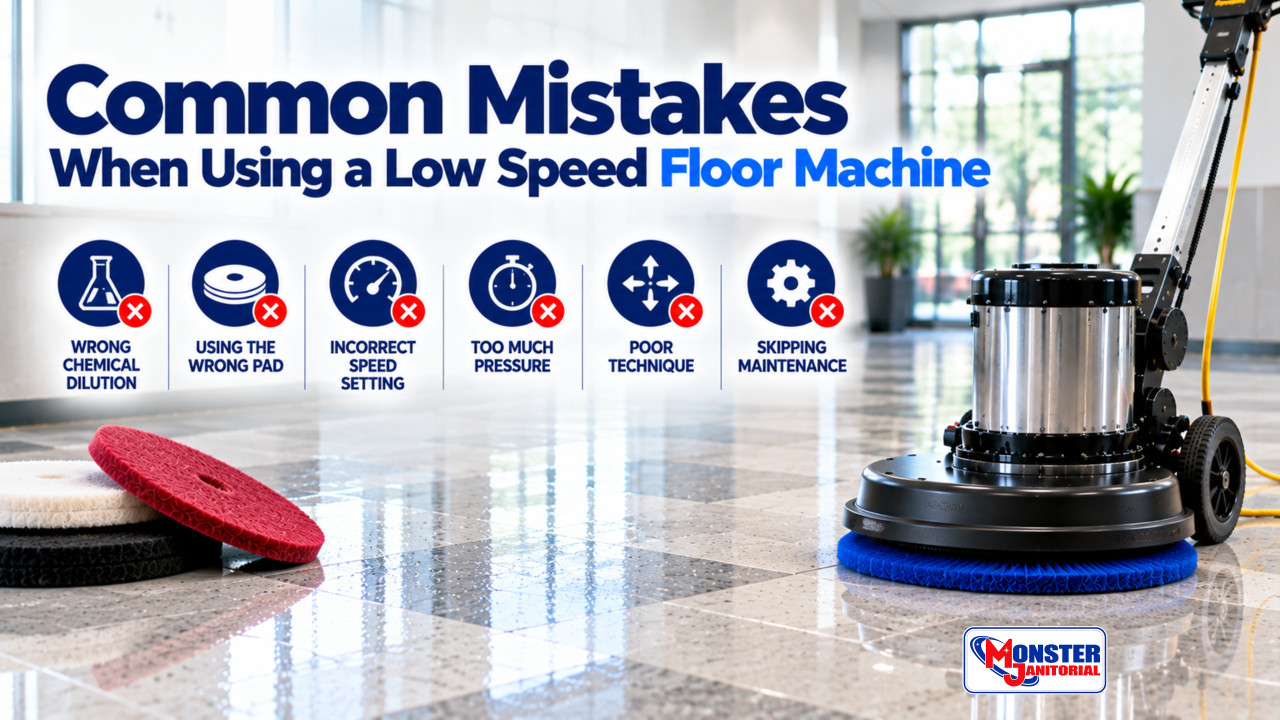
Common Low Speed Floor Machine Mistakes
Learn how pad selection, operator technique, chemical control, slurry recovery and maintenance can affect stripping, scrubbing and floor-restoration results.
Most problems with low-speed floor machines come from using the wrong pad or brush, moving too quickly, allowing chemistry to dry, poor slurry recovery, worn accessories or improper machine technique. Always follow the floor, chemical, pad and machine manufacturer's instructions.
What Is a Low Speed Floor Machine?
A low-speed floor machine is a commercial rotary machine commonly used for scrubbing, stripping, cleaning and other periodic floor-care tasks.
Many traditional rotary machines operate around 175 RPM, although operating speed varies by model and machine design. Always verify the actual machine specifications before selecting pads, brushes or accessories.
Common Low Speed Floor Machine Mistakes
Small setup and technique mistakes can reduce cleaning performance, increase rework and shorten pad or brush life.
Mistake #1: Using the Wrong Pad or Brush
Different floor-care applications require different pads or brushes. The most aggressive option is not automatically the best option.
Match the accessory to the floor surface, finish, chemical and cleaning goal. When in doubt, use the least aggressive effective option and test an inconspicuous area first.
| Common Pad Color | Typical Application |
|---|---|
| Black | Aggressive stripping on compatible floors and finishes |
| Blue / Green | Scrubbing applications, depending on manufacturer |
| Red | Light cleaning or spray buffing applications |
| White | Light polishing on compatible floor-finish systems |
How to Choose the Right Floor Pads →
TASKI Twister Diamond Floor Pad System Guide →
Mistake #2: Moving the Machine Too Quickly
Operators sometimes move a rotary floor machine faster than the cleaning process allows.
The correct pace depends on the floor, pad or brush, chemical, soil level and application. Moving too quickly can reduce contact time and create uneven results that require another pass.
Mistake #3: Allowing Stripping Solution to Dry
During floor stripping, letting stripping solution dry can leave residue and make removal more difficult.
Apply only as much solution as the crew can keep wet, agitate and recover within the product manufacturer's recommended dwell time.
Mistake #4: Forcing the Machine Instead of Controlling It
A rotary floor machine should be guided with proper handle position and balanced operator technique. Trying to force the machine downward or fight its movement can reduce control and create uneven results.
Let the machine's weight, motor and accessory provide the intended floor contact. Follow the manufacturer's operating instructions and allow trained operators to become comfortable with the machine before aggressive stripping or restoration work.
Mistake #5: Leaving Chemical or Slurry Residue Behind
After stripping or deep scrubbing, residue left on the floor can interfere with the next step in the maintenance process.
Recover dirty solution completely and follow the chemical manufacturer's directions for rinsing, neutralizing or additional recovery passes. The required process varies by chemistry and floor-finish system.
Mistake #6: Ignoring Pad or Brush Wear
Pads and brushes lose effectiveness as they wear, load with soil or become compressed.
- Reduced stripping or scrubbing performance
- Uneven cleaning
- Heavy soil loading
- Compressed or damaged pad fibers
- Worn or uneven brush bristles
Equipment Used in Commercial Floor Stripping
A complete stripping process may require a rotary floor machine, compatible stripping pads or brushes, wet recovery equipment and the appropriate floor-care chemistry.
Final Thoughts
Low-speed floor machines remain versatile tools for commercial floor maintenance, but results depend heavily on proper setup and operator technique.
Match the pad or brush to the floor, use compatible chemistry, keep stripping solution from drying, recover dirty solution completely and inspect accessories regularly.
The floor, machine, chemical and accessory manufacturers should always be the final authority for compatibility and operating procedures.
Explore More Commercial Cleaning Guides
Visit MJ University for commercial cleaning education, equipment guides, floor-care resources, maintenance tips and troubleshooting help.
Explore MJ University →Need Help with Floor Machines, Pads or Chemicals?
Monster Janitorial can help match your floor type and maintenance process to the appropriate commercial equipment, accessories and cleaning chemistry.