
MJ University Carpet-Care Guide
Why Carpet Extractors Foam: When and How to Use Defoamer
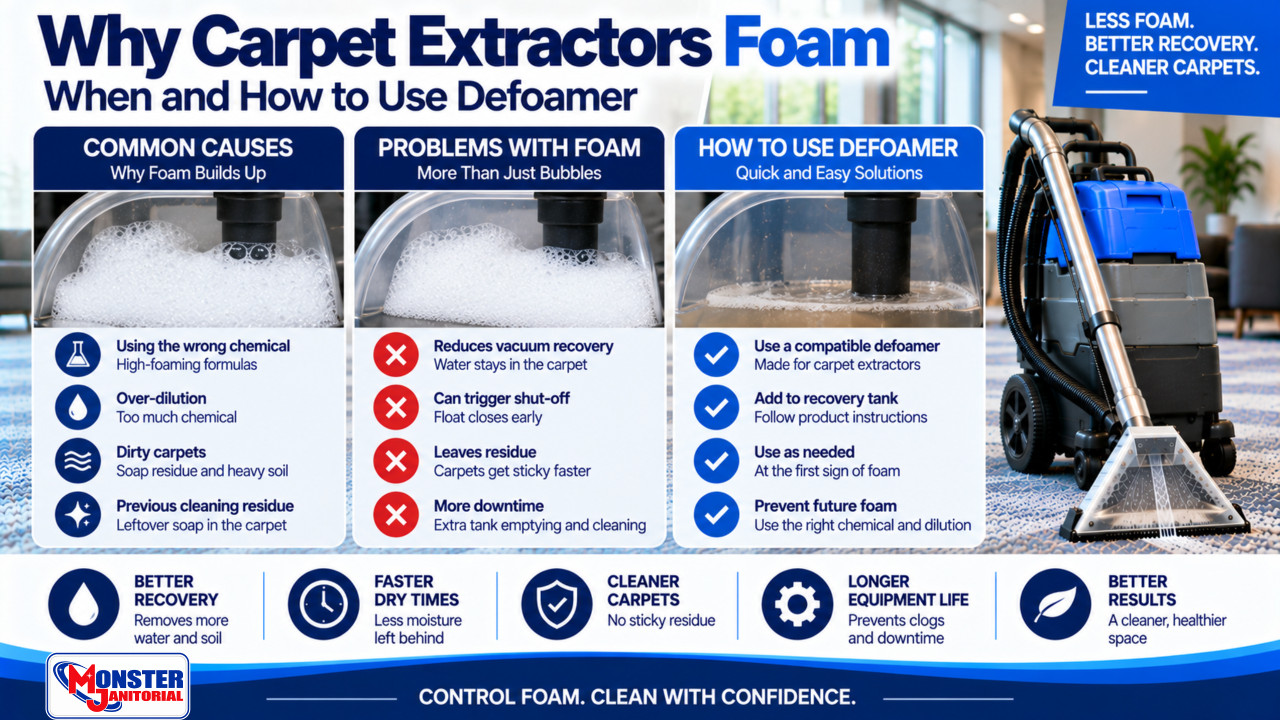
Excess foam inside a commercial carpet extractor can reduce usable recovery-tank capacity, interrupt water recovery, activate the float shutoff early, and place unnecessary stress on the vacuum-protection system. Learn what causes extractor foam, when defoamer is needed, where to add it, and how to prevent the problem from returning.
The Most Important Rule
Carpet-extractor defoamer normally belongs on the recovery side of the machine, not in the clean-solution tank. Always follow the defoamer label and the extractor manufacturer’s instructions before adding any chemical.
Why Do Carpet Extractors Foam?
Carpet extractors recover dirty water, detergent residue, pre-spray, spotter, shampoo, grease, and other contamination through the vacuum hose. Airflow and agitation inside the hose and recovery tank can turn these residues into foam.
The extractor’s current cleaning solution is not always the only cause. Older shampoo or detergent left in the carpet from previous cleanings may reactivate when fresh rinse water reaches it.
Where Foam Forms Inside the Machine
Foam can develop throughout the recovery path rather than only on top of the dirty water.
Why Excess Foam Is a Problem
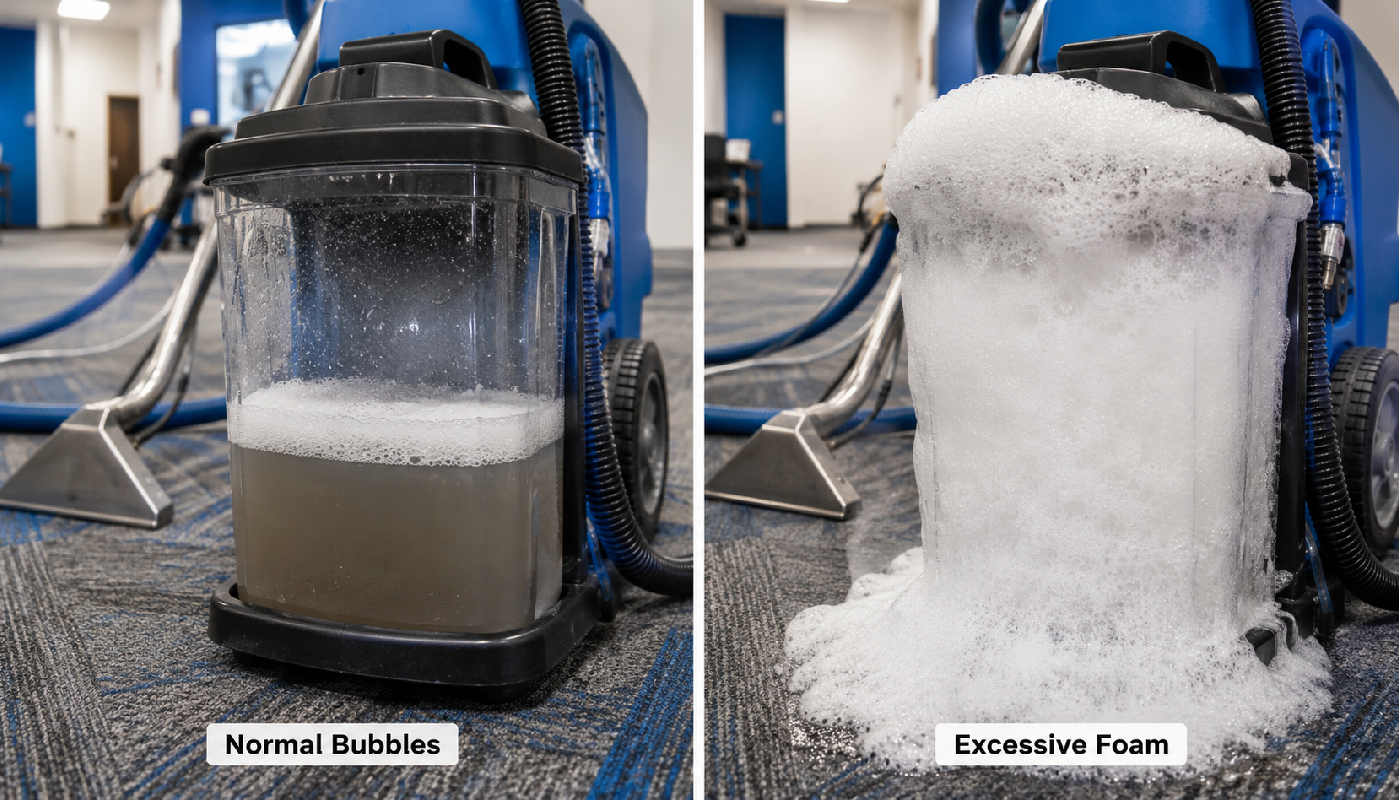
Normal Bubbles vs. Excessive Foam
Normal Conditions
- A thin layer of bubbles
- Foam settles quickly
- Recovery remains consistent
- Usable tank capacity remains normal
- The float shutoff does not activate early
Excessive Foaming
- Thick foam continues growing
- Foam rises toward the shutoff
- Recovery stops prematurely
- Foam appears throughout the hose
- The tank must be emptied repeatedly
What Is Carpet Extractor Defoamer?
Defoamer is a concentrated foam-control product designed to collapse or reduce foam in the recovery hose, recovery tank, or other approved wastewater areas of extraction equipment.
Defoamer Does Not
- Replace extraction detergent
- Improve soil removal by itself
- Remove detergent residue from carpet fibers
- Correct an improper detergent dilution
- Sanitize the recovery tank
- Replace routine equipment cleaning
When Should You Use Defoamer?
Defoamer is useful when foam is reducing recovery performance, filling the recovery tank too quickly, or approaching the machine’s vacuum-protection system.
When Defoamer May Not Be Necessary
A small number of bubbles does not automatically mean defoamer is required. The goal is to control excessive foam, not to add extra chemistry to every recovery tank.
- The extraction detergent is correctly diluted and low foaming.
- The carpet contains little previous detergent residue.
- Only a light layer of bubbles is present.
- Water recovery and tank capacity remain normal.
- The machine or chemical manufacturer does not recommend routine use.
Where Should Defoamer Be Added?
Depending on the product label and machine design, defoamer may be added directly to the empty recovery tank, applied to the inside wall of the recovery tank, placed in a designated compartment, or introduced through the recovery hose.
Do not pour defoamer into the clean-solution tank unless the chemical label and equipment instructions specifically authorize that use.
Correct Carpet-Extractor Defoamer Process
Follow a controlled process to reduce foam while protecting the extractor and avoiding unnecessary chemical use.
How Much Defoamer Should Be Used?
The product label determines the correct amount. Tank size, foam level, product concentration, carpet residue, and the type of machine can all affect the required dose.
- Start with the manufacturer’s recommended amount.
- Measure the chemical rather than pouring freely.
- Increase the dose only when the label allows it.
- Retreat the recovery tank when foam returns and the label permits it.
- Do not assume that more defoamer will provide better results.
Should Defoamer Be Applied Directly to Carpet?
Defoamer is generally intended for the recovery system rather than broad application across carpet. Direct carpet application may leave residue, affect other cleaning chemicals, create resoiling concerns, or conflict with the product label.
Apply defoamer directly to carpet only when the manufacturer specifically authorizes that procedure.
How to Reduce Foaming Without Defoamer
Repeated foaming can indicate a larger detergent-residue or chemical-selection problem. Correcting the cause can reduce how often defoamer is needed.
Pre-Spray, Extraction Detergent, Rinse Agent and Defoamer
Why Previously Shampooed Carpet Foams
Rotary shampoo and other high-foaming products may leave residue behind in carpet fibers. When extraction water reaches this residue, the following process can occur:
- Water dissolves the old shampoo residue.
- The extractor wand and hose agitate the solution.
- Vacuum airflow introduces additional air.
- Foam develops inside the hose and recovery tank.
Heavy foam does not always mean the detergent currently in the extractor is responsible. The carpet may contain years of residue from previous cleaning methods.
Recovery-Tank Maintenance
Recovery-system maintenance helps prevent old detergent, residue, debris, and odor from affecting future extraction jobs.
What to Do When Foam Reaches the Shutoff
- Stop the vacuum motor.
- Turn off solution flow.
- Disconnect power when required by the equipment instructions.
- Empty and rinse the recovery tank.
- Clean the float, screen, filters, and separators.
- Add measured defoamer according to the label.
- Restart the extractor and monitor the foam closely.
Recommended Carpet-Extractor Defoamers
Confirm equipment compatibility and follow the product label before use.
Carpet-Extractor Defoamer
Red Carpet Liquid Defoamer | Karcher 8.695-213.0
A professional foam-control product designed to reduce foam in compatible recovery hoses and waste tanks.
View Karcher Liquid DefoamerAll-Purpose Foam Control
Eclipse All Purpose Defoamer | Pioneer Eclipse 804
A foam-control option for compatible carpet-extractor recovery tanks, automatic scrubbers, and approved recovery systems.
View Pioneer Eclipse 804Common Defoamer Mistakes
Carpet-Extractor Foam-Control Checklist
- Ask about the carpet’s previous cleaning history.
- Verify detergent and pre-spray dilution.
- Use low-foaming extraction chemistry.
- Inspect the recovery tank before starting.
- Keep approved defoamer available.
- Read the product and equipment instructions.
- Measure the defoamer dose.
- Add it to the correct recovery location.
- Monitor foam throughout extraction.
- Empty the tank before foam reaches the shutoff.
- Rinse the tank, hose, float, and filters.
- Allow recovery components to dry.
- Document recurring foam problems.
- Plan a rinse procedure when residue is excessive.
Need Help Choosing Carpet-Extractor Chemicals?
Monster Janitorial can help match low-foaming extraction detergents, rinse agents, pre-sprays, defoamers, spotters, and carpet extractors to your facility, carpet type, soil conditions, and cleaning process.
Email: sales@monsterjanitorial.com
Call: 956-772-4842