
Air Quality & Filtration Learning Center
When to Replace Air Scrubber Filters: Prefilter, HEPA & Carbon Guide
Learn how to recognize loaded, damaged, or exhausted air-scrubber filters and maintain proper airflow during restoration, construction, remediation, and occupied-building filtration.
Filter Inspection Basics
Replace Filters Before Airflow Drops Too Far
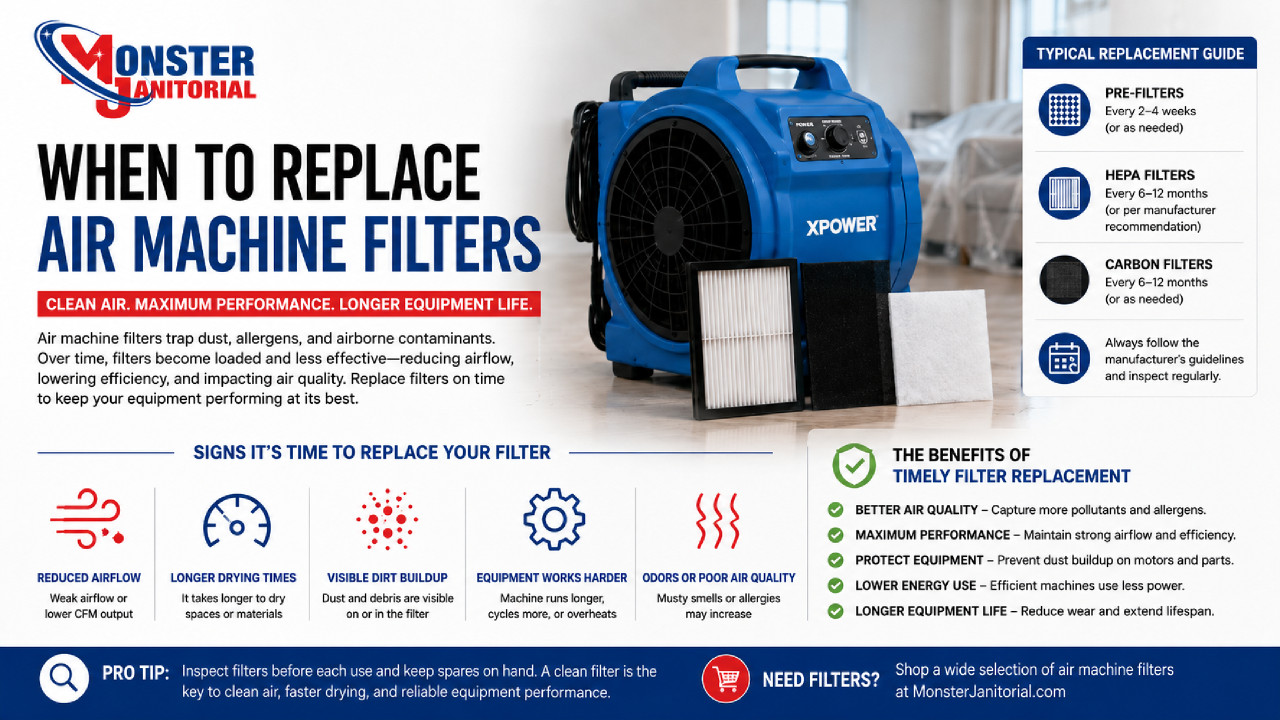
There is no single replacement schedule for every job. Filter life depends on dust levels, operating hours, contaminant type, airflow resistance, machine design, room conditions, and manufacturer guidance.
Step 1
Check Airflow
Notice whether intake or discharge airflow has decreased.
Step 2
Inspect Prefilters
Look for visible dust, fibers, debris, and surface loading.
Step 3
Check HEPA Stage
Inspect the media, frame, gasket, and filter indicator.
Step 4
Evaluate Odors
Check whether carbon filtration is still helping control odors.
Multi-Stage Filtration
How Air-Scrubber Filters Work Together
Many commercial air scrubbers use several filter stages. The exact configuration depends on the machine and application.
First Stage
Prefilter
Captures larger dust, fibers, hair, lint, and visible debris.
Intermediate Stage
Secondary Filter
Captures smaller particles before they reach the HEPA filter.
Final Particle Stage
HEPA Filter
Captures fine airborne particles that pass through earlier stages.
Optional Odor Stage
Activated Carbon
Helps adsorb selected odors and gaseous contaminants.
How Air-Scrubber Filters Work Together
Air-Scrubber Filter Stages
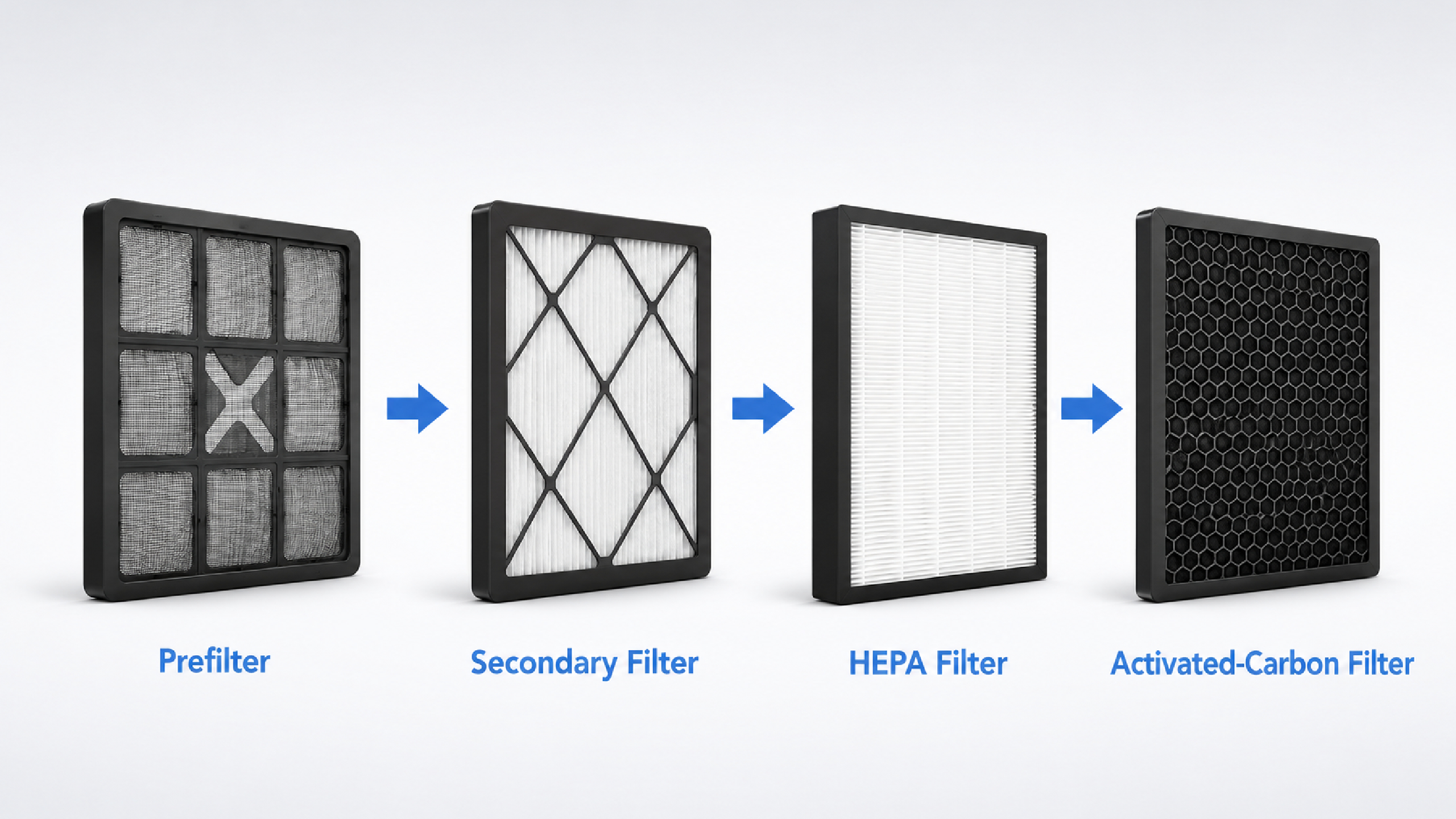
Air passes through each installed filtration stage in order. Each layer targets different particles, contaminants, or odors.
Replacement Overview
When to Replace Each Filter
Prefilter
Replace More Frequently
Primary job: Captures larger dust, fibers, lint, and visible debris.
Replace when: Visibly loaded, damaged, warped, wet, or restricting airflow.
Secondary Filter
Protects the HEPA Stage
Primary job: Captures smaller particles before they reach the final filter.
Replace when: Loaded, damaged, wet, or no longer fitting securely.
HEPA Filter
Replace When Performance Declines
Primary job: Captures fine airborne particles.
Replace when: The indicator activates, airflow remains low after changing the prefilter, or the media, frame, gasket, or seals are damaged.
Activated Carbon
Replace When Odors Return
Primary job: Supports control of selected odors and gases.
Replace when: Odor control declines, the media becomes wet, or the manufacturer’s service interval is reached.
Filter Maintenance
Clean or Replace?
Do Not Wash HEPA or Carbon Filters Unless Specifically Approved
Water, compressed air, stiff brushes, and aggressive cleaning can damage filter fibers, pleats, carbon media, adhesives, frames, and seals.
Jobsite Conditions
Filter Inspection Frequency by Application
Occupied Buildings
Inspect for dust loading, noise changes, reduced airflow, and odor-control performance.
Water-Damage Restoration
Check filters during demolition, cleaning, drying, and final cleanup.
Construction and Demolition
Inspect prefilters frequently because drywall, concrete, wood, and sanding dust can load them quickly.
Smoke and Odor Cleanup
Evaluate carbon filtration based on odor breakthrough, exposure time, and manufacturer guidance.
Filter-Change Safety
Safe Air-Scrubber Filter Removal

Wear appropriate protective equipment and handle loaded filters carefully to reduce contact with captured dust and contaminants.
Continue Learning
Related Air-Quality Guides
Safety and Compliance Notice
Filters used during asbestos, lead, silica, mold, smoke, healthcare, hazardous-material, or regulated-contaminant projects may require specialized handling, containment, respiratory protection, disposal procedures, and qualified professionals.
Need Help Finding Air-Scrubber Replacement Filters?
Monster Janitorial can help identify compatible prefilters, HEPA filters, activated-carbon filters, filter kits, and replacement parts for commercial air scrubbers.
Shop Air Scrubbers & Filters Request Filter HelpCall: 956-772-4842 | Email: sales@monsterjanitorial.com