null
Heated vs. Non-Heated Carpet Extractors

Heated vs. Non-Heated Carpet Extractors

Posted by Monster Janitorial Tech Team on Aug 03, 2026

MJ University Carpet-Equipment Guide

Heated vs. Non-Heated Carpet Extractors

Compare cleaning performance, electrical demand, carpet compatibility, portability, maintenance, and vacuum recovery before choosing a commercial carpet extractor.

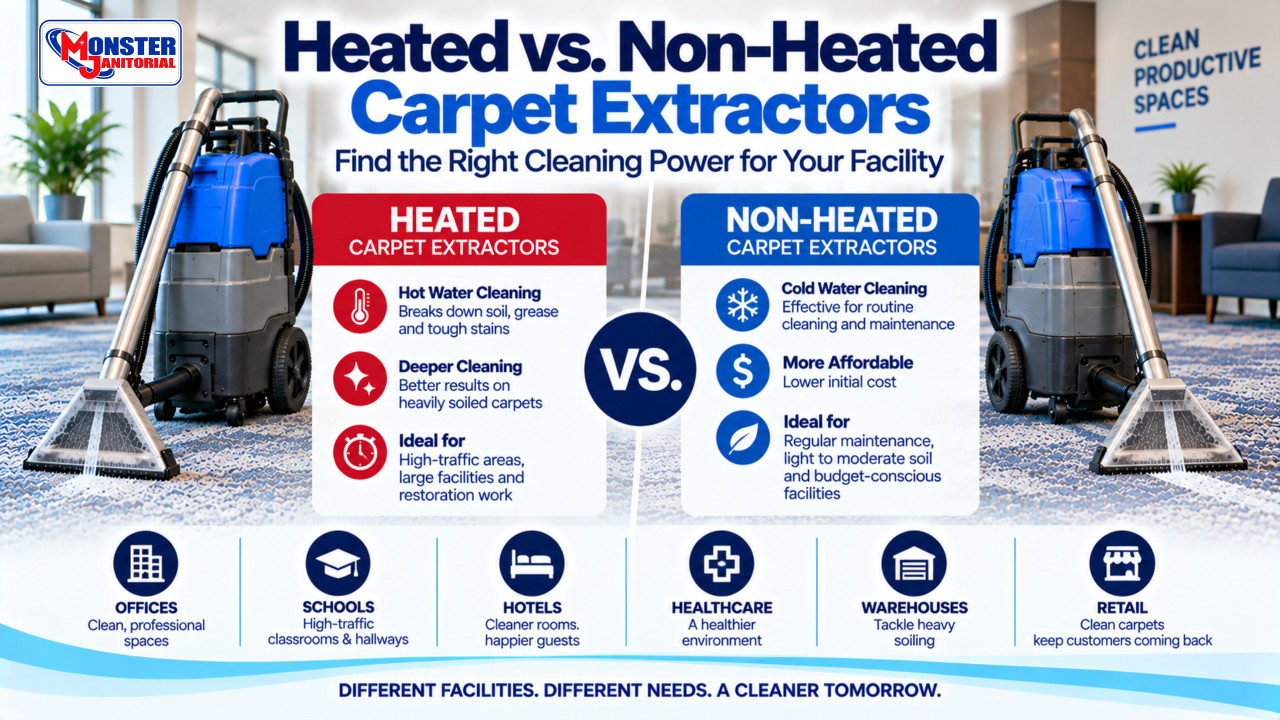
Heated Extractor

Best when oily or greasy soil is common.

Heat can support restorative cleaning and help loosen compatible oily contamination, but it adds warm-up time, electrical demand, weight, and maintenance.

Non-Heated Extractor

Best for routine cleaning and easier operation.

Non-heated machines can deliver excellent results when cleaning chemistry, dwell time, agitation, pump pressure, and recovery are properly matched.

°F

What Is a Heated Carpet Extractor?

A heated carpet extractor warms the cleaning solution before it reaches the carpet wand, upholstery tool, or cleaning head. Depending on the machine, the heater may warm solution inside the tank or as it travels toward the tool.

Heat is separate from pump pressure and vacuum recovery. A machine can provide hot solution but still perform poorly when airflow, water lift, hose condition, or operator technique are inadequate.
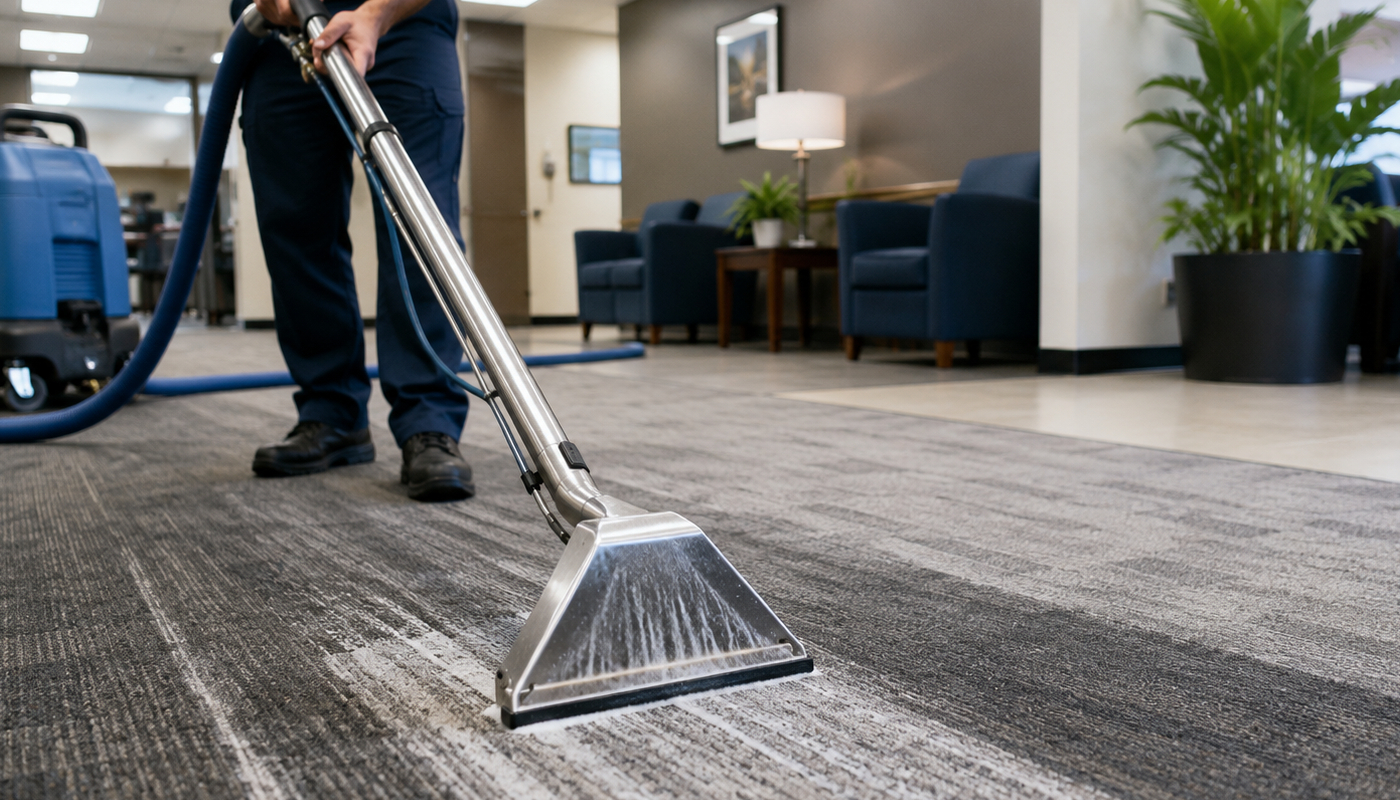
Quick Comparison

Heated vs. Non-Heated Extractors

Choose according to the soil, facility, carpet, electrical supply, and required level of cleaning.

Heated Extractor

Helps loosen oily and greasy soil
Useful for compatible restorative cleaning
Requires warm-up time
May require additional electrical capacity
Requires heater maintenance

Non-Heated Extractor

Lower electrical demand
Ready to operate immediately
Often lighter and easier to move
Well suited to routine carpet care
Simpler maintenance
Application Guide

Where Each Extractor Type Fits Best

Restaurants and Food Service Heat may help release greasy contamination tracked from kitchens and food-preparation areas.
Automotive and Manufacturing Heated solution may improve cleaning where compatible oily or industrial soils are common.
Offices and Carpet Tile A non-heated extractor is often sufficient for routine cleaning of low-pile commercial carpet and carpet tile.
Spot Cleaning and Upholstery Compact non-heated machines may be easier to transport and operate for controlled detail work.
Material Compatibility

Heat Is Not Appropriate for Every Material

Confirm the carpet, upholstery, backing, adhesive, tool, and cleaning-chemical temperature recommendations before using heated solution.

Wool carpet
Natural fibers
Delicate upholstery
Dye-sensitive materials
Heat-sensitive adhesives
Unknown carpet construction
Important Terminology

Heated Extractor vs. Hot-Water Extraction

Hot-water extraction describes the cleaning method. It does not always mean that the extractor contains an onboard heater.

A non-heated machine may use warm water added to the solution tank when permitted by the manufacturer. A heated extractor actively raises or maintains solution temperature during operation.

Heating-System Design

Inline Heater vs. Tank Heater

INLINE HEATER

Heats Solution During Delivery

Heats solution as it travels toward the tool
May provide hotter solution at the wand
Can require additional electrical capacity
May need time to reach operating temperature
TANK HEATER

Warms Solution Inside the Tank

Warms the solution before cleaning begins
May heat more slowly
Temperature may decrease during operation
Performance varies by machine design
Electrical and Operating Requirements

Plan for the Heater Before Cleaning Begins

Vacuum motors, pumps, and heaters may create a high combined electrical load. Heated machines may also need time to reach operating temperature.

Higher amperage draw
Possible two-cord design
Separate circuits may be required
Warm-up time affects startup
Heaters can trip overloaded breakers
Cord placement must be controlled
Never assume two nearby outlets are connected to separate electrical circuits. Follow the extractor manufacturer’s electrical instructions.
Cleaning Fundamentals

What Heat Does Not Replace

Heat can support the process, but it cannot correct poor preparation, incompatible chemistry, excessive moisture, or weak recovery.

Pre-Vacuuming Remove loose dry soil before introducing moisture.
Correct Chemistry Match the chemical to the carpet fiber and soil.
Dwell Time Allow the cleaning solution time to release contamination.
Agitation Use compatible mechanical agitation when soil requires it.
Vacuum Recovery Recover dirty solution and control residual moisture.
Dry Passes and Airflow Remove additional moisture and support controlled drying.
HEATED EXTRACTOR

Additional Maintenance

Descale the heater when required
Inspect temperature controls
Check heating elements and wiring
Expect additional weight and components
BOTH EXTRACTOR TYPES

Routine Machine Care

Rinse solution and recovery tanks
Flush solution lines
Inspect jets, filters, hoses, and seals
Store the machine clean and dry
Buying Checklist

How to Choose the Right Extractor

01
Identify the Soil Determine whether oily contamination or routine dry soil is more common.
02
Confirm Carpet Compatibility Review the fiber, backing, adhesive, and temperature limits.
03
Review Chemical Instructions Confirm dilution, dwell time, and approved solution temperature.
04
Compare Recovery Evaluate airflow, water lift, hoses, seals, and vacuum-motor design.
05
Check Electrical Capacity Confirm amperage, cord count, voltage, and circuit availability.
06
Consider Portability Compare weight, stairs, loading, transportation, and storage needs.
07
Compare Maintenance Review heater, pump, hose, motor, filter, and descaling requirements.
08
Match the Actual Workload Choose according to the facility’s real cleaning conditions and goals.
Final Recommendation

Choose heat according to the soil and facility.

Choose a heated extractor when oily soil and restorative cleaning are common and the facility can support the added electrical demand and maintenance. Choose a non-heated extractor for routine cleaning, spot work, carpet tile, easier transport, and simpler operation. In either case, strong recovery and proper cleaning technique remain essential.

Need Help Choosing a Carpet Extractor?

Monster Janitorial can help compare heater types, vacuum motors, airflow, water lift, pump pressure, electrical demand, tank capacity, machine weight, wands, upholstery tools, and replacement parts.

Commercial Cleaning Education

MJ University Learning Center

Explore carpet-care guidance, extractor comparisons, maintenance procedures, chemical-selection resources, and commercial cleaning education from Monster Janitorial.