null
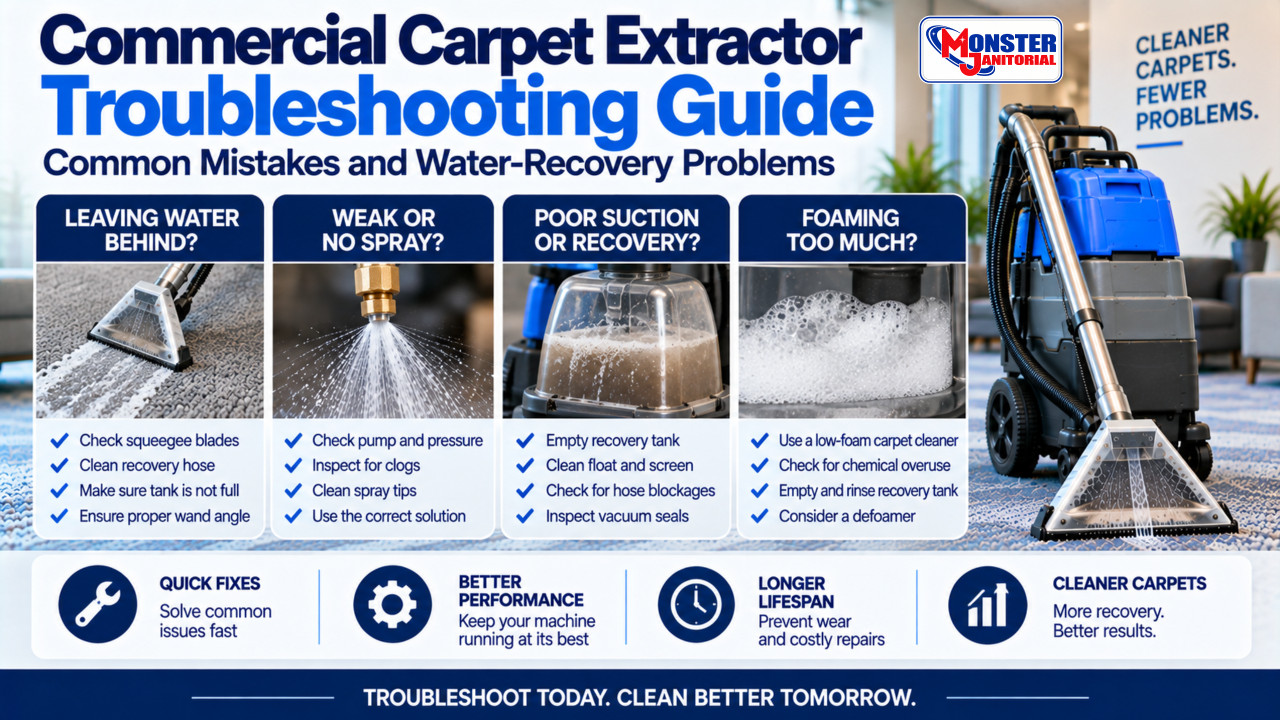
Commercial Carpet Extractor Troubleshooting Guide: Common Mistakes and Water-Recovery Problems

Commercial Carpet Extractor Troubleshooting Guide: Common Mistakes and Water-Recovery Problems

Posted by Monster Janitorial Tech Team on Aug 03, 2026

MJ University Troubleshooting Guide

Commercial Carpet Extractor Troubleshooting Guide: Why It Is Not Recovering Water

Diagnose weak suction, poor water pickup, excessive moisture, hose restrictions, tank-seal leaks, float-shutoff problems, foam, and common operating mistakes.

Quick Diagnosis

Start by checking the recovery tank, float, lid seal, hose, and cleaning tool.

Most water-recovery problems are caused by a full tank, activated float shutoff, blocked airflow path, loose tank lid, damaged gasket, leaking hose connection, clogged wand slot, excessive foam, or incorrect operator technique.

Identify the System

Is It a Solution-Delivery Problem or a Recovery Problem?

Separating spray problems from suction problems prevents unnecessary repairs and shortens troubleshooting time.

Solution-Delivery Problems

Weak or missing spray
Pulsing pump pressure
Uneven spray pattern
Clogged or worn spray jet
Pump runs but solution does not reach the tool

Water-Recovery Problems

Weak suction at the wand
Carpet remains excessively wet
Recovery tank fills unusually slowly
Water remains visible in the vacuum shoe
Dry passes produce little improvement
Troubleshooting Sequence

Check the Machine in This Order

Begin with the simplest airflow restrictions before investigating motors or internal electrical components.

01
Turn Off and Unplug the Extractor Disconnect power before opening tanks, removing hoses, or checking internal components.
02
Empty the Recovery Tank A full tank may activate the float shutoff and stop airflow.
03
Inspect the Float Shutoff Make sure the float moves freely and returns to its normal position after the tank is emptied.
04
Clean the Filter or Intake Screen Remove lint, carpet fibers, foam residue, and debris restricting airflow.
05
Check the Lid and Gasket Clean the sealing surfaces and look for cracks, distortion, debris, or a loose lid.
06
Inspect the Vacuum Hose Check the entire hose for clogs, splits, crushed sections, loose cuffs, and poor connections.
07
Clean the Wand or Vacuum Shoe Remove debris from the pickup slot and confirm that the tool contacts the carpet evenly.
08
Test Suction at the Machine Inlet Strong suction at the inlet but weak suction at the wand usually points to a hose or tool problem.
09
Confirm Vacuum-Motor Operation Listen for each motor and note unusual noise, odor, vibration, or heat.
10
Test on a Small Carpeted Area Make one controlled wet pass followed by dry passes to confirm normal pickup.
Common Causes

Why a Carpet Extractor Stops Recovering Water

A small air leak or restriction can sharply reduce pickup because the vacuum system depends on a sealed airflow path.

Full Recovery Tank The float shuts off airflow to prevent water from reaching the vacuum motor.
Stuck Float Residue or debris can hold the float in the closed position.
Loose Tank Lid An unsealed lid allows outside air to enter and reduces suction at the tool.
Damaged Gasket Cracks, flattening, or missing gasket sections prevent a reliable seal.
Blocked Vacuum Hose Carpet fibers, debris, or collapsed hose sections restrict airflow.
Leaking Hose Cuff Loose or cracked connections allow air to bypass the cleaning tool.
Clogged Pickup Slot Debris across the wand or vacuum shoe prevents consistent water pickup.
Restricted Filter Wet lint, foam, or residue reduces air movement through the machine.
Vacuum-Motor Problem A failed motor, worn component, or electrical issue may reduce or eliminate suction.

Excessive Foam Can Interrupt Recovery

Foam can activate the float shutoff before the recovery tank is physically full. It may also move toward the vacuum intake and threaten the motor.

Excess detergent was used
Carpet contains old detergent residue
A high-foaming chemical was selected
The recovery tank was not rinsed
Defoamer was omitted when needed
Residue from previous cleaning remains

Stop the extractor if foam approaches the vacuum intake. Empty and rinse the tank, correct the chemical problem, and use defoamer according to its label when appropriate.

Operating Technique

The Extractor May Be Working Even When the Carpet Stays Wet

Too much solution can overwhelm an otherwise functional recovery system.

Too Many Wet Passes Repeated spraying introduces more solution than the machine can recover efficiently.
Wand Movement Is Too Slow Slow movement can oversaturate a small section of carpet.
Trigger Held During Every Pass The return pass should not automatically become another wet pass.
No Dry Passes Additional passes without spraying help remove moisture left after cleaning.
Incorrect Tool Angle Poor carpet contact allows air to leak around the vacuum shoe.
Excessive Hose Length Unnecessary hose can add resistance and reduce airflow at the tool.
Fast Isolation Test

Test Suction at Three Points

Testing from the machine outward helps identify where airflow is being lost.

1. Machine Inlet Weak suction here points toward the tank, seal, float, filter, or vacuum motor.
2. End of the Hose Strong suction at the machine but weak suction here suggests a blockage, split, or loose cuff.
3. Cleaning Tool Strong hose suction but weak carpet pickup usually indicates a clogged or poorly contacting tool.
Safety and Equipment Protection

When to Stop Using the Extractor

Water or foam approaches the vacuum motor
A cord, plug, switch, or connection is damaged
The machine repeatedly trips the circuit breaker
A vacuum motor smells hot or sounds abnormal
Water leaks into the machine body
Suction remains weak after basic checks
Prevention

Reduce Future Recovery Problems

Short end-of-shift cleaning prevents residue, foam, lint, and mineral buildup from restricting the extractor.

Empty and rinse both tanks
Clean the float and intake filter
Flush the solution system
Inspect hoses and cuffs
Clean jets and the pickup slot
Wipe the tank lid and gasket
Leave tanks open to dry
Replace worn seals and hoses promptly
Use low-foaming extractor chemicals
Final Check

Follow the airflow path from the tank to the carpet.

Start with the recovery tank and float, then inspect the filter, lid seal, hose, cuffs, wand, and vacuum motors. When suction is normal but the carpet remains wet, correct the amount of solution applied, wand speed, tool angle, and number of dry passes.

Need Help Identifying an Extractor Problem?

Contact Monster Janitorial with the extractor brand, model, serial number, symptoms, hose length, and any unusual sounds, leaks, foam, or electrical issues.

Commercial Cleaning Education

MJ University Learning Center

Explore carpet-care guidance, equipment comparisons, maintenance procedures, chemical-selection resources, and commercial cleaning education from Monster Janitorial.