
Choosing the right commercial sweeper is critical for maintaining clean, safe, and professional facilities. One of the most common decisions facility managers face is whether to invest in a manual sweeper or a battery-powered sweeper. Each option offers distinct advantages depending on your environment, cleaning frequency, dust control needs, and productivity goals.
This guide breaks down the key differences between manual and battery sweepers to help you determine which solution is best for your facility.
Quick Answer: Choose a manual sweeper for smaller spaces, quick cleanups, entryways, and lower-cost debris pickup. Choose a battery-powered sweeper for larger facilities, higher productivity, better dust control, and reduced operator fatigue.
Manual vs Battery Sweepers at a Glance
Simple and low cost
Manual Sweepers
Best for entryways, sidewalks, small warehouses, retail areas, schools, and quick debris pickup where batteries and charging are not needed.
Higher productivity
Battery Sweepers
Best for medium to large facilities, warehouses, schools, production areas, and high-traffic spaces where dust control and speed matter.
Understanding Manual Sweepers
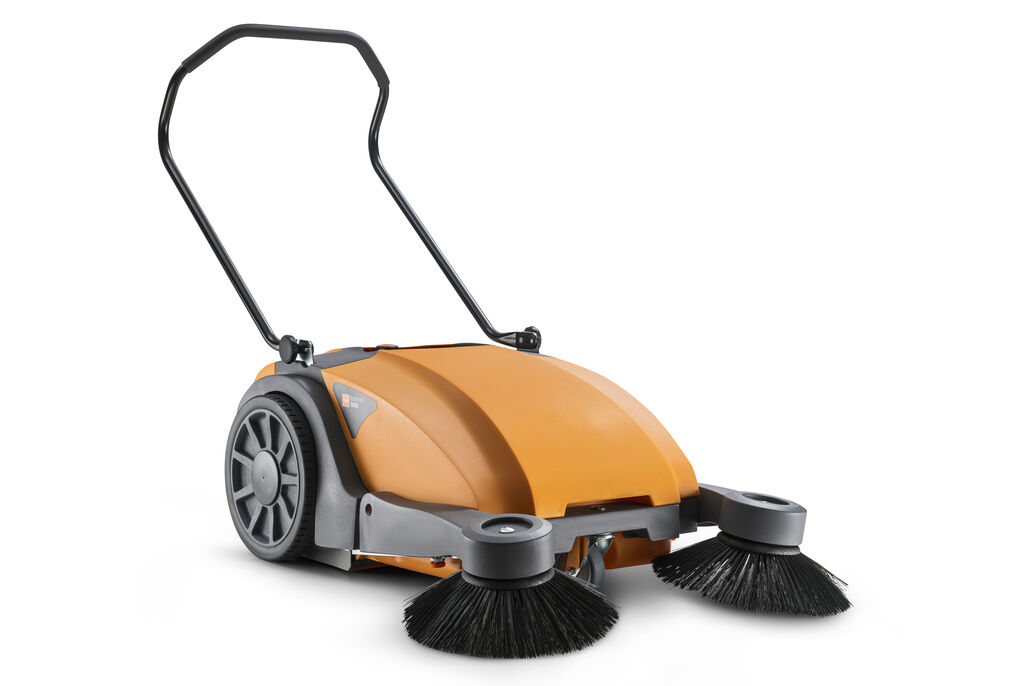
Manual sweepers are push-operated machines that use mechanical brush systems to collect debris into a hopper. They require no power source, making them simple, reliable, and cost-effective for smaller cleaning applications.
Equipment such as the TASKI Balimat 1600 Pro is designed for quick, efficient cleaning in tight spaces without the need for batteries, charging, or electrical components.
Advantages of Manual Sweepers
- No batteries or charging required
- Lower upfront investment
- Lightweight and easy to maneuver
- Minimal maintenance requirements
- Quiet operation for noise-sensitive environments
Limitations of Manual Sweepers
- Operator-dependent productivity
- Less effective for large areas
- Limited dust control compared to powered units
- Not ideal for heavy debris or demanding industrial environments
Understanding Battery-Powered Sweepers
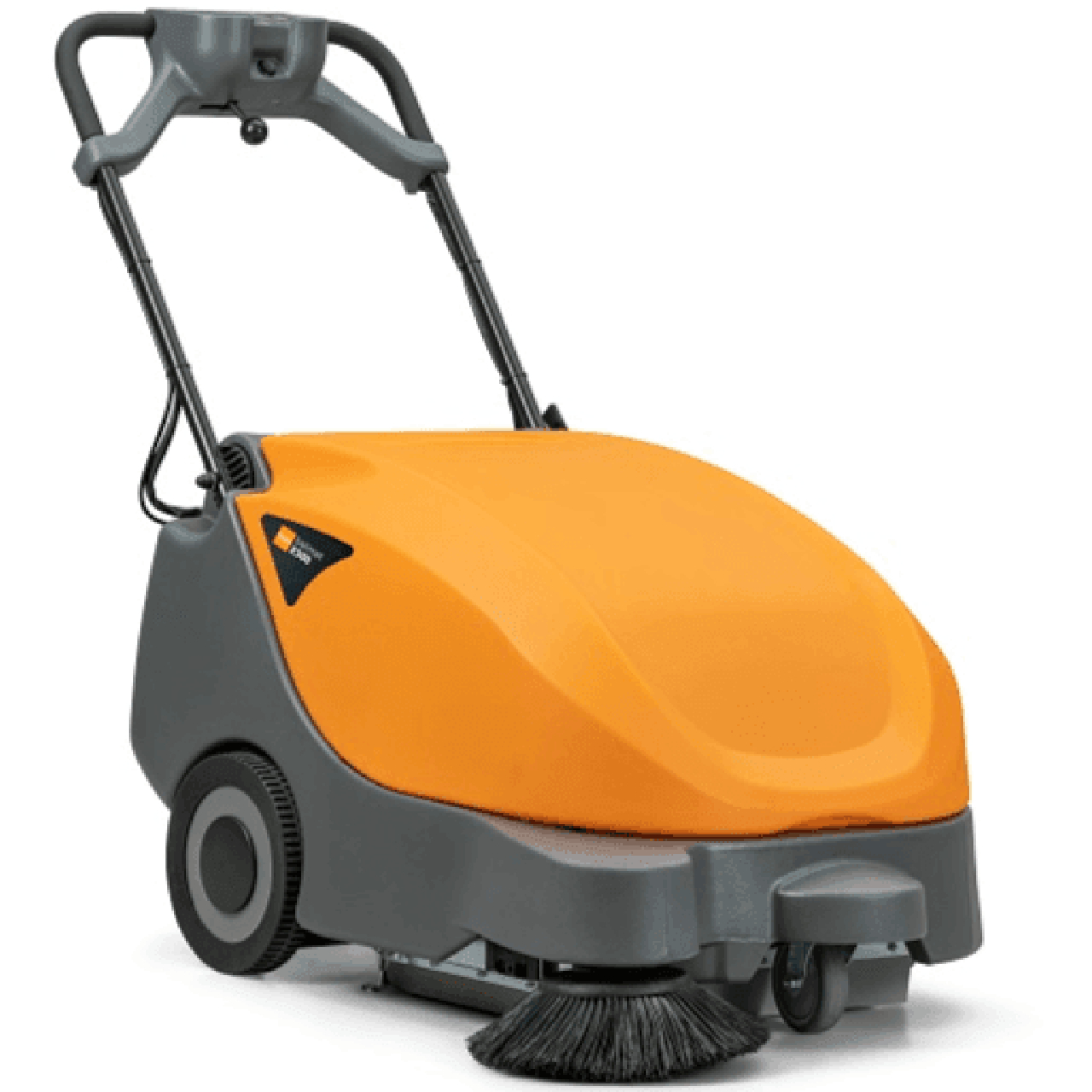
Battery-powered sweepers use motorized brush systems and dust control systems to deliver higher productivity and more consistent cleaning performance. These machines are designed for medium to large facilities where efficiency, debris pickup, and dust management are critical.
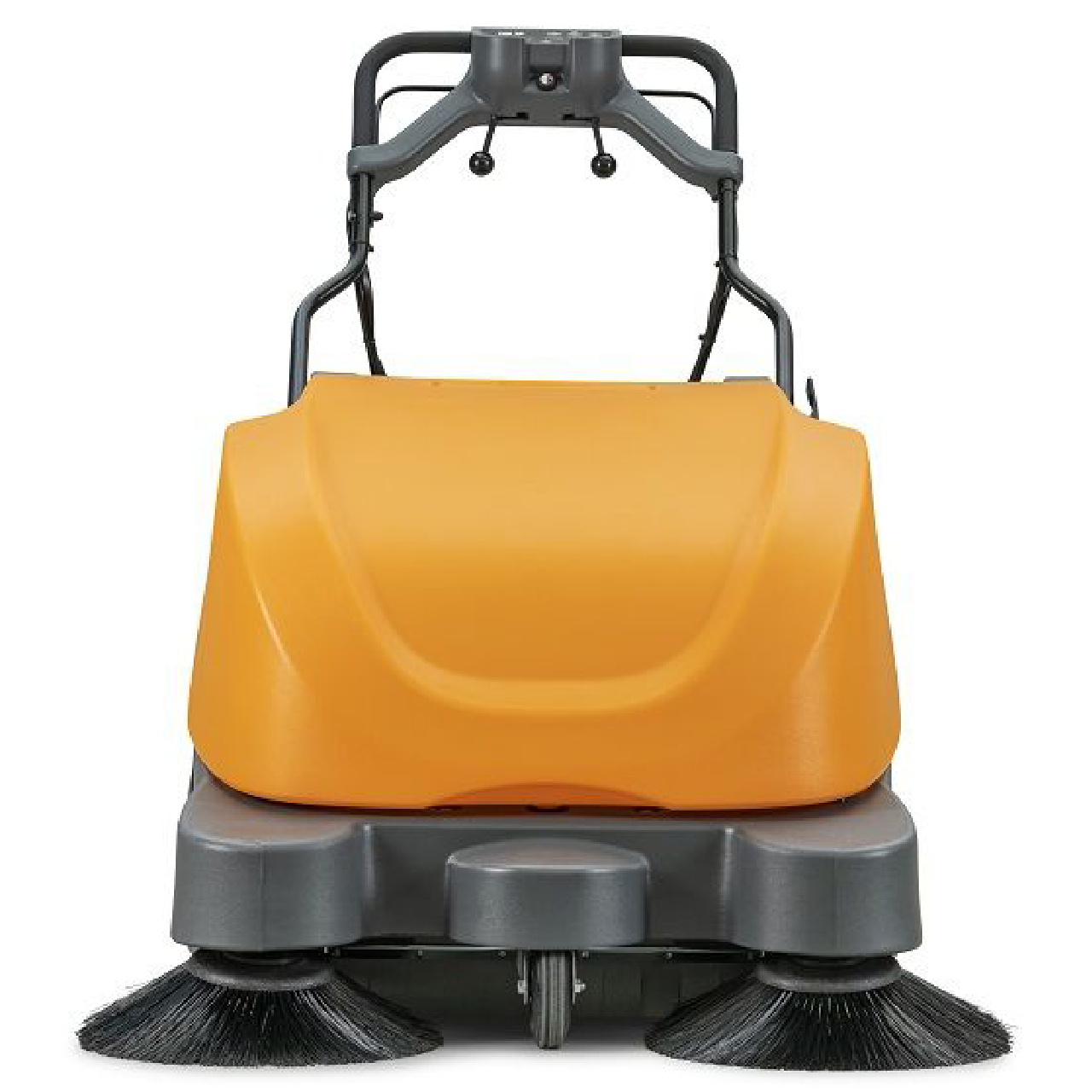
Models such as the TASKI Balimat 2300, TASKI Balimat 3300, and TASKI Balimat 6500 provide scalable solutions for different facility sizes, from compact warehouses to large industrial spaces.
Advantages of Battery Sweepers
- Significantly higher cleaning productivity
- Consistent sweeping performance with less operator effort
- Improved dust control for cleaner indoor environments
- Ideal for large and high-traffic areas
- Reduced labor costs over time
Limitations of Battery Sweepers
- Higher initial investment
- Requires battery charging
- May require battery maintenance depending on battery type
- Larger footprint may limit use in tight spaces
Manual vs Battery Sweeper Comparison
Choosing Based on Facility Size
Small Spaces
Manual sweepers are ideal for offices, entryways, sidewalks, retail areas, and quick cleanup routes.
Medium Spaces
Battery sweepers like the TASKI Balimat 2300 or 3300 help improve efficiency in schools, hallways, and light warehouses.
Large Facilities
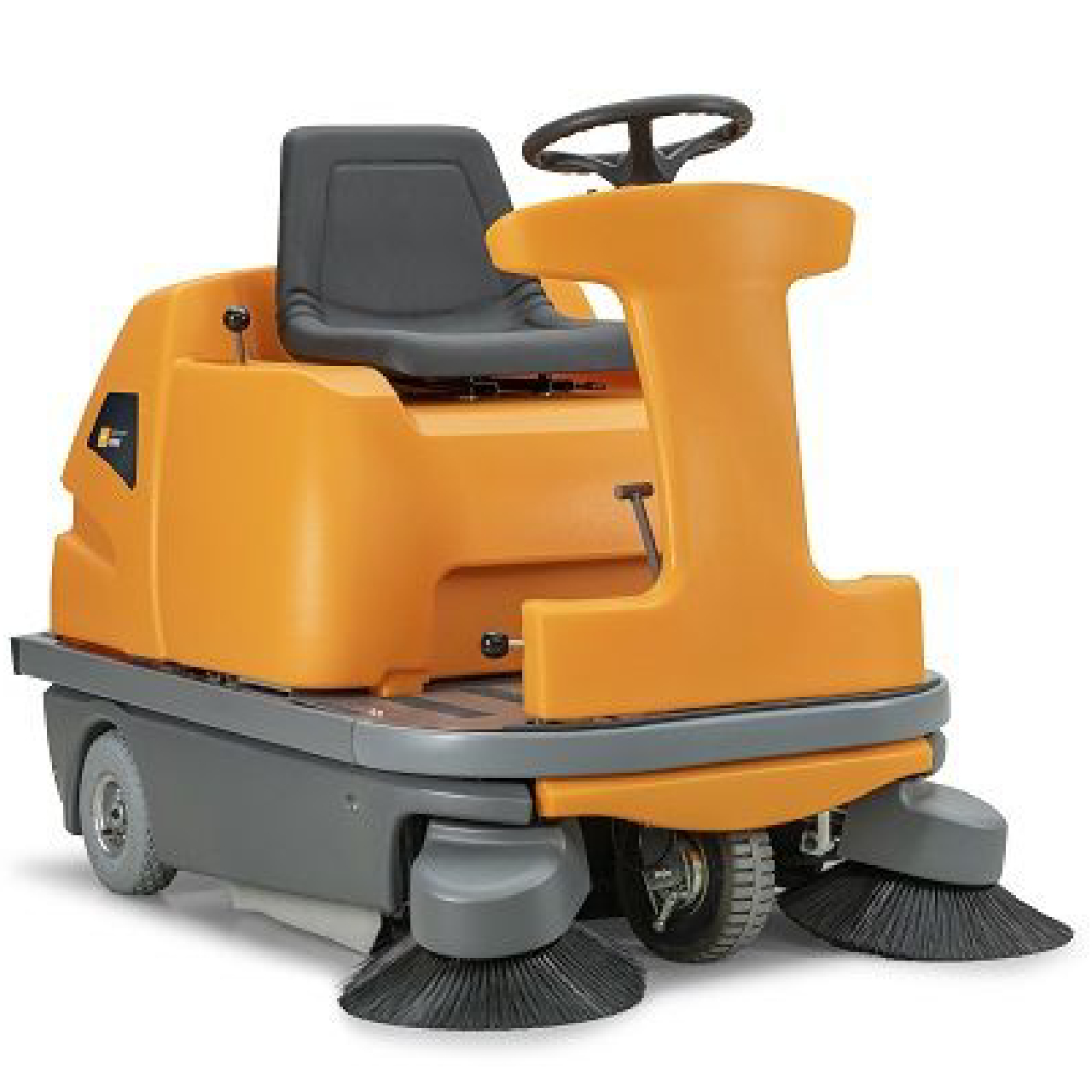
Ride-on battery sweepers such as the TASKI Balimat 6500 deliver maximum productivity and coverage for large spaces.
Cleaning Performance and Dust Control
Manual sweepers rely on mechanical brush action, which is effective for visible debris but may provide less dust control than powered sweepers. Battery-powered sweepers can offer more consistent brush performance and better dust management, which helps improve cleanliness in larger or dust-sensitive facilities.
For environments where dust control is essential, such as warehouses, manufacturing facilities, schools, healthcare support areas, or packaging spaces, a battery sweeper is often the better long-term choice.
Labor Efficiency and Productivity
Manual sweepers require continuous physical effort, which can slow down cleaning operations over longer routes. Battery-powered sweepers reduce operator fatigue and allow staff to clean larger areas in less time.
Ride-on models, such as the TASKI Balimat 6500, further increase efficiency by allowing operators to cover expansive areas quickly and comfortably.
Total Cost of Ownership
Manual sweepers typically have a lower upfront cost and fewer maintenance needs. Battery-powered sweepers cost more initially, but they often provide better long-term value for larger facilities because of labor savings, higher productivity, and improved dust control.
When evaluating cost, consider not only the purchase price but also cleaning time, labor savings, maintenance needs, battery care, and how frequently the machine will be used.
Which Sweeper Is Right for You?
Choose Manual
Choose a manual sweeper if you need a simple, cost-effective solution for smaller areas, quick cleanups, sidewalks, entryways, or light debris pickup.
Choose Battery
Choose a battery-powered sweeper if you need higher productivity, better dust control, reduced operator fatigue, and consistent performance across larger spaces.
For many facilities, a combination of both types can provide the most efficient cleaning strategy by using manual sweepers for detail work and battery machines for large-area cleaning.
Recommended Commercial Sweepers
Recommended Sweeper Equipment
Manual, Battery & Ride-On Sweepers for Commercial Facilities
Compare manual sweepers, battery walk-behind sweepers, and ride-on sweepers for schools, warehouses, retail spaces, sidewalks, production areas, and large commercial buildings.
Explore TASKI Sweeper Solutions
Monster Janitorial offers a full range of TASKI sweepers to match your facility requirements, including compact manual units, battery walk-behind sweepers, and high-capacity ride-on machines.
- TASKI Balimat 2300 – Compact battery sweeper with dust control
- TASKI Balimat 3300 – Mid-size battery sweeper with dual side broom cleaning support
- TASKI Balimat 6500 – Ride-on sweeper for large-scale cleaning
Contact our team to determine the best solution for your facility and to learn more about available equipment, replacement parts, and maintenance support.