
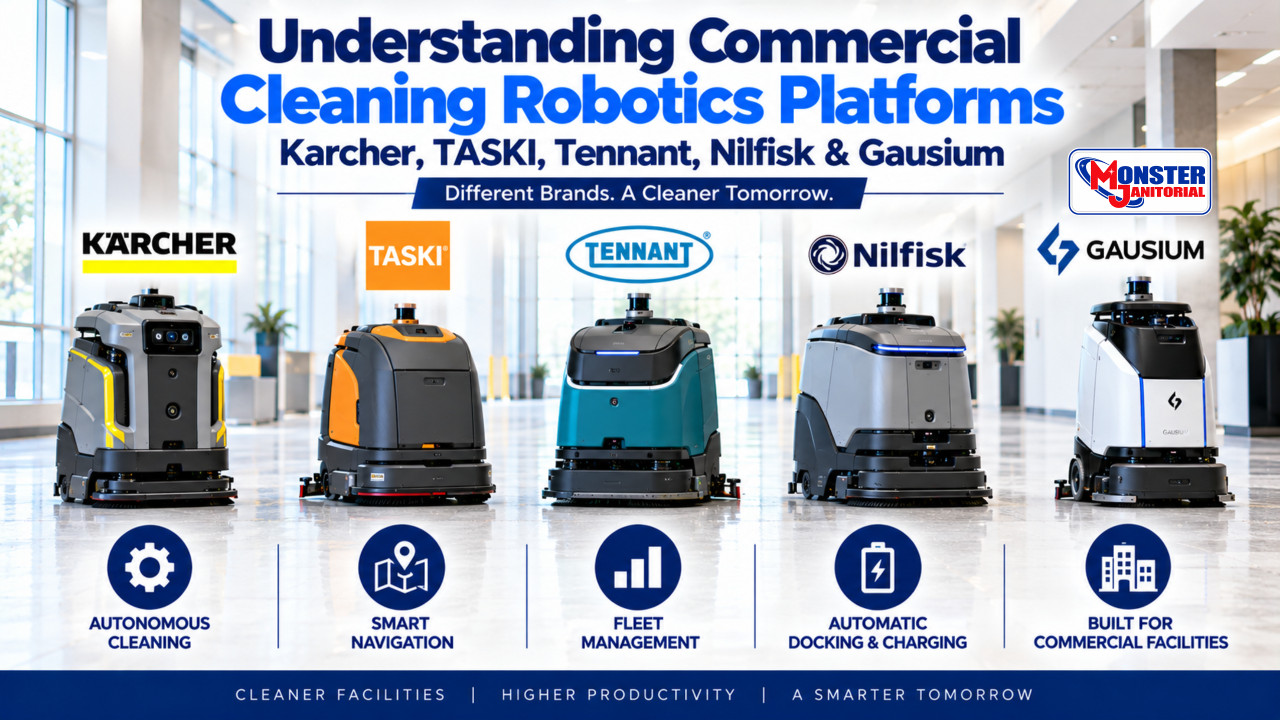
Commercial Cleaning Robotics Platforms: How Karcher, TASKI, Tennant, Nilfisk & Gausium Differ
Commercial cleaning robots are not all built around the same operating philosophy. Some platforms emphasize structured enterprise deployment, while others focus more heavily on adaptive navigation, workflow integration, fleet scalability, or facility analytics.
Understanding those differences can help facility managers compare robotic cleaning systems based on actual operational needs rather than brand name alone.
Is There One “Best” Commercial Cleaning Robotics Platform?
No single platform is automatically best for every facility. The stronger choice depends on route complexity, traffic, staffing, floor area, connectivity, fleet-management goals, support requirements, and how much adaptability or structure the cleaning operation needs.
From Automated Machines to Connected Robotics Platforms
Modern commercial cleaning robots may combine autonomous navigation, cloud connectivity, operational reporting, fleet coordination, remote management, and facility data into a broader cleaning system.
Earlier Autonomous Machines
- Basic automated movement
- Fixed or taught routes
- More limited obstacle response
- Less operational reporting
- Primarily standalone machine operation
Modern Robotics Platforms
- Connected operating systems
- Cloud-based fleet tools
- AI-assisted navigation
- Cleaning data and reporting
- Integrated charging and docking options
The result is a wider range of approaches to navigation, deployment, fleet management, facility integration, safety systems, analytics, and operational scalability.
Structured Enterprise Automation
Karcher KIRA systems can be viewed as an enterprise-oriented approach focused on structured deployment, operational consistency, safety systems, and integration into professional facility-cleaning programs.
Repeatable autonomous cleaning programs.
Sensor-based navigation and obstacle response.
Designed for professional facility environments.
Common applications: airports, transportation hubs, universities, public buildings, government facilities, and larger commercial properties.
Workflow Efficiency & Facility Integration
TASKI robotic systems emphasize integration with broader facility-cleaning workflows, including productivity, resource use, cleaning consistency, and smart automation.
Designed to work as part of a larger cleaning program.
Focus on efficient cleaning processes and resource use.
Robotics integrated with modern navigation technology.
Some TASKI Ecobot systems incorporate Gausium OMNIE robotics technology while combining it with TASKI's commercial floor-care platform.
Common applications: healthcare, schools and universities, corporate campuses, retail environments, and public facilities.
Large-Scale Fleet Deployment
Tennant machines using BrainOS have been deployed in commercial and multi-site environments where fleet scale, repeatable operation, and centralized management can be important.
- Operational scalability
- Fleet-wide consistency
- Centralized analytics
- Cloud-connected infrastructure
- Multi-location deployment
This type of platform may be especially relevant to retail chains, warehouses, airports, and organizations managing multiple facilities.
Practical Enterprise Automation
Nilfisk Liberty systems can be viewed as a practical approach to autonomous cleaning focused on daily operation, repeatability, ease of use, and integration into established facility-cleaning programs.
- Daily cleaning consistency
- Ease of operation
- Operational simplicity
- Scalable autonomous cleaning
- Facility integration
AI-First Robotics Architecture
Gausium emphasizes AI-assisted perception, sensor fusion, adaptive navigation, and real-time environmental awareness.
Machine perception and environmental awareness.
Multiple sensing technologies working together.
Dynamic route response in changing environments.
Gausium technology is also used within some other branded robotic-cleaning platforms, including certain TASKI Ecobot systems.
Commercial Robotics Philosophy Comparison
These descriptions are broad operating tendencies rather than absolute rules for every model or deployment.
| Platform | General Emphasis | Potential Strength | Deployment Style |
|---|---|---|---|
| Karcher KIRA | Structured enterprise automation | Operational consistency | Structured facility deployment |
| TASKI Ecobot | Workflow efficiency and facility integration | Cleaning-process optimization | Integrated smart-cleaning deployment |
| Tennant + BrainOS | Large-scale fleet deployment | Scalability and centralized management | Enterprise fleet deployment |
| Nilfisk Liberty | Practical autonomous cleaning | Operational simplicity | Daily enterprise cleaning |
| Gausium OMNIE | AI-first robotics architecture | Adaptive navigation | Dynamic and public environments |
No Single Robotics Platform Is “Best”
Different robotics systems are built around different operational priorities.
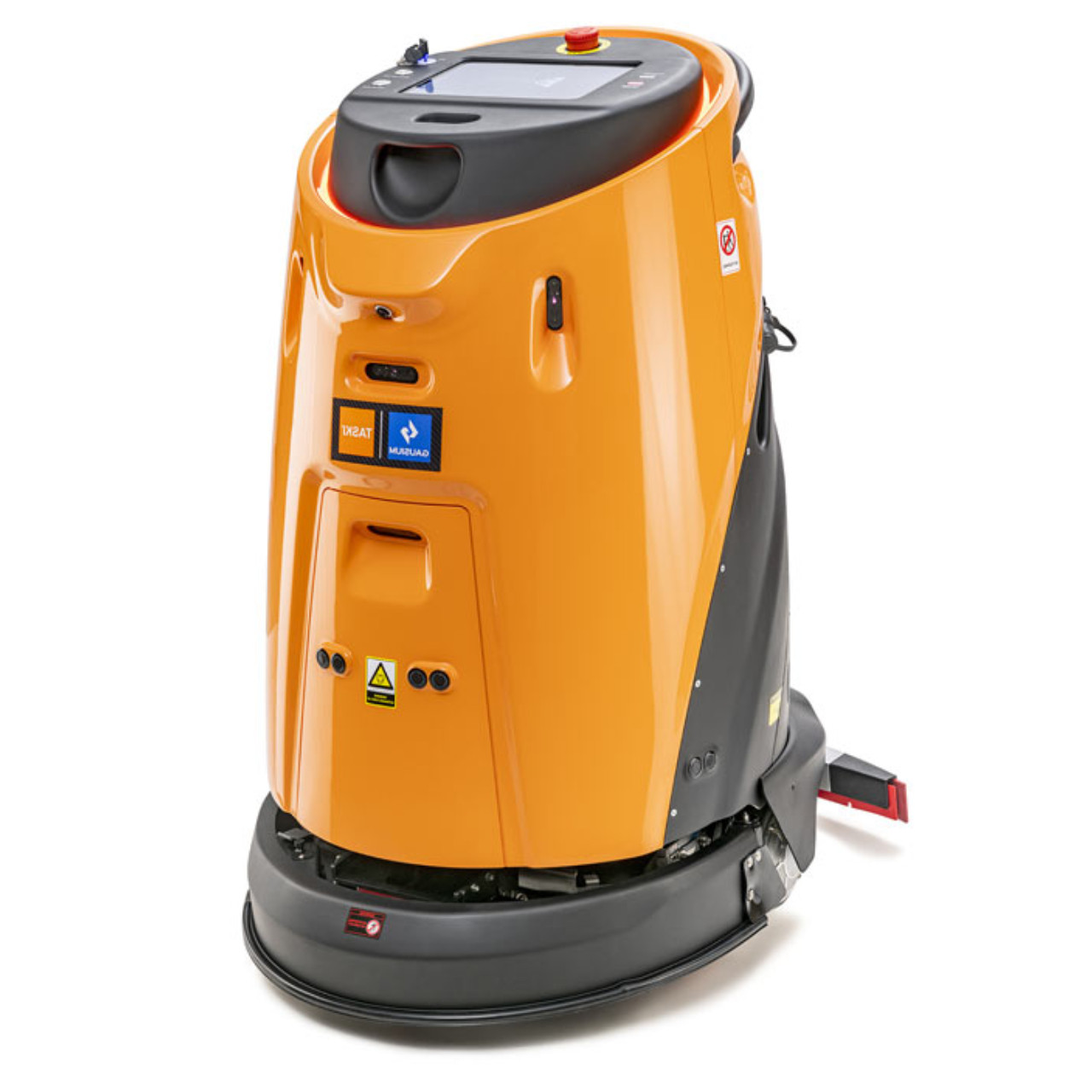
TASKI Ecobot 50 Pro
The TASKI Ecobot 50 Pro is an autonomous floor scrubber built around OMNIE AI and 3D LiDAR navigation for commercial hard-floor cleaning.
- Cleaning path: 18 in.
- Navigation: OMNIE AI + 3D LiDAR
- Machine type: Autonomous scrubber dryer
- Potential applications: healthcare, schools, airports, retail, and public facilities
Robotic Cleaning Equipment
Different robotic machines solve different cleaning tasks, including scrubbing, sweeping, vacuuming, and large-area autonomous maintenance.
TASKI Ecobot 50 Pro
AI-assisted autonomous scrubber using OMNIE AI and 3D LiDAR navigation.
View Ecobot 50 Pro →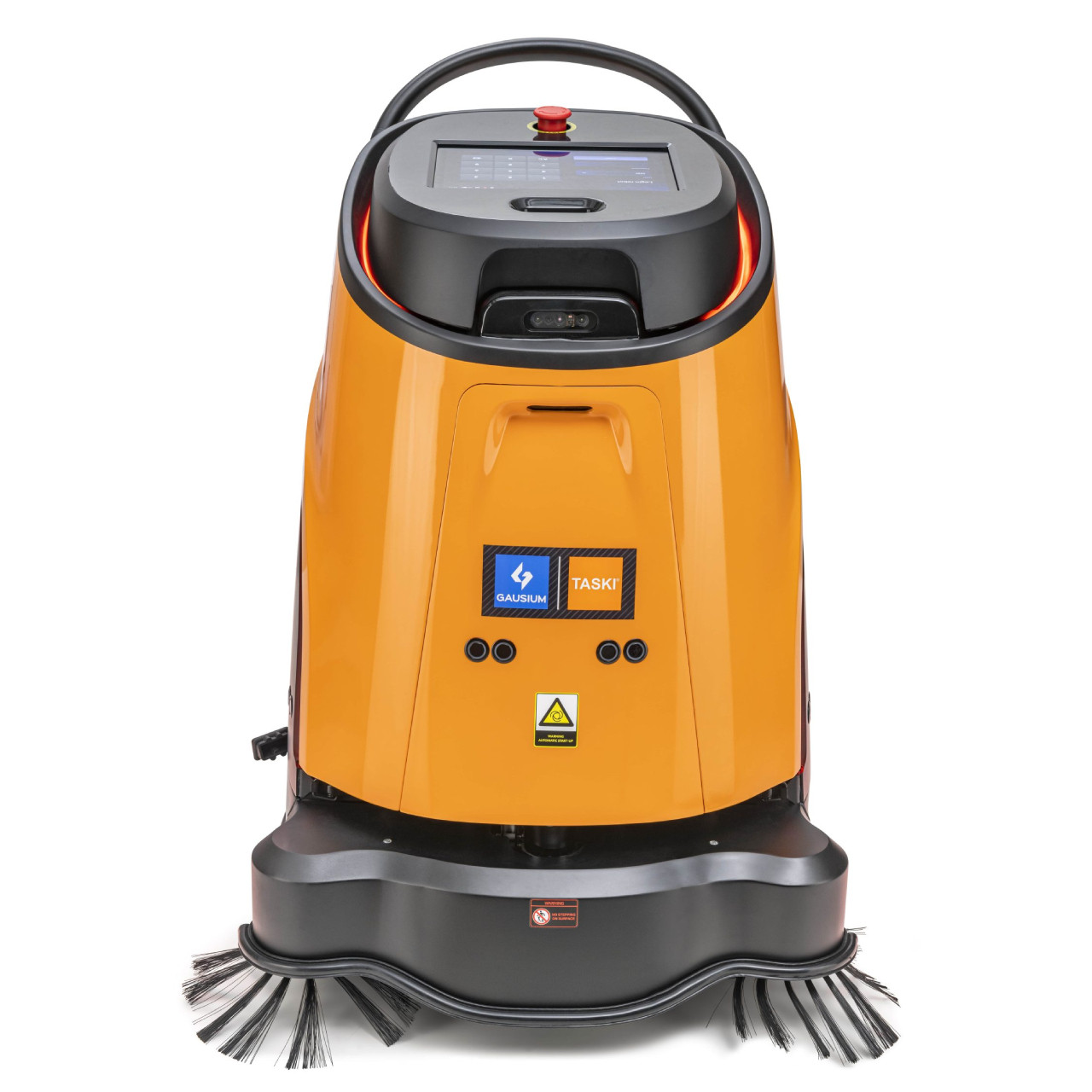
TASKI Ecobot 40
Robotic sweeping and vacuum platform with HEPA H13 filtration.
View Ecobot 40 →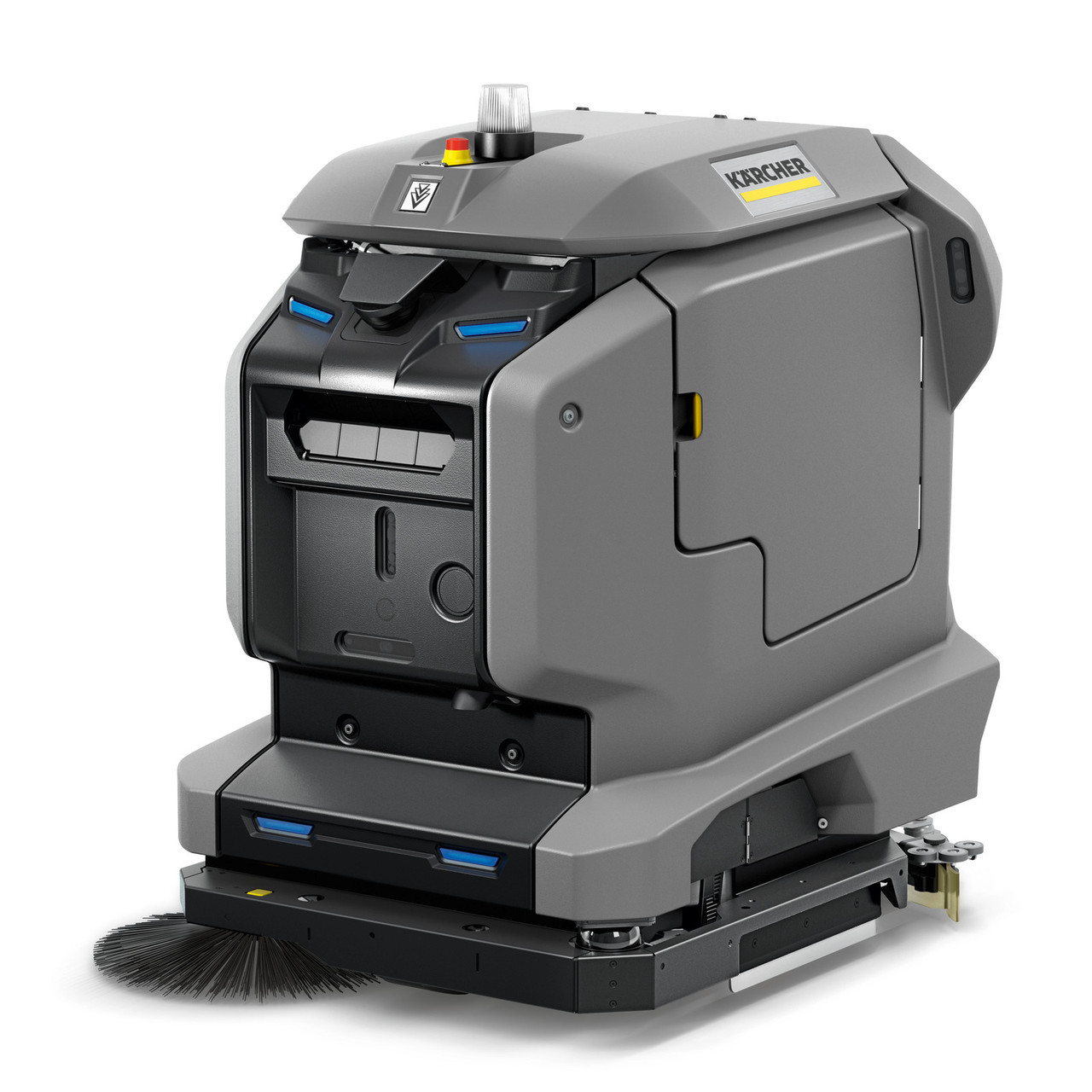
Karcher KIRA B 50
22 in. autonomous robotic floor scrubber for repeatable commercial cleaning routes.
View KIRA B 50 →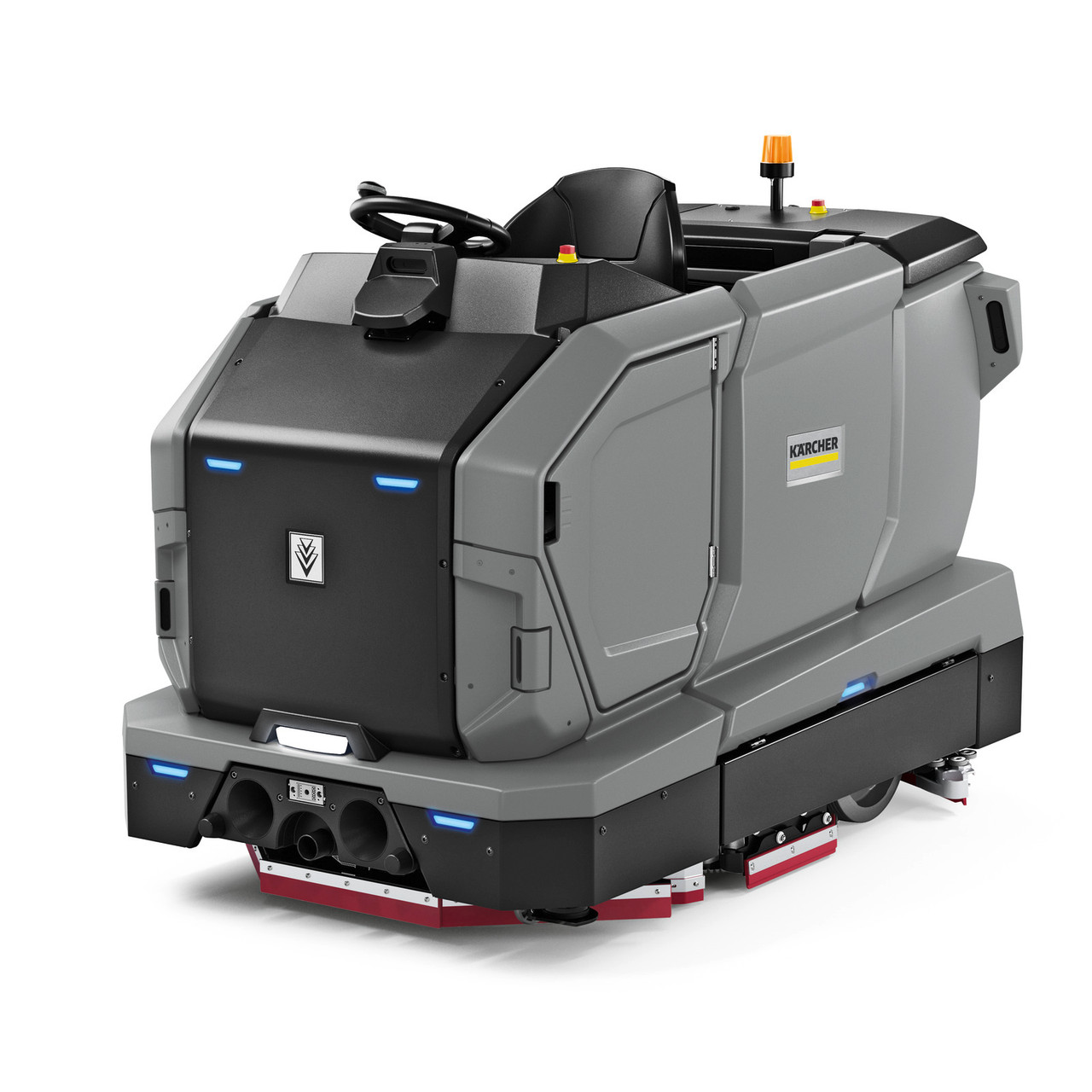
Karcher KIRA BD 200
33.5 in. autonomous floor scrubber designed for larger commercial facilities, with docking options.
View KIRA BD 200 →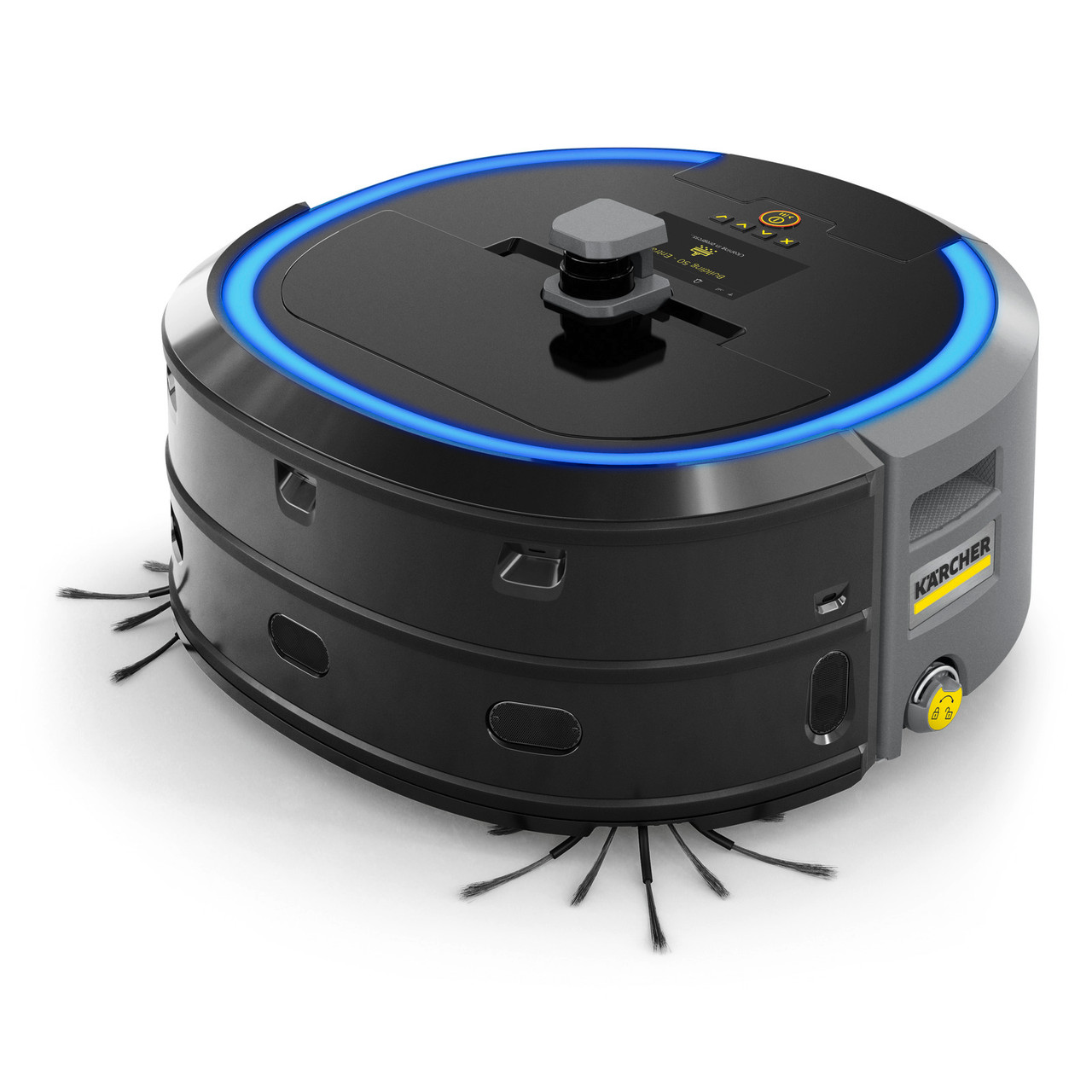
Karcher KIRA CV 50
Commercial robotic vacuum platform for autonomous carpet and hard-floor vacuuming applications.
View KIRA CV 50 →Choose the Robotics Platform That Fits the Facility
Commercial cleaning robotics is moving beyond simple autonomous movement toward connected cleaning systems that combine navigation, reporting, fleet tools, charging, and facility integration.
The most important question is not which brand sounds the most advanced. It is which platform can consistently complete the required cleaning routes within the facility's operating, staffing, service, and technology requirements.
Learn More About Robotic Cleaning
Explore robotic cleaning guides covering navigation, facility fit, deployment, docking, fleet management, autonomous floor scrubbers, and commercial cleaning technology.
Explore MJ University →Need Help Comparing Robotic Cleaning Equipment?
Monster Janitorial can help compare autonomous scrubbers, robotic vacuums, navigation systems, docking stations, brushes, pads, batteries, facility layouts, and deployment requirements.
- #AI adaptive robotics
- #AI robotic scrubbers
- #autonomous cleaning machines
- #autonomous floor scrubber comparison
- #cloud connected cleaning robots
- #commercial cleaning robots
- #commercial robotics platforms
- #Gausium robotics
- #Karcher robotics
- #LiDAR robotic scrubbers
- #Nilfisk Liberty SC50
- #robotic cleaning systems
- #robotic scrubber technology
- #TASKI robotic scrubbers
- #Tennant BrainOS