
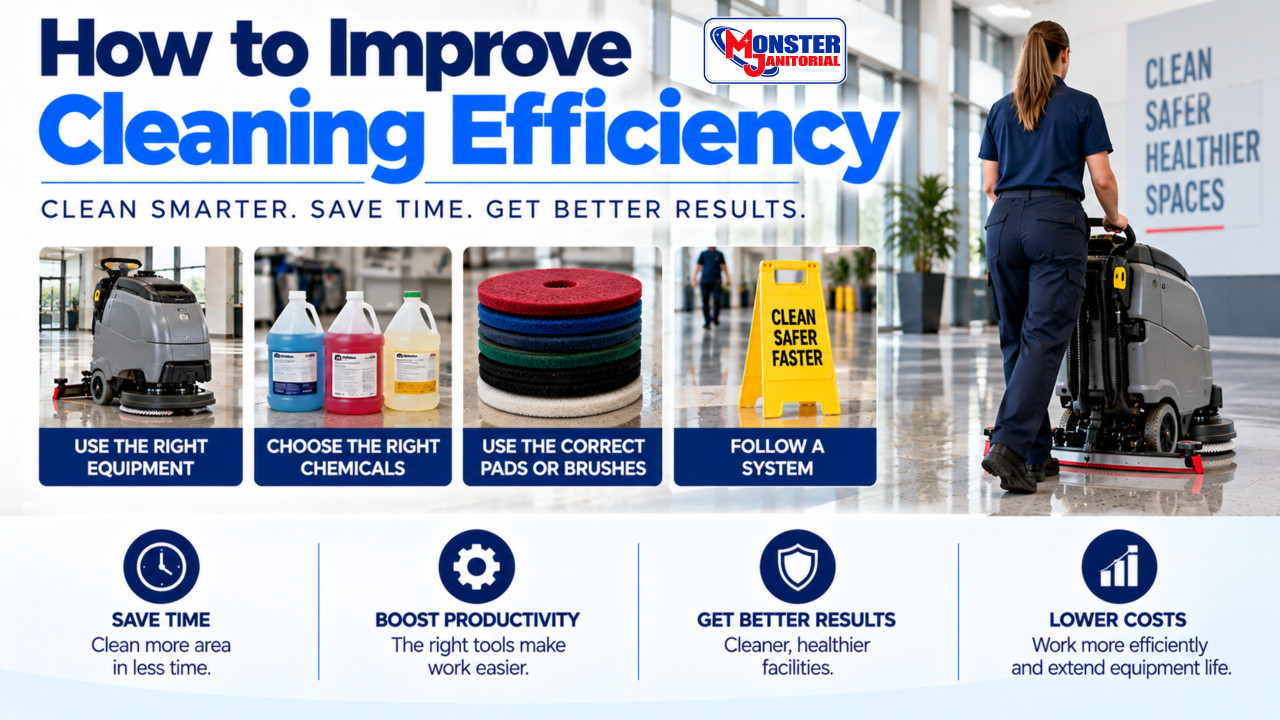
How to Improve Cleaning Efficiency in Commercial Facilities
Improve facility cleaning by matching equipment to the task, planning better routes, training operators, maintaining machines and using compatible chemicals.
Efficiency is not just about buying a faster machine. The best results come from combining the right equipment, process and maintenance program for the actual cleaning route.
Improve the Route Before Simply Adding More Equipment
Start by identifying the real cleaning tasks and route. Then select appropriately sized equipment, reduce unnecessary overlap and travel, maintain machines, train operators and use the correct chemistry for the floor and equipment.
Use the Right Equipment for the Job
Cleaning efficiency drops when the machine is too small, too large, poorly matched to the floor or being used for a task it was not designed to perform.
Build a Routine Around Actual Soil & Traffic
A structured program helps prevent buildup, but cleaning frequency should match actual traffic, soil, floor type and facility requirements rather than a fixed schedule for every building.
Train Staff on the Machine & the Process
Even properly selected equipment can perform poorly when operators are unfamiliar with controls, pads, brushes, chemical dilution, solution flow or recovery systems.
Prevent Small Problems From Slowing the Route
Worn accessories, clogged filters, weak batteries or poor recovery can reduce practical productivity even when the machine is technically operating.
Optimize Cleaning Routes
Route design can save significant time without changing equipment. Reduce unnecessary travel, repeated passes and backtracking.
Use Battery Equipment Where It Fits the Route
Battery-powered machines remove cord management from the route, but they are not automatically the best choice for every facility. Compare runtime, charger type, battery chemistry, charging window and replacement cost.
Use the Right Chemical at the Right Dilution
The wrong chemistry can create residue, excessive foam, poor soil removal or compatibility problems. Match the product to the floor, soil and equipment.
Combine Cleaning Methods Instead of Forcing One Machine to Do Everything
Track Practical Productivity
Efficiency should be measured by the actual route, not just manufacturer square-foot-per-hour ratings.
Common Causes of Poor Cleaning Efficiency
Equipment That Can Improve Route Efficiency
Choose based on the actual route, floor type and cleaning task rather than assuming one category is always faster.
Battery Floor Sweepers
Useful for powered dry pickup on warehouse, school and commercial hard-floor routes.
Shop Sweepers →Walk-Behind Auto Scrubbers
Balance maneuverability, solution delivery and recovery for mixed commercial routes.
Shop Walk-Behind Scrubbers →Ride-On Auto Scrubbers
Useful where large open areas, long routes and adequate turning space support rider equipment.
Shop Ride-On Scrubbers →Commercial Vacuums
Support carpeted areas, offices, stairs and detail work outside hard-floor machine routes.
Shop Vacuums →Cleaning Efficiency FAQ
Related MJ University Resources
Schools, Government & Commercial Facilities
Monster Janitorial supports commercial and institutional buyers with equipment selection, quotes, purchase-order support and replacement parts.
Tax-exempt organizations can create an account and email their exemption certificate to sales@monsterjanitorial.com.
Need Help Improving Your Cleaning Route?
Monster Janitorial can help compare scrubbers, sweepers, vacuums, batteries, pads, brushes and cleaning equipment based on your facility layout, floor types, route size and cleaning schedule.