
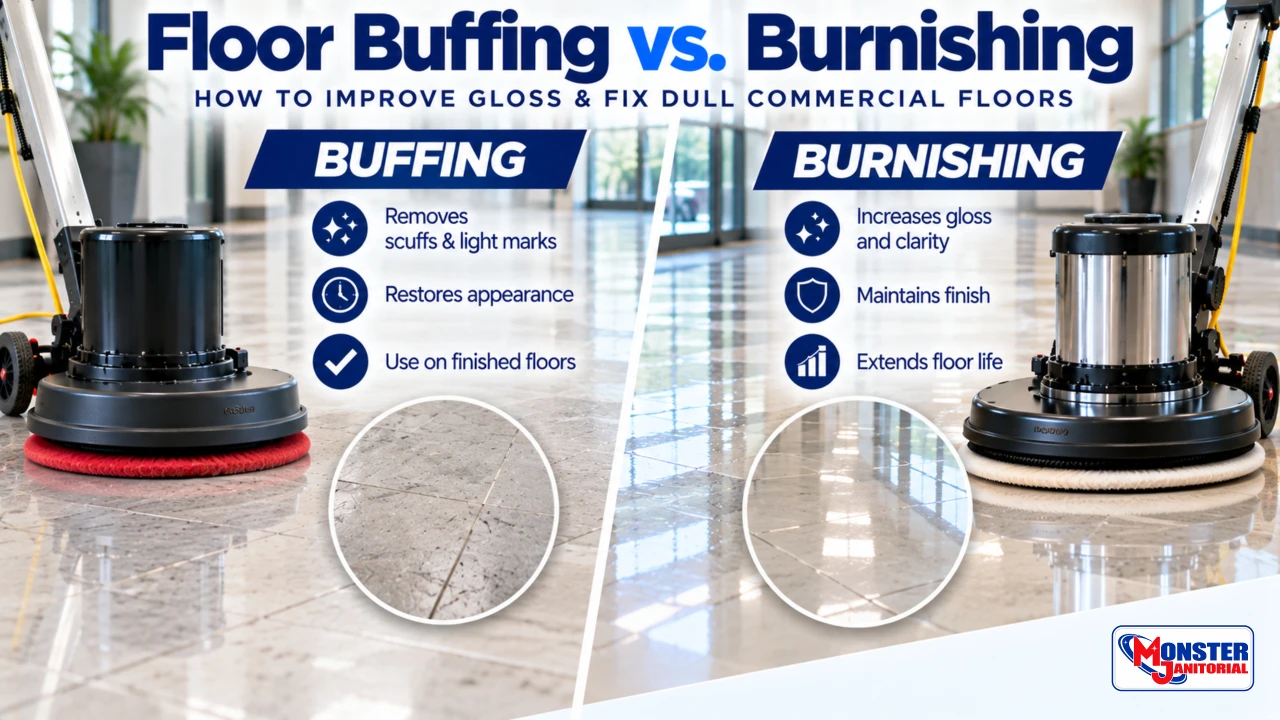
Floor Machines & Burnishers
Floor Buffing vs Spray Buffing vs Burnishing
A practical guide to machine speed, pad selection, gloss results, troubleshooting, and choosing the right process for finished commercial floors.
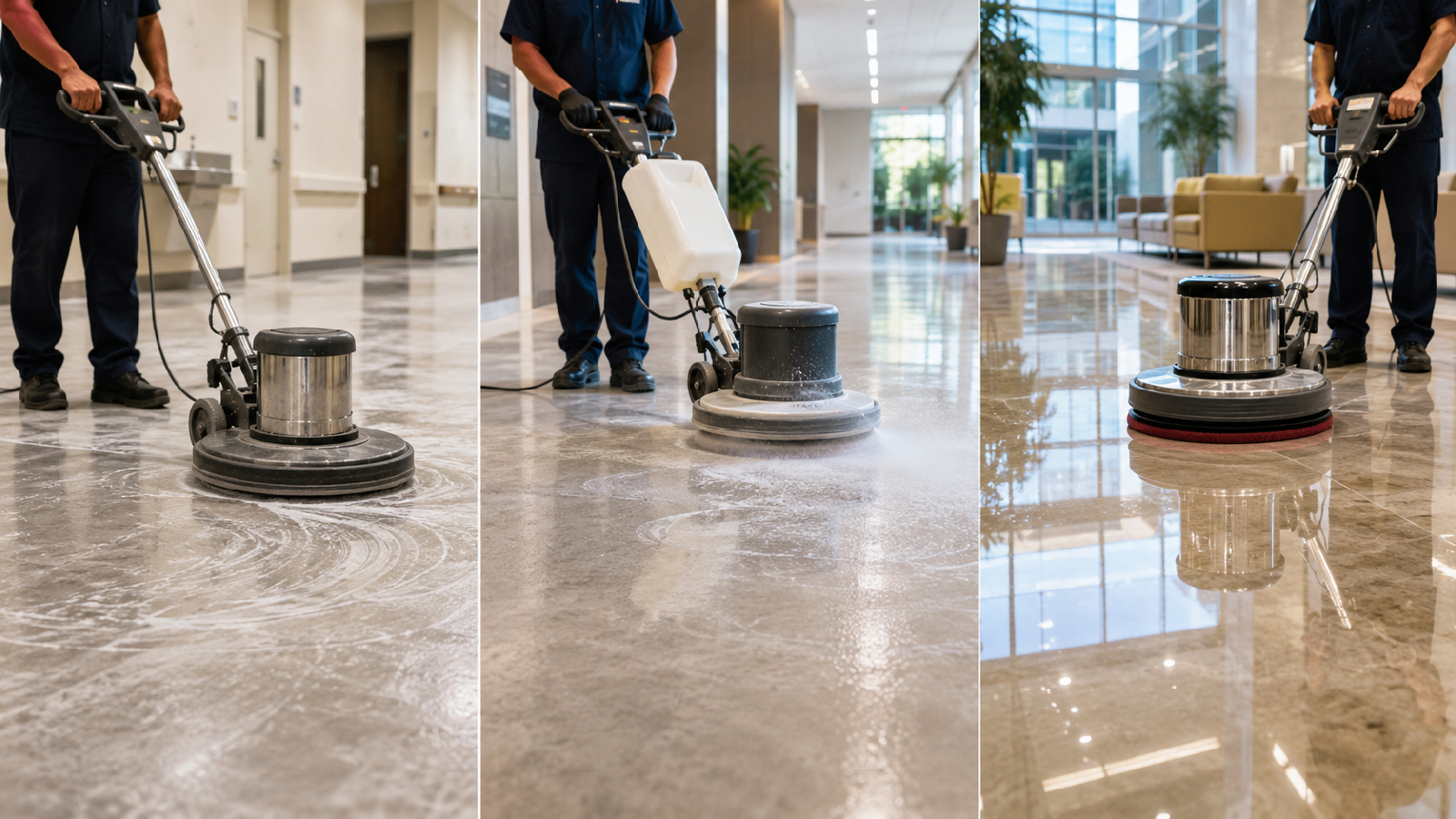
Floor Maintenance Comparison
Low-speed buffing is used for light polishing, spray buffing adds chemical-assisted scuff removal, and high-speed burnishing creates stronger gloss and reflectivity on clean, intact floor finish.
Choose the Right Process
Three Ways to Improve Finished Floors
The best choice depends on floor condition, area size, gloss expectations, and the equipment already in your program.
175–300 RPM
Buffing
Low-speed polishing for light scuffs, small dull areas, and routine appearance maintenance.
175–300 RPM + Solution
Spray Buffing
Chemical-assisted buffing for scuff removal, isolated dull spots, and moderate gloss improvement.
1,000–2,000+ RPM
Burnishing
High-speed gloss maintenance for clean, intact finish in medium and large commercial areas.
Machine Speed
Why RPM Matters
Lower speeds provide versatility. Higher speeds focus on smoothing intact finish and increasing reflectivity.
Buffing, spray buffing, scrubbing, and general maintenance
Routine commercial burnishing and gloss restoration
High-reflectivity and high-gloss appearance programs
Floor Condition Decision
Burnish, Recoat, or Strip?
Burnish
Use when the finish is clean and intact but needs more gloss.
Scrub and Recoat
Use when traffic lanes are worn or burnishing no longer restores an even appearance.
Strip and Refinish
Use when finish is peeling, yellowed, contaminated, heavily built up, or failing.
Floor Gloss Troubleshooting
Why Floors Still Look Dull
Poor gloss is usually caused by floor condition, pad selection, machine setup, or operator technique.
Dust and grit reduce pad contact and may scratch the finish.
The pad may be loaded, glazed, or unsuitable for the RPM.
Burnishing cannot replace finish that has worn away.
The RPM or walking speed may not match the desired result.
Clogged bags or filters can leave dust on the floor.
Dirty drivers, worn parts, or charging issues reduce performance.
Maintenance Frequency
How Often Should Floors Be Burnished?
Daily to several times per week
Weekly or biweekly
Weekly or as needed
Weekly, biweekly, or monthly
Power Options
Cord-Electric, Battery & Propane Burnishers
Cord-Electric
Continuous power with no charging, but requires cord and outlet management.
Battery
Cordless operation for larger routes. Compare runtime, charging, battery type, and replacement cost.
Propane
High productivity for large areas. Consider ventilation, emissions rules, fuel storage, and training.
Recommended TASKI Equipment
Low-Speed Buffing & High-Speed Burnishing Equipment
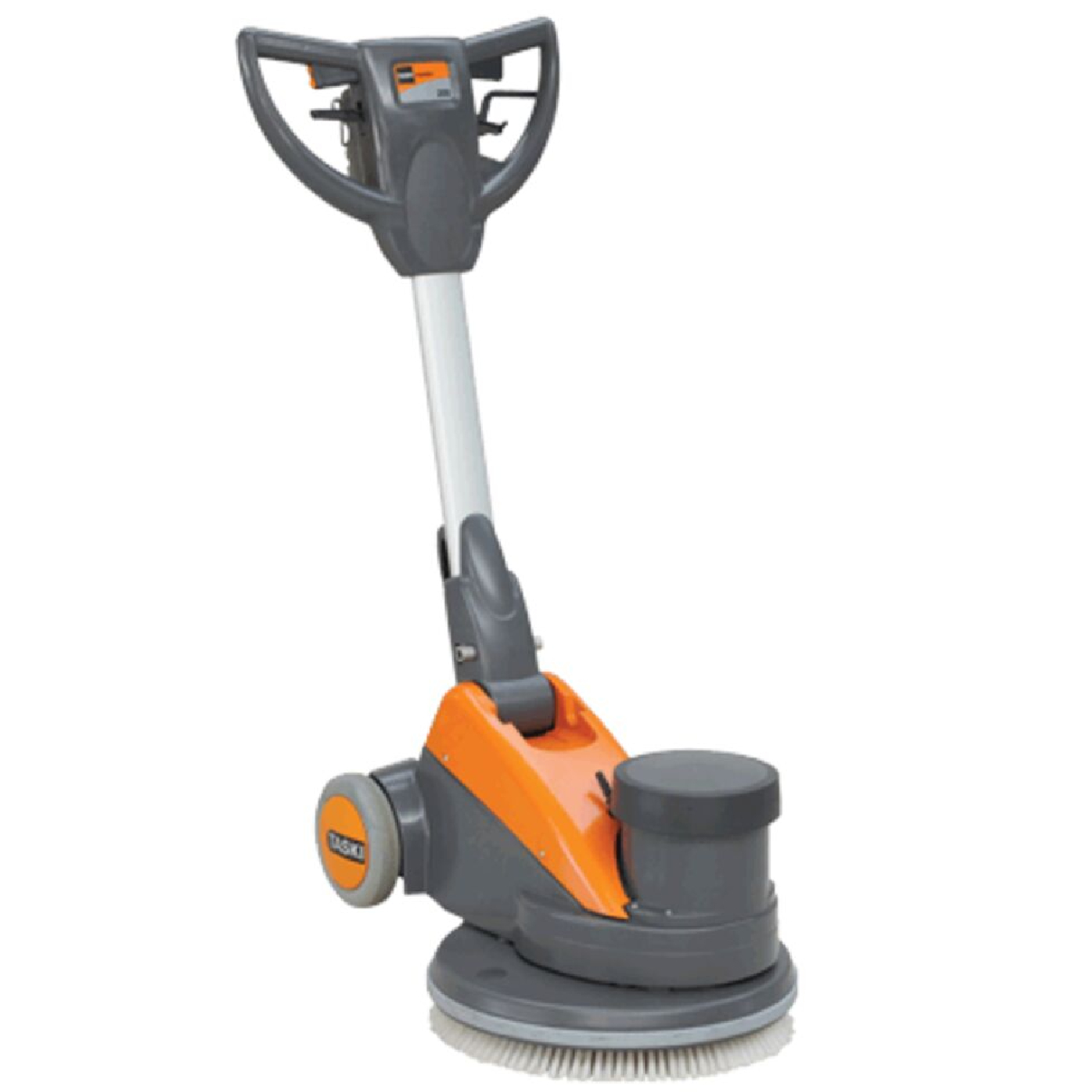
Low-Speed Rotary Machine
TASKI ergodisc 175
For spray buffing, light polishing, scrubbing, stripping, and routine maintenance.
View Machine →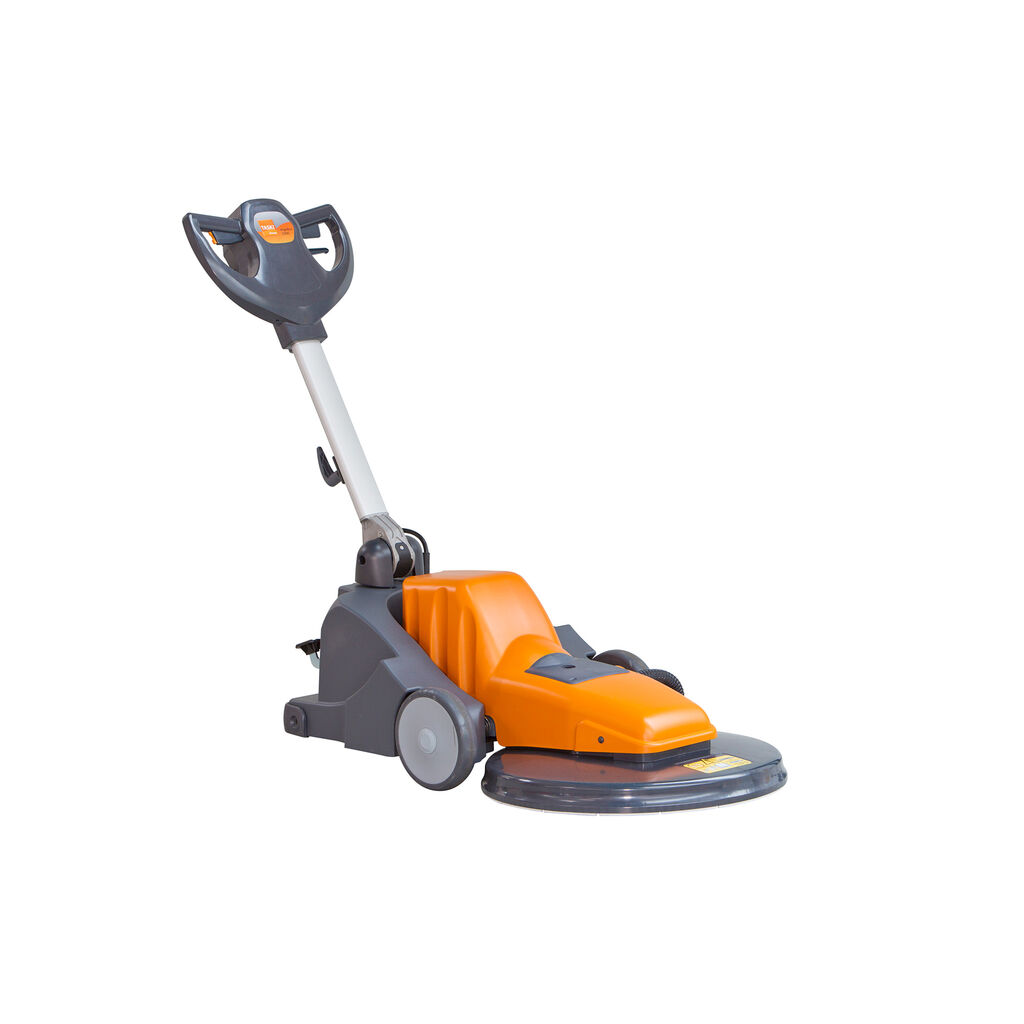
Ultra-High-Speed Burnisher
TASKI ergodisc 2000
For high reflectivity and high-gloss commercial floor programs.
View Burnisher →Common Questions
Frequently Asked Questions
Is buffing the same as burnishing?
No. Buffing uses lower speed for light polishing. Burnishing uses higher speed for stronger gloss and reflectivity.
Can a 175 RPM machine burnish?
It can buff and lightly polish, but it will not usually create the same reflectivity as a dedicated burnisher.
Should floors be cleaned first?
Yes. Dust, soil, sand, and grit should be removed before buffing or burnishing.
How do I know whether to burnish or recoat?
Burnish intact finish. Recoat when traffic lanes are worn or proper burnishing no longer restores an even appearance.
Need Help Choosing a Floor Machine or Burnisher?
Monster Janitorial can help compare low-speed machines, high-speed burnishers, pads, chemicals, dust-control systems, and replacement parts.