
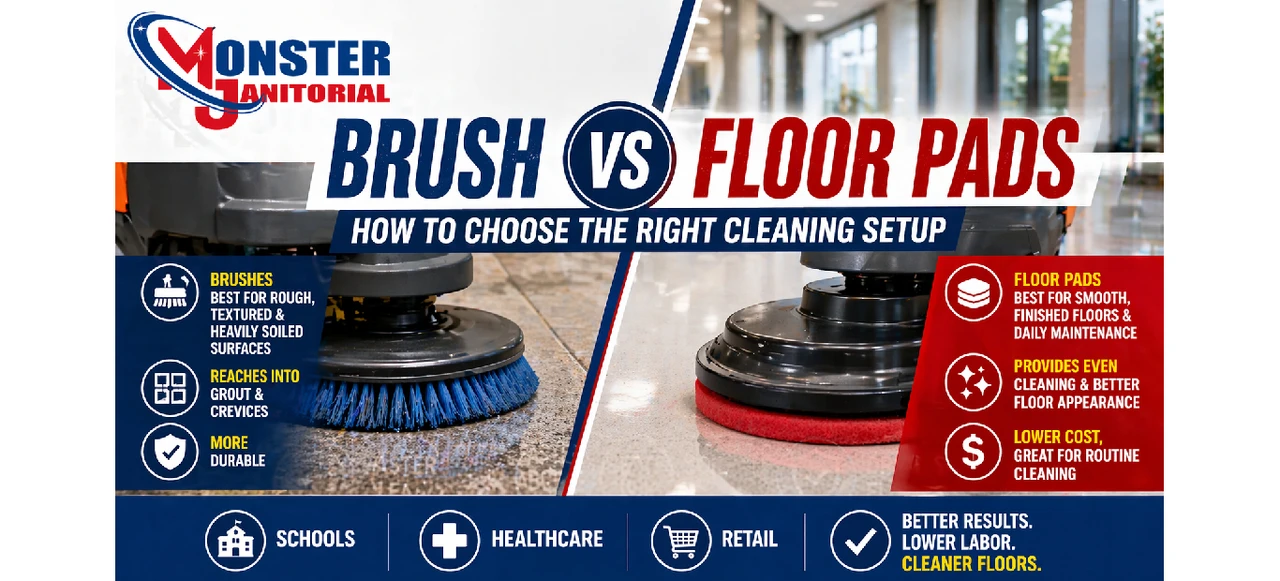
If you are buying or using an auto scrubber, one of the most important decisions you will make is whether to clean with brushes or floor pads.
The right choice affects cleaning results, floor appearance, labor efficiency, and replacement costs. It can also help prevent the wrong setup from being used on the wrong surface.
This guide explains the difference between scrubber brushes and floor pads, when to use each one, and how to choose the best setup for your facility.
Quick Answer
Use floor pads for smooth, finished floors. Use brushes for rough, uneven, or heavily soiled surfaces.
- Pads: Best for VCT, tile, polished concrete, and daily maintenance cleaning
- Brushes: Best for grout, textured floors, concrete, and heavier soil
What Is the Difference Between Brushes and Floor Pads?
Floor Pads
Floor pads attach to a pad driver and clean using friction across a flat surface. They are commonly used on smooth, finished floors where even contact and appearance matter most.
- Best for smooth floor surfaces
- Provide even floor contact
- Helpful for routine scrubbing and appearance improvement
- Available in different colors and aggressiveness levels
Brushes
Scrubber brushes use bristles to agitate the floor and reach into surface texture, grout lines, and small crevices. They are often the better choice for rougher or more heavily soiled environments.
- Best for textured and uneven floors
- More aggressive mechanical agitation
- Better for grout lines and rough surfaces
- Typically more durable than floor pads
When to Use Floor Pads
Floor pads are usually the best choice when you are cleaning smooth, sealed, or finished floors and want consistent appearance with effective daily maintenance.
Use Pads When:
- You clean VCT floors in schools
- You maintain finished tile or smooth hard floors
- You want a cleaner, more polished appearance
- You are performing daily maintenance cleaning
- You use specialized floor care systems such as polishing or diamond pad programs
Pads are especially popular in schools, healthcare facilities, retail stores, and office buildings where appearance and consistent maintenance matter.
When to Use Brushes
Brushes are usually the better choice when the floor is rough, uneven, textured, or heavily soiled.
Use Brushes When:
- You clean tile and grout
- You maintain slip-resistant floors
- You clean warehouses or rough concrete
- You deal with heavier soil buildup
- You need more aggressive agitation than a pad can provide
Brushes can also be the better option when floor texture prevents pads from making full, even contact with the surface.
Brush vs Pad: Side-by-Side Comparison
| Feature | Floor Pads | Brushes |
|---|---|---|
| Best Floor Type | Smooth, finished floors | Textured, rough, uneven floors |
| Cleaning Action | Flat surface contact | Bristle agitation |
| Appearance Improvement | Excellent | Good |
| Grout / Texture Cleaning | Limited | Excellent |
| Durability | Lower | Higher |
| Best Use | Routine maintenance | Heavier soil and rough floors |
Best Setup by Facility Type
Schools
Schools often have large amounts of VCT and smooth finished flooring, so pads are commonly the best fit for daily maintenance. However, brushes may be useful in restrooms or textured entry areas.
Healthcare
Healthcare facilities usually prioritize clean appearance, consistency, and dry floors. Pads are often preferred on smooth finished surfaces, while brushes may be useful in specific utility or textured floor areas.
Retail
Retail stores often benefit from pads because they help maintain a clean, polished appearance on smooth finished floors. Brushes may be better in back rooms, receiving areas, or textured service zones.
How the Wrong Setup Causes Problems
Using the wrong cleaning setup can create avoidable issues:
- Pads may wear out quickly on rough floors
- Brushes may be more aggressive than needed on smooth finished floors
- Cleaning results may look inconsistent
- Operators may need extra passes to get acceptable results
- Facilities may spend more on labor and replacement parts
Choosing the right floor contact method helps improve results while reducing waste and frustration.
How This Connects to Your Auto Scrubber Purchase
If you are buying a new scrubber, this decision matters before checkout. Some machines are available in a brush kit or a pad kit, and selecting the right one helps you get better results from day one.
For example, a compact machine like the TASKI ULTIMAXX 360 may be available in both brush and pad configurations depending on your floor care program.
If you are still comparing machine types, read our related guides:
Shop Brushes, Pads, and Scrubber Accessories
Need replacement parts or the right cleaning setup for your machine?
Final Verdict
Use floor pads for smooth, finished floors and appearance-focused maintenance. Use brushes for rough, uneven, textured, or heavily soiled surfaces.
The right choice depends on your floor type, soil level, and cleaning goals. Making the right decision helps improve cleaning results, reduce wear, and get better performance from your scrubber.