
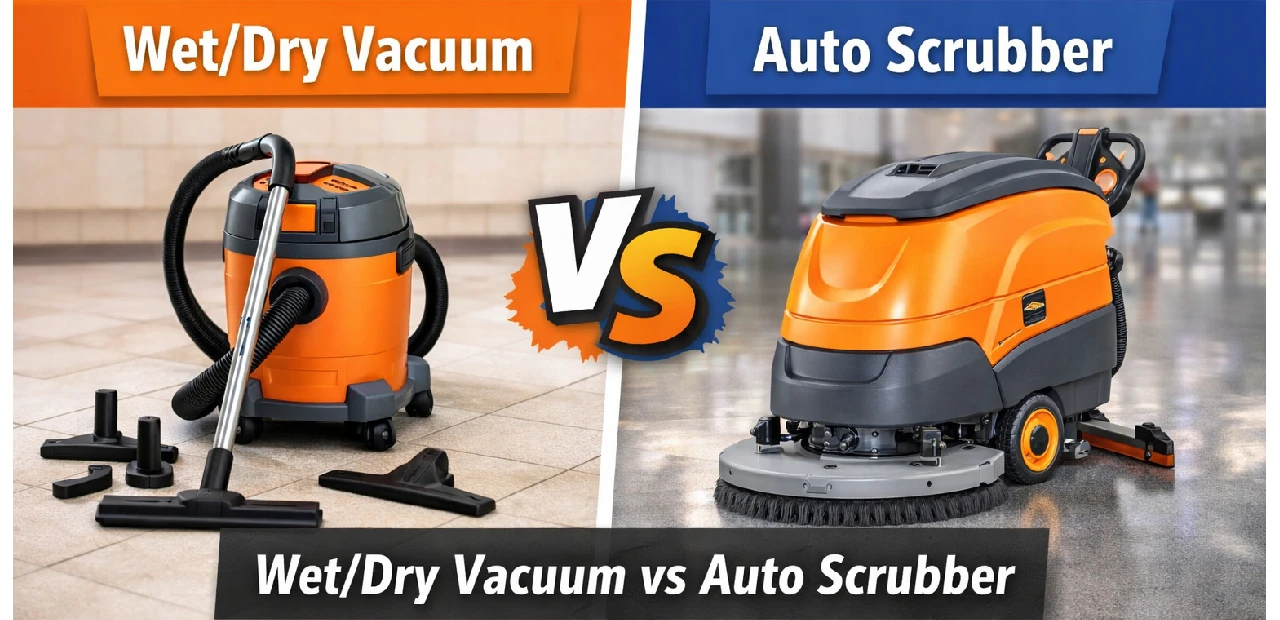
Fast floor drying is critical in commercial environments to reduce slip hazards, improve safety, and keep facilities operational. Excess moisture not only increases safety risks but can also lead to residue buildup and surface damage if not properly managed.
Shop equipment: Wet/Dry Vacuums | Air Movers & Drying Fans
Use the Right Equipment for Faster Drying
The most effective way to reduce drying time is by using proper recovery equipment. Wet/dry vacuums remove water quickly after spills or scrubbing, while air movers and drying fans accelerate evaporation by increasing airflow.
- Wet vacuums: Rapid water removal for spills and recovery
- Front squeegee systems: Improve pickup efficiency on large areas
- Air movers: Increase airflow to speed up drying
Control Water Usage
Using too much cleaning solution is one of the biggest causes of slow drying floors. Controlled moisture application improves predictability and reduces drying time.
- Use only the necessary amount of solution
- Avoid over-wetting floors
- Follow proper chemical dilution ratios
Improve Airflow and Ventilation
Air movement is essential for faster drying. Increasing airflow helps moisture evaporate more quickly and prevents standing water.
- Use commercial air movers or drying fans
- Open doors and windows when possible
- Leverage HVAC systems for circulation
Optimize Cleaning Practices
Proper cleaning technique directly impacts drying performance. Overusing chemicals or leaving residue can slow drying and attract dirt.
- Clean spills immediately to prevent buildup
- Use quick-dry cleaning methods during peak hours
- Train staff to follow efficient cleaning workflows
Match Equipment to Facility Type
Different facilities require different drying strategies based on traffic, layout, and safety requirements:
- Healthcare: Fast drying is critical to reduce slip risks and maintain sanitation
- Retail: Minimize downtime and keep aisles safe for customers
- Warehouses: Large concrete floors require high-efficiency recovery and airflow
- Schools: Ensure safe reopening of hallways and classrooms
- Restaurants: Frequent spills require quick-response recovery equipment
Clean at the Right Time
Scheduling cleaning during low-traffic periods allows floors to dry properly and reduces recontamination. High-traffic areas often require daily cleaning and quick response to spills.
Bottom line: Faster drying comes from the right combination of water control, airflow, and recovery equipment. Using wet vacuums and air movers together is one of the most effective ways to keep floors safe, dry, and ready for use.