
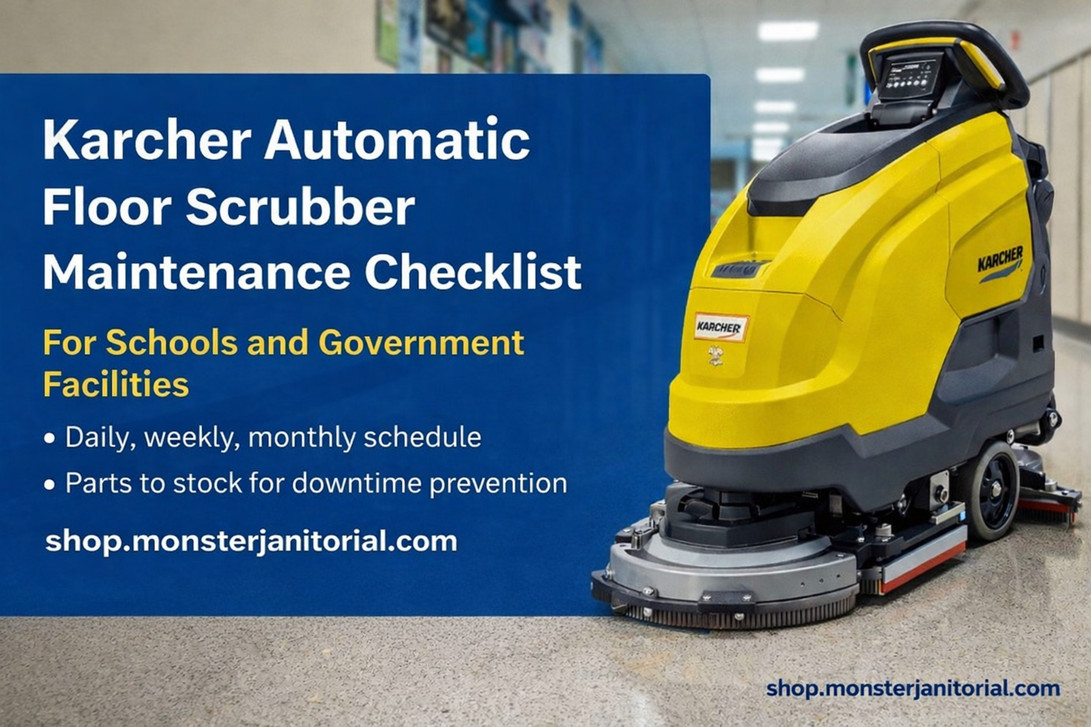
In schools and government facilities, downtime is expensive. When a floor scrubber fails during a cleaning shift, hallways get skipped, safety risks increase, and labor costs rise. A simple preventive maintenance program dramatically extends machine life and protects your investment.
This Karcher-focused maintenance guide outlines what custodial teams should inspect daily, weekly, and quarterly — plus which parts schools should keep in stock to avoid delays.
Why Preventive Maintenance Matters
- Reduces emergency repairs
- Extends battery life
- Improves water recovery and slip prevention
- Maintains consistent cleaning performance
- Protects 3 to 5 year capital budgets
Even high-quality Karcher automatic scrubbers require routine inspection to perform at their best.
Daily Maintenance Checklist
- Empty and rinse recovery tank
- Rinse solution tank if chemicals were used
- Wipe down squeegee assembly
- Inspect squeegee blades for wear or cuts
- Check brushes or pads for uneven wear
- Recharge battery fully
Daily rinsing prevents chemical buildup and protects vacuum performance.
Weekly Maintenance Checklist
- Inspect brush bristles or pad driver face
- Check squeegee blade edges for rounding
- Inspect vacuum hoses for cracks or blockage
- Clean debris from deck housing
- Inspect battery terminals (AGM or wet systems)
If you notice streaking or water trails behind the machine, the squeegee blades likely need flipping or replacement.
Monthly / Quarterly Maintenance
- Check brush motor noise or vibration
- Inspect down-pressure settings
- Review runtime consistency (battery health indicator)
- Inspect charger cables and connectors
- Check wheel condition and steering components (ride-on units)
Monitoring runtime decline often identifies battery aging before failure occurs.
Parts Schools Should Keep in Stock
Keeping essential wear items onsite prevents costly delays.
Squeegee Blades
Typically replaced every 3 to 6 months depending on floor type and usage.
Shop Karcher Squeegee Replacements
Brushes or Pad Drivers
Replace brushes when bristles are worn to half length. Keep at least one spare set per machine.
Floor Pads (Correct Size)
Stock appropriate sizes for your deck width (17 inch, 20 inch, 28 inch, etc.).
Batteries
Plan battery replacement cycles in advance:
- AGM: Often 2 to 4 years
- Lithium: Often longer lifecycle depending on charge habits
- Wet: Requires watering and inspection
Browse Karcher Battery Replacement Options
Vacuum Filters and Hoses
Check for suction loss and replace as needed.
Using the Right Chemicals
Incorrect chemical dilution shortens squeegee life and causes excessive foam. Use approved floor care solutions appropriate for your surface.
Find Parts by Model
Use exploded diagrams to confirm part numbers before ordering.
Download the Printable Preventive Maintenance Checklist
Keep your custodial team on track with our printable 1-page preventive maintenance checklist designed specifically for Karcher automatic floor scrubbers used in schools and government facilities.
Download the 1-Page Karcher Scrubber Preventive Maintenance Checklist (PDF)
Need replacement parts, squeegees, brushes, batteries, or service support? Browse our Karcher Parts or view Karcher Parts Manuals and Exploded Diagrams to identify the correct part numbers for your machine.
Institutional Purchasing Support
Monster Janitorial supports school districts and government facilities nationwide.
- Purchase orders accepted
- Tax-exempt account setup available
- Bid assistance available
D-U-N-S Number: 080901706
UEI Number: U4TYL7A5LEN9
Email: sales@monsterjanitorial.com
Phone: 956-772-4842