
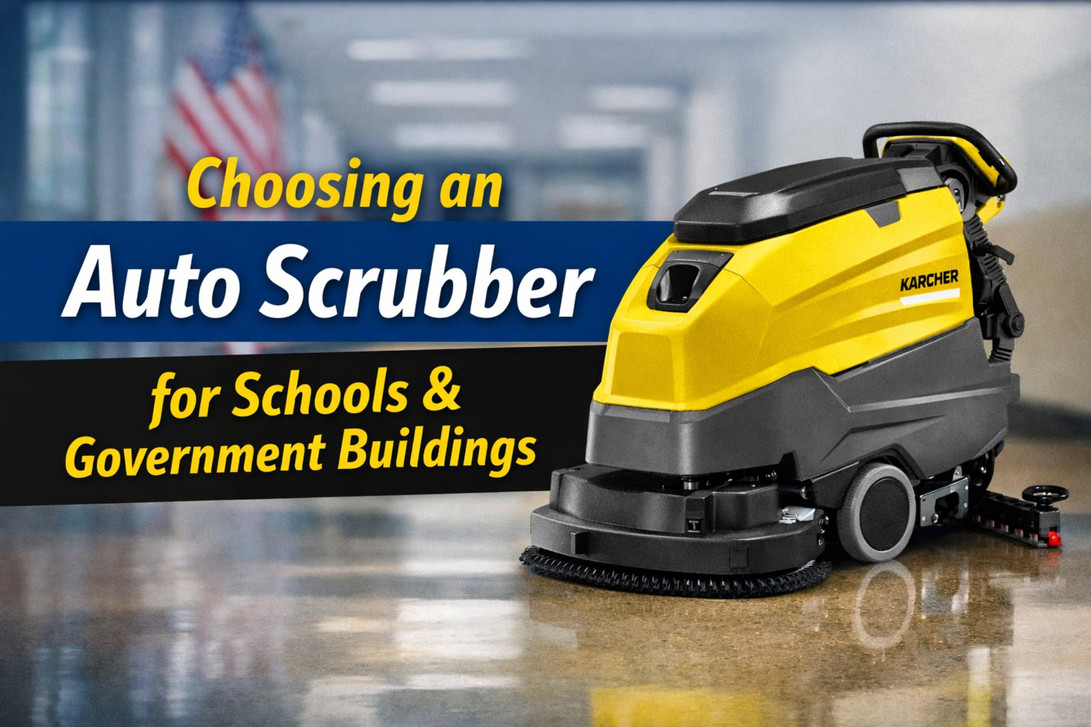
When you are responsible for cleaning a school campus or government facility, your floor scrubber is not just equipment - it is a productivity tool. The right automatic floor scrubber can reduce labor hours, improve slip-resistance by recovering dirty water, and keep hallways, lobbies, and common areas looking consistent day after day. The wrong scrubber can create bottlenecks (slow cleaning paths), battery downtime, missed edges, and higher repair costs.
This guide breaks down the main scrubber types (walk-behind, ride-on, stand-on, and robotic/autonomous), how schools and government buildings typically choose, and what specs matter most for daily use.
Start Here: What do you need to clean?
- Daily maintenance: frequent cleaning of hallways, cafeterias, classrooms, vestibules, and restrooms
- Restorative cleaning: heavier soil removal after events, bad weather, or summer projects
- Floor types: VCT, tile, sealed concrete, terrazzo, rubber, or a mix across buildings
- Space constraints: doorways, tight corridors, ramps, elevators, and storage areas
Auto vs Automatic vs Autonomous - what is the difference?
- Auto scrubber and automatic scrubber are the same thing in everyday purchasing language. Both refer to a machine that dispenses solution, scrubs, and recovers water in one pass.
- Autonomous scrubbers (robotic) are a separate category: they can run pre-mapped routes with sensors and safety features, often with reporting and fleet management tools.
Which scrubber type fits your building?
1) Walk-Behind Scrubbers (most common in schools)
Best for: K-12 schools, smaller government buildings, mixed spaces, tighter corridors, and budgets that prioritize versatility.
- Fits standard doorways and maneuvering around desks, cafeteria tables, and hallway traffic
- Lower cost of ownership than large ride-on units
- Great for daily cleaning when operators rotate between tasks
2) Stand-On Scrubbers (fast like a ride-on, nimble like a walk-behind)
Best for: campuses with long hallways and large common areas where speed matters, but turning radius and storage space still matter.
- Higher productivity than walk-behind without the footprint of many ride-ons
- Excellent for long corridors, gym perimeter routes, and large lobby runs
- Often a strong "middle ground" choice for schools and municipal buildings
3) Ride-On Scrubbers (maximum productivity for large facilities)
Best for: universities, airports, civic centers, convention-style buildings, and large multi-wing campuses.
- Highest productivity for wide open areas (big hallways, concourses, large cafeterias, big lobbies)
- Reduces operator fatigue during long cleaning shifts
- Often preferred for facilities with dedicated custodial teams and scheduled cleaning windows
4) Robotic (Autonomous) Scrubbers (consistency + reporting)
Best for: facilities that want consistent results daily, visibility into cleaning coverage, and help addressing staffing shortages.
- Runs repeatable routes for consistent cleaning
- Designed to operate safely around obstacles with sensors and speed controls
- Great for predictable areas like long hallways, large open floors, and after-hours programs
Battery choices - what schools and government buyers should know
Batteries can make or break your cleaning schedule. If the machine cannot finish the route, productivity drops and floors get skipped.
- AGM batteries: proven and common, typically lower upfront cost. Plan for charging time and eventual replacement.
- Lithium batteries: faster charging, longer usable life in many fleets, and often better for opportunity charging between shifts.
- Wet (flooded) batteries: can perform well but require maintenance practices that some facilities prefer to avoid.
If battery uptime is critical (multiple buildings, long routes, or evening shift constraints), prioritize a configuration that supports your real-world run time and charging habits.
What specs matter most for real facilities
- Cleaning path width: wider paths reduce labor time in big hallways and open areas
- Solution and recovery tank size: larger tanks reduce refill and dump cycles
- Pad/brush pressure and downforce: more pressure helps restorative cleaning, especially on textured floors
- Squeegee performance: critical for safety - better recovery means fewer slip hazards
- Noise level: important for daytime cleaning in schools and occupied government offices
- Serviceability: accessible consumables (squeegees, brushes, pads) reduce downtime
Recommended chemicals and accessories
Using the right chemicals and the correct pads/brushes will improve results, reduce labor, and help protect floors long-term.
Shop scrubbers by type
- Shop All Automatic Scrubbers
- Shop Walk-Behind Scrubbers
- Shop Ride-On Scrubbers
- Shop Stand-On Floor Scrubbers
- Shop Robotic (Autonomous) Scrubbers
Shop Karcher equipment and parts resources
FAQ - Automatic Floor Scrubbers for Schools and Government Buildings
Do schools search "auto scrubber" or "automatic scrubber"?
Both are common. "Auto scrubber" is often used in everyday speech, while "automatic scrubber" is common in formal purchasing language. It is smart to include both terms in headings, copy, and metadata.
Is an autonomous scrubber the same as an auto scrubber?
No. Auto/automatic scrubbers are manually operated machines. Autonomous scrubbers are robotic units designed to run routes with sensors and safety programming.
Should we buy a walk-behind or a ride-on?
Walk-behind units are best when space is tight or budgets prioritize flexibility. Ride-ons are best when labor savings and productivity are the priority for large open areas.
What is the biggest mistake facilities make when buying a scrubber?
Choosing based on price alone without mapping the real cleaning route. Cleaning width, tank size, battery runtime, and service parts availability usually determine long-term satisfaction.
What parts should we plan to replace?
Most facilities regularly replace squeegee blades, brushes or pads, and sometimes batteries depending on use and charging habits. Keeping these on hand reduces downtime.
Need help choosing the right scrubber for your facility?
If you tell us your building type (K-12, campus, municipal), floor type, and approximate square footage, we can recommend a scrubber category and the right brush/pad and chemical approach for your maintenance plan.
Email: sales@monsterjanitorial.com
Phone: 956-772-4842
Tax-Exempt Purchasing
Tax-exempt? Create an account and email your tax exemption certificate to sales@monsterjanitorial.com.